Tuesday, October 23, 2012

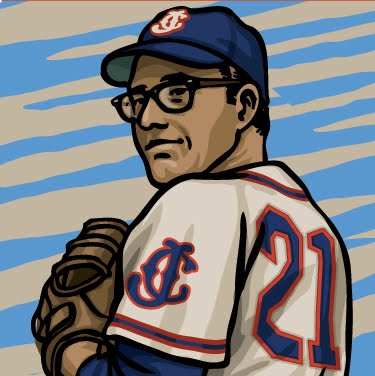
134. Charlie Sweasy: Cincinnati's first second baseman


I'm angry. And disappointed, too. Once again my ball club has let me down. I wrote a long and recklessly eloquent intro piece on how the Reds blew the playoffs this year and my explanation of why they did. Oh, it was magnificent in its unrelenting venom and just looking at the card of Charlie Sweasy of the 1869 Red Stockings I had designed specifically for the day when the Reds clinched the 2012 National League pennant made me angry all over again. Then all at once I stopped. It wasn't worth it. Anyone who comes here can simply read the same thing at countless other blogs all over the internet - disappointed Angels fans, angry Cardinals nuts and perennially pissed-off White Sox aficionados probably wrote more or less the same stuff I had. 

So I pressed delete. 

Who the heck needs another rant? Let's get to some good old-time base ball...

It was the end of August, 1870. For the past 2 years the Cincinnati Red Stockings criss-crossed the nation destroying all who were foolish enough to engage them on the field of battle. They were the first all-professional baseball team  assembled and they lived up to all the expectations anyone ever had of them, but by the time the team disembarked from a river steamer at Portsmouth, Ohio their success was such that it was starting to work against them.

The novelty of seeing a Red Stockings game no longer had that certain shine any longer - they were going to win and that was that. Attendance suffered. Once you saw them there wasn't any reason to go again such was the usual lopsidedness of the exhibitions. The team also became a victim of their success on the field. The ballplayers who were once held to vows of abstinence from alcohol was now starting to cut loose. Where once the Red Stockings were the only professional team in the nation, two years after their founding many of the players were being courted to jump the Red Stockings and join newly formed pro teams for more money. With the threat of being tossed off the only paying ball club now irrelevant, the ballplayers became lax on and off the field and it was starting to show.

On the ball field at Portsmouth, the once invincible Red Stockings were losing to the half-rate local Riverside Base Ball Club. When the 9th inning rolled around Portsmouth was ahead 27-23. After Cal McVey and Charlie Gould made 2 quick outs, it looked like the Red Stockings were about to lose their 3rd game of the year. With one out needed to secure a Portsmouth win, Fred Waterman chiseled out a base hit when the shortstop dropped an easy play. Doug Allison and Harry Wright singled to keep the inning alive and suddenly the bases were full of Red Stockings. Andy Leonard then launched an easy fly ball to left field and as the Portsmouth outfielder settled under it for the final out, Leonard slammed down his bat and swore. But the left fielder lost track of the ball, then found it again and made a jumping catch for what appeared to be the final out. Waterman and Allison had crossed the plate but it was in vain as the umpire ruled it an out, game over.

Cincinnati manager Harry Wright ran over to the umpire and claimed it wasn't a catch, that he saw the left fielder drop the ball. Wright and the umpire went out to the left fielder who was picking himself up off the grass. Astonishingly, he willingly admitted he did in fact drop the ball. The umpire ruled a hit and Waterman and Allison runs counted bring the score to 27-25 Portsmouth.

Asa Brainard came up next and his single loaded the bases once again. That brought up Cincinnati's second baseman Charlie Sweasy. He was the team's leading slugger that season, and that afternoon in Portsmouth, Ohio, he certainly didn't disappoint. With a mighty wallop, Sweasy drilled the ball to deep center. Watching the ball carry, Wright, Leonard and Brainard roared around the bases followed closely by Sweasy. Since there was no outfield fence, the center fielder eventually came up with the ball and threw towards the infield - but it was too late. Charlie Sweasy's inside the ballpark home run put Cincinnati ahead 29-27.

It was a close one - too close. To all present it was obvious the quality of the Cincinnati Red Stockings ball playing had seriously deteriorated. While the Portsmouth win was certainly exciting, there was no reason it should have even been close. Nightlife and offers of more cash had taken its toll on the greatest best ball team in history.

As the sun set, the Red Stockings boarded the river steamer Fleetwood for the overnight trip back to Cincinnati. Because of the mixed emotions of that day's game, the team settled into the steamers restaurant and drank freely. The teams once stringent alcohol policy was all but forgotten by now, and most of the men drank continuously through the night. The tanked-up ballplayers became more and more agitated and the air was right for something to happen. When breakfast was being served, Charlie Sweasy, the hero of the previous day's win, began fighting his teammates. Reporters accompanying the team didn't say what the argument was all about, but it's easy to assume it was over his teammates' lousy play of late. Sweasy was in the process of taking on 2 or 3 other Red Stockings when the Fleetwood's captain threatened to run the ship aground if the fighting didn't stop. 

The thought of being marooned somewhere along the rural Ohio River wisely put an end the brawl. When the team returned to Cincinnati, its executives decided to suspend Sweasy from the team. Discipline had been breaking down for some time and it was obvious Harry Wright was losing control of his men. 

So now Charlie Sweasy, Cincinnati's first second baseman was now professional baseball's first suspended ballplayer.

Charlie Sweasy was a product of Newark, New Jersey's bleak and seamy slums. The city made the young man strong and tough, and it was inevitable that this athletic scrapper would become roped in by the area's burgeoning baseball scene. The game had been popular since before the Civil War, and by the time Sweasy picked up a bat North Jersey boasted some of the most competitive baseball in the country. After cutting his teeth with a few of the many sandlot teams in Newark, Sweasy was recruited by the New Jersey Irvingtons. This was the ball club that launched Sweasy as well as his teammate Andy Leonard to stardom. Their play with the popular Irvingtons got them both a lucrative offer from the Cincinnati Buckeyes from whom they were in turn snatched away from when the Red Stockings formed in 1869. 

With Cincinnati, Sweasy became their solid and dependable second baseman. While not their best hitter, he was 2nd on the team with 30 home runs in 1869 and first the next year with 18, securing his reputation as the Red Stockings' premier slugger. When he felt his $800 salary for 1869 was not enough for the following season, Sweasy held out for a couple hundred more and became baseball's first hold-out.

But the man the Red Stockings swiped from the Buckeyes was to prove a complicated fellow. At times belting out popular songs and appearing gregarious and witty, he was also cranky and irritable. By the time the Red Stockings swiped him off the Buckeyes' bench, Sweasy was known as a troublesome character. Booze was mostly to blame, and the Red Stockings' enforced abstinence kept Sweasy from becoming his own worst enemy for most of 1869 and 1870. When fame started destroying the team in the late summer of 1870, Sweasy was its first casualty.

The suspension of the team's best slugger was unpopular with the press and fans, resulting in a quick reinstatement. The decision further brought out the Red Stockings' problems: when the team completed its schedule it was announced that Harry Wright was taking the Red Legs name and most of the marquee players and heading for Boston. Sweasy, though he led the team in home runs, wasn't one of the players invited to join. More than anyone else, Harry Wright knew that left to his own devices, Charlie Sweasy was a shipwreck waiting to happen. Though he didn't take his old second baseman to Boston he did vouch for him to other clubs, being careful to tell them that he performs best when held under strict guidelines to ensure sobriety. Along with old pal Andy Leonard he went to Washington but his play never came close to what he'd become known for with Cincinnati and he left after a season. From then on his career was like a pinball machine - Cleveland, Boston, Brooklyn, Baltimore, St. Louis, Cincinnati, Providence and finally back in Newark. Somewhere he picked up rheumatism to add to his alcoholism and he dropped out of the game, spending the rest of his life peddling oysters on the dank streets of Newark.

 SOURCES
  • Rhodes, Greg and Erardi, John, The First Boys of Summer: The 1869-1870 Cincinnati Red Stockings (Road West Publishing, 1994)
  • Guschov, Stephen D., The Red Stockings of Cincinnati (McFarland & Company, 1998)
  • Wheeler, Lonnie and Baskin, John, The Cincinnati Game (Orange Frazer Press, 1988)
  • This Game of Games (thisgameofgames.blogspot.com)


Wednesday, October 17, 2012

133. Melo Almada: Not quite Mexican, Not quite American

My girlfriend, who happens to be as much of a degenerate baseball fan as I am, casually asked me one night "when did it become bad form to bunt to try to break up a no-hitter?" 

The reason she brought that up was earlier this season Justin Verlander of the Tigers was throwing a no-hitter against her L.A. Angels. Erick Aybar tried to get on base by laying down a bunt in the 8th inning. Fundamental baseball, right? Not to Verlander. Detroit's ace was pissed someone would dare try to put his no-hitter in jeopardy. He went so far as to call Aybar a "bush-leaguer" for trying to get on base and get the Angels moving. Apparently "big leaguer" Verlander thought a no-hitter was something the other team was just supposed to hand over to you after a certain amount of innings had been played. What is that magic inning number? The 7th? 8th? What is it? 

When did baseball become like youth soccer? Maybe Verlander should be playing right wing or some other stupid position on a community soccer field somewhere. In my opinion, if you can't deal with a bunt in the late innings then you don't deserve a no-hitter - you don't even deserve to wear that Detroit ball cap. Bush league. Hell, with an attitude like that Verlander should just pull up his socks, pull on some ad-riddled polyester jersey and hit the soccer field. At least between the goals no one will call you a sissy if you fall down and writhe around in pain if you get bumped.

It used to be that baseball was a tough sport. The outfield walls weren't padded. Guys slid hard into a base and someone in the opposing dugout always found something in your ethnic background to needle you ceaseless with. You broke up a double play with your body and every time you stepped up to the plate the chances of having an 82 mph fastball thrown directly at your head was frightfully good.

It was a tough game and unfortunately, it wasn't always for everyone, no matter how good they were. So that brings me to Melo Almada, the first Mexican-born ball player to make it to the majors.

He was born Baldomero Almada Quiros but everyone called him Melo or Mel. He was recklessly handsome, olive skinned with a thousand watt grill that made the broads go limp. He was musically inclined and his travel luggage included a state-of-the-art radio which he immediately installed in each hotel room, keeping up with the newest hits. His manners were as impeccable as one of those mustachioed stars you saw in a Hollywood musical. And he was a heck of a promising young ballplayer.

His Pop was the Mexican Consul in Los Angeles, a position he accepted because the governorship of Baja California he was initially posted to came with an incumbent who didn't seem to want to vacate. The hundred-man private army he surrounded himself with made any attempt at collecting the keys to the governor's mansion seem, well, stupid. And Melo's father was anything but stupid.

The Almada's traced their lineage right back to Spain and countless "Dons" and "Donas" dangled from the family tree. By the time Almada Senior was handed the Baja governor's job his family controlled silver mines and their vast land holdings amounted to the size of Belgium. When the Mexican revolution broke out in 1910 the Almada's and their wealth became a prime target of the angry peasants and quite a few Almada's were victims of the violence that Mexico descended into. So in 1914 when Almada Senior realized the odds of him becoming governor of Baja was a certain death wish, he wisely realized the time had come to get the heck out of Mexico. 

Melo was but a year old when the family settled in Los Angeles. Both he and his older brother Lou quickly adapted to life in America and of course that included baseball. Their father also developed a passion for the game and encouraged his boys to play the sport. Lou was good enough that he turned pro in 1927 and within a year was well on his way to becoming the first Mexican-born major leaguer when he was injured. Meanwhile younger brother Melo was back in high school breaking every athletic record he could find. Track and field, football, baseball - you name it Melo excelled at it. But, and Melo was the first to admit this, his older brother was the better baseball player. After Melo graduated high school, Lou, who was now with the Seattle Indians of the Pacific Coast League, invited his little brother to spring training in Santa Cruz. The younger of the two Almada boys was in a quandary whether to go to college or play baseball. Melo chose baseball.

Though he originally pitched like his older brother, Seattle recognized Melo's speed and power and quickly converted him to be an outfielder.In a twist that was eerily similar to the DiMaggio brothers, Melo actually swiped his brother's place on the team. It wasn't that Lou was a poor ballplayer - it just made fiscal sense since he was holding out for a bigger contract. 

For Melo, the speed came naturally but fielding did not and he struggled to learn his trade. Throughout the 1932 season Melo batted an impressive .311 and before anyone knew it, the rookie was the team's regular left fielder. Over in San Francisco older brother Lou was slugging .320 for the Mission Reds who picked him up after being let go by the Indians.

By the time 1933 season was half way over Melo was the best outfielder on the coast and being touted as the guy who would become the first Mexican national in the big leagues. While the Mexican fans in the cities around the league honored the kid with "Melo Almada Day's" and the sports page coined all kinds of dopey nicknames utilizing his Mexican heritage, Almada always thought of himself as a regular ol' American. In interviews he stressed this point, telling the Sporting News "...you see, I am very much an American."

The Red Sox came calling first and the $40,000 they paid Seattle reportedly saved the club from financial ruin. On September 8th, 1933 Melo Almada emerged from the Red Sox dugout and took his place in center field, the first Mexican American to make it to the majors. Boston kept him up with the big club for the remainder of the season and the next year sent him to their American Association farm team for seasoning. Playing outfield for the Kansas City Blues, Almada clobbered the ball at a .328 clip, swiped 30 bases, was named the teams' most valuable player and made the all-star team before the Red Sox saw enough and sent for him. He batted only .233 in just over 20 games but the Sox liked the speedy outfielder and when 1935 began Melo was with Boston for good. Six months later he'd hit .290 and was being called the best Red Sox outfielder since the mythical Tris Speaker.

And just as fast as it came, it quickly started to fade away. Baseball was a tough sport back in the depression years. Guys held onto their jobs with all means necessary. Every man knew that the farm teams that littered the countryside were chock-full of kids desperately trying to claw their way into their very seat in the dugout. Desperate times leads to desperate measures and as a result, big league baseball was not for the feint of heart. Clinging to their big league berths, ballplayers used every edge they could find to get the jump on the opposition. Somewhere, sometime around 1938 Almada was beaned by a pitch. Like I said, this wasn't an uncommon occurrence, hell, the brush back was a just another pitch in a pitcher's arsenal. 

Thing was, Melo took it all personally. Coupled with the expected racial ribbing he received for being Mexican, a fastball at the noggin took on a more sinister meaning to Almada. He was convinced opposing teams singled him out and were trying to hurt him. And as he tortured himself by thinking about where the next pitch was going to be aimed, his batting average plummeted. 

Was there a big league conspiracy to drive the first Mexican out of the majors? Nah, no way. Melo's own brother Lou thought he was wrong, telling him that those guys were throwing at him not because he was Mexican, they were throwing at him because he was a batter. In 1937 it was just part of the game. What probably happened was opposing pitchers caught on to Melo's fear and soon everyone was brushing him back. For many, once you get beaned even a mildly close fastball is enough to throw off your concentration and that fear was an edge any pitcher worth his salt would exploit to their benefit. 

The Red Sox dealt Almada to the Senators who in turned passed him down to the Browns. He rebounded a few times but by 1939 the perceived head-hunting drove him out of the majors. After a disappointing season back where it al started in the Pacific Coast League Melo headed south to the land of his birth.

Melo Almada was the highly-touted player-manager of the Torreon Union Laguna team. His experience as a successful major leaguer should have made him the keystone of the fledgeling Mexican League which was trying to establish itself as a professional level entity. Unfortunately, that was not meant to be. Though he was batting .343, Almada quit in early May. Seems that the very thing that should have made him a star in the Mexican League was what drove him back north. Almada, though considered Mexican by American fans and sportswriters, was considered "Americanized" by Mexicans who resented his success up north and his privileged upbringing. In the States he was "olive-skinned," down there he was "high-white." The rough characters in the league threw at him with a vengeance and his own players refused to respect him. After 26 days he threw in the towel and quit the game.

Back in Southern California Almada's good looks got him some movie parts and when the war started he served in the U.S. Army. In the mid-1950's he gave baseball another try and managed the Sonora team in the Mexican Pacific Coast League. This time it went much better and the league's rookie of the year award is called the Baldomero Almada Trophy.

So was it a tragedy that bean balls and brush backs ran Melo Almada out of the majors? Sure. A few guys who played with and against Almada went so far as to say if he played today he might have enough to be Hall of Fame material. But in Almada's time, baseball was a tough game. Still is. Nothing is handed to you. It's up to every man who puts on a uniform to play his best and win the game for his team. Back in 1938 bean balls and brush backs helped a pitcher do just that, and until this season, I though a well-placed bunt did as well. To Erick Aybar and the Los Angeles Angels it still does, but I guess to Justin Verlander it's a thing of the past.


SOURCES
  • Nowlin, Bill, Mel Almada (SABR Bio Project)
  • The Sporting News (Sept. 5, 1935)
  • The Sporting News (August 29, 1988)
  • Wilson, Nick, Early Latino Ballplayers in the United States (McFarland and Company, 2005)

Wednesday, October 3, 2012

132. Artie Wilson: Last of the .400 Hitters


A few months ago Larry Blakely wrote to me suggesting Artie Wilson, last of the .400 hitters, as a suitable candidate for The Infinite Baseball Card Set. Larry spelled out Wilson's credentials - a key member of the Negro League Champion Birmingham Barons, one of the first blacks to play in the majors, teammates with Willie Mays both in the Negro and Major leagues, a legend in Puerto Rico for his batting prowess and all-around fan favorite in his later years in the minors out on the west coast. As if that wasn't enough to convince me that Artie Wilson did indeed deserve a place on this site, Larry also sent along a copy of an article he'd published a few years ago about Wilson. After reading it I instantly knew that no one was better qualified to write about the subject so I asked Larry if he'd consider letting me run his article as-is along with a card I illustrated. Larry graciously agreed, updated the earlier published piece with some new tidbits, and, well, here it is...

Almost every baseball fan knows Jackie Robinson broke Major League Baseball’s color barrier in 1947. Less well known is the fact that integration of baseball thereafter was a slow process, taking far longer than it should have. After Robinson joined the Brooklyn Dodgers, the door of opportunity for African American players was ajar but not yet fully open, the stream of blacks entering the majors was initially more like a trickle.

True, the integration of baseball was faster than the glacial “all deliberate speed” of school desegregation in America that began in 1954. Nonetheless, for several seasons after Robinson’s breakthrough, tapping into the existing pool of talented Negro League veterans was more sluggish than swift. For reasons ranging from simple to complex, clear to obscure, many star players didn’t get the call. Some, like Josh Gibson in 1947, had died young. Some, like James “Cool Papa” Bell, had played their best ball a decade earlier. And some, though clearly qualified to play in the major leagues, had a break or two go against them. Case in point: Artie Wilson.
 
In July of 1959 the Boston Red Sox became the last major league team to shake its Jim Crow heritage and include an African American on its roster. Elijah “Pumpsie” Green modeled his game after a speedy shortstop who played professionally for the Oaks in nearby Oakland when Green was growing up. His name: Artie Wilson.
 
Who was the last big leaguer to hit .400? No, it’s not that Red Sox slugger who ended the 1941 season with a .406 batting average. It was a different left-handed hitter known for knocking line drive singles to the opposite field. The year was 1948 (Ted Williams only managed a paltry .369 that year). The player: Artie Wilson.
 
1948 was a very good year for Arthur Lee Wilson. Besides hitting .402 in the regular season and winning his second batting title in a row, he played in the East-West All-Star game as well as the Negro Leagues World Series. After the Series he went to Puerto Rico for winter ball where he led the Mayaguez Indians to a Cuban league title, hitting .379. Oh yeah, in 1948 Wilson also met Dorothy Daniels, the manager of a Birmingham record store, and later left her tickets for a game. Turned out she and her father were big baseball fans. The following year “Dotty” became his bride.
 
Artie Wilson first played professional baseball in 1944-48, five seasons with the Birmingham Black Barons. Four times he was selected to play in the All-Star game, a huge event in black baseball that usually drew 40,000-50,000 fans to Comiskey Park. The only year he missed, 1945, the shortstop chosen was a rather talented Kansas City Monarch rookie, Jackie Robinson. Wilson played in the Negro Leagues World Series three times, including the final one in 1948, each time losing to the powerful Homestead Grays. “Those guys could play,” Wilson said in a classic bit of understatement. “Even their pitchers could hit.” 

1948 was also the year that a fellow Alabama native, 16-year-old Willie “Buck” Mays, joined the Black Barons. Wilson, who had once played against Willie’s father “Cat” in Birmingham’s semipro industrial league, said the elder Mays was a terrific all-around player who covered center field like a tarp. “He’d played real shallow, practically in the infield,” he recalled, “but he could run down anything hit his way.” In fact, in his entire career, Wilson says he never saw a player better than Willie Mays Sr. though he conceded son had better home run power than dad. Wilson’s wife said her husband was like a second father to young Willie. In 2006 the Wilsons attended a banquet in Beverly Hills where Mays honored four surviving Black Barons teammates. He said his Birmingham mentors knew he could, with a little guidance and a little luck, play in the majors. “What they did for me, I’ll never forget.”
In the spring of 1949, two years after Jackie Robinson made sports history, it appeared Wilson was likewise headed to the major leagues.
 
The Cleveland Indians, after winning the 1948 World Series with Larry Doby, the American League’s first African American player, and an aging yet ageless Satchel Paige on their roster, purchased the rights to Wilson from Barons president Tom Hayes Jr. In February of 1949 Cleveland’s flamboyant president Bill Veeck personally flew to Puerto Rico to sign Wilson, 28, who they had been scouting for a year. Earlier, between the regular season and winter ball, Wilson had barnstormed with Satchel Paige’s All-Stars, playing Bob Feller’s white All-Star team in venues all over the country. In addition to Rapid Robert, he hit against top pitchers such as Warren Spahn, Bob Lemon and Spud Chandler. So when he arrived at the Indians’ Arizona spring training site in 1949, a confident Wilson commented, “I’ve hit major league pitching before. I think I can do it again.”
 
1949 was also the year the New York Yankees signed a raw talent from Oklahoma who could likewise get wood on a baseball: Mickey Mantle. Unfortunately, the Yanks also thought they had secured the rights to one of the Negro Leagues brightest prospects: Artie Wilson.
New York General Manager George Weiss, sounding very much like he’d just eaten a large serving of sour grapes, claimed Veeck’s signing Wilson was unethical if not illegal.
To the middle infielder caught in the middle who simply wanted a chance to play Major League Baseball, the controversy was difficult to fathom. “New York made me an offer. I didn’t accept it,” Wilson told a newspaper reporter. “Cleveland came along with another offer. I liked it. I accepted it and signed. That’s all there is to it.”
 
Well, so it seemed.
 
Except the Yankees, being the Yankees, weren’t about to let a rival best them in the pursuit of new talent. They were probably still stinging from Cleveland’s taking the 1948 World Series title, a title held the previous year by the Bronx Bombers (and for five consecutive years starting in 1949). The fight for Wilson wound up in the commissioner’s office for resolution. At the same time a second contract dispute developed between the Indians and Yankees involving former Negro League outfielder Luis Marquez who, unlike Wilson, had signed with New York. In biblical times, King Solomon threatened to split the baby. In this case, baseball commissioner “Happy” Chandler switched the players. He voided both contracts, sending Marquez from the Yankees’ farm club in Newark to the Cleveland organization and Wilson to Newark. Unhappily, neither player would make it to the majors for another two years.
 
Truth be told, in those days the Negro Leagues owners knew, with integration finally becoming a reality, their teams’ days were numbered. Some were less than straightforward with both their own players and the major league teams seeking to sign their best players. So it’s possible Hayes, unbeknownst to Wilson, conveniently backed out on the Yanks when a better offer came along. Or the Yankees simply muscled the commissioner’s office into wiping out a legitimate deal. Or perhaps Chandler was pushing his own hidden agenda.
In any event, after the decision was announced, the Yankees promptly traded Wilson to the Oakland Oaks of the Pacific Coast League where he played his first season of integrated ball one year after the PCL color barrier was broken. 

One day a cocky second baseman arrived and overheard someone mention that Wilson didn’t have a roommate. “Yeah, he’s got a roommate,” said 20-year-old Billy Martin. “I’m his roommate.” Wilson fondly recalled Martin was both a good player and a good person. In those days, of course, it was not exactly common for teammates of different races to share a room on the road. Although the fiery Martin matched with the even-tempered Wilson seems an odd couple, Wilson said they—sharing a passion for the game—got along great.
 
That year Wilson quickly became the Oaks most popular player while topping the league in both hitting (.348) and stolen bases (47). After the 1949 season, the Yankees bought the rights to second baseman Billy Martin. Yet it was another year, during which he helped Oakland win the 1950 pennant, before the shortstop who played next to Martin got an opportunity to move up. It was not the Yankees but New York’s Giants who signed Wilson, and in the spring of 1951 it appeared he was finally going to be playing on major league diamonds. In Florida, he shined in spring training, once collecting 5 of the Giants 11 hits in a game. In one of his typical at-bats reflective of the faster, more freewheeling style of the Negro Leagues, Wilson laid down a bunt and rocketed to first, stole second and then scored on a single. During a short barnstorming tour after spring training, Wilson had a team-high .480 batting average.

Well into his 80s, Negro League veteran, New York teammate and Hall of Famer Monte Irvin retained an encyclopedic memory of his baseball career. He compared Wilson to major leaguer Ichiro Suzuki and said, “You couldn’t get Artie out. As soon as his bat hit the ball it seemed like he was already halfway to first base.” Irvin added, “Artie was great in the clubhouse. He kept us loose and laughing, always had a joke to tell. That’s why Leo Durocher loved him so much.” Heading into the regular season, an April 3 New York Times headline touted the versatile Wilson as being slated for a regular berth. In fact, when asked about the highlight of spring training, Giants manager Durocher said, “This fellow Wilson. In my book he has been terrific and I don’t see how I’m going to keep him out of the line-up. A fellow who can field and hit the way he can is going to take somebody’s job, make no mistake about that.”
 
It never happened.

On the road toward full integration of the game, at the intersection of talent and opportunity, Wilson hit a roadblock. After the regular season started Wilson played only sparingly for the Giants, getting only 22 at bats in 19 games, sometimes as a pinch hitter, other times while playing second or even first base. He once commented, “The only time I got into a game was when somebody got hurt or kicked out.” One day Durocher, who Wilson admired in spite of “The Lip” routinely stealing his cologne while he was in the shower, asked him to play center field. According to a newspaper account, Wilson replied, “You’ve got the best center fielder in baseball down in Minneapolis. Why don’t you get him up here?” Indeed, a 20-year-old on the Giants’ farm club was torching AAA pitching at a .477 clip after 35 games. 

Willie Mays was called up. After initially batting a less than spectacular 1-for-26, he soon became, well, Willie Mays. And to make room on the roster for the Say Hey Kid, Wilson was sent down. Thus a dependable leadoff man who consistently hit well over .300, a speedster who ran like a cheetah on caffeine, a slick-fielding shortstop who had a strong arm and a soft glove, a player who was popular with fans and players alike, was gone.

After Bobby Thomson hit his famous Shot Heard ’Round the World in a playoff against Robinson’s Dodgers, that Giants team went on to the World Series in 1951. They lost to a Yankees squad that included Joe DiMaggio in the twilight of his career and a blond rookie on the ascent, Mickey Mantle.
 
As for Wilson, was it simply bad luck because the Giants younger shortstop and co-captain, Alvin Dark, was in his prime? A lack of home run power? Concern that the 31-year-old’s stellar skills might soon decline? Or another possibility that can neither be proved nor ruled out: an unwritten racial quota in play behind the scenes. This much is known: in 1951 only six of the 16 major league teams carried at least one African American player on their rosters. A few owners like Veeck aggressively pursued Negro Leaguers, whereas other teams were more interested in bringing a young black player along through the minor league ranks than signing an established veteran. And some simply and steadfastly maintained a certain uniformity of skin color. With Mays in uniform, the 1951 Giants were also about to field the first all-black outfield in major league baseball and had another African American, catcher Ray Noble, on the roster. A cynic might wonder if someone in upper management was a bit twitchy about the team becoming too dark too fast.

Instead of playing for Giants minor league clubs, Wilson—with Dotty’s blessing—eventually decided to return to Oakland where he earned more money than his major league salary and, even more importantly, could play every day. Major league cities only went as far west as St. Louis until 1959, and in the ‘50s the PCL was often called the third major league as its level of talent was nearly on a par with the major leagues. Upon his return to Oakland Wilson was greeted by a big floral display purchased by fans. His first game back, attendance was four times greater than a normal weeknight crowd. Like the previous two seasons, hordes of youngsters waited after the game to get his autograph, and the friendly shortstop always accommodated the fans.

Wilson hit over .300 each of his first four years after returning to the Pacific Coast League and earned three more batting titles. Obviously his skills had not eroded. But he never again got a look with a major league club. Wilson finished his career in the PCL in 1957 after playing for the Oaks, Seattle Rainiers and Portland Beavers. In an odd twist, the 1955 Beaver team included a couple of former Negro League stars, Luis Marquez and Artie Wilson. And 1955, by the way, was also the first year the Yankees fielded an African American player, Elston Howard. Two years earlier, Jackie Robinson had publicly questioned whether the Yankees had an unwritten pigmentation policy. In a follow-up magazine article, the front office strongly denied it. But their scout who had earlier passed on Willie Mays was quoted, “I got no use for him or any of them. I wouldn’t want any of them on a club I was with.” Policy or no, I’m guessing he wasn’t the only scout to harbor such views.

For over 50 years the Wilsons lived in Portland, Oregon, where they raised two children and Artie sold cars for many years after his professional career was over. Wilson never really left baseball, however, and when he still played in old-timers games in his 70s, the 5’ 11” former shortstop remained within a pound or two of his 163 pound playing weight. At age 85, the man who “loved to hit” threw out the first pitch when the Yankees played the Mariners in Seattle. When asked what would happen if he stepped into the batter’s box, his eyes lit up, he flashed a sly smile and said, “Well, I wouldn’t be leaving the bat on my shoulder, that’s for sure.”
 
Some 60 years after the fact, Wilson received official recognition for his Negro League stardom. The ESPN Baseball Encyclopedia named him both Rookie of the Year and Most Valuable Player in the Negro American League for 1944. In addition, historian John Holway’s Complete Book of Baseball’s Negro Leagues named Wilson and Marquez winners of the Fleet Walker Award (MVP) for their respective leagues in 1947. “There have been only two geniuses in the world,” actress and notorious free spirit Tallulah Bankhead once said, “Willie Mays and Willie Shakespeare.” A few years ago Mays told an audience, “Artie broke me in. I wish I could somehow pay him back.”
 
A few centuries ago that other Willie wrote, “Let us not burden our remembrance with a heaviness that’s gone.” By these words Artie Wilson lived, happy in the moment, unfettered by regret. Some have speculated that Josh Gibson’s fatal stroke at age 35 was due in part to heartache after being passed over by major league baseball in favor of Jackie Robinson. If in fact the man known as the black Babe Ruth was haunted by thoughts of what might have been, this definitely cannot be said of Wilson. The mild-mannered player who was never—not once—tossed from a ball game, was completely comfortable in his own skin, fully satisfied with the way things turned out for him both within and without baseball.
 
Still, one fact is inescapable: in slightly different circumstances he could have played for the Indians with Bob Feller and Satchel Paige. Or the Yankees with Mickey Mantle and Billy Martin. Or the Giants with Willie Mays and Monte Irvin. But Wilson was definitely not one to waste time on idle speculation, not inclined to curse the baseball gods (or owners, if they are different), not the sort of man to bemoan a tricky curveball of fate. Sure, early in his career he was forced to play in the shadows of segregated ball due to a nation’s shameful racism. And for four seasons post-Jackie Robinson, he didn’t get a shot at the major leagues. His typically tranquil reaction, per one newspaper account, “Why be angry about it? There’s a time for all things. It just wasn’t the time.”
 
Several years ago, following a lengthy discussion about his playing days, Wilson stood on the porch of his comfortable Portland home and gazed down the tree-lined street where he and Dotty lived for a half century. Finally, in a voice scarcely more than a whisper, he said, “Those were some good old days.” A pause. “I had a nice career. That’s good enough.”
Playing across the U.S. and Latin America against some of the all-time best players, both black and white. Batting and stolen base titles. Negro Leagues World Series. Multiple pennants. Pacific Coast League Hall of Fame. All-Star. Rookie of the Year and Most Valuable Player, albeit belatedly. Mentor to Willie Mays. Last of the .400 hitters.
 
For Artie Wilson, good enough was plenty good. The last of the .400 hitters died in October 2010 a few days after his 90th birthday.

A Little About the Author... Before he retired, Larry Blakely wrote sports for a number of publications including Chicago Sports Weekly. Dust and Dreams, his collection of short fiction, is out of print but he hopes to bring it back soon as an e-book.

Thursday, September 27, 2012

131. Carl Mays: The unpleasant man with the unpleasant pitch

Most casual baseball fans have heard of Carl Mays, the man who threw the ball that killed a man on the field. There's a photograph of him at the end of his career that is always used to illustrate articles about him - he's hunched over, standing on one leg, his torso coiled around so that his back is showing, his face partially hidden from view with just his eyes peering towards the viewer. It's a striking pose and if not for his being in a baseball uniform you might be partial to thinking that this was some evil character trying to hide something particularly dangerous which he will unleash on you in short order. In a sense, that photograph sums up Carl Mays.

He had a lousy childhood. His father died when he was 12. His mother was stuck with the family farm trying to provide for him and his 7 other siblings. He learned to throw accurately out of necessity - the family owned no rifle so he had to kill game with rocks. A good ballplayer, in 1911 he and a buddy hopped a freight train and headed to California to live their dream of playing pro ball. The made it as far as Price, Utah where the two were thrown in jail for vagrancy. When the sheriff discovered that the two hobos were ballplayers they were paroled on the condition they play on the town ball team. Virtually held hostage, Mays beat the town's big rival and spent the winter in Price. Come spring he high-tailed it out of there and began his professional career with the Boise Irrigators. The next year he went to the Portland Beavers and he adapted the city as his home for the rest of his life. While toiling in the minors Mays injured his arm. To lessen the pain he tried a variety of ways to throw the ball and discovered that when he pitched underhanded the pain went away.

It's called a "submarine" pitch and when it's thrown right it's a formidable weapon. Mays would contort himself on the mound, rocking back on his right leg, twisting his torso behind him as his gloved hand loosely dangled straight down while his pitching arm with the ball swung back behind him, almost out of sight to the batter. As the arm whipped forward Mays dropped it so low to the ground his knuckles sometimes scraped the dirt. To an opposing batter the ball looked like it was being thrown at him from under the third base bag. As the ball came at the hitter it rose from the field instead of gradually dropping as when thrown by a conventional pitcher. It angled upwards at the batter and when it reached the plate mysteriously dropped down sharply. If a batter didn't know what to expect when he faced Mays, it was a frightful and disorienting experience. Opposing players disliked facing him and many thought the underhanded pitch should be banned all together. It was too hard to see and that was dangerous.

As Mays worked his way up to the majors he left behind him a wake of discontent. Though a brilliant pitcher, the submariner was angry, unpleasant and just plain mean. His own teammates disliked him. When he played for the Providence Grays in 1914 his teammates sawed of the handle of his bat then glued it back together. The next time he connected with the ball the bat fell apart, robbing him of a hit and leaving him humiliated. When he bought a new home for his wife and mother someone burned it down to the ground. I'm not sure how much Mays brought on himself or if perhaps he just had one of those disagreeable dispositions and unknowingly rubbed people the wrong way. For sure Mays had a couple of close friends. He married and was a loving husband and father so he couldn't have been that bad.

But to most, especially other ballplayers, Carl Mays was hated. Not to disappoint his detractors, Mays became known right from the start of his major league career as a headhunter. He led the league in hit batsmen in 1917. He had a running battle with Ty Cobb which culminated in Cobb spiking the hell out of the pitcher, leaving a terrifying wound that required many stitches to close. To the end of his life Mays showed it off, almost as a badge of honor, perhaps to prove he could take as good as he could give. He yelled at his own teammates when he thought they messed up a play and backed it up with his fists. When he thought his teammates on the Red Sox weren't trying hard enough he walked off the mound, out of the ballpark and refused to come back unless he was traded.

Carl Mays was the ace of the New York Yankees when he hit Cleveland's popular star Ray Chapman in the head with the ball. Mays insisted he didn't mean to hit Chapman and even fellow ballplayers remarked at how Chapman would typically crowd the plate. The way Mays pitched was hard for some batters to follow and the ball Mays was using that afternoon was supposedly filthy and darkened from being used for too many innings. The odds are the submariner wasn't trying to hit Chapman, let alone kill him. Any other pitcher would have been exonerated for the incident but because Mays was such a disagreeable person he was flayed alive. A few teams threatened to strike if he pitched against them and because of the death, major league baseball banned all "trick" pitches like the spitter and shine ball. Umpires were instructed to replace misshapen and dirty balls with new ones.

The season after the death of Chapman, Mays was spectacular, winning 27 games as the Yankees captured their first American League pennant. As a nod to his place as the best pitcher on his staff, Miller Huggins tapped Mays to start the opening game against the Giants. True to form he tossed a 3-0 shut-out. The Yanks took the second game as well and after losing a game to the Giants, Huggins sent Mays to the mound again in game four.

Mays was cruising along after 7 innings giving up only two hits to the Giants and leading 1-0 when he fell apart. Irish Meusel stepped up to face Mays. From the dugout Miller Huggins signaled Mays to throw a fastball. Instead he threw a slow breaking curve and Meusel bounced it off the outfield wall and had himself a triple. After the game Mays told reporters he had disregarded Huggins' instructions because he'd gotten Meusel out earlier with the same slow curve. A single by Johnny Rawlings scored Meusel and the score was tied. Frank Snyder bunted back to Mays and instead of an easy out Mays fell down and the runners were safe. Phil Douglas tried another bunt but this time Mays fielded the ball flawlessly and got him at first. But now he had 2 runners in scoring position with the score tied and one out. George Burns smashed a double scoring both runners and just like that the Giants were up 3-1. Mays got out of the inning but the Giants scored another run off him in the ninth and the game ended 4-2. It was an unfortunate turn of events and a tough loss for Mays who had pitched 7 stellar innings.

Enter Fred Lieb. The veteran New York Telegram reporter was president of the Baseball Writers Association and one of the most respected writers in the country. After the game he was approached by a "well-known Broadway actor" and told an intriguing tale. The actor, who was also a gambling man, had been tipped off that the Yankees ace had been approached by gamblers to throw any close game he was involved in. The way it was to go down was that a man would approach Mays' wife Freddie and slip her a packet of cash. Payoff in hand, she was then supposed to signal her husband that the fix was in. The actor claimed that Freddie Mays had waved her handkerchief at her husband as he took the mound in the 8th inning that afternoon. A few minutes later Meusel was standing on third with a triple.

These accusations were truly serious. The stain of the Black Sox scandal was still all over the sport and the future of the game was still precarious. Another World Series scandal could be the knock-out blow that would forever damage the way fans followed the sport. Lieb took the actor to see the Yankees owner Colonel Huston and Commissioner Landis. The new czar of baseball took the charges seriously enough to open a full investigation and he instructed Lieb to keep a lid on the story until he finished looking into it.

Meanwhile the Yankees won game 5 to take the lead but then the Giants came roaring back in game 6. The series was shaping up to be an exciting slug fest. With the series knotted up at 3 games apiece Carl Mays took the mound for the Yankees.

Again the Yankees' ace turned in a masterpiece - at least for the first 7 innings. With the score tied at 1 each in the seventh Mays fell apart again. With two out, a double by Frank Snyder scored Johnny Rawlings who had reached first on an error by Yankee second baseman Aaron Ward. That was all the Giants needed as they held the Yankees off to win 2-1.

According to Lieb, the commissioner's investigation of Mays did not turn up anything questionable, but still, rumors swirled around the unpopular pitcher. The following season was one of Mays' worst. He uncharacteristically went 13-14 for the pennant winning Yanks and after the World Series was put on waivers. Despite being one of the top hurlers in the league, the Yankees didn't want him anymore and neither did any other major league team.

When 1923 rolled around Carl Mays was still a Yankee. Miller Huggins basically refused to pitch the submariner and he only got into 23 games that year. Mays, never shy, complained loudly to the press about his lack of use. Despite pressure from the newspapers Huggins let Mays sit on the bench. The manager's dislike of Mays was clearly visible, especially when he finally started him in a game against Cleveland in July. The under worked pitcher got pounded 13-0 and Huggins left him in the entire game. After the drubbing was finally over sportswriters asked Huggins why he left Mays in instead of inserting a reliever. Huggins wryly quipped "he told me he needed lots of work, so I gave it to him."

The next season Mays was shipped off to Cincinnati. In the new surroundings he went 19-12 but it was down hill from there. He retired after the 1929 season and went home to Portland. When the stock market crashed he lost his hard-won nest egg and was forced to go back to baseball to make a living. At the age of 38 he rejoined the Portland Beavers, the club he played for 17 years earlier.

Mays didn't have any luck making friends on his way down as he had on his way up. Right from the start his new teammates disliked him for "big leaguing" them. According to one: "Mays has been a trouble maker all season. He tried that old big league racket on all the gang. Carl couldn't forget he wasn't in the big show and the Coast League was tougher than he figured." Since Mays was still a big name he attracted a good deal of press and sportswriters speculated was that he would be the next manager of the Beavers. This was far from the reality but Mays believed his own write-ups and began acting the part. His teammates decided amongst themselves that they would refuse to play for a guy like Mays. There was talk of a strike if he was named skipper.

Despite all his bluster Mays was getting hit hard by Pacific Coast League batters. By mid season he was 5-9 with a 4.75 ERA. So much for trying to "big league" his teammates. Instead of humbling the submariner, Mays' disappointment and embarrassment over his record manifested into outright belligerence. He took out his frustration on Portland ace, Junk Walters and the two came to blows at the end of July. In the locker room before a night game, the two men went at each other as the rest of the team watched. Walters received a black eye but Mays got the shit kicked out of him. Walters broke his nose, cracked one of his ribs and left the rest of him covered in bruises. The Pacific Coast League quickly suspended him indefinitely. The Portland management had had enough of the troublesome pitcher and on August 4th the Beavers handed Mays his release and transferred his contract to the Toledo Mud Hens of the American Association.

Mays spent the rest of 1930 and beginning of 1931 with Toledo and then was shipped out to Louisville to finish up his career as a ballplayer. Things didn't get any smoother for Mays - his mother died, followed afterwards by his wife Freddie in 1934. To make a living he scouted for the Cleveland Indians, Milwaukee Braves and Kansas City Royals. As if to totally go against his surly and solitary reputation he operated his own baseball school for over ten years. Red Sox star shortstop Johnny Pesky was one of his students. Though he couldn't be bothered with his teammates, Mays seemed to genuinely love being around kids and none complained of him having a nasty disposition towards them.

As he grew old Mays became even more bitter. Besides the notoriety he received from his part in Chapman's death, Mays was angry about not being considered for the Hall of Fame. Not one to shy away from speaking his mind, Mays railed against contemporaries he considered of lesser talent than he. He was right. Teammate Waite Hoyt got the nod to the Hall and his winning percentage was a mediocre .566. Other contemporaries were ushered in with similar stats: Dazzy Vance's percentage was .585, Herb Pennock's was .598, Burleigh Grimes posted .560 and the final slap in the face: Eppa Rixley had a truly unremarkable .515 winning percentage and even he was considered Hall of Fame worthy. Carl Mays' was .623. The old submariner was convinced that it was the Chapman incident that kept him out, and that may have been true, but there may have been a darker reason for his exclusion.

The rumors of the 1921 series fix continued to swirl around, just out of sight of baseball fans. Fred Lieb related that sometime in 1928 Colonel Huston got drunk and told Lieb that Yankee pitchers had thrown world series games in 1921 and 1922. Lieb asked if Carl Mays was one of them to which Huston said yes. Miller Huggins, who wasn't the kind of manager to hold grudges, absolutely hated Mays. Telling Fred Lieb that he'd lend a financial hand to any of his former players, he paused and said anyone except Carl Mays and Joe Bush. Bush was on the Yankees with Mays and had also been accused of not playing on the level in the world series. Huggins got up out of his chair and said "if they were in the gutter, I'd kick them!" as his leg sliced through the air before the startled writer. As for his exclusion from Cooperstown, Lieb, who was on the voting committee, stated that the Chapman incident never came up when the vote was discussed. That he might have helped throw the world series did, and that's what stood between him and the Hall.

While time soothed the animosity some players held for one another, time did nothing to abate Mays' contemporaries dislike of him. As an old man, former teammate Bob Shawkey called him "a stinker." Ty Cobb, one player whose reputation among his contemporaries mellowed with the passing of time, still despised Mays. He still believed he hit Chapman deliberately.

Mays remarried and retired, and spent his leisure time helping kids learn the game. Each year he would travel from Oregon to San Diego to help his foster son Jerry coach high school baseball. "I love working with kids, especially the pitchers," Mays said. "I try to teach them everything. But the big thing I do is teach them safety in baseball." The old submariner passed away on April 4, 1972. 

SOURCES
  • Sowell, Mike, The Pitch That Killed (MacMillan, 1989)
  • Spatz, Lyle and Steinberg, Steve, 1921: The Yankees, The Giants & the Battle for Baseball Supremacy in New York (University of Nebraska Press, 2010)
  • Ogden Evening Standard (July 25, 1930)
  • Portsmouth Times (July 27, 1930)
  • Salt Lake Tribune (August 5, 1930)
  • The Charleston Gazette (August 10, 1930)
  • The Sporting News (April 17, 1971)


Saturday, September 8, 2012

129. Benny Kauff: Stealing bases and Automobiles


I've been working on three new cards and stories the past few weeks and much to my chagrin, each one became pretty complex (especially the one you're about to read). I try to update the site every week but due to the research and writing (I'm a hunt and peck kind of typist) it took much longer than I had wanted, but in the end I think it was time well spent. I hope you enjoy reading them as much as I enjoyed researching, drawing and writing them.

It was the week before Christmas, 1919 when James Brennan parked his new Cadillac outside his father's apartment building at 789 West End Avenue on the Upper West Side of Manhattan. As he spent an enjoyable winter evening with his Pop, three men were cruising the neighborhood looking for a Cadillac exactly like Brennan's. It was, as the stockier one of the three had proclaimed earlier that evening, a "good night for stealing autos."

The three men had walked all over the Upper West Side looking for a new Caddy. That stocky fellow, who was the leader of the group, already had an eager buyer waiting for a "discounted" Cadillac and if they could boost one tonight, it was easy money in their pocket. Sure enough, turning onto West End Avenue they spotted one that would do just fine. Two of the men went back and waited at the end of the block looking out for the cops while the stocky one jimmied the lock with a screwdriver and hot-wired the Caddy. Pulling away from the curb he paused just long enough to pick up his two accomplices before they sped off, headed south.

The three men were car thieves, something relatively new since the mass-produced automobile was less than a decade old. With fore-sight, Manhattan already had a dedicated police unit that dealt with auto theft. Because usually only the most influential and wealthy citizens of the city owned cars, the NYPD Automobile Squad was crewed by some of the department's best plain-clothes detectives. A Cadillac like Brennan's that they just boosted cost about $3500 off the lot - over $40,000 in 2012 dollars. Ths was a serious crime and the three thieves surely knew they had to act fast if they wanted to get away with this heist.

The men brought the car to a garage and auto parts store on Columbus Avenue between West 68th and 69th Street that the stocky man owned. They needed to hide all traces that would link the Caddy back to its original owner. First, one of the men removed the motor number plate located on the engine block and handed it off to the second man who took it over to the work bench and ground out the original numbers and added new ones. Now the stocky man and the other man jacked up the Cadillac and replaced its tires and rims with new ones. With the altered motor number plate bolted back on the men hopped back in the car and drove up to 137th and Lenox Avenue in Harlem to give the Caddy a new paint job. Once it had its new color it would be sufficiently unrecognizable except under close scrutiny. While the paint was drying the stocky man arranged for a phony bill of sale to be drawn up to show the car was purchased from a William Dorst and carefully dated a few months prior to the theft. With the fake paperwork in hand he telephoned the man who wanted the new Cadillac. They had been introduced to each other a few days earlier by a mutual friend, ruthless racketeer, bootlegger and murderer Dutch Schultz. When the phone call went through the stocky man told Ignatz Engel that for $1800 cash he had that Cadillac he wanted.

The transaction went smoothly and after he handed off the cash Engel drove away in the Cadillac and the stocky man went back to his two accomplices and divided up the loot.

A few months later it all fell apart. Detectives Martin Owens and Thomas Moran of the NYPD Automobile Squad showed up at the Hotel Monterey and knocked on the door of the stocky man. Earlier that month two hoods named James Whalan and Jim Shields had been pinched after stealing a $5000 automobile. Facing some seriously steep charges, it didn't take much for the two thieves to rollover and offer up some information on their boss, the stocky garage owner. The detectives busted Ignatz Engel and recovered the Cadillac. After giving the Caddy a thorough going over it was obvious to the veteran cops that the body had been repainted and the motor number plate altered. After putting the screws to Engel he gave up the guy who sold him the car, the stocky garage owner on Columbus Avenue, whose door they were now knocking on.

The man who opened the door was well known to the two detectives as well as to most of New York's sporting public - the stocky man they put in hand cuffs was the star center fielder of the New York Giants, Benny Kauff.

10 years before, Benny Kauff came bursting like a comet out of the miserable coal fields of eastern Ohio. Mining coal underground made his 5'-7" stocky frame strong but agile enough to be as fast as deer. In the minors he hit for power as well as average and besides playing the outfield with great skill he stole bases like he owned them. It was only a short time before the big leagues noticed him and in 1912 the New York Highlanders brought him up to take a look. The kid batted .273 in 5 games but he couldn't beat out the veterans already stationed in the Highlanders' outfield. He was sent back down to the high minors where he continued to make waves especially when he led the Eastern League the following season with a .345 average. This time the Cardinals bought his contract and made plans to send him to the Indianapolis Indians who they had a working agreement with. With their own outfield already set, St. Louis had no immediate use for Kauff but wanted to keep him tucked safely away in Indianapolis, just in case. Kauff, who by this time had developed quite a cock-sure attitude about himself, seethed. He felt - no, he knew he belonged in the major leagues. At 24 he was afraid of spending the best years of his career buried in the bushes, but as property of the Cardinals there wasn't anything he could do about it. Or was there?

1914 happened to be the debut year of the Federal League. Founded in 1913 as an unaffiliated minor league, the Federal League emerged the next season aiming to be a third major league. The 8 team league strategically placed their clubs all around the eastern half of the country, selecting major league cities like Chicago, Brooklyn, St. Louis and Pittsburgh as well as the big minor league markets of Baltimore, Indianapolis, Kansas City and Buffalo. The Federals then commenced a raiding spree on the major leagues. Aging and underpaid stars like Three-Finger Brown, Germany Schaefer and Eddie Plank joined up eagerly signing contracts paying them much more than what their major league teams did. Besides these disgruntled big leaguers the Federal League offered a way out for ballplayers like Benny Kauff who felt trapped down in the minors. Major League Baseball called the Federal League an "outlaw league" and considered any ballplayer who jumped their contract to join them ineligible to play in organized ball again without being officially reinstated.

The brash outfielder signed with the Indianapolis Hoosiers for $4000, a nice jump from his bare-bones minor league contract. Right from the start Kauff made headlines. By June he was knocking the cover off the ball and stealing bases left and right. Every week the newspapers seemed to be talking about another great catch he made in the outfield. Instead of veterans like Brown, Schaefer or Plank being the stars of the Federal League, it was Benny Kauff who was the undeniable superstar. The sportswriters took to calling him "the Ty Cobb of the Federal League."

Benny Kauff lived his life as one would expect the a star to live - he bought racks of expensive suits and covered his stocky figure in diamonds and gold jewelry. When out on the town he astonished lesser men with his ability to chew tobacco, smoke a cigar and down mugs of beer - all at the same time. Besides his brilliant all-around play on the field he led the league in trash-talking. It was reported that Kauff would get on base and announce when he was going to steal a base. And then he would proceed to do so, safely. He was tossed out of games for arguing with the umpires. Brash and a complete show-off, Kauff was a surprisingly good teammate and a soft touch when it came to picking up the tab.

Kauff and teammates Bill McKechnie, Al Scheer, Edd Roush and Frank LaPorte added the spark the Hoosiers needed to win the first Federal League championship after an exciting pennant race that went right down to the wire. When the dust settled the record book showed Kauff led the league in batting average (.370), runs scored (120), hits (211), doubles (44), on base percentage (.447) and stolen bases (75). Benny Kauff was the face of the new Federal League.

But to Kauff, the Federal League was still the Federal League. He yearned to bring his talent to the other major leagues, specifically to the mighty New York Giants. In the off season Kauff had started talking with Giants manager John McGraw. By spring, 1915 McGraw had convinced Kauff to jump over to the Giants. Kauff didn't believe he was breaking any contract with the Federals - his Indianapolis team folded and what was left was hastily relocated to Newark, New Jersey and renamed the Peppers. Indianapolis sold Kauff's contract to the leagues' Brooklyn team but since Kauff had specifically signed to play in Indianapolis he argued that his contract was null and void. After a typically boastful press conference Kauff tried to take his place in center field that afternoon against the Braves but Boston would have none of that. The team's owner who just happened to be at the game that afternoon, protested to the umpires that Kauff was not eligible to play because he had been a member of an outlaw league. After much back and forth Kauff was removed from the field and he slinked across the East River to join the Brooklyn Tip Tops.

Not one to disappoint, Kauff picked up where he left off the previous season and was again the star of the league. By the time 1915 ended he led the Federal Leagues in batting average (.342), on base percentage (.446), slugging (.509) and of course stolen bases (55). More important to Kauff, the Federal League called it quits at the conclusion of the 1915 season and he was free to sign with the Giants for the 1916.

With the Giants Kauff was a good ballplayer, but all his headlines and his own bragging worked against him. No one, not even Benny Kauff, could possibly live up to all the hype he'd generated. His first season in New York he batted a mediocre .264 but he got on base at crucial times and McGraw made him the Giants' regular center fielder. In 1917 he improved to .308 and in the world series that year hit 2 homers in one game. Kauff wasn't setting the National League on fire but he was an integral part of the Giants juggernaut and his larger than life persona made him an instant favorite amongst New Yorkers.

So by 1919 Benny Kauff was the toast of the city. In New York City he found that even his name garnered additional attention: "Benny Kauff" was assumed by many to be a typically Jewish name. In fact Kauff wasn't a Jew, but a large chunk of the Giants' fan base were Jewish immigrants from Eastern Europe and their belief that he was one of their own made him all the more popular. He circulated in the highest circles of the sporting world - and that meant gangsters and gamblers. That many of the prominent gamblers in the city who he palled around with were Jews probably intimated to many that Kauff indeed was Jewish as well.

It was from running around with this crowd that Kauff made the acquaintance of the city's most ruthless gangster, Dutch Schultz, and the East Coast's premier sportsman, Arnold Rothstein. Prior to the revelation that the Chicago White Sox had fixed the 1919 series it was common for ballplayers to be in the company of known gamblers and fixers, often called "sportsmen" or "sports." Being in New York, the Giants always seemed to be dogged by allegations of crooked play and it was no surprise to insiders when it came to light that two Giants players, Heinie Zimmerman and Hal Chase tried to fix a few games at the tail end of the 1919 season. When they tried to rope Kauff into the scheme he went and reported the whole thing to McGraw. By the end of the year both Zimmerman and Chase were released by the Giants and on the surface, Kauff seemed to come off as an upstanding and honest ballplayer.

That winter Kauff went back to his off-season profession - auto parts dealer. The year before Kauff and his half brother Frank teamed up with Giants pitcher Jess Barnes and bought an auto accessory store on Columbus Avenue in Midtown Manhattan. Unfortunately Kauff was a better ballplayer than he was businessman and by the fall of 1919 the store was hemorrhaging money so bad that he and Barnes borrowed money from the Giants to stay afloat. With the store going down the drain and now in debt to the Giants for future earnings coupled with his taste for the high-life, Kauff was in serious financial trouble.

When Kauff was indicted for petty larceny in February 1920 he pleaded not guilty and claimed to have not known the Cadillac was stolen when he sold it to Ignatz Engel. Kauff came up with the story that he did indeed want to buy the Cadillac and while he went out of town on a trip he left money with store employee James Shields to buy it if the owner wanted to part with it for a reasonable price. When he returned the Caddy was sitting in his garage waiting for him. Shields and Whalan both turned on their boss and for a plea bargain signed statements naming Kauff as the mastermind behind the theft.

Kauff was released on bail and he went to spring training with the Giants. He continued to play good ball and when the Giants opened the 1920 season Benny Kauff was in center field. Behind the scenes ugly rumors started swirling around and threatened to turn into a hurricane. That the 1919 series wasn't played on the level started to make the papers and people started asking why veterans Hal Chase and Heinie Zimmerman suddenly retired from the game. Kauff's legal troubles lumped him into the same dirty pool and by July McGraw sold his star center fielder to the minor league Toronto Maple Leafs. It's probable that McGraw did so to get the heat off of the Giants because by the end of the season, in which Kauff hit .343 for Toronto, he told reporters that he expected him to be back with the Giants in 1921.

John McGraw was wrong. Baseball had named former Judge Kennisaw Mountain Landis to be the commissioner of baseball in the aftermath of the Black Sox scandal. Landis was determined to rid the game of undesirable elements and in his zeal to do so sometimes got a bit too overenthusiastic. Before the 1921 season Landis met with Kauff and decided that he was suspended until his auto theft case was sorted out.

The trial took place the second week in May. The first 2 days found Shields and Whalan testifying against Kauff and fingering him in open court as the ring leader. They described in detail how he set up the job and recruited his two employees, how Kauff personally broke into and hot-wired the Cadillac and how the three men met in a restaurant on a specific night to split the $1800 three ways upon Kauff and Engel completing the sale. Witnesses stated that Kauff attempted to refund the $1800 purchase price after everyone was pinched. One one hand it could appear that Kauff was a stand-up guy who wanted to do the right thing, while on the other it could look like he was trying to hush the whole thing up. It seemed like almost every witness for the prosecution was one low-level scumbag after another - even Detectives Owen and Moran, the two Automoblile Squad cops who busted up the theft were now under indictment themselves in another unrelated case for accepting bribes.

Things didn't look too good for Kauff when the lovely Mrs. Kauff took the stand on the third day with a surprise revelation: on the evening Shields and Whalan claimed to have met in the restaurant to split the dough, Kauff was with her having dinner with a friend. During dinner she testified that her husband left the table to sell the Cadillac and returned a half hour later. After dinner Kauff and his wife returned to their apartment at the Hotel Monterey where Kauff handed her the full $1800.
It took the jury an hour to find her husband not guilty.

Believing he was now clear to join the Giants, who had re-acquired his contract from Toronto, Kauff applied to Landis for reinstatement. The commissioner took his time to rule on the request and then decided against reinstating him. Landis proclaimed that the Giants center fielder's "mere presence in the line up would inevitably burden patrons of the game with grave apprehension as to its integrity." Furthermore the commissioner felt that the trial "disclosed a state of affairs that more than seriously compromises your character and reputation."


In short, Benny Kauff was banned from organized baseball. Newspapers and fans alike speculated how he could be denied reinstatement when he was found innocent by a court of law. The real reason was a bit deeper than the alleged auto theft.

Remember Hal Chase and Heinie Zimmerman? When Landis started to look into the game fixing accusations revealed by Kauff at the end the 1919 season, Zimmerman turned around and implicated Kauff as well as a few other Giants in fixing games. He also threw out a few tidbits regarding Kauff and stolen cars. When the whole filthy Black Sox scandal was being sorted out Benny Kauff's name got brought up as well. None other than old pal Arnold Rothstein supposedly claimed Kauff had requested $50,000 from the gambler to bribe White Sox players. It was all hearsay but together with the auto theft charge it was more than enough for the commissioner to shut the door on Kauff's baseball career.

Incredulous, Kauff hired a lawyer to get Major League Baseball to allow him to play again. The case went to the New York Supreme Court but it ruled that it had no grounds to intervene but one judge commented that in his opinion Kauff suffered an apparent injustice.

After suing the New York Giants for the balance of his 1921 contract the disgraced former ballplayer returned with his wife to Ohio. To add insult to injury Kauff was used by auto magnate and rabid anti-Semite Henry Ford when he wrote his paranoid pamphlet "The International Jew." Twisting a quote by sportswriter Hugh Fullerton out of proportion and perpetuating the belief Kauff was a Jew, the former outfielder and his pal Arnold Rothstein are held up by Ford as prime examples of a "sport spoiler," meaning they and all Jews are detrimental to the game of baseball and sports in general. (When I read in Craig Burley's great article in The Hardball Times about Kauff's inclusion in Ford's publication, I had to verify it for myself. Dredging up a copy of "The International Jew" which I had come across referenced many times but never looked into personally, I was truly sickened when I read through the part on Jews and sports. I can only assume the rest of that vial pamphlet was just as evil. It's shocking what a sick and twisted man Henry Ford was.)

In 1930 Kauff made the papers again when he was banned from a race track in Columbus, Ohio for "practices detrimental to horse racing" which probably meant either some kind of gambling or a race fixing accusation. The next year he topped that by being banished from the entire city of Columbus, Ohio for violating prohibition laws. He then became a scout for the New York Giants, a job he held for over 22 years. At the time of his death in 1961 he'd switched careers, and putting his past experience of being a fashion plate in his youth, Kauff was employed by the John Lyman Company in Columbus as a clothing salesman.
SELECTED SOURCES
  • Burley, Craig, Free Benny Kauff (The Hardball Times www.hardballtimes.com April 12, 2004)
  • Coshocton Tribune (November 20, 1961)
  • Jones, David, Benny Kauff in Deadball Stars of the National League (SABR, 2004)
  • Reno Evening Gazette (May 5, 1915)
  • Galveston Daily News (May 11, 1921)
  • New York Evening Telegram (May 11, 1921)
  • The Washington Post (May 11, 1921)
  • Bridgeport Telegram (May 11, 1921)
  • The Washington Post (May 11, 1921)
  • Rome Daily Sentinal (May 11, 1921)
  • Boston Globe (May 9, 1921)
  • The Washington Post (May 11, 1921)
  • Wiggins, Robert Peyton, The Federal League of Base Ball Clubs (McFarland and Company, 2009)