
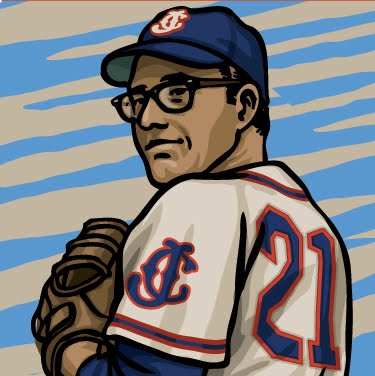


This is the second and last part of the Willard Hershberger story. For part one, please start HERE.
The Sunday morning traffic that moved through the lobby of the Copley Plaza Hotel surged and flowed around the group of ballplayers who sat in the plush arm chairs. Some fiddled with cigarette lighters and watches but most pretended to study the newspapers they hid behind. None were open to the Sunday sports section. A handful of newspaper men went from man to man only to be quietly shooed away after scribbling a few lines in their notepads. After a while, most simply took seats next to the men they were trying to talk to and sat silently as well. Though everyone wanted to be alone, no one took the elevator to their rooms, for upstairs was where Willard Hershberger, catcher for the Cincinnati Reds, had killed himself yesterday afternoon.
Three years earlier when Willard Hershberger arrived at the Cincinnati Reds spring training camp, he found a team in transition. Once the whipping boys of the National League, the Reds had begun a quick resurgence under general manager Larry MacPhail. In a whirlwind of activity he restructured the farm system, installed the first lights in the majors atop Crosley Field, discarded lazy and defeatist players and instilled a winning attitude to the clubhouse. He had moved on to Brooklyn by that spring but the changes he put in motion would bring Cincinnati back-to-back pennants in less than a year. It was an exciting time and the arrival of Willard Hershberger was expected to be a harbinger of future Reds success.
Through the Reds worst years the one bright spot in the line up was future Hall of Fame catcher Ernie Lombardi. Big and cumbersome, he was called "Slug" for his sloth-like speed on the bases and fielding his position. None-the-less was a bonafide slugger and all-star. What he lacked in speed Lombardi made up in his quick, accurate arm. You simply didn't steal against Lom. With his years of experience the pitchers loved having him call the game.
The big man was also a character. He was gregarious and especially popular with the ladies of Crosley Field. His large nose would unleash a snoring barrage that was legendary in both leagues. He was a friendly veteran and was just the kind of mentor Hershie needed in his first year in the big leagues.
The summer of 1938 was exciting indeed. As Hershie rode the pines observing the veteran Lombardi work, the Reds surprised everyone by making a run for the pennant. New manager Bill McKechnie had come over from the Boston Bees and took over the re-made ball club. He was a kind and wise man, known throughout his career as "The Deacon". Though thoroughly in control, he kept the club loose and very quickly they had gelled into a tight-knit group. When Johnny Vander Meer tossed his back-to-back no hitters in June, the city exploded into a Reds fever that hadn't existed since 1919. The pennant race between Chicago, Pittsburgh, Brooklyn and Cincinnati went right down to the wire, Gabby Hartnett's "homer in the gloamin'" famously bringing victory to the Cubs.
Hershie got into 49 games that first year and batted a nice .276. He caught in 39 of those games and proved himself a reliable backup to Lombardi. Smaller and more agile than the lumbering Lombardi, Hershie quickly became a favorite of the Crosley Field fans. He was constantly in motion and soon earned the nickname "Herky-Jerky". It was meant in a good way since his defensive play on pop-ups and covering the bases surpassed Lombardi's skills. As loved as the big catcher was in Cincinnati, many fans were heard to exclaim "Hershie would have got that one!" when Lombardi was slow to catch a fly ball.
When he wasn't catching, Hershberger was the Reds secret offensive weapon off the bench. For a guy who wasn't comfortable with pressure, he excelled as a pinch hitter. Blessed with a good eye and patience, it was almost impossible to strike him out. In his 402 at bats in the majors he whiffed only 16 times. With men on base, Hershie put the ball in play and the fans appreciated him for that.
With Lom and Hershie, the Reds had themselves the best catching staff in the majors.
1939 was the Reds' year. The team MacPhail put in motion finally came together with the addition of Billy Werber at third and Bucky Walters finding his feet as a starting pitcher. The Reds charged through the summer, all the while beating back a strong St. Louis club which would turn into a powerful dynasty during the war years.
Again the Reds' backup catcher turned in a strong year. He came into his own, performing particularly well off the bench with runners in scoring position. In 174 times at the plate he batted a .345, the best average on the team. Still, he was prone to being inconsolable after a Reds loss and a bad day at the plate ate him up inside.
Off the field his behavior was as quiet and secretive as it was in the minors. He would occasionally take in a movie with his teammates but more often than not he stayed in and read books and magazines about hunting and guns. While the other Reds thought him pleasant enough, his only close friend on the club was Johnny Vander Meer, whose love of fishing and hunting gave the two a common bond. For Hershie, his idea of a good time was scouring the countryside in his new car in pursuit of antique firearms for his collection. As in Binghamton and Newark, the fans gravitated to the quiet catcher and women surrounded him for autographs, hoping for a date. Indeed in a contest, Lombardi and he came in first and second for the ladies' favorite Reds player. Yet he never dated and remained a solitary figure. More than one teammate used the word "loner" to describe him.
He was diligent at putting his money aside and sent much of it home to his mother. In an age when most ballplayers boozed heavily, Hershie drank in moderation, a fact his teammates later made a point of mentioning. On the long train trips between cities, the other players would find him alone, staring out the window at nothing.
Ably handled by Lombardi and Hershberger, the five Reds starters won a combined 87 games between them. Bucky Walters won 27 and won the National League MVP Award. Paul Derringer won 25 and came in 3rd in the MVP vote. Timely hitting combined with the team's air-tight infield defense helped the Reds take the pennant by 4 1/2 games.
Unfortunately for Reds fans, the post season excitement ended almost as soon as it began. In what was one of the most disappointing losses in Reds history, the Yanks swept the series in 4 straight. Hershie had two at bats with a hit and an RBI. He took his series check and commissioned a house for his mother. Back home in California he spent long hours drawing up the plans for the new home. After the season began he would proudly tell his teammates the fine details of its construction.
The Reds of 1940 was a modified, suped-up version of the '39 team. Jim Turner and Joe Beggs bolstered the already strong pitching staff and rookie Mike McCormick replaced aging outfielder Wally Berger. The superb infield of McCormick-Frey-Myers-Werber was even tighter their second summer together which made all the difference: 41 of their 100 wins were by a 1 run margin. Brooklyn stayed close to the Reds all summer, the two teams trading first place no less than 7 times. It was a strenuous time. With the country still suffering from the great depression, the player's share of the World Series money was a huge incentive to win the pennant again.
As spring turned to summer, Hershberger began acting even more odd than his teammates were accustomed to. Vander Meer, his closest pal, was sent down to Indianapolis to work out his control problems. Though he was consistently hitting over .350, each time he failed to deliver at the plate he sulked inconsolably. Hershie's hypochondria reached new levels and he was constantly badgering the team doctor to the extent of visiting his hotel room in the evening reporting new symptoms. As a matter of course, the other Reds kidded him about it, it was a way to blow off the pressure of a tight pennant race. Stuffing pill bottles in his locker or telling the hypochondriac he didn't look well was all good-natured fun - to everyone but Hershberger.
On the long train trips he told a few players he thought about killing himself. In 1940, suicide wasn't all that common or talked about. It was something sick or financially ruined people did, not a ballplayer in the prime of his life on a pennant-bound team. As usual, no one took him seriously.
In late July the Reds were about to begin a crucial eastern road trip. Before they left, Hershberger bought a $500 government savings bond and deposited it in the safe of the Cincinnati hotel where he lived. He made a point of pulling aside roommate Lew Riggs and tell him that if anything happened to him on this trip, he could find that bond in the hotel's safe and that it should be delivered to his mother in California. Like everyone else, Riggs shrugged off the fatalistic talk.
As August loomed, a record heatwave enveloped the eastern half of the country, and Cincinnati began to falter.
Ernie Lombardi was the first pillar that fell. On July 23rd the big man severely sprained his ankle in Brooklyn and was out of commission. Then pitcher Junior Thompson, winner of 10 games so far, was spiked during an bench-clearing brawl with the Dodgers and was on crutches. It was broiling up and down the east coast and the Reds were at the beginning of a grueling schedule that would take them to Philadelphia, New York and Boston. Hershberger taking over the primary catching duties shouldn't have been a big deal, in fact any other catcher would have killed a man to get that spot on a pennant bound team. But for a guy with a severe inferiority complex and nervous disposition, it was a recipe for disaster. At the time Hershberger was batting well over .350, the best on the team. But as the temperature rose and the pressure mounted, Hershie started to melt.
First, he began to waste away; reports claimed he lost 15 pounds in the heat. Then the Reds split a four game series against the lowly Phillies. Hershie went 1 for 13 at the plate and his average nosedived. Off the field he was inconsolable. Then the Dodgers started winning. The Reds headed back to Manhattan and pulled into the Polo Grounds. The catcher told a few incredulous teammates that he thought certain unnamed players were conspiring against him. The losses were all his fault he said, and everyone knew it. At the Polo Grounds the Reds lost the first game by a single run and Hershberger went 0 for 4. The morning papers were all full of Brooklyn's winning streak and Hitler's blitzkrieg of France. The world was falling apart before his eyes. The next day he bounded back with 3 hits and an RBI as the Reds won 6-3. The sports page on the morning of Wednesday, July 31st showed the Reds were 8 games up on Brooklyn. It was a good lead but not something to get comfortable with.
Then came the breaking point.
That afternoon, up 4 to 1 going into the bottom of the 9th with 2 out, the Reds came within 1 strike of winning the ballgame. Instead Bucky Walters put Bob Seeds on base with a walk. Then Walters ran a full count on Burgess Whitehead before he put his fastball into the stands making it a 4-3 ballgame. Bucky Walters was the best pitcher the Reds had and with the game still only one out away from a win, McKechnie left him in. Now Mel Ott stood ready. In the sweltering heat, Walters again ran the count full. Ott kept the bat on his shoulder and was soon standing on first with another walk. Still, McKechnie left Walters in to finish the job.
In today's game, there would have been no way this scenario could have played out. First of all, today it's rare that the starter lasts past the 7th inning, but in 1940, pitchers were expected to finish the games their own games. If McKechnie would have yanked Walters with 2 outs in the 9th, it would not only have been odd, it would have been insulting to Walters. Today, by the time Walters' walked the second batter, he would have been replaced by a relief pitcher, but this was 1940, not 2013. He stayed in.
With Ott on first, that brought Harry Danning to the plate. The Giants' catcher batted a solid .300 but wasn't a power hitter. Walters bore down and got 2 quick strikes on him. Hershie called for Walters to throw his fastball. The pitcher shook off the call but Hershie insisted. Fastball. Danning saw it coming a mile away and launched it into the stands for a home run to end the game. Hershberger stood motionless behind the plate, frozen in horror at the loss he caused.
That evening the team rode the train up to Boston. A gruelling series of 3 days worth of double headers awaited them. Still, even with the slump and ceaseless humidity, six games against the Boston Bees wasn't so bad - simply put, Boston stunk. It could be just the thing to help the Reds shake off their slump and gain ground in the standings. As the train roared towards Boston, Hershberger told anyone who'd listen that it was all his fault. When Billy Werber tried to talk him out of it he told the third baseman that Walters had won 27 games the previous season; he was too good of a pitcher to have lost the game himself. No, Hershberger claimed he called all the wrong pitches. Lombardi would have called the right ones, he and his bad judgement was solely responsible for the Reds predicament.
The Reds had Thursday off before the 3 straight days of double headers. To pass the time and unwind, many of the players took in movies and that's what Hershie and Werber did. In the darkness of the theater, instead of relaxing Hershberger grew more anxious. Through out the feature he kept getting up to pace the lobby. He couldn't shake the idea that he was dragging the club down. Besides losing the pennant, he was taking money from the player's pocket - that World Series check was like getting a second year's salary. Now all because of him they would lose that as well.
The weather on Friday August 2nd was mild compared to the last couple weeks. The morning paper was full of war talk. Congress was hammering out the final details on re-instituting the draft, Japan was taking over French Vietnam and the previous night Hitler's Luftwaffe flew over London unopposed, dropping leaflets warning the populace of the hell that was to come. In the sports pages, Brooklyn was 6 1/2 back, playing the Cubs who were barely playing .500 ball. In the lobby of the Copley Plaza Hotel, Hershie stopped at the drug store and bought a small bottle of medicine and brought it up to the room he shared with Bill Baker. Then he took a cab to Braves Field for the double header.
The first game was a disaster. The Bees jumped all over Jim Turner in the first scoring 4 runs. By the time it ended Cincinnati lost 10-3. At least Hershberger couldn't blame himself for this one, he sat out the game as third-string catcher and roommate Bill Baker worked the loss. Game two was Hershie's.
Though the Bees stung early with a run in the first, the Reds scored 3 in the 5th to take the lead. The game proceeded easily until the 8th when with 2 away the Braves tied it up with a pair of singles and a double by Max West. Now the game went into extra innings as neither team could score. Hershie came to the plate five times with men on base - his old specialty - and all five times came up empty. That the rest of the Reds bats were silent didn't register in his mind, Hershie carried the weight of the entire team on his back and it began to show. When he failed to field a slow roller in front of the plate, forcing the pitcher to come off the mound to make the play, Bill McKechnie came out of the dugout to see what was wrong with his catcher.
The Cincinnati fans didn't call him "Herky-Jerky" for nothing, it was an easy play that Hershie should have been all over. Pointing to the area in front of the plate where the ball was fielded, McKechnie asked Hershberger if something was wrong.
"There's plenty wrong with me" he said. "I'll tell you about it after the game."
In the bottom of the 12th the Bees loaded up the bases on reliever Joe Beggs. With two out, rookie Chet Ross knocked a 3-2 pitch into left field scoring the winning run. A glance at the out of town scores showed that Brooklyn lost to the Cubs 4-3. Still, Brooklyn gained a half game and was now 6 games back.
As the Reds players showered and dressed in silence, McKechnie kept Hershberger behind. He wanted to get to the bottom of what was troubling his catcher. Along with coach Hank Gowdy, the three men walked out into the empty stadium and sat down in the bleachers. Hershberger broke down and talked about how he blamed himself for the Reds' slump and his inability to hit and call the right pitches. The skipper and coach attempted to raise his spirits. Hell, the two of them had been around the game for more than 30 years. They'd seen it all before, the slump was just temporary, the Reds will snap out of it. The two men tried to get the catcher to see the bright side of things: he was batting over .300, was still the teams best pinch hitter and though they'd lost some ground, the Reds were still on top of the standings. But, as the sun set behind the bleachers, McKechnie could see that something deeper was bothering Hershie.
Returning to the Copley, McKechnie brought Hershberger back to his suite. Laying on his managers couch, Hershie broke down. Punctuating his story with tears, he told McKechnie he planned on killing himself. It wasn't something new, his father had done it before him and he was going to do it, too. He told the speechless manager that he had purchased a bottle of iodine at the drugstore that morning and was going to drink the poison before he lost his nerve. Then he settled on using a razor but all he had with him was his brand new electric shaver. By then it was time to go to the ballpark.
All this must have been shocking to Bill McKechnie. In 1940, men didn't talk about their feelings, let alone cry and reveal thoughts of suicide. Fortunately McKechnie was a kindly man and something of a father figure to his boys. Still, this was something deep that even he couldn't completely comprehend. All he could do was listen.
In a stream of consciousness, Hershberger went from the inescapable thoughts of taking his life and the recent Cincinnati losses to his father's suicide and how he knew the other players blamed him. In between he cursed Hitler and sobbed freely. After a few hours, he'd talked himself out. The tears dried up and McKechie felt he'd recovered his senses. He knew the catcher was a sensitive man and different than his other boys, and that the last couple of weeks had been hard on all of the Reds. Talking about suicide was one thing, but doing it was quite another. McKechie felt that all Hershberger needed was a good outlet to blow off steam. Since he didn't drink or carouse like most of the other guys, he didn't have that time-honored outlet for his emotions. This long talk, no matter how unorthodox it was, probably did the trick. Grabbing his hat, he took Hershberger out for a good dinner.
Arriving back at the Copley after eating, Hershie paused to joke with some of the Reds who were lounging around the lobby. Everyone said he appeared fine.
Later that evening, Bill Baker returned to the room he shared with Hershberger. At first he thought his roommate was sleeping or out, but soon realized he was over by the window, sitting in the dark smoking a cigarette. Turning on the light, Baker could see Hershie staring at something on the floor. He followed his gaze to a coil of radio antenna wire that lay at his feet. The whole scene was odd, didn't make sense. But it wasn't the first time he'd seen his roommate like this. Leaving Hershie to his thoughts, Baker turned in.
On Saturday morning Hershberger woke up and told Baker he didn't feel well. Dressing, he went downstairs and had breakfast with Cincinnati Enquirer sports writer Lou Smith. When Smith tried joking around with the catcher to raise his spirits, he found him unresponsive. Later, he sat in the Copley Plaza's vast lobby. His teammates strode past in small groups, each pausing to ask if he wanted to grab a cab with them. No, he said, he was waiting for a friend. When pitcher Paul Derringer stopped to chat, Hershie smiled and told him he was going to go 4 for 4 that day. When asked if he wanted to share a taxi, Hershie said no. As Derringer's cab pulled away from the curb, Hershberger took the elevator back upstairs to his room.
When Hershberger didn't arrive at the ballpark, McKechnie began to worry. He asked Gabe Paul, the team's traveling secretary, to call his room. After ringing a long time, Hershberger picked up. Sounding annoyed, he told Paul he was sick and couldn't play. The secretary said that was ok, McKechnie said to just come out to the park, he could sit in the stands and watch the games. Hershberger said he would and hung up.
Derringer pitched well in the first game, scattering 11 hits and keeping the Bees scoreless until the 7th inning. The Reds scored first in the 4th, again in the 6th and added another in the 9th to win 3-1. Between games, McKechnie scanned the stands for Hershberger. Realizing that he never showed, the skipper became both annoyed and worried. Being depressed over his performance was one thing, but failing to show up at the ballpark couldn't be tolerated, it set a bad example. He asked Daniel Cohen, a Cincinnati businessman who sometimes tagged along on road trips, to go back to the Copley and bring Hershberger to the ballpark. Meanwhile, McKechnie called his players together in the locker room. He told them that they had a sick man amongst them, a man that should be treated differently from the rest. Everyone knew he was talking about Hershberger. He told them to stop asking him how how he was feeling and to cease playing jokes. This was a man who needed his spirits lifted back up to normal. The players knew this was serious. Playing jokes and needling other ballplayers was an expected part of locker room life. It was unheard of to have a manager ask something like this. As the Reds filed out for the second game, a solemn mood overtook the players.
Earlier, while the first game was entering the 6th inning, Hershberger went into the bathroom and shaved with his new electric razor. While his portable radio broadcast the ballgame in the other room, Hershberger rifled through his roommate's shaving kit. Finding Baker's safety razor, he unscrewed the head and set the blade on the sink. He gathered all the towels and carefully spread them seamlessly across the cool tile floor. Standing, Hershberger took off his shirt and stood bare chested before the mirror above the sink. He picked up the razor, felt for his jugular vein and sliced repeatedly at the side of his neck until he finally hit it. He then knelt down on the towels and leaned over the tub. By the time the Reds scored another run in the 9th, Willard McKee Hershberger was dead.
Dan Cohen banged on the door. He knew Hershie was ill, but had no idea of what he had discussed with McKechnie the night before. Thus, when he got a hotel porter to unlock the door, Cohen wasn't expecting the scene that unfolded before him. Hershberger's lifeless body was draped over the tub, the towels and the drain limiting the mess to the bare minimum. Willard couldn't bare to leave behind the kind of mess his father had done 10 years before.
When Lew Riggs saw Dan Cohen running towards the Reds' dugout in the 4th inning of the second game, he knew something bad had happened. McKechnie spoke hastily with Hank Gowdy, grabbed the team doctor and Dan Cohen and left. Already behind a few runs, all the air left the team and they lost 5-2. In the locker room, Gowdy gathered the players.
"I want to tell you something. Willard Hershberger has just destroyed himself".
The aftermath affected each player differently. That night, McKechnie called a team meeting in his hotel suite. Devastated by the suicide and his failure to prevent it, he reassured his boys that Hershie was a sick man, that all the kidding had nothing to do with his destruction. He told them about his father's suicide and how it affected his mind. More over, the manager revealed that in the talk the previous evening, the catcher revealed other, more personal problems he was dealing with. While McKechnie reassured the players it had nothing to do with anyone on the team, he promised Hershberger he would never reveal what they were. Still, many players, like Eddie Joost and Junior Thompson, resolved never to poke fun at another man so long as they lived.
In the years since that August afternoon in 1940, rumors have swirled around what caused Hersberger to take his life, and what exactly those personal issues were he revealed to McKechnie. For his part, the manager kept his word and never spoke about it. Silence breeds speculation, and while I was going to list all the suspected reasons other writers have posed for his suicide, I decided it wasn't appropriate or responsible, since there was no evidence to come close to proving any of the theories.
The memory of Willard Hershberger hung over the Reds for the rest of the summer. McKechnie told the team that they owed it to Hershie to go forward and win the pennant. In tribute to the catcher, each man wore a black armband on the right sleeve of their jerseys. In a novel tribute for the time, the Cincinnati Reds even retired Hershie's number 5 for the rest of the season. Unlike today, numbers weren't taken out of circulation by a ball club after being worn by a good player, but simply handed over to the next guy who needed one. While the retirement of Hershberger's number 5 wasn't permanent, in 1984 it was finally hung up for good - after Johnny Bench, who wore it on his own back for 17 seasons, retired.
As McKechnie predicted, the Reds started winning again, held off the Dodgers and finished 12 games in front. Hershberger's suicide left the team's catching staff in a terrible state, Lombardi was still not completely healed and Baker was not experienced enough. Going into the World Series against Detroit, the Reds activated their coach Jimmy Wilson, a former catcher. Though he hadn't caught a game in years, he became the hero of the 1940 World Series, catching 6 of the 7 games and batting .353 as Cincinnati won. At the end of October, 1940, the Reds sent Willard's mother a check for $5,803.62 - Hershie's full share of the World Series winner's money.
Carrying the weight of the whole ball club on his shoulders, the boys felt he earned it.
SOURCES
- Mulligan, Brian The 1940 Cincinnati Reds: A World Championship and Baseball's Only In-Season Suicide (McFarland and Company 2005)
- Bradley, Leo H. Underrated Reds: The Story of the 1939-40 Cincinnati Reds, The Team's First Undisputed Championship (Fried Publishing, 2009)
- Nack, William The Razor's Edge (Sports Illustrated May 6, 1991)
- Mayer, Ronald A. The 1937 Newark Bears: A Baseball Legend (Rutgers University Press, 1980)
- Various Contemporary newspaper sources including Binghamton Press, Newark Evening News, The Sporting News, Cincinnati Post.

