Tuesday, February 14, 2012

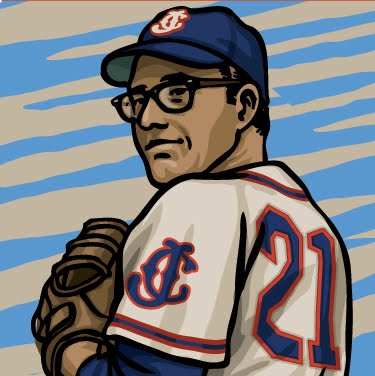
65. Shoeless Joe Jackson: What's In A Name?


Yeah, I know, I already posted this story a while back, but wait - there's a reason... after much prodding and more than a basketful of emails, I finally got around to finishing my trilogy of Joe Jackson's minor league odyssey. So, if you think you can remember all you need to about my story on Jackson's first year in pro ball with the Greenville Spinners, just go one down to the next entry. An don't just stop there - this week is a double heaping of Southern Hospitality, Joe Jackson style as I posted the story of his 1910 New Orleans season as well. Enjoy!

One of 8 kids, Joe Jackson was born into extreme poverty. At the age of six Joe took his place alongside the rest of his family in one of the sprawling textile mills that dotted the rural South Carolina landscape at the turn of the century. Because of the need to contribute money to the family he never had time for proper schooling and much to his shame remained unable to read and write for the rest of his life. The one bright spot in Jackson's grim life of industrial-age toil was baseball. Showing great skill at an early age, by 13 Jackson was playing outfield for the Brandon Mills men's ballclub. South Carolina's textile leagues had an impressive amount of talent playing on the various mill teams and for Jackson to make a mark amidst all this talent was quite impressive.

He quickly became a local legend and during games his brothers would roam the stands passing a hat taking donations after Jackson made another impressive play of timely hit. Word soon spread of his talents and in 1907 the Brandon Mills team was playing an exhibition game against the Greenville Spinners of the Carolina Association. Their manager Tom Stouch was shocked and dismayed when a young player on the team seemed to get on base every damn time he got up to the plate. In the field he dazzled as well. By the end of the game Stouch knew the kid had what it took to play professionally and the next year Jackson inked his "X" to a contract for the staggering sum of $75.00 a month to play for the Spinners.

Although he was brimming with ability he was still raw around the edges. On a few occasions he was caught trying to steal bases already held by his own teammates, but he was the local boy and the fans of Greenville readily embraced him. He had done what most of them were unable to do - escape the drudgery of the textile mills. The 1908 team featured two other players destined to play in the big leagues, Ezra Midkiff and Scotty Barr and along with Jackson the Spinners quickly made it to the top of the 6-team league. Jackson played the outfield but was also brought in to pitch on occasion. He had a tremendous arm but retired as a pitcher after he broke the arm of an opposing batter and the rest of the league refused to hit against him. It didn't matter, he made his mark elseware. His speed and skill in the outfield led fans to dub his mitt "a place where triples go to die." He belted the ball at a .400 clip for most of the summer. Locals noted that the sound his bat connecting with the ball made had such a unique sound that they could tell it was Joe Jackson even if they were blindfolded.

It was during a Sunday double-header against the Anderson Electricians that Joe Jackson earned his nickname.

Finally earning a decent salary, Jackson treated himself to a well-deserved new pair of spikes. While playing in the first game of the double-header the unbroken-in shoes gave him blisters. By the end of the game he was in terrible pain and begged Stouch to let him sit out the second game. A Sunday double-header back then was the place to be for a small rural community and Jackson was the great attraction. Stouch couldn't let him sit out the game, everyone would not only be disappointed but there was always the potential for violence. People took their baseball seriously back then.

So with great pain, Joe Jackson made the fateful decision to remove his brand-new spikes and took the field in just his stocking feet. All went well for most of the game until the top of the seventh when he smacked a triple and slid stocking feet-first into third. An angry Anderson fan, seeing Jackson called safe at third base and noticing his stocking feet cried out "you shoeless son-of-a-gun, you!" A sportswriter overheard it and a timeless nickname was born.

Jackson hated it. Already sensitive about his inability to read or even sign his own name, he felt the nickname made him look even worse, bringing to life the image of a back-woods bare-foot illiterate. He spent the rest of his life trying to explain the circumstances around his moniker, telling the story over and over again that he never played ball bare-foot and it was but one game in his whole career that he took the field in his socks.

Shoes or no shoes, it was obvious to all that Jackson didn't belong in the minors for long. Manager Tom Stouch wrote to Connie Mack of the Philadelphia Athletics letting him know about the potential of two of his outfielders, Joe Jackson and Scotty Barr. Mack must have been impressed by the description Stouch wrote because in mid-August he dispatched one of his players on the disabled list to Greenville to take a look. "Socks" Seybold sat in the stands as the Spinners played the Charlotte Hornets and watched as Jackson belted a double, triple and home run. He noted that the kid also had a rifle for an arm. He quickly telegraphed Mack who in turn sent his assistant Sam Kennedy to verify Seybold's claims. Further assured by Kennedy, Mack signed Jackson who was batting .346 at the time and Barr, who was batting .299 as well as posting a 12-6 pitching record.

As soon as the Spinners season ended, Scotty Barr hopped on the first train to join the Athletics but Jackson hesitated. He'd never left the Carolina's and Philadelphia was as far away from Greenville as the moon. He was embarrassed by his illiteracy and because of it did not even know who the heck Connie Mack or the Philadelphia Athletics were. Manager Tom Stouch had spent a lifetime trying to get to the major leagues and even though he played in but 4 games he assumed it was every ballplayer's dream to get the call. With this in mind he decided to personally deliver Jackson to Connie Mack and at the end of August, 1908 Tom Stouch and "Shoeless Joe" Jackson boarded the overnight sleeper to Philadelphia.

Many of the photographs I used for reference were found on the valuable website called "The Shoeless Joe Jackson Virtual Hall Of Fame" at www.blackbetsy.com Not only is it a great resource on the life of Joe Jackson, but the staff are extremely helpful, a fellow named T.W. over there was extremely patient fielding my questions a few months ago when I was working on a Jackson angle for this site.
 

106. Joe Jackson: Southbound and Down


One of the most popular posts I've written was THIS ONE on Shoeless Joe Jackson and his first season of professional baseball with the Greenville Spinners. It was during that 1908 season that Jackson was saddled with the "Shoeless Joe" nickname he hated so much. This week I'd like to continue the saga of Shoeless Joe Jackson's early days...

We last left Joe Jackson in late August, 1908 as he and his Greenville manager Tom Stouch boarded the overnight sleeper to Philadelphia in order to join Connie Mack’s Athletics. Though Stouch’s prized protegee took some convincing to make the trip to Philly, the Greenville manager woke up the following morning sure Connie Mack would love this rookie. But there was only one problem: that prized rookie wasn’t on the train! Stouch searched high and low for Jackson but by the time the train stopped in Philadelphia a confused and empty-handed Stouch showed up at Shibe Park. Connie Mack handed the confused manager a telegram sent from Charlotte the previous night:

AM UNABLE TO COME TO PHILADELPHIA AT THIS TIME. JOE JACKSON.

It seems Jackson slipped off the train in the middle of the night as it stopped at Charlotte, North Carolina. Undaunted, Mack sent “Sock” Seybold back down to Greenville to fetch the kid and on August 25th he was in an A’s uniform in Shibe Park.

The local press made much of the unknown busher, comparing him to the great Ty Cobb and lavishing a generous heaping of praise on him before he even had his A’s cap on. In his first game he had an RBI single and made a few outstanding catches and throws in the outfield that sufficiently sated the press corps and the evening papers were full of enthusiasm for the young find.

The Tigers came to town next for a four game series and Philly fans couldn’t wait to see how their new boy measured up against Cobb. His new teammates also talked amongst themselves about this superstar in the making and when bad weather delayed the Detroit series by two full days, the downtime enabled the newspapers to whip-up the story of the wonderboy from Greenville into a media tsunami.

But when the skies cleared, Joe Jackson was nowhere to be found. He’d slipped away again, headed due south.

Jackson always maintained he was homesick, but his disgruntled teammates, left short-handed for 2 double-headers in 2 days against the powerhouse Tigers, let the press know they thought the kid a coward, unable to face his show down with the great Cobb. Jackson returned to the team again in early September but just as before, fled south once more before the season ended.

In retrospect, cowardice probably had little to do with Jackson’s desertion of the Athletics - embarrassment and bullying did. Since he couldn’t read nor write, Jackson was at the mercy of the other players who could and rather than let his illiteracy become known he tried to cover it up, the result of which only made it worse. There is one story that Connie Mack caught the busher sitting alone at breakfast with almost a dozen fried eggs on his plate. A shocked Mack asked the boy how he expected to play ball after such a feast and Jackson sheepishly explained to his manager what happened. He actually wanted two eggs for breakfast, but since he could not write a “2” he made 2 slash marks on his breakfast order card which the kitchen interpreted as an 11. It was incidents such as this, compounded on the resentment of his abandoning the team that led to teasing by the other A’s. It didn’t help any that the “Shoeless Joe” moniker followed him up to Philadelphia.

The Athletics held their 1909 training camp in Savannah, Georgia and Joe Jackson tore up the ball all spring. Although Mack was sure Jackson’s skills were up to the major league level, he wisely acknowledged that mentally the ballplayer was just not ready. So when the Athletics broke camp to head north, Jackson stayed behind, the newest member of the Class C Savannah Indians of the South Atlantic League, affectionately called the “Sally League”.

More comfortable playing in the south, Joe smashed the ball at a .450 clip in the beginning of the season and started to be called the “Ty Cobb of the Sally League.” Here in Savannah, the sportswriters were less ruthless than back in Philly and the crowds didn’t heckle him - here back down south Jackson was amongst his own people. The Indians had a mediocre team in 1909 and would finish the season with a losing record. Jackson for his part played splendidly, leading the league with a .358 average, 19 doubles, 12 triples and couple of home runs. He swiped 32 bases and his arm and fielding skills impressed even the most jaded observer. The sportswriters spent columns and columns of space praising the young star and he was named the center fielder of the Sally League All-Star team. One paper wrote of him: “Jackson is a sensation in all departments of the great American game, and that’s saying a whole lot.” It was obvious a player of Jackson’s talent had no business playing around in the Sally League - this boy was a big leaguer.

But the sure-bet big leaguer also seemed to have a problem with authority and a propensity towards strange, immature acts. Sometimes he didn’t show for batting practice or miss games completely. His manager in the first half of the season was Bobby Gilks who seemed to know how to handle the budding star. Under Gilks, Jackson was given a long leash and as long as he produced on the field he was left alone. But with the Indians stuck in the lower half of the standings, Gilks was fired and the new manager, Earnest Howard, didn’t understand how to harness the young Jackson. Hurt by the loss of Gilks, Jackson moped around the clubhouse and sulked openly.In one bizarre instance, he and a teammate left the game in the middle of an inning and took seats in the stands, sharing a bag of peanuts. The Savannah management fined the hell out of him for that stunt, but it didn’t seem to put a stop to his immaturity.

At the end of the season Mack brought Jackson north again to ease him into the Athletics clubhouse. The A’s were in a pennant race with the Tigers and Mack used the uneasy busher very sparingly. He didn’t play well at all and managed an anemic .176 in a handful of games. The teasing was relentless as well.

It was supposedly during this period that one of the most famous Jackson stories took place - while standing on third base a fan called out “hey Joe - can you spell cat?” to which Jackson spat back: ”Hey mister - can you spell shit?”

The kindly Connie Mack was sympathetic to Jackson’s plight and offered to pay for a tutor to teach him how to read and write, but the ballplayer refused. But even the saintly Mack had his limits and Jackson was approaching the breaking point. His behavior became more and more erratic, sometimes showing up late to the park, then skipping practice and sometimes whole games. Then Mack found out his new outfielder went to a burlesque show instead of a game and that was the end of Jackson’s stay in Philly.

107. Joe Jackson: The Big Easy


This is the third and last post on the minor league career of Shoeless Joe Jackson. If you missed the previous entries, HERE is the first on his season with Greenville and HERE is the story of his 1909 season in Savannah.

After a second attempt to bring Joe Jackson up to the Philadelphia Athletics, Connie Mack resigned himself to the fact that the sure-hit superstar in the making was just not mentally able to cope with life in the big leagues. At the same time, he couldn’t simply trade the kid to another big league team because of the chance that it could come back to haunt the A’s one day. The only logical option was to lend him to another minor league club down south and hope that another year marinating in the minors would be the right prescription to make Jackson ready for the big time.

Jackson reported to the training camp of the New Orleans Pelicans in March, 1910. Arriving there he found his old Greenville teammate Scotty Barr, who had been called up at the same time to the A’s and had just been released by Mack.

The Pelicans played in the Class A Southern association and had a working agreement with Cleveland (at this time called the “Naps”). Joe’s manager from Savannah, Bobby Gilks, was now a scout for Cleveland and the two were reunited again down in New Orleans.

Realizing that he was probably never going to play for Connie Mack again, Jackson set himself to becoming a mature ballplayer. Besides disciplining himself to show up for practice and to work as a member of a team, Jackson also developed a make-shift training routine to strengthen his body. Holding the heaviest bat he could find, Jackson would hold it out at arm’s length and keep it raised for as long as he could keep a hold on it. Then he would do the same with the other arm. To sharpen his eyesight he came up with the strange regimen of closing one eye and staring at a lit candle until the flame became out of focus and then he would repeat with the other eye. How this was not harmful I have no idea, but Jackson swore that it strengthened his eyesight and helped him keep a pitched ball in clear focus.

As in Savannah, the local press was much kinder to Jackson and the fans less caustic in their comments. Coupled with his new-found maturity, Jackson commenced to eating up the Southern Association pitching. Once again he led his league in batting with a .354 average and his skillful base running helped him steal 40 bases. The Pelicans were a much better team than Savannah and they won the pennant that year and once again Jackson was selected for the league all-star team. The New Orleans Picayune called Jackson a “star of the first magnitude” and no one argued differently. After another brilliant year down south, there was no way around it - Joe Jackson was bound for the big leagues.

Since Jackson’s former Savannah manager Bobby Gilks was now a Cleveland scout, it was probably him who put the bug in the ear of the big club to sign this kid right now. Connie Mack, who still owned the rights to Jackson, consented to a trade. After a confusing round of side-trades and money exchanging hands, Jackson became property of Cleveland. Finally mentally and physically up for the challenge, Joe Jackson was big league bound for good.

Sunday, February 12, 2012

105. Eddie Boland: Major League Recycling


Let’s play a game: It’s 1943 and you’re the owner of a cellar-dwelling major league baseball team. What good players you’ve managed to scrounge up for your team have been drafted into the service and won’t be back for the foreseeable future. The Cuban players you imported to fill their place all scurried back home when they realized as residents of the U.S. they too were liable for the draft. As you contemplate your lot in life, you gaze out your office window which happens to look onto the magnificent baseball stadium that is named after you. Two semi-pro teams are warming up to play a game while your big league team is on the road (probably losing, you think to yourself). You notice the crowd. There’s over 10,000 fans in the stands and this isn’t even a major league game - in fact most sports fans have no idea who these players are. Trying hard not to think of your own team and to avoid the temptation to check the scores, you settle down to watch this baseball game below.

Right away, three players catch your attention and you follow their play during the course of the game:

Player A is a 23 year-old right handed pitcher. Over the course of 9 innings he strikes out 3 and gives up a single walk. Besides a spot of trouble in the 3rd inning where he gave up 4 hits, he scatters 5 hits harmlessly across 9 innings of work. Not a strike-out power-pitcher, he lets the batters hit the ball harmlessly to his fielders. This player is not currently in organized ball and is available to be signed immediately.

Player B is a 35 year-old right fielder. Over the course of the game he hits a single and a double in 4 at bats and commits an error when he misplays a fly ball. Asking around you find he once played for Philadelphia 8 years ago and in 38 games he hit just under .250. This player is not currently in organized ball and is available to be signed immediately.

Player C is a 31 year-old catcher. He smashes an RBI triple and a home run in your cavernous ballpark that was so impressive the entire crowd of 10,000 stood as one and cheered wildly. Looking at the crowd you can see he is the most popular player on the field. This player is not currently in organized ball and is available to be signed immediately.

Now all of these players are available to be signed to your team ASAP. In fact, they would love the opportunity to play in the big leagues. As a veteran appraiser of athletic ability, you can spot major league talent like no one else and you decide to offer a contract to one of those three men you watched today. Which one would it be? Washington Senators’ owner Clark Griffith was put in this same position as he watched those 2 teams play in his stadium in 1943 and was faced with the exact choice of ballplayers I offered above.

Griffith chose to sign Player B. But before we find out about Griff's pick, let‘s take a quick look at the 2 players he passed up:

If you picked Player A, you decided on Johnny Wright. He was the young ace of the Homestead Grays, one of the two teams playing that day. He was selected to pitch in the East-West All-Star Game that year as well as finish the season with a 31-5 record against all levels of competition. He would go on to be signed by Branch Rickey along with Jackie Robinson to break the color barrier in 1946. Although his major league career wasn’t terribly successful, he only got his chance after serving 2 years in the Navy during the war so he was not at his prime as a player. In 1943, he was.

Player C was the indomitable Josh Gibson. Although he might have been slowing down a touch at age 31, Gibson was still an unbelievable slugger whose home run totals in Griffith Stadium usually surpassed the home run total hit in that stadium by the entire Senators team. His average for the 1943 season was an astonishing .474 and the next year it was .345. Along with Satchel Paige, Gibson was the most popular black baseball player in 1943 and his presence on a major league team would bring in a huge amount of fans just to see him play.

But to Griffith, Player A and Player C have a major flaw: Wright and Gibson are black. While Griffith had to have realized that their talent was better than anyone on his roster, he was not a brave man and being the first to integrate the majors was not something he could bring himself to do. Upholding a sinister unwritten ban on blacks was more important than fielding a winning team his fan base could be proud of. No, Griffith looked over the field that day and decided on Player B: Eddie Boland.

Eddie Boland was a 35 year-old ex-pro ballplayer from New York City who was playing outfield for the Brooklyn Bushwicks that day in 1943 against Wright, Gibson and the Homestead Grays. Boland had spent 8 years toiling in the minor leagues and had a cup of coffee in the majors with the Philadelphia Phillies in 38 games spread over 2 seasons where hit just under .250. Stuck in the high minors with Buffalo, Boland called it quits after the 1938 season and went home to New York where he took a job with the Department of Sanitation.

Back in the 1920’s-40’s the metropolitan area was a hotbed of sizzling semi-pro ball clubs, some equalling the level of a AAA minor league team. The New York City public servants such as the police, fire and sanitation department all fielded highly competitive ball clubs chock-full of major league castoffs.

Boland played for the best of the city servant teams, the Department of Sanitation, and his skills so renown that he also played for 4 other top-draw semi-pro teams. His extra-curricular schedule for 1943-44 was kind of hard to believe:

Thursday: night game for the Stamford (Connecticut) Pioneers
Friday: night game for Cederhurst, Long Island club
Saturday: day game for the inmates at Kings Park prison
Sunday: double-header day games for Mt. Vernon plus a night game with Cederhurst again.

If you weren’t counting, that makes a total of 6 games a week. Boland was definitely in playing shape if nothing else. So while he was no where near as talented as Wright, let alone Gibson, Boland was a decent prospect considering the depleted talent pool to choose from.

When the Senators approached him with a contract, initially Boland balked - his job at the Department of Sanitation was much more steady than restarting a big league career at age 35. Eventually he agreed to play the outfield for Washington, but only during his annual vacation from his job and with one major stipulation - that he be free to participate in the annual game between his Sanitation team and the New York City Police Department in the Polo Grounds in September.

So while other garbage men took their late summer vacations at the Jersey Shore or up in the Poconos, Eddie Boland spent it roaming the outfield for the Washington Senators. In 19 games he batted a respectable .271 with 4 doubles and 14 RBI’s. Not bad for a guy that was, as the the sportswriters of the day liked to say, was "literally picked off the scrap heap."

The next season Boland decided to give in to the temptation of professional ball again and played for Buffalo in the International League but the war ended and he was out of pro ball again after 1947.

While the white press made much out of the signing of Boland, kind of a rags-to-riches, feel-good underdog story, the black press had a conniption over it. It was bad enough that the majors brought up sub-standard talent to keep the leagues going, and sure it was really tough to stand by and watch as teams like the Senators imported foreigners to fill their depleted rosters, but Boland’s signing was just too tough to take. Here was 2 whole leagues (the Negro National and Negro American Leagues) filled with at least 2 dozen can’t-miss major leaguers and the Senators go and sign up a has-been semi-pro garbage man?

It was a slap in the face to black Americans and the outrage it caused helped spur on the movement to get the major leagues to integrate. In the late summer of 1944, that moment was barely 2 years away...


Thursday, February 9, 2012

Now Wouldn't That Look Good On The Wall?


While trying to decorate my house, I had a 24" x 36" poster printed with 90 of my favorite cards on it. I made a few extra and if you are interested in one (unframed) they are $135 each and I can sign it as well if you want (I always feel funny doing that, but people ask!). Send me an email and I will let you know about availability (info@cieradkowskidesign.com)

Tuesday, February 7, 2012

104. José Méndez: Beating The Reds Black & Blue


Before I start off this week's story, please let me thank ESPN's Jim Caple for the beautiful article he wrote about my cards. I don't think I could have envisioned a nicer write-up on my work and Jim was a really great guy to talk to, which I discovered while being interviewed for the article. Anyway, here's this week's ballplayer, a guy I've gotten quite a few requests for - José Méndez.

When the Cincinnati Reds disembarked in Havana in early November, 1908, they expected a nice, leisurely vacation and nice, easy exhibition games against the locals. Baseball was an American game and hell, they were The Cincinnati Reds of the National League. Though they finished in 5th place, the Reds were tried and true professionals - Hans Lobert’s .293 average was 6th best in the league and he finished in the top five in hits, triples, games played, total bases, singles and stolen bases. No, they weren’t a great team, but they were National Leaguers, surely more than a match for the island competition they were going to face in the 11 exhibition games over the next 2 weeks.

The first game they played was on November 12th against the Havana Reds. Luis Padrón gave up seven hits to the Reds and lost 3-1. Three days later they were slated to meet the Havana Reds’ rival club, the Almandares Blues.

12,000 fans packed into Almandares Stadium to watch the Americanos play their Azules. No one recorded what the Cincinnati players thought when the Blues’ pitcher took his warm-up pitches before the game, but it must have made them lick their lips. The skinny fella that stood on the mound that day was barely 5’-8” tall, black as coal and his own teammates called him by the unflattering nickname “Congo”. Surely this was going to be an easy win.

The only problem was this skinny kid was José Méndez, perhaps one of the top 5 greatest pitchers of all time.

Raised on the sugar cane plantations in Cardenas, Méndez became a skilled carpenter as well as talented clarinet and guitar player. Some say he had quite a voice as well. He was discovered playing semi-pro ball and the Almandares club signed him in 1906 where he promptly went 9-0 and was the top pitcher in the Cuban Winter League. Méndez had a blinding fast rising fastball, and if that wasn’t good enough, he also threw a wicked curve. Both these pitches were helped out with Méndez’s unique physical traits - he had extra long arms and attached to them were equally long fingers - these gave him an extra spin on the ball as he released it.

Méndez followed up his rookie season with a 15-6 record and this is where he stood as he faced the Cincinnati Reds that day.

To start off the game Méndez retired the side in order. Facing Cincinnati rookie Jean Dubuc, who would go on to a successful 9 year career in the majors, Almandares scored a quick run to make it 1-0. For the next 8 innings Méndez and Dubuc dueled each other, matching zeros on the scoreboard. But unlike Dubuc, Méndez hadn’t allowed a hit - he was pitching a no-hitter.

As the ninth inning commenced, Méndez got two out when Reds second baseman Miller Huggins, the future Yankees manager, hit a weak grounder between first and second. Méndez and first baseman Regino García went for the ball but neither could make the play. It was a cheap single but Huggins made it to first and the no-hitter was busted. Méndez bore down and got the next batter to end the game.

It wasn’t a no-hitter, but heck, a 1-hitting a major league team wasn’t something to sniff at!

Smarting from the embarrassing loss to an unknown black Cuban, the Reds won their next exhibition game 8-0 against the Havana Reds. Cuban sports pages at the time opined that the Havana club didn’t field their best players that day, but a win is a win and the big leaguers needed it. On November 19th Cincinnati faced Almandares again and lost 2-1 as Andrés Ortega held them to just 3 hits.

The following afternoon the Reds took a break from the Cubans and took on some of their countrymen, the Brooklyn Royal Giants, a Negro league team. If they thought they would be any easier than the Cubans, they were sorely mistaken as Brooklyn beat the heck out of them 9 to 1. The Reds were only able to get 6 hits off the Royal Giants and the great Pete Hill hit a home run, a rare feat in the cavernous baseball stadiums they played in down in Cuba.

After a day off, a desperate Cincinnati Reds team jumped all over the Havana team and won 11-4.

The next afternoon, November 23rd, brought the Americans back to Almandares Stadium and they were defeated by the Blues for the third strait time, 4-3.

Then on the 25th Cincinnati got by Havana again 5 to 1. The Americans now had 3 days off to regroup. So far their record stood at 4 and 4 against 2 Cuban League teams and 1 Negro league squad. In the past, visiting major league ball clubs could usually sleepwalk their way through an exhibition series in the islands, but now, something was different.

I’m sure the Reds weren’t all that excited to arrive at Almandares Stadium again on the afternoon of the 29th, but things started off well for them because by the 3rd inning they were up 3-0 over the Blues. Then that damn little Cuban kid came walking out of the bullpen.

José Méndez took the ball and proceeded to throw 6 shut-out innings against Cincinnati. Although the Reds won the game, Méndez had now racked up 16 innings without the big leagues being able to score. The Cuban public went bananas. The local sports writers predicted before the series that the home teams would hold their own against the Americans, but what was unfolding before their eyes was beyond their wildest dreams.

The next day Cincinnati was to face the Havana Reds again but before the game began the Americans protested about the umpiring of the games thus far. The Cuban newspapers took note of this and called it what it was - a cheap excuse. Havana proceeded to best the Reds 6-4.

There was another break in the series and the Americanos had a few days to pick up the broken pieces of what was supposed to be their playing-holiday in the sun. And it was going to get worse. Almandares was next on the schedule.

In what was beginning to seem like deja-vu all over again, Jose Mendez shut out the Reds 3 zip and now had an incredible 25 CONSECUTIVE scoreless innings of work against a major league team!

The next day Cincinnati finally found an opponent they could trounce - the amateur Vedado Tennis Club - and slapped them around 13-3.

Inspired by this easy win the Reds defeated Havana 4-1, but now they had to head over to Almandares Stadium again. There the Reds were wrapping up a win going into the bottom of the ninth ahead 6 to 3 when the Blues tied it up. Mercifully for the Reds, the game was called due to darkness the following inning.

The last game of the series was against the Blues again and of course, José Méndez got the ball for Almandares. In the first he had his scoreless inning streak ended but he held the Reds to 9 harmless hits and won again 6-2.

The Reds slinked home and José Méndez traded in the nickname “Congo” for the much more regal moniker of “El Diamante Negro” or “The Black Diamond”. His Cuban fame preceded him to the U.S. where he pitched splendidly for the Cuban Stars, All Nations, Chicago American Giants and Kansas City Monarchs for over 20 years. New York Giants manager John McGraw famously said he would be worth $30,000 to his team, if only he were white. Among the other marquee big league talent he bested was Christy Mathewson, Eddie Plank and Chief Bender. Towards the end of his career he was made manager of Kansas City and led the Monarchs to Negro National League pennants in 1924, 1925 and 1926 as well as the Colored World Championship in 1924.

Much of the Cincinnati Reds series highlights were gleaned from Gary Ashwill's great baseball research blog, Agate Type. Ever the groundbreaking baseball archaeologist, Gary uncovered all the games played by the Reds down in Cuba in 1908 and their results. As far as I know, until his research no one ever published a full account of that trip.

Tuesday, January 31, 2012

103. A Tale of 4 Ruths


While working on the previous Babe Ruth post, after I drew the '34 All-Americans uniform on him, I wanted to see what that drawing would look like in the colors of other teams The Babe played with. Clockwise from the top left is: 1938 Brooklyn Dodgers from his time as a Dodger coach, 1927-30 New York Yankees, 1935 Boston Braves and 1923 Barnstorming uniform.


Thursday, January 26, 2012

102. Beibu Rusu: The Babe In Japan


When my buddy Charlie Vascellaro and I were taking the Babe Ruth Museum Traveling Exhibit around the country back in '02, one of the best things about the job was the personal stories people were constantly telling us about their own, or someone they knew, had with The Babe. Most of the stories culminated in getting the cherished autograph of the big man. I don't think anyone else in the history of the world signed their own name as much as The Babe. In a day and age where guys like Barry Bond will deliberately ignore young children politely asking for a signature (I witnessed it myself, it was an episode that still turns my stomach), the stories of The Babe delaying the departure of the Yankees' team bus on a humid summer afternoon because he couldn't bring himself to leave until every scrap of paper handed to him by little children and blushing adults had his signature on it. I often wondered what went through The Babe's mind as he signed ball after ball, had his meals interrupted by a request to sign a cocktail napkin or confronted a typical day's mail delivery that held countless requests for that most famous of autographs.

I think The Babe looked on it as his obligation to the people who made him famous, a small price to pay for the love, money and adulation he now received and that his childhood so tragically lacked. We've all seen the newsreel footage of him standing on a ledge in New York, tossing brand-new baseballs with his signature to hundreds of screaming fans in the street. He's laughing so hard at the joy his autograph gave the people below. After re-watching this footage once, I realized how many hours he must have sat in a room and signed ball after ball.

Earlier this week, as I was devouring Rob Fitts' new book "Banzai Babe Ruth: Baseball Espionage & Assassination During the 1934 Tour of Japan", I read a great passage about how The Babe was relaxing one night in his suite at the Imperial Hotel in Tokyo when there was a knock at the door. An old Japanese man in a kimono bowed and handed a ball to The Babe: "sign please". The old man didn't have a pen so The Babe went back into his suite and got his own which he used to sign the ball and returned it to the old man. The old man bowed in thanks and out from his kimono sleeve rolled another ball. "Sign please" said the old man and The Babe signed the second ball. The old man bowed again and out rolled a third ball: "sign please" and The Babe did again. As Ruth's wife and daughter watched laughing, The Babe and the old man repeated the same drill more than a dozen times until there were no more balls to sign and the old man bowed and left. As Fitts writes "the amused Ruth took it in stride."

So this week I just wanted to pay tribute to Babe Ruth and how something so simple and free as his signature could bring so much happiness to so many people, as well as introduce you to a really spectacular book, the aforementioned "Banzai Babe Ruth." I've written about the 1934 Tour of Japan in my stories on Moe Berg, Eiji Sawamura and Victor Starffin and Fitt's book brings them all together in a great tale of baseball, spying and murder. I haven't read a baseball book this good in a very long time I can't recommend it enough. Here is what Rob has to say about his new book:

Nearly 500,000 screaming fans lined the streets of Tokyo on November 2, 1934, to welcome Babe Ruth and his team of American all stars to Japan. The line of open limousines held one of the greatest baseball teams ever assembled. Joining the Bambino were future Hall of Famer members Lou Gehrig, Jimmie Foxx, Earl Averill, Charlie Gehringer, Lefty Gomez, and Connie Mack as well as stars Lefty O’Doul, Bing Miller, and Earl Whitehill. Only one player didn’t seem to belong—a journeyman catcher with a .238 career batting average named Moe Berg. Berg would eventually become an operative for the OSS, the forerunner of the CIA, and many believe that this trip was his first mission as a spy.

As the motorcade paraded through Ginza rows of fans, often ten to twenty deep, crowded into the road to catch a glimpse of the Americans. The pressing crowd reduced the broad streets to narrow paths just wide enough for the limousines to pass. Confetti and streamers fluttered down from well-wishers leaning out of windows of the avenues’ multi-storied office buildings. Thousands waived Japanese and American flags and cheered wildly. Cries of “Banzai! Banzai, Babe Ruth!” echoed through the neighborhood. Reveling in the attention, the Bambino plucked flags from the crowd and stood in the back of the car waving a Japanese flag in his left hand and an American in his right. Finally, the crowd couldn’t contain itself and rushed into the street to be closer to the Babe. Downtown traffic stood still for hours as he shook hands with the multitude.

Ruth and his teammates stayed in Japan for a month, playing 18 exhibition games against Japanese opponents in 12 cities. But there was more at stake than sport. Japan and the United States were slipping towards war as the two nations vied for control over China and naval supremacy in the Pacific. Politicians on both sides of the Pacific hoped that the goodwill generated by the tour and the two nations’ shared love of the game could help heal their growing political differences. Many observers, therefore, considered the all stars’ joyous reception significant. The New York Times, for example, wrote: “The Babe’s big bulk today blotted out such unimportant things as international squabbles over oil and navies.” Connie Mack added that the tour was “one of the greatest peace measures in the history of nations.”
But the shared love for a sport would not be enough to overcome Japan’s growing nationalism. Just two miles to the northwest of the parade at the Imperial Japanese Army Academy in Ichigaya, a group known as the Young Officers was planning a coup d’etat against the government, an upheaval that would jeopardize the tour’s success and put the players’ lives at risk. In another section of Tokyo, the ultra-nationalist War Gods Society met at their dojo. Their actions would tarnish the tour with bloodshed.

Banzai Babe Ruth! is the story of the doomed attempt to reconcile the United States and Japan through the tour of Major League all stars in 1934. It will reveal how two groups of men from different cultures, temporarily united by their love for baseball, became tragically divided as their countries rushed towards war. It is a tale of international intrigue, espionage, attempted murder and, of course, baseball.

We shall see how Babe Ruth, the jovial demigod of baseball, brought the two nations together and forestalled talks of war, before becoming a symbol in Japan of American decadence, cursed by imperial troops charging to their certain deaths. We shall also see how a 17-year-old pitcher named Eiji Sawamura became a national hero by playing against the Americans in friendship but died in the South Pacific as their bitter enemy. We will follow Moe Berg’s forays into espionage; the Young Officers attempt to overthrow the Japanese government; the ultra-nationalist War Gods Society attempt to murder tour organizer Matsutaro Shoriki; and the birth of Japanese professional baseball. It will introduce the lesser-known tales of Victor Starffin, the Russian immigrant and player for Japan whose father was a convicted murderer; and Jimmy Horio, a Japanese-American who played for the All Nippon team in an effort to gain a Major League contract. The 1934 All American tour of Japan was more than just a series of exhibition baseball games. It was an event that changed lives and influenced Japanese-American relations, for better and worse, for decades.

Robert K. Fitts is the author of three books and a number of articles on Japanese baseball and baseball cards. A former historical archaeologist, Rob left academics to write about baseball in 2000. His articles have appeared in The National Pastime, Baseball Research Journal, Journal of American Culture, Tuff Stuff and on MLB.com. His first book, Remembering Japanese Baseball won the 2005 Society of American Baseball Research & The Sporting News Award for Best Baseball Research. His second book, Wally Yonamine: The Man who Changed Japanese Baseball tells the story of the "Jackie Robinson of Japan." Learn more about his projects at www.RobFitts.com

Monday, January 23, 2012

101. Nick Cullop: Tragedy and Triumph in Atlanta


Anyone who's done their share of baseball research by culling through old newspapers knows how easy it is to get sidetracked by an interesting article totally unrelated to the thing you're looking for. Such was the case a while ago with the mysterious Farmer Dean. Just recently I was going through a 1925 Dallas sports page when I stumbled on an Associated Press article causing me to abandon what I was originally searching for and set my artistic sights on an obscure outfielder whose major league career totaled just 173 games spread over 5 mediocre seasons with 5 different teams.

Despite forging a mediocre career in the majors, Nick Cullop was the “Babe Ruth of the Minor Leagues” back in the 1920’s and 30’s. His 420 home runs is still the third best in the minors and for a while he held the RBI record as well with 1,857. Despite his early promise, Cullop’s life took several tragic turns on the way to the majors.

He broke into pro ball with the 1920 Madison Greys of the class D South Dakota League where his 18-12 pitching record and .341 average got him a quick promotion to the Minneapolis Millers. A bit out-classed in the American Association he managed only a 1-2 record by the time the season ended. The next spring Cullop was sent down a rung to the Western League where despite early praise in the newspapers including The Sporting News, he went 6-11 and batted a disappointing .229. The following season he played for the Des Moines Boosters and had a bit more success with his 13-16 record for a poor team, but his average improved to .295. Despite his billing as a pitcher, Cullop was traded to the Omaha Buffaloes and converted into an outfielder. Through everyday use his hitting improved in spades to the point of him smashing 40 homers in 1924.

The New York Yankees got wind of Omaha's window-breaking outfielder and bought his contract from the Buffaloes. With the Yankee outfield stocked with fellas such as Babe Ruth, Earle Combes and Bob Meusel, Nick was optioned to the minor leagues for another year of seasoning.

Cullop was sent to the Atlanta Crackers of the Southern Association where he became the teams' starting center fielder. By now the 25 year-old slugger was married with two boys and his family moved with him to Atlanta for the 1925 season where he rented a 3rd floor apartment in town. The Yankee-in-waiting made the best out of his Atlanta assignment and continued demonstrating his hitting prowess. By the time Independence Day weekend rolled around Cullop was leading the Southern Association with 21 homers and was one of the most popular players on the Crackers.

Cullup went into the holiday weekend riding a hot streak - on the Thursday before the 4th he smashed 2 round-trippers off New Orleans' Harry Kelley and the next day belted another off John Martina. The Pelicans were still in town for the next 2 days and Nick was chomping at the bit getting ready to feast on some more New Orleans pitching.

Saturday morning, July 4th, Cullop was up early and at Spiller Field warming up for the holiday double header. Throwing the ball around to loosen up, Nick was informed that his 4 year-old son Billy had somehow broken through the screen covering the family's window and fallen 3 stories to the street below. Cullop dashed out of the ballpark still in uniform and not taking the time to grab a cab or secure a ride, ran the whole way back to his apartment building.

By the time the exhausted center fielder arrived in front of his home, young Billy Cullop was dead. The lengthy fall had broken his neck and he had died instantly. Cullop collapsed on the sidewalk in grief.

Emotionally distraught, Cullop spent two long weeks mourning his boy and supporting his frail wife and other son. The stress took its toll on the burly ballplayer and he lost over 14 pounds. When he finally became stable enough to suit up, Cullop dedicated the rest of his season to his boy Billy and finished up 1925 with a league-leading 30 home runs. Despite the tragic turn the year in Atlanta took, Nick had successfully battled back from adversity and proved to the Yankees that he had what it took to play in the big leagues. When the New Yorkers' went south for spring training in March of 1926, Nick Cullop was with them.

In his first season in the majors he rode the Yankee bench but did get into two games as a pinch hitter - he had one hit and one strike-out. Because of the sheer amount of talent on the Yankees Cullop was dealt to Washington and then Cleveland. Despite his promising minor league stats Cullop managed only .231 before he was sent back to Atlanta for the 1928 season.

The Crackers' fans welcomed Nick, his wife and remaining son back with open arms. If anything, Cullop's tragedy his previous stint in town made him an even more popular payer and he responded by hitting .352 with 17 homers. The Brooklyn Robins (they were nick-named "The Robins" after their popular manager Wilbert "Robby" Robinson and would be called "The Dodgers" after he left the club in 1932) took notice and when opening day 1929 came around Cullop was roaming the Ebbets Field as one of the Robins' back-up outfielders. Unfortunately a .195 batting average was not good enough to even stay in Brooklyn and he was sent down to Minneapolis for the 1930 season. If a being demoted a second time wasn't bad enough, things would get even worse for Nick.

During the winter of 1929-30 Nick's remaining son passed away when he contracted a fever and died. Unable to bear the death of their remaining son, Cullop's wife had a nervous break down and he spent the spring of 1930 nursing her back to health. The baseball season started off just as bad - in his 3rd game Cullop was beaned in the head. Throughout the first month of the season he suffered from a fear of the ball and in 15 at bats he struck-out 11 times.

With all the bad juju coming down on him, 1930 should have been a lousy season for Nick, but, like 1925 when Billy died, he put his head down and plowed ahead. For Nick Cullop 1930 was to be his best season ever. After that first month he suddenly regained his confidence and for the remaining 130 games he hit .359 and his 54 home runs was the best in the American Association. Just like in 1925 and 1928, the majors came knocking and Cullop was back in the bigs wearing a Cincinnati Reds uniform during the tail end of the 1930 season.

Although he made the Reds after spring training in 1931, his final season in the majors was to be as disappointing as all the others. His fielding became so erratic to the point he committed 3 errors on the same play when he charged in on a scorching ground ball - the ball took a bad hop and went through his legs - error number one. Cullop turned to snag the ball when it rebounded off the outfield wall and went through his legs again - error number two. Finally catching up with the darn thing he threw it towards third but the throw, rushed by the flustered outfielder, went wild and eluded the third baseman - error number 3. That fielding lapse plus a .263 average and the most strike-outs in the National league sealed his fate - after the season his contract was sold to Columbus- Nick was back in the American Association again.

For his part he was pretty positive about his brief major league career, noting that the teams he played on already had pretty good talent in place and he never really had the chance to play a full season and show what he could do. Now realizing he was back in the minors to stay, Cullop focused on learning how to manage a ball club. The Columbus Red Birds were part of the Cardinals vast farm system and in 1941 the team put him in charge of their Asheville Tourists club. For the next 19 years Nick was a popular and successful manager, mostly at the AAA level with Baltimore, Columbus and Milwaukee. He retired in 1960, a full 40 years after turning pro.

There's one last story about Nick that I think speaks a lot about the man. While skipper of the Columbus Jets in 1955, he had a black outfielder named Al Pinkston on the team. Although this was 10 years since Jackie Robinson had broke the color line in organized ball, racial tensions were still present and during a game with the Toronto Maple Leafs those tensions were hot and heavy. Toronto's pitcher Bill Miller sent Pinkston diving into the dirt one pitch after another until he finally started arguing about it. As the 2 teams started getting closer to a fight, Cullop apparently heard something he didn't like from the Leaf's first baseman Lou Limmer and knocked him flat on his keister with a left-hook. Cullop was thrown out of the game, but that wasn't all. The two teams remained in a high state of alert and the next inning all hell broke loose after a rough play at second base. Before it ended 40 players pounded on one another before 11 sheriff's deputies and 7 local Columbus cops restored order. Limmer, already hurting from Cullop's left-hook, was hospitalized with severe bruising to the face and body. Nick Cullop was fined $50 and made African-American newspapers and magazines across the country for standing up for his black outfielder.

Wednesday, January 18, 2012

Frankie Zak: The Reason I Love This Game


Recently, I was reminded of the ballplayer whose story, more than anyone else, got me into researching obscure players and teams from baseball’s past and tell their stories.


Way back when I was a kid, I remember asking my grandfather if he ever knew anyone who made it to the major leagues. My grandfather said yes, as a matter of fact he did know a major leaguer, and his name was Frankie Zak. Frankie was a buddy of my grandfather from the old neighborhood in Passaic, New Jersey, an industrial city a few miles west of Manhattan. Frankie, like everyone else on Fourth Street, was the son of Polish immigrants. Thomas and Victoria, his parents, had immigrated from the Galicia region of Eastern Poland. Born in 1922, Frankie was the youngest of the four Zak kids. 


Just like my grandfather and the rest of the gang on Fourth Street, Frankie played baseball, but the game didn’t really interest Frankie. Sure, he tagged along when my grandfather and his cronies were devising schemes to sneak into Newark’s Ruppert Stadium to see the Yankees top farm club play, but baseball wasn’t Frankie’s thing. Just under 5’-10” and with a lean, athletic build, Frankie excelled at football, tennis, and especially track, where his fast speed earned him medals in the 60-yard dash.


When he graduated Passaic High in 1940, Frankie went to work in a wire cable factory. The stable life of a blue collar factory worker seemed to be his future, but that’s when fate stepped in.


In the summer of 1941, Frankie and a couple neighborhood pals decided to bum around the country in an old jalopy. With $30 bucks between them, they ventured south to visit another neighborhood pal (and an uncle of mine) Eddie Sudol. Back in the neighborhood, Eddie was the guy everyone thought would go all the way to the major leagues one day, and sure enough he was now playing his second year of organized ball with the Tarboro Orioles in the Coastal Plain League. This was Class D ball, the bottom rung of the minors at the time. While most teams at this level were not owned by a big league club like they are today, the Tarboro team had recently signed a working agreement with the Baltimore Orioles, an independent minor league team at the time.


So anyway, Frankie Zak and his two pals turn up in Tarboro one hot and humid June day. As Eddie told the Pittsburgh Post-Gazette, “That night I went to the park, not because I liked baseball, but just to see my friend play. I wasn’t very much impressed, and the next day was making ready with my two pals to shove off, when my ball-playing friend rushed into the room and said: “Come on to the park. You’re goin’ to play for us tonight.”


In another interview with the Paterson Morning Call, Frankie recalled that Eddie, “came up and told me their shortstop quit and I was going to play that night. I’d played a little amateur and sandlot ball, but didn’t care much about the game. But the manager, Poke Whalen, said he would pay me for it–and I needed the money. So I played. I hit one for three and didn’t make any errors. He signed me to a contract after the game, and I stayed.” But it was only temporary, you know, ‘cause Frankie didn't really care for baseball.

Though he had been a second baseman back in Passaic, Frankie eased right into his new job. And the sportswriters who covered the Coastal Plain League were delighted with the newcomer because they no longer had to write out the name of the shortstop Frankie replaced: Olesciewicz!


So Zak finishes the season with the 6th place Orioles, bats a lean .255, and fields his position with a .905 percentage, right about in the middle of the league. Not bad for a rookie who never played the position before. In normal times, it would be a tough call to say whether his first season at Tarboro was good enough to keep him in professional baseball, but these were not normal times. During the off season the Japanese attacked Pearl Harbor and the country was thrust into a two-front war. Any able-bodied men who didn't rush to volunteer were being scooped up by the draft, and baseball at all levels was being affected. It was a time when men like Frankie Zak got their chance at baseball immortality.

With the war picking up steam, Frankie's rookie season was deemed good enough to be picked up by the Pittsburgh Pirates organization. The Bucs sent the 20-year-old shortstop to the Class D Hornell Maples in the Pennsylvania-Ohio-New York League (mercifully known as the PONY League). While he didn't exactly tear up the circuit, he did boost his average to .271 in 129 games as the Maples’ starting shortstop. He had 39 RBI's and belted 2 home runs, the only ones he ever hit in his career. The baseball odyssey of Frankie Zak was fully underway.

Spring training for the Pittsburgh Pirates in 1943 was held in Muncie, Indiana due to wartime restrictions, and Frankie worked out under the tutelage of the greatest shortstop who ever played, Hall of Famer Honus Wagner. Though he didn’t seem ready for the majors quite yet, Frankie always managed to endear himself to those around him. This included the legendary managers he played for, such as Casey Stengel, Frankie Frisch, and Burleigh Grimes – all gruff veterans and Hall of Famers who did not normally take to young ballplayers. Yet something about the kid from Passaic made these normally taciturn skippers take on an almost big brother role when it came to Frankie.


Throughout his career, the slight but enthusiastic ballplayer who was descried in an Associated Press wire story as “dynamic, effervescent,” never failed to make a positive impression on those around him. He was ever eager to hone his craft, showed unselfishness at the plate, willing to take a walk and get on base instead of swinging for the fences, and was a non-stop chatterbox of whistles and encouragement to his teammates when he was manning shortstop. The other ballplayers began calling Frankie, “The Voice.”


While Frankie didn’t impress Pirates skipper Frankie Frisch enough to make the big club, he was promoted to Pittsburgh’s highest minor league team, the Toronto Maple Leafs of the International League. The 1943 Leafs were managed by Burleigh Grimes, the cantankerous former Brooklyn Dodgers spitball pitcher and later manager. Grimes quickly became a Frankie Zak fan, singing his praises to both the young ballplayer and the press. The Leafs skipper told one sportswriter that his shortstop, “is better than Pee Wee Reese was when he came to the Dodgers” and Frankie later told the Pittsburgh Post-Gazette that Grimes “told me I would be a star in the majors, but I thought it was just encouragement, that’s all.”


Besides being the Leaf's starting shortstop, Frankie became noted for his speed on the bases. He batted .246 with 9 doubles and a triple in all 150 games played that year, the only player on the team to do that. He swiped 22 bases, led the league with 104 runs scored, and was second in the league with 104 walks as Toronto won the pennant. He did, however, commit 50 errors at his position – but then again, who can find fault with that, ‘cause Frankie didn’t care for baseball very much...

In 1944, the major league talent pool had been decimated by the war. By then pretty much every player who could pull a trigger was in the service. Those still playing were high school aged kids, geezers too old for the service, guys who were just plain lucky their draft number hadn’t come up yet, and those given a 4-F deferment by the draft board. 4-F was given out for a wide variety of reasons why a person was not acceptable for military service, in most cases a physical ailment. Afflicted with what was described in newspapers as a “kidney ailment,” Frankie was one of the 4-F’s.


It was under these circumstances that Frankie Zak put on a Pirates uniform with the number 14 on the back and stepped out onto the field as a real major leaguer.


Frankie’s big league debut came on April 21, 1944, in Forbes Field against the Cincinnati Reds. With the Pirates losing 4-2 in the bottom of the ninth, with 11,377 fans in the stands, Frankie Zak was put in to pinch hit for veteran catcher Al Lopez. He wound up being stranded on first when the next batter hit into a forced third out – but still, Frankie Zak, the guy from the old neighborhood who didn't care for baseball, was now a major league baseball player!


Pirates manager Frankie Frisch continued to use Frankie exclusively as a pinch hitter through the first two months of the season until his regular shortstop, Frankie Gustine, went into a batting slump. Frankie made his batting debut on June 1 in Ebbets Field against the Brooklyn Dodgers. In his first major league at bat, Frankie hit a single off Curt Davis in the top of the third. With Rip Sewell at the plate, the over enthusiastic Frankie danced too far off the bag and was picked off by Davis. However, Davis’s throw was off target and Frankie scampered into second on the error. Frankie clipped Davis for another hit in the fifth before he was taken out for a pinch hitter in the eighth inning.


Throughout the summer the young shortstop played backup to Frank Gustine and got into 87 games, frequently used as a pinch runner. Zak batted a hearty .300 with 3 doubles, a triple and 6 stolen bases thrown in there for good measure. But breaking the .300 mark was not the highlight of Zak's 1944 season – getting named to the 1944 All-Star Game was! Yes, Frankie Zak, rookie back-up shortstop and occasional pinch-runner was named to represent the National League at the 1944 All-Star Game.

How the heck did that happen? Well, it's like this: The 1944 All-Star Game was to be played on July 11 at Pittsburgh’s Forbes Field. Marty Marion of the Cardinals and Eddie Miller of the Reds were picked as the National League shortstops for the game. However, on the eve of the game, Miller was injured and could not play. National League manager Billy Southworth needed a backup to Marion ASAP, but because of wartime travel restrictions it would be impossible to import a player from out of town. He needed to grab someone present in Pittsburgh.


Southworth’s first choice was the Pirates second baseman, Pete Coscarart. Unfortunately, Pete was using the All-Star break to go on a fishing trip out of town. Fortunately, Frankie Zak had decided to stay in town. And just like that, Frankie Zak, the guy who didn’t care for baseball all that much, became an All-Star.


Although he didn't get into the game (Marty Marion played all 9 innings), Frankie had the best seat in the house as the National League won, 7-1. He did, however, manage to get into the official team portrait, mixed right in there with the best National Leaguer players of 1944.

Frankie, who was batting .330 at the All-Star break, cooled down slightly to an even .300 at the end of the season. Though he more than held his own in his rookie season, Frankie’s major league career would last only 36 more games spread over the next two years. But Frankie Zak made up for lack of playing time with a couple of legendary baseball stories that are still told by old timers.


The first one takes place sometime in the 1944 season. The Pirates were playing Chicago at Wrigley Field and Frankie was trying to score on a double by outfielder Jim Russell. As he rounded third, the Cubs nasty little third baseman, Eddie Stanky, gave him a hard shove. Thrown off balance and now out of control, Frankie careened out of the basepath and tumbled all the way to the dugout. The ump waved in the run but neglected to discipline Stanky. Pirates manager Frankie Frisch vowed to even the score for Frankie, and sure enough on the next play Jim Russell comes sliding into third, spikes high, as does manager Frankie Frisch, sliding in spikes high from the coach’s box! The ump, Hall of Famer Jocko Conlan, calls Russell safe and Frisch out of the game.

Another great Frankie yarn took place on Opening Day, 1945. Pittsburgh is leading the Reds 1-0 in the fifth at Crosley Field and Frankie Zak beats out a bunt. Now there's two men on base. Reds pitcher Bucky Walters looks in to pitch to Jim Russell and Zak, noticing his shoe is untied, calls time. The first base umpire throws his hand up calling time out, but Walters and the home plate ump didn't hear it in time. Walters throws and Russell belts the ball into the right field bleachers for a home run. Only it wasn't. The run wasn't allowed and after much argument, Russell returned to the batter’s box while Frankie hung his head in shame, tying his cleats. The best the Pirates could do was score one run that inning and as luck would have it, they lost the game 7-6. The next day Frankie Frisch got a telegram from Casey Stengel “Am rushing a pair of button shoes for Zak.”


Then there’s the time in spring training when the Pirates were playing an exhibition game against the Cleveland Indians. Frankie was the leadoff batter in the Pirates half of the first inning. The pitcher was a giant Native American from Oklahoma named Allie Reynolds. Eager to show his stuff, Reynolds wound up and threw his hard one. Frankie swung and connected solidly – everybody heard it – but nothing happened. There Frankie was, standing at home plate, his hands empty and his bat laying on the ground – Reynolds threw so hard it literally knocked the bat out of Frankie’s hands! Pirates manager Frankie Frisch fell off the bench laughing so hard. Allie Reynolds would go on to be known for his overpowering fastball and pitch the New York Yankees to a couple World Championships.


The last Frankie Zak story comes from the old catcher, Al Lopez. When he was the manager of the Cleveland Indians he used to tell this story:


“I never like to see women in the dugout. In the first place they don't get a very good view. In the second place, they don't know how to duck. I even knew a fellow whose romance was broken up by a foul ball in the stands. His name was Frankie Zak – a shortstop when I was catching for Pittsburgh – and he fell in love with a Chicago girl. There was only one hitch. The girl's mother didn't want her daughter to have anything to do with a professional ballplayer. Frankie thought he knew how to break down a mother’s prejudice. He arranged for the girl to bring her mother to a game. We were in Wrigley Field and it was Ladies' Day – 20,000 women in the park. And of all those people, who do you suppose got the foul ball in the face? That's right. The girl's mother. She was really hurt, too. And that was the end of the romance.”

So what became of Frankie Zak? As the war wound down in the summer of 1945, former big leaguers began rejoining their old clubs. Frankie bounced back and forth between the Pirates and their farm team in Kansas City. He made the most of his demotion, leaving anyone who saw his work at shortstop come away impressed. The Kansas City Star went so far as call him, “one of the more talented tenders of that position in Kansas City’s baseball history.”


The start of the 1946 season marked the return of real baseball and replacement players like Frankie Zak became redundant. To allow both the returning vets and the replacements to have a fair shot at staying in the majors, the usual 40-man roster was enlarged to 48 players for the season. Frankie opened the season with Pittsburgh, but after batting a flat .200 in 20 at bats he was given his release by Pittsburgh. Fortunately, Frankie’s time in KC the previous summer had impressed his manager, Casey Stengel. Even though he was now managing the Oakland Oaks, when Casey heard the Pirates had cut Frankie loose, he contacted his former bosses in Kansas City and told them to sign Frankie ASAP. As Kansas City was now a Yankees farm club, Frankie was now part of their vast organization.


Again, Frankie’s fielding and speed made him stand out, with the Kansas City Star musing, “the fact remains he is considerably above the average shortstop in fielding and is a definite threat on the cushions. His inability to drive in many runs is all that prevents his becoming outstanding as a major leaguer.”


After the ’46 season, Frankie became eligible for the Rule 5 Draft. This was MLB’s way of preventing teams such as the Yankees from keeping too many talented players down in the minors when they could be used by another major league club. The St. Louis Browns snatched Frankie up, but before he could report he was thrown in to sweeten the pot of a Browns-Yankees trade and he again found himself part of the Pinstripe Empire.


The Yanks sent him to their top farm club, the Newark Bears, the same team Frankie and my grandfather’s gang would try to sneak into watch years before. He batted a weak .206 for 1947 and then spent the next three seasons with Portland, San Diego, Oklahoma City, and finally Tacoma.


His nine-year baseball odyssey at an end, Frankie returned to Pittsburgh. He had married a Smoke City gal named Helen in 1945 and had two daughters. Sometime in the late 1950s Frankie made his way back to Passaic and took a job at United Wool. He stayed active in the area’s semipro baseball scene and in 1967 was inducted into Passaic High’s Athletic Hall of Fame along with his old pal Eddie Sudol, the same guy who started Frankie on his unlikely baseball career. The National League All-Star passed away of a heart attack just a few days before his 50th birthday in February 1972.

Well, that's a lot to write about a guy who played only 123 major league games, right? Wrong. It's players like Frankie Zak who make this great game so interesting. For every Mickey Mantle and A-Rod, there are thousands of Frankie Zak’s out there, every one of them with their own bunch of stories just waiting to be told. It just takes a little digging, and you'll find them. I did.


Look up Frankie Zak today and you’ll find a bunch of mediocre articles churned out by lazy sportswriters that label Frankie “The Worst All-Star of All-Time” or some similar click-bait title. They rehash the ’44 All-Star Game replacement story and how Frankie hit just .269 in his three year MLB career and essentially was a nobody that went nowhere. The one thing all those articles have in common is that the writers didn’t look any father into Frankie’s story than his entry in Wikipedia or maybe his stat line on Baseball-Reference.com. They don’t go into how and why Frankie got to the time and place that made him an accidental All-Star. Their curiosity ceases after the 36 games Frankie played after his All-Star Game season.


Do a bit of research and you find that far from being a joke at the time, contemporary sportswriters found Frankie Zak’s story inspiring. He was given the title of “Baseball’s Cinderella Man.” Like the original “Cinderella Man,” James J Braddock who in 1935 went from being a washed up thirty-year-old New Jersey fighter to the heavyweight boxing champion of the world, the sportswriters appreciated how Frankie made the most of his unlikely career and turned into a real major leaguer. In 1944, Frankie’s story was an inspiration, something people could hold onto when their options looked bleak. Frankie proved that any man could become a “Cinderella Man.”


And that label of “worst All-Star?” Frankie was batting .330 at the All-Star break. If we use the same level of research those writers put towards their stories, one can make a case that the mantle of “worst All-Star” could be given to Willie Mays who played in the 1972 game despite hitting a sad .211 on the year – or Hank Aaron who was an All-Star in 1975 despite batting a sub-Mendoza .234. But do Mays and Aaron deserve title of “worst All-Star?” No, of course not once you look past the numbers. And neither does Frankie.


Frankie Zak was the beginning of my interest in baseball research. Where else would I have heard of the Tarboro Orioles? Or learned that before the Orioles fielded a major league team in 1954, there was a team by the same name with a proud heritage and enough success that it could support a farm system of its own, independent of the major leagues? I learned every box score and faded photograph holds the potential to launch a great yarn. That's why Frankie Zak, the guy from the neighborhood who never cared much for baseball, is the Patron Saint of The Infinite Baseball Card Set.