Monday, May 26, 2014
Memorial Day, 2014
This morning I opened up my newspaper to see another famous person with a hang-dog look on their face, holding up a piece of paper with another "hash-tag" something written on it. Part of the article was dedicated to saying how these "selfies" were really doing "something" to affect "change" in the world.
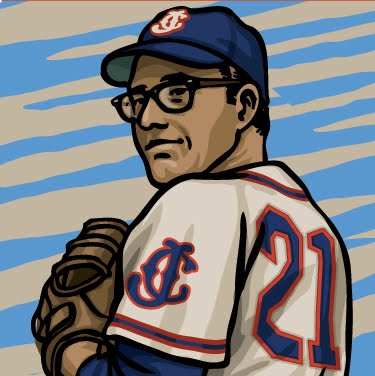
Today is Memorial Day, 2014, and before I spend some time outside, grilling something meaty, I wanted to re-introduce Sam Kau. Kau was the spit-ballin' ace of the Hawaiian Chinese Travelers, a semi-pro outfit that toured the States before WWI. Sam's story is below, but I wanted to put him up again today because after his playing career was over, Sam enlisted in the Army when WWI broke out, and although he was sent to Officer's training, Sam resigned in order to go to the front with his old outfit.
See, in the summer of 1918, Sam didn't pose with a "hash-tag" piece of paper in front of him and boldly post it on a Twitter account. Sam put down his books, took the white hat band officer's in training wore back then, boarded a ship and sailed across the U-Boat infested Atlantic to fight. When he met his end somewhere below Hill 378 no one posed for a "hash-tag" selfie to memorialize his violent end. But what he did get is the gratitude of millions of Americans, most of whom never even knew he existed. The greatest memorial Kau could receive is the deep thanks all us American's feel towards veterans who gave their lives so that our country can go forward, passing to us the greatest comfort and opportunity any country on the face of the earth could ever offer.
When you're outside today, and hear the sweet "slap" of a ball hitting the well-worn leather of a glove, give a little silent "thanks" to Sam Kau and all the other Americans who gave their lives over the past 238 years.
The son of Chinese immigrants, Sam Kau grew up playing ball in the fast paced Oahu League. Armed with a devastating spitball to go along with a good fastball and professional curve, Kau joined the All-Chinese Hawaiian Travelers that toured the U.S. mainland every summer from 1912 to 1915. When the All-Americans team came to Hawaii in 1914, Kau pitched against the major league stars, losing 5-2. The big leaguers were impressed with his spitball and noted that 4 of the runs came during one bad inning. On the Travelers’ 1915 American tour, Kau held the minor league San Antonio Bronchos to 6 hits (though he lost 3-2) and then tossed a perfect game against Baylor University, striking out 20. Kau moved permanently to Philadelphia where he continued to be a sought-after semi-pro pitcher.
A former member of the Hawaiian National Guard (as were a good number of his teammates on the Travelers), Kau enlisted in the army in 1918. With his prior experience he made sergeant quickly and was sent to officer candidate school. Anxious to get to the fighting, the former spitballer voluntarily resigned from officer training in order to join his old regiment when it received orders to France.
The 315th Infantry was posted to the Verdun Sector during the last week of the war. On the night of November 4th they moved into the front lines to spearhead an attack on Hill 378 which was outside the town of Borne-du-Cornouiller. Going over the top at the head of his squad, Sergeant Kau was killed by German bullets. It was only six days until the war ended.
Though Kau never played in the majors or even the minor leagues, he was a big enough name that his death in battle was reported by the wire services.
I originally learned about Sam Kau from an update I received from Gary Bedinfield, proprietor of Baseball's Greatest Sacrifice. After reading Gary's fine bio on Apau Kau, I called up my old pal Scott Simkus, the man behind the now defunct Outsider Baseball Bulletin, who tapped into his vast OBB archives and supplied me with some hard-to-find newspaper photo's of Kau from which I did my drawing. Various old newspaper articles along with some background of the Hawaiian All-Chinese Travelers team from Joel Frank's book filled out the rest of Kau's story.
Wednesday, May 21, 2014
171. Don Anderson: Speed on the Bases
I've been working on my book for the past few months, compiling, writing about and illustrating some really great and forgotten ballplayers. I'm really proud of where it's going so far and as the deadline looms, I will try to post some sneak peeks at some of the new characters (and some old ones I revisited and revamped).
Today I thought I'd bring you something a little off the path usually tread here at The Infinite Baseball Card Set. A quick glance at the card to the left and you're probably thinking "what does 1950's auto racing have to do with baseball?". Well, bare with me.
Remember the Brooklyn Bushwicks? I did a few of their players over the years and told the story about how they played in a magical place in Woodhaven, Queens called Dexter Park. During the 1920's through the early 1950's some of the best baseball outside the major leagues were played there. The home team, the Brooklyn Bushwicks, were an ever changing squad of future or former major leaguers, career minor leaguers or college stars. Their opponents were the best semi-pro teams and the cream of the Negro Leagues. On some days the Bushwicks would out-draw the neighboring Brooklyn Dodgers at Ebbets Field.
Dexter Park, besides being an outsider baseball mecca, was also home to boxing, football, soccer, rifle shooting, archery and auto racing. Yep, auto racing. In the early fifties the sport was in its infancy and Dexter Park, along with many other ballparks and stadiums were host to what would eventually evolve into NASCAR. About a year ago, the son of one of those early drivers contacted me to see if I was game for producing an illustration of his father, who often raced his '38 Plymouth named "Miss Charlotte" in Dexter Park. I love the tie in with the old Bushwicks, and with a stack of old photographs supplied by the son, created a card of Don Anderson. Don's son even had the great idea of including the Dexter Park scoreboard as a backdrop to the illustration, which besides being visually appealing, helped reinforce the baseball tie-in. Don's son one other request was that I post the story of his father as card number 171, his old man's car number.
So here he is, number 171: Don Anderson...
DONALD THEODORE "DON" ANDERSON
#171, “Miss Charlotte”, ‘38 Plymouth
Non-Ford, Jalopy, Claiming Divisions
Dexter Park & Freeport Stadium, N.Y.
Non-Ford, Jalopy, Claiming Divisions
Dexter Park & Freeport Stadium, N.Y.
Don was a member of The All State Racing Stock Car Club during the ’52 & ’53 seasons. Throttle pushers as they were called, “Raced around the Bases” of Max Rosner’s, Bushwick Baseball Club from ’51 to ‘55. Thursday and Sunday night racing was witnessed by thousands under the arc lights at the 1/3 mile Woodhaven N.Y. metro plant. With his gal Charlotte cheering from the bleachers Don won his Heats, Semi and Consi events here and at Freeport. Surviving to make the feature when over 100 cars are vying for it was no small feat. He competed against and beat veteran drivers like Zeke, Gouevia, Rocco, Coy, Brunnhoelzl and Tet. Luck shined on him in the Feature events too, taking second to veteran shoes Al DeAngelo, Axel Anderson and Jim Hendrickson. Co-Driver Mitch Harris of Richmond Hill did well too, winning it all in July ’52, taking the checkers!
Thursday, March 20, 2014
Leon Day's '37 Eagles Cap & The Ideal Cap Company
In what seems like a thousand years ago, during the summer of 1989 I was working in a garment factory in Passaic, N.J. On a lunch break I was reading Sports Illustrated and happened on an article about a company in upstate New York called Cooperstown Ballcap Company who was recreating classic baseball caps, just like the ones made from the 1860's through World War II. I was smitten with the beautiful wool caps with felt logos, with the soft crown and leather sweatbands. I WANTED one of those caps, but they were about twice the amount one of those adjustable mesh caps cost, and being in art school, I couldn't justify spending that much bread on a cap. But I WANTED one of those caps!
In a rare moment of business acumen, I wrote a letter to the owner, Will Arlt up in Cooperstown and offered to do illustrations for his catalogue in exchange for ballcaps. Much to my surprise Will accepted and I've been proud to call him a friend ever since. I'll never forget opening the box that held my first Cooperstown Ballcap - it was a 1944 St. Louis Browns cap and I loved it. The crown molded to the shape of my head and after a few months the brim became soft and pliable. It looked just like the caps depicted in my baseball history books. It was perfect. Today I have dozens of Will's ballcaps and I never wore a modern cap again. Over the years Cooperstown Ballcap developed a following of ballcap purists and aficionados - one guy even came up with a website devoted to fans showing off their favorite Cooperstown Ballcap!
Will closed Cooperstown Ballcap Company about 7 years ago and knew the world had lost the greatest cap manufacturer of all-time. I was distraught at the horror of resigning myself to having to wear those cheap and boxy modern jobs or substandard "retro" caps that jersey companies put out. Then one night over drinks at the Formosa Cafe in Hollywood, Will disclosed he was starting a new company: IDEAL CAP COMPANY. Not only would he produce those beautiful ballcaps again, but other interesting styles as well. I immediately signed on to design the logo and illustrate the caps on the website, and after a few years of preparation and inventory building, Will launched Ideal.
As you know, I'm a stickler for accuracy in my illustrations, and over the years Will has been a font of information when it came to researching obscure caps - he simply knows more about vintage baseball caps and their insignia than anyone else in the world. Sometimes when I'm trying to decide what uniform to depict a player in, I'll go to Will's website or one of his old catalogues and see which headgear is the most interesting, and that's exactly what I did when I was working on a full page illustration of Leon Day for my book. Day played almost exclusively with the Newark Eagles and I wanted to illustrate him on that team. Since the Eagles had a few different caps over Day's 10 years with the club, I went to one of Will's old catalogues to pick a good looking cap - I chose the 1937 Newark Eagles cap. It's a striking design that typifies the great style Blackball teams possessed back in the day. After seeing that cap, I couldn't picture ol' Leon in anything else.
When I shared the illustration of Leon with Will, he like it so much he decided to include the '37 Newark Eagles cap in his inventory of hats he offers. It's the "Cap of the Month" for March and you can see it (and own one!) HERE.
Now, over the past 4 years I've gotten quite a few lucrative offers to advertise on my site, all of which I turned down; I wanted the Infinite Baseball Card Set to be pure and good, clean fun. So I want to make it clear that this isn't some shill ad disguised as a blog post - I get nothing from Ideal Cap and simply wanted to share what I believe is the most unique and beautiful baseball caps in the world. I highly recommend picking one out (and that's a hard thing to do!) and wearing it proudly - you'll never wear one of those modern hard-hats again!
Click the logo to see Will's caps (and tell him what a great logo design it is - I designed it!)
Tuesday, March 18, 2014
John Henry Lloyd Multiple Choice
The most recent illustration I've completed for my upcoming book is of Hall of Famer John Henry Lloyd. Lloyd was Blackball's premier shortstop and hitter from the first years of the 20th century into the 1920's. Lloyd played against and was watched by Big Leaguers like Ty Cobb, Babe Ruth and Honus Wagner, all of whom declared him major league star quality. In fact, the story goes that when Honus Wagner was told by a sportswriter that Lloyd was called "The Black Honus Wagner" he responded that he was honored that he was compared to so fine a ballplayer. As the best and most famous ballplayer outside the major leagues, Lloyd once said "wherever the money was, that's where I was". As such, the great shortstop played on an impressive array of ball clubs throughout his 30 year career. When I sat down to draw a card of Lloyd, I knew I wanted to depict him in a classic batting stance as would have been seen had he been on an actual early 1900's tobacco card like Cobb or Wagner.
However, since he changed teams so often in pursuit of the biggest pay check, what club to portray him as playing for turned out to be the hardest part. I narrowed it down to the two teams he received the most of his notoriety with: the New York Lincoln Giants and the Atlantic City Bacharach Giants. Lloyd played for the Bacharachs off and on from 1919 to 1932 and their home town of Atlantic City is where he remained after his playing days ended. There is a Pop Henry Lloyd baseball field there today and he is one of AC's honored citizens to this day. Plus, their uniforms were pretty snazzy as can be seen in card A. The other team he is most associated with is the New York Lincoln Giants. Lloyd played for the Lincolns during the earlier part of his career and I illustrated him in 2 styles of Lincoln uniform. The first one is B and is the 1911. It's a neat dark blue with red lettering. The second Lincoln ensemble is C and represents the 1915-1920 team.
So, unable to decide which one to go with, I thought I'd let visitors to this site choose... just put your preference in the comments section below this post and whichever garners the most votes will be the one I put into the book!
Tuesday, February 18, 2014
169. Hi Bithorn: Puerto Rico's First Big Leaguer
It's odd today to think that of the hundreds of native Puerto Rican ballplayers who have played in the majors to date, the first one debuted only as recently as 1942. That he only played 4 seasons of big league ball and the average baseball fan probably never heard of him doesn't mean he doesn't have a hell of a story...
On December 27, 1951 Almante, Mexico police officer Ambrosio Castillo Cano was escorting a suspected car thief to jail. Officer Cano had apprehended the man as he tried to sell his '47 Buick for a few hundred dollars, suspiciously way below what it was actually worth. When officer Cano asked to see the ownership and registration papers the suspect couldn't produce them which caused his arrest. As the pair rode to the police station, the suspect suddenly attacked the officer, causing him to fatally shoot the suspect. As he lie bleeding in the street outside the town bus station, the suspect used his dying words to utter "I am a member of a communist cell on an important mission". It was an odd story but one that possibly would have ran under the radar had this suspected car thief and Commie agent not been Hi Bithorn, former Major League baseball player and nothing short of a hero in his native Puerto Rico.
Hiram Gabriel Bithorn-Sosa was the husky offspring of a Dutch mother and Puerto Rican father. 6-1 and 200lbs, Bithorn made a name for himself on the island as a star basketball player, playing for the national team in the 1935 Central American and Caribbean Games. Unfortunately there was no future for even the greatest basketball players back then - the sport was still an amateur and collegiate novelty. Besides, Hi loved baseball and there was indeed a future in that.
Puerto Rico had produced a number of good home grown talent, but unfortunately their avenue of advancement was severely hampered by their skin tone. It was tough enough already for a lily-white Latino to make it in organized baseball in America, but the darker the skin pigment, the fewer opportunities there were. Unfortunately guys like Pancho Coimbre, Millito Navarro and Perucho Cepeda (Orlando Cepeda's pop) would be known only to fans of outsider baseball, simply because they were judged too dark.
But not so with Hi Bithorn. By 1936 the sturdy pitcher had made enough waves with his semi-pro Leones de Ponce team that people began to take notice. When the visiting Brooklyn Eagles Negro League team came to Puerto Rico in the spring of 1936, they were a little light in pitching. The team, featuring Hall of Famers Buck Leonard, Ray Dandridge and Leon Day, tapped the 20 year-old Puerto Rican to start their game against the Cincinnati Reds. For seven innings the young Bithorn held the big leaguers to a single run before yeilding 3 to tie the game up. Brooklyn eventually won the game and the young pitcher became a national hero. Along with his local fame, his credible performance brought Major League interest. Besides a good fastball, Bithorn's pigment was working in his favor as well: as a light skinned Puerto Rican with one European parent, Bithorn was deemed racially safe enough to be signed by the best ballclub in the world - the New York Yankees.
In the States, Bithorn consistently posted winning records: 16-9 with Norfolk in 1936 followed by 17-9 for Norfolk and Binghamton the next year. However, no matter how many games he won or how high he climbed in the Yankees chain, he was stuck behind one of the best pitching staffs in the majors - Lefty Gomez, Red Ruffing, Spud Chandler, Bump Hadley, Monte Pearson, Atley Donald, Johnny Murphy - the Yanks pitching staff was a never ending rotation of All-Star arms. No matter how good he was, the Yankees simply had no room for him. Luckily, after a half dozen years stuck on the Yankees farm, Bithorn was picked up by the New York Giants and then acquired by the Chicago Cubs in 1941.
After winning the pennant in 1938, the Cubs never recovered from their 4 game sweep by the Yankees in the World Series. Their pitching staff was a mess and looking for a miracle, so in the spring of 1942 all eyes were on their new Puerto Rican import. Carrying the honor and responsibility of being the very first from his island to make it to the majors, Bithorn put up a 9-14 record for the year. As is so often the story, numbers don't tell the whole story of course - the Cubbies were miserable in '42 and when you take Bithorn's 3.68 ERA in account his year looks a little more promising. 1943 was his breakout year, easily establishing himself as the Cubs ace by going 18-12 with a nice 2.60 ERA. His seven shutouts topped the National League and the future seemed bright for Chicago's newest star.
Unfortunately World War Two was raging and Bithorn enlisted in the U.S. Navy. The Cubs ace was quoted in newspapers as quiping "after being with a losing team many years, I am now joining an outfit that can't lose."
Stationed at the San Juan Naval Air Station, the Navy put Bithorn's star status in Puerto Rico to good use as manager of a service team that entertained troops and raised money for the Red Cross and other causes. It was during his time in the service that Bithorn may have suffered the first of a succession of arm injuries, which was compounded by packing on over 25 pounds (some reports state as much as 45lbs) from solid Navy food.
Discharged in September of 1945, Bithorn missed out on the Cubs pennant and World Series but was expected to be an integral part of their post-war plans. As he did before the war he joined the San Juan Senators for the Puerto Rican Winter League season and helped lead the team to the Championship against Mayaguez. It was during that series that Bithorn suffered an injury to his arm during a play at the plate. The injury was still unhealed when he joined the Cubs in the spring of 1946 and seemed to worsen as the summer wore on. By the end of the season he was relegated to the bullpen and managed a weak 6-5 record. It was clear he no longer had his stuff and the Cubs sold their former ace to the Pirates who quickly sold him to the White Sox.
Bithorn returned to Chicago in 1947 but pitched just 2 innings in as many games before he was released to the Hollywood Stars who cut him loose after 4 games. Realizing he needed help, Bithorn underwent surgery on his arm and sat out the 1948 season in the hopes his arm would recover. His comeback fizzled out after he gave up 65 hits in 46 innings during a season split between Oklahoma City and Nashville. Still wanting to stay in the game, Bithorn changed uniforms and learned to be an umpire. He completed his training and was hired by the Pioneer League for the 1951 season, the first Puerto Rican umpire in organized baseball. After the season Bithorn went south to Mexico to attempt a comeback in the Mexican Winter League. When the season ended, Bithorn loaded up his '47 Buick and began the long lonely drive back to the United States.
He made it as far as the dusty little town of Almante.
That's right, the deceased secret agent car thief was Hi Bithorn. When the press got wind of Puerto Rico's first big leaguer's death and questions started to be asked, Officer Cano's story started coming apart. For starters, why the hell would Hi Bithorn be selling his Buick, his only means of transportation, in the middle of nowhere? Plus, the former Cub had over a thousand U.S. dollars on his person, negating the theory he needed some quick cash. And that whole Commie confession? Bithorn's brother swore up and down his brother was no Red. In the paranoid Cold War atmosphere of 1951, Officer Cano probably figured he'd be looked on as a hero for gunning down a real Red spy. Probably thought he'd get a medal. No, it became pretty obvious Officer Cano was an inept shakedown artist with a badge and he had murdered an unarmed Hi Bithorn. The Mexican justice system agreed and Cano was sentanced, albeit to a paltry 8 years for the ballplayer's execution.
It was a sad and pointless end to a promising life. While in America his role as the very first of a long line of fine Puerto Rican ballplayers is a footnote at best, back in Puerto Rico, Hi Bithorn is far from forgotten. When it came time to name the island's biggest and most modern baseball stadium in 1962, it was a given that it would bear the name "Estadio Hiram Bithorn" in his honor.
Saturday, February 1, 2014
Another Quick Book Preview: Shoeless Joe Jackson
One of my favorite stories I have written on this site has been the day-in-the-life of Joe Jackson during his days as a baseball mercenary. When I started envisioning the stories and drawings I wanted to include in my book, this one always can to mind first - indeed it was one of the handful I included in my book proposal. I knew from the start that I wanted to make it a 6-7 page story with 3 different illustrations interspersed with the text. I saw the main, full-page drawing being of Jackson in action on that bush-league Hackensack ball field, a million miles away from Comiskey Park. Knowing that I would be giving it full-page status, the extra space enabled me to expound on what I had wanted to do with the original drawing. One of those things was that I wanted to portray the overflowing crowd that lined the rural ball field, and opposing players and cars in the parking lot - all of which I now poured into this piece. Other little details include Jackson's trademark two-toned "Black Betsy" bat and his plain, grubby, second-hand gray flannel uniform.
And now, here is the story behind the drawing...
Shoeless Joe Jackson's One Day in Baseball Purgatory
The man standing in the shade of the building was deeply suntanned and wrinkles ran round his face, making him seem older than his 32 years. He wore a black suit, finely tailored, though of an older style cut and starting to show it’s age around the edges. In his rough, calloused hand he gripped a leather travel bag, which, upon closer examination, showed that the ornate brass plaque between the handles had been crudely altered: someone had scratched away all traces of the original engraved initials.
The man stood outside the box office entrance to the town ballpark. It was a small, well built ball yard, but in actuality he hardly took notice. After all, he’d played in a different one almost every weekend that summer and now they were all starting to blend together. If he hadn’t stopped at the coffee shop back in the train station he’d probably have had no idea where exactly he was, which, by the way, was Hackensack, New Jersey.
After standing around in the late morning sun for a few minutes a caravan of dirty open cars turned into the dirt lot beside the ballpark. Stopping in a cloud of dust, a dozen men poured out. These were to be his teammates for today’s ballgame. He watched as the men unloaded canvas bags of equipment. The oldest looking one of the group saw him standing near the box office door and walked quickly over to him, extending his hand. He introduced himself as the manager. In his other hand he offered up a manila envelope. The suntanned man opened it and pretended to count the money inside and quickly shoved it in his coat pocket. It was time to get ready.
The locker room was a locker room in name only. The small room was damp and had 2 long wooden benches that ran the length of the room and the walls had a shelf about neck high opposite each bench and a row of hooks beneath that. Each of the ballplayers staked out a space on one of the benches and unpacked their small traveling bags. Most of the players talked loudly with one another, laughing and throwing around swear words. Their accents were harsh to his ears and sometimes not too easy to follow. A few of the players stared unabashedly at the suntanned man and he began to grow more uncomfortable than he usually felt. As the suntanned man undressed he hung his jacket from the hook and folded his black pants and silk pink shirt. Running his hand over the folded silk garment to smooth it out before placing it on the shelf, he quietly touched the gold embroidered “J” monogram over the pocket.
The suntanned man removed a worn baseball uniform from his leather satchel. It was of a rougher quality wool than he was used to but it was a baseball uniform just the same. There was no name on the front, just black pinstripes. The cap he retrieved from the satchel was black as well, with a white button and white “P” on the front - a souvenir of an afternoon up in Poughkeepsie the week before. His name was “Joe Nutter” that day.
The manager appeared with another ballplayer in tow. He introduced him as “Smith” but the suntanned man recognized him as a young pitcher with Toronto. He couldn’t recall his name, but it sure as hell wasn’t Smith. The manager repeated the story he’d already heard - that his Westwood town team, traditionally a local powerhouse, had been unexpectedly clobbered by Hackensack a month before. There was always a heated rivalry between the two towns and the games always attracted spirited betting, the action being covered by heavies from nearby New York City and Newark. Westwood swore Hackensack had a few ringers on their team that day and, needless to say, much money was lost by Westwood’s fans that day. Plenty of people were pissed off and thirsty for revenge. Taking up a collection, Westwood decided to purchase some insurance for today’s game, hence the manila envelope of cash. Today, the suntanned man’s name was “Josephs,” at least that’s what it said on the lineup card.
By this time he could hear the roar of the crowd. Through the row of filthy windows that lined one wall above the shelves he could make out much movement as hundreds of people jostled for seats. He could hear men shouting and children squealing. Someone threw something through one of the open windows and every few minutes some wiseguy would bang on the glass and shout something nasty. One of the suntanned man’s temporary teammates sidled up and said: “They know you’re here.”
Emerging out from the darkness of the locker room he pulled his cap down as low as he could over his eyes to protect them from the sun. The crowd went wild when they recognized him.
“My God, it’s Shoeless Joe Jackson!”
Spectators were spilling out onto the field and bits of paper littered the field. Glancing out to center field he could see it was cleared of fans, which made him feel a little better. The roar was deafening. There must be more than 1000 here today, probably more. Ugly, twisted faces shouted unintelligible words at him. Small children stared and women craned their heads and stood on tip-toes to catch a glimpse of him. He’d seen it all before. He did this every weekend.
The game wasn’t much to remember as far as he was concerned. It was a standard affair - the Hackensack manager came over to the Westwood bench and in between swearwords made it clear his team would be playing the game under protest. Westwood held back the Toronto pitcher until he was unleashed in the 3rd inning after Hackensack scored a few runs. It was smart managing as it gave the gamblers time to settle the odds before the Toronto kid shut them down for the rest of the game.
In between hitting a home run, double and two singles there were a few notable incidents. A news photographer ran onto the field while Westwood was batting and attempted to take a photo of him as he sat on the bench. Two of his teammates started shoving the newsman and threatened to beat the hell out of him if he didn’t get back to the stands. When Westwood’s catcher reared back, ready to throw a punch, the fella ran off so fast he left his hat behind. The catcher stomped on it with his spikes and the rest of the ballplayers laughed. A few times the game was stopped, not by the umpire but because everyone paused to watch a fist fight in the bleachers. He noticed that the couple of policemen stood by and did nothing - wading into a crowd like this was pointless and after a few minutes the fighting stopped on its own anyway. At a few points in the afternoon the play was stopped while the players collected some of the larger items that were thrown onto the grass. Bottles of beer, scorecards, newspapers and even a few straw hats were picked up and thrown in a pile behind home plate. One call by the amateur umpire cause a heck of a row. When he called Westwood’s left fielder out for supposedly not touching first base on his way to an easy double, the bench cleared and for a time it looked like the poor umpire was going to catch a beating. He sat on the bench and watched. The guy missed touching first by a mile anyway. A few innings later a Westwood fan charged out of the stands and accused a Hackensack outfielder of putting a concealed second baseball in play when he couldn’t get to a deeply hit fly ball. He just pulled his cap lower over his eyes and thought about his wife.
He was proud of one play he made that day, not at bat but in the outfield. On a long ball hit out to him in center, he’d made the catch and threw a straight liner back to the surprised catcher who tagged out the equally surprised runner to end the inning. The bases had been loaded and it squelched a rally and when all was wrapped up it probably made the difference in Westwood’s 9 to 7 defeat of Hackensack. Most of the crowd cheered but some threw even more crap on the field. This wasn’t Comiskey Park.
After the game he tried to dress as quickly as possible. Half the team was drunk and in various stages of undress. One of the guys threw his spikes through one of the glass windows. He was too busy packing his leather satchel to find out why. Someone was pounding on the locker room door but no one answered. After a while he slipped his black suit coat over his pink silk shirt, once again obscuring the embroidered “J” above the pocket. He opened the locker room door and ignoring the lingering spectators in the parking lot headed off towards the train station, trying to remember where he was going to be next weekend and what his name would be when he got there.
Sunday, December 15, 2013
166. Earl Huckleberry: Straight to the Majors and Back
I don't have much family left now-a-days, so one of the added bonuses I received when I married my wife Andrea in August was that I became part of her family. More often than not, the phrase "in-laws" accompanies some horror story or otherwise unpleasant holiday tale. That's just not the case with Andrea's family - they're all great people who have made me feel more welcome than I had ever thought possible.
Now, I'm sure most are wondering what the heck does my in-laws have to do with The Infinite Baseball Card Set? Well, I found out about this week's ballplayer via my wife's sister.
For the past two years Andrea and I have driven out to Oklahoma City to spend Thanksgiving with her sister Cathy and their family. Her husband, Scott (an L.A. Dodgers fan) was one of the groomsmen at my wedding. They have 3 teenagers who are healthy, smart, athletic and so well-grounded that spending time with them has renewed my faith in the future of America. So anyway, last Thanksgiving the whole family plus Andrea and I hopped in the family Suburban and went antique shopping. Oklahoma City has a huge number of very good antique stores and in one Cathy was thoughtful enough to pick up a present for me. It was a large hard-bound volume called "Glory Days of Summer: The History of Baseball in Oklahoma". It's a very well made and researched book and not one I'd seen before. Not only does its authors cover the various major league players that hailed from the state, but its also heavy on the various minor leagues and semi-pro teams that populated the state before the second world war. My wife's sister hit the jackpot because it's the kind of book I absolutely love and within its pages that I came across a guy that has one of the best names in baseball history: Earl Huckleberry.
Throughout the bleak summer of 1935 Ira Thomas prowled the western half of the United States. As the odometer on his beat up Ford V8 clicked off mile after dusty mile, Thomas had a front row seat to the desolation the great depression and dust bowl had wrought on the American landscape. The usually sparsely traveled roads were now choked with refugees fleeing the dust storms and foreclosed farms that littered the great plains. While it seemed like everyone was on the move out of there, Thomas stepped on the gas and headed in. He was looking for arms.
His boss, the venerable and saintly Connie Mack, owner-manager of the Philadelphia Athletics, had scattered his scouts to the far corners of the country looking for pitching. Thomas, Mack's former catcher from his first dynasty of the early teens, was the A's chief scout and although he didn't specifically come out and say it, the old man was counting on him to come through with a miracle. The stock market crash had hit the Athletics' owner hard and for the second time in his long career, Mack had to dismantle what may have been the greatest baseball team in major league history. For three glorious years, 1929 to 1931, Mack's A's had dethroned the mighty New York Yankees and won three consecutive pennants and back-to-back World Championships. But by the summer of 1935, slugger Jimmie Foxx and outfielder Doc Cramer were the only stars remaining. The once great pitching staff of Lefty Grove, Rube Walberg and George Earnshaw were long gone, their place in the rotation taken by a long list of punch-drunk veterans and a revolving door of fuzzy-faced college kids. Connie Mack, for all his years in the game, was slow to accept the new concept of farm teams. Both his American League dynasties were assembled through good scouting and decades worth of connections he'd cultivated. In the past when a low-level minor league team had a promising youngster, Mack counted on managers to contact him and offer up the kid's contract. Now with many minor league clubs under working agreements with big league teams, Mack's pipeline had dried up. That's why Thomas was roaming around racking up more miles than a bible salesman.
Late August found Thomas sitting in the bleachers watching a semi-pro tournament in Oklahoma. Two pitchers from the Seminole Redbirds caught his attention - Vallie Eaves and Earl Huckleberry. Both right handers were well known on the dust bowl diamonds of Oklahoma and the two often found themselves teammates on semi-pro teams that had the cash to pay for their services. Eaves was a Native American with a lame leg and Huckleberry was a lanky Okie fireballer. Neither of these guys were another Eddie Plank and Lefty Grove, but the most important thing here was that both men were free agents. With his boss back in Philly desperate and nothing to lose, Ira Thomas quickly got both hurlers signatures on standard American League players' contracts and sent the duo east on the next train.
Back in Philadelphia, Connie Mack watched helplessly as his once proud team careened out of control down the American League standings. The pitching staff seemed to disintegrate in the late summer heat: rookie Lee Roy Mahaffey and veteran George Blaeholder blew their arms out and were done for the year, while promising lefty Whitey Wilshere abandoned the sinking ship to return to the University of Indiana. Apparently hitting the books was a more appealing prospect than ending the season with a lousy team like the Athletics.
The A's were in 7th place, a few games atop the lowly St. Louis Browns - that is, they were, until the Browns took 4 straight from Mack's men. Mired in last place and in a tailspin that now stretched to 13 consecutive losses, Mack was desperate and out of tricks - Thomas' telegram announcing the signing of the two Okies couldn't have come at a better time.
The two westerners joined the team in Philadelphia. Thursday, September 12 was a double header against the Chicago White Sox. The only remaining A's pitcher that was any good, Johnny Marcum, won the first game to snap the 13 game losing streak. For the second game, Connie Mack handed the ball to Vallie Eaves who proceeded to go the distance and beat White Sox ace Monty Stratton 4-3. It was a big enough win that the wire services picked up Eaves' story.
The next day, Friday, September 13th was Earl Huckleberry's turn.
Wearing number 24, the lanky Oklahoman took the Shibe Park mound. Veteran A's catcher Charlie Berry would be catching him that afternoon. Huckleberry wound up and threw his fireball. He wasn't the fastest anyone had ever seen, but out west his fastball had nice movement and that big pitch worked fine on the semi-pro lots. Games of more than a dozen strike-outs weren't uncommon for Huckleberry, and for over five summers that ol' fireball had baffled hundreds of his opponents. In the major leagues it took the White Sox less than a handful of pitches to figure him out. By the time the inning ended the Sox had scored a run on a couple hits and Huckleberry's own error.
It wasn't the best of debuts, but fortunately White Sox starter Ray Phelps was even worse. By the time he was finally yanked and sent to the showers without finishing the first inning, Phelps had walked 8 batters and gave up seven runs. Reliever Jack Salveston let in another run before getting the last out.
Now working with a 7 run lead, the Oklahoman bore down and shut out Chicago for the next four innings. He struck out two Sox and his control wasn't bad for a guy coming directly from the sandlots to the majors. Meanwhile, A's batters piled on 4 more runs to make it 12-1 going into the bottom of the 6th. A handful of hits resulted in two Chicago runs but he got out of it. The A's added another 2 runs in the bottom of the inning to make it 14-5.
But then Connie Mack's newest find ran out of gas. Huckleberry managed to retire 2 Sox but let two more runs in before Mack gave him the hook. Dutch Lieber came in and shut Chicago down for the rest of the game. Though he gave up 7 earned runs and 8 hits, Huckleberry was awarded the win.
The papers made much of Mack's two new discoveries, calling them "Mack's Kindergarten Class". Despite promises to play the Okie rookie again, September 13th, 1935 was Huckleberry's first and last appearance in organized baseball and neither Oklahoman made any difference in the A's nose-dive of a season. When the books mercifully closed on the 1935 season two weeks after Huckleberry's win, the Athletics were firmly locked in the cellar of the American League, a staggering 34 games out of first place.
Not many men can say they skipped the minor leagues on their way up and down from the big leagues, but Earl Huckleberry can. While his professional career was started and finished in the span of an afternoon, he continued to be a much-sought out baseball mercenary in Oklahoma. A year after his major league game, Huckleberry and Eaves joined forces again to pitch the Halliburton Cementers to victory in the Denver Post Tournament. He was still pitching up into the 1940's for various semi-pro clubs like the Enid Oilers and Seminole Red Birds, living his entire life in his native Oklahoma. He and his wife Dollie, who he married in 1933, had a daughter, and by the time he passed away in 1999, the Huckleberry's had two grand kids and three great-grand kids. Now I don't know this for sure, but I'd be willing to bet my bottom dollar that Grandpa Huckleberry bent their ears on many a Thanksgiving Day telling his brood about his one day on the mound for Connie Mack's Athletics.
I say this all the time, but it's stories like this that make this game interesting to me. You can take all the Hall of Famers and multi-million dollar contracts. I'll take Earl Huckleberry's one afternoon in the big leagues anytime.
Monday, December 9, 2013
165. Sam Kau: The Travelin' Chinese Spitballer
Here's a great little slice of baseball history I learned about from an update I received from Gary Bedinfield, proprietor of Baseball's Greatest Sacrifice. After reading Gary's fine bio on Apau Kau, I called up my old pal Scott Simkus, the man behind the now defunct Outsider Baseball Bulletin, who tapped into his vast OBB archives and supplied me with some hard-to-find newspaper photo's of Kau from which I did my drawing. Various old newspaper articles along with some background of the Hawaiian All-Chinese Travelers team from Joel Frank's book filled out the rest of Kau's story.
The son of Chinese immigrants, Sam Kau grew up playing ball in the fast paced Oahu League. Armed with a devastating spitball to go along with a good fastball and professional curve, Kau joined the All-Chinese Hawaiian Travelers that toured the U.S. mainland every summer from 1912 to 1915. When the All-Americans team came to Hawaii in 1914, Kau pitched against the major league stars, losing 5-2. The big leaguers were impressed with his spitball and noted that 4 of the runs came during one bad inning. On the Travelers’ 1915 American tour, Kau held the minor league San Antonio Bronchos to 6 hits (though he lost 3-2) and then tossed a perfect game against Baylor University, striking out 20. Kau moved permanently to Philadelphia where he continued to be a sought-after semi-pro pitcher.
A former member of the Hawaiian National Guard (as were a good number of his teammates on the Travelers), Kau enlisted in the army in 1918. With his prior experience he made sergeant quickly and was sent to officer candidate school. Anxious to get to the fighting, the former spitballer voluntarily resigned from officer training in order to join his old regiment when it received orders to France.
The 315th Infantry was posted to the Verdun Sector during the last week of the war. On the night of November 4th they moved into the front lines to spearhead an attack on Hill 378 which was outside the town of Borne-du-Cornouiller. Going over the top at the head of his squad, Sergeant Kau was killed by German bullets. It was only six days until the war ended.
Though Kau never played in the majors or even the minor leagues, he was a big enough name that his death in battle was reported by the wire services.
Tuesday, November 19, 2013
164. Chino Smith: Like a Meteor
Some ball field, somewhere in 1928 or 1929.
The air was electric. With the score tied up for the past 6 innings, the crowd had settled in the sticky late afternoon heat. After the first batter struck out, the number two man had just hit a cheap single that dropped behind the shortstop who was playing for a bunt. Now the crowd came to life. They knew who the man on deck was and what he could do. Chino Smith could break a ballgame wide open with a single swing of his bat. The stands were filled with taunts, screams, insults - even a few hats were launched onto the grass, but Chino Smith didn't care.
Savagely throwing the two extra bats he used to warm up behind him, he strode slowly towards the plate. Instead of walking in a straight line, he swung deliberately out of his way towards the hostile crowd. The noise got louder and he paused at one point to gaze menacingly over his shoulder. His eyes, slightly slanting at the corners, gave him a faintly Asian look, and from that sprung his nickname - Chino. Turning back, he continued his walk to the plate. He kicked savagely at the dirt, digging a hole for his spikes to get traction. He swung the bat back and forth and finally pointed it at the pitcher.
"I'm gonna kill you today".
His voice was loud, booming and eerily even. The crowd ate it up and yelled louder than before. They cried for the pitcher to stick one in his ear. The catcher said something, but no one could hear for the crowd. The pitcher didn't say a word. He checked the runner on first.
The first pitch was close, a brush-back, up just beneath his chin. Fully expecting it, Chino dodged it and unleashed a foul stream of tobacco juice at it as it hissed by. The runner on first had taken off and took second standing up. Chino pointed at the runner, silently taunting the pitcher. The crowd loved it and hated it.
"That all you got? That all you gonna throw?"
The pitcher pounded his glove and eyed the man on second.
"Cause if that's all you throwin', I'm gonna kill you today."
The stands erupted with an even louder torrent of hatred. Someone threw a soda bottle. Chino suddenly made towards the box seats along the first base line but stopped after a few steps. A smile curled up from the edge of his mouth and he turned back towards the plate. The umpire kicked the bottle back towards the crowd.
The next pitch sailed in just a bit outside but still within reach. With a flick Chino smashed the ball straight back at the pitcher who feebly stabbed at the ball while instinctively jumping out of the way. The runner on second crossed the plate before the center fielder made the play and Chino stood on first base like he owned it. When the crowd quieted down he motioned at the pitcher.
"Hey! I made you jump out there!"
The pitcher threw the ball in the dirt and charged towards first. The slight curl in the corner of Chino's lips turned into a full-blown smile as he braced for the coming fight.
****************************************************************
When it comes to blackball, you take it for granted that due to lack of newspaper coverage, record keeping and plain-old racism that it's tough to discern truth from myth. With a guy like Chino Smith, the waters become as murky as Lock Ness. His career was so meteoric and short that over the years he took on an almost King Arthur-like reputation. And like the Medieval knight, whose story is based in fact, much of what is repeated is not. Often called a small man, listed in most books as 5'-6", if you just look at a team photo you can see he was most likely 5-11 or 6 foot. Not a giant, but average for a ballplayer in 1930. I reckon somewhere in some newspaper many years ago there is a typo that just kept getting reprinted. Even his great nickname "Chino", which he is universally known by today, is not quite correct. While the Spanish language press and fans in Cuba dubbed him Chino, after his "Chinese-looking eyes", in the States he was known to fellow players by the less racy "Smitty", and to the public as just plain-old "Charlie", his given name.
Though said to be from Greenwood, South Carolina, baseball archaeologist Gary Ashwill uncovered that Charlie Smith really came out of Hamlet, North Carolina. As a teen he added muscles by lugging baggage in New York's Pennsylvania Station and honed his baseball skills playing for the ball club made up of porters like him called the Redcaps. Boasting quite a few future and former blackball players, the Redcaps were a valuable training ground and after a few seasons playing for second-tier teams, Smith turned pro in 1925. Smitty's team, the Brooklyn Royal Giants, were one of the old independent blackball teams, but by 1925 they'd joined the Eastern Colored League. Playing alongside aging vets like Dick Redding, Bill Holland and Jesse Hubbard, Smith spent 1925 and 1926 getting his bearings and learning his craft. By 1927 he emerged as one of the most dangerous sluggers in the game.
In an era filled with hard characters, Smith quickly earned a reputation as one of the toughest. He was the grandfather of trash-talkers and decades later when old-timers tired of waxing poetically about Smitty's skills with a bat, they often turned to talking about the verbal abuse he slung like line drives. Once in Cuba he'd had a bust up with the Yankee's ace Johnny Allen which over the years turned into something of a legend. While some blackball players like Satchel Paige delighted crowds with good-natured antics, Smitty made them angry and dangerously on the edge. He deliberately riled up the crowd which in turn made him play harder.
Playing for the Royal Giants, Smitty averaged above .400 in league games in '27 and '28. In 1929 Smith moved from the aging Royal Giants to the New York Lincoln Giants, a younger and more competitive club. Just 28 and at his peak, Smith crushed the ball, going .465 and then .429 in 1930. He was the most feared batter outside the major leagues, which some might argue doesn't mean a whole heck of a lot. A common argument is made that the Royal Giants and his next team, the Lincoln Giants, played their home games in an oddly shaped ballpark called the Catholic Protectory Oval up in the Bronx. It was shaped, as it's name suggests, like an oval, much like the Polo Grounds where the New York Giants and Yankees played. The field had very shallow left and right field dimensions, making many modern historians look disparagingly at Smith's Ty Cobb-like averages. On the surface that's a great argument, but the Royals and the Lincolns didn't play the majority of their games "at home". Negro League teams traveled more than professional white teams and even league games were scheduled at neutral parks. The Lincolns, for instance, played some of their home games at Yankee Stadium during Smith's career. In games played against the other big names of the day, Smitty hit as good or better than the best outsider baseball had to offer.
Like many of the big stars of the Negro leagues, Smith was invited to play winter ball in Cuba. Down in the Caribbean the blackballers got to test their mettle against not only the best Latin players, but also against touring major leaguers and up and coming white stars. In the handful of winters spent on the island, Smith batted in the range of .340, putting him right about the top 10 of the time. In addition, pioneer blackball historian John Holway tracked down a slate of Stateside games in which Smith got to face off against active major league pitching (active big league hurlers, not washed up retreads throwing for semi-pro teams). Smitty clipped them at the same pace he did the Eastern Colored League pitchers: In 11 games against big leaguers Smith had 15 hits in 37 at bats, a .405 average.
The two best pitchers of Smith's day, Baltimore's Laymon Yokely and the eternal Satchel Paige whose career spanned the 1920's to the 1960's, both put Smith in the top 3 of the toughest batters they faced. When Colonel Ruppert opened up Yankee Stadium to black teams in 1930, Charlie Smith was the star of the inaugural game. Facing the Baltimore Black Sox, defending champs of the American Negro League, Smith walked in the first, hit a two-run homer in the third, smashed an RBI triple in the fifth and then wrapped it all up with a three-run homer in the seventh. Nothing it seemed, could stop Smitty.
Then, just like that, it was over.
Sometime during the 1931 season, Smith started to feel sick. Self-medicating with a variety of different elixirs failed to prevent his batting average to plummet. Traveling to Cuba for the winter season, Smitty played a few games and then returned home to his wife in the Bronx. In less than a month after Christmas he was dead. Some attributed his illness to a game against the Homestead Grays when he took a knee to his stomach during a savage collision with Walt Cannady, others say it was yellow fever picked up in Cuba. Baseball archaeologist Gary Ashwill however put an end to the speculation when he uncovered Smith's death certificate which stated he died of stomach and pancreatic cancer. He was just 31 years old.
I went back and forth whether or not to put "Chino" on the front of Smith's card. When I started doing my illustrations and stories over 3 years ago, I began with the idea that I wanted my work to be as accurate as possible. Most of the time this comes down to very minute things like uniform details, but in this case I eventually thought it important to put the name he was known for in the States. In my research going through 1920's and 30's newspapers, the name Chino was never used, only "Charlie Smith". Since I illustrated him as a member of the 1930 Lincoln Giants playing at the Catholic Protectory Oval, I ultimately decided to give him the name he would have been known by as at the time.
Monday, November 11, 2013
Veteran's Day

I originally posted the story of Captain Eddie Grant, former New York Giants 3rd baseman, 3 years ago in honor of Veterans Day. To show my respect and gratitude to all the men and women who interrupted their lives in order to serve and protect this country, I'd like to post it again, my small way to say thank you.
On a day like today, Veteran's Day, I want to feature a real hero. These days it seems anyone who does anything can be termed a hero. We are losing the real meaning of that word and that is something that really bothers me, especially when I learn about ordinary men and women who somehow rise to the top and emerge as real heroes. Miners trapped in Chile may be survivors and noteworthy, but they are not heroes. But, instead of writing an introduction outing the many pseudo-heroes that the media seems to create, I will let the story of a real, bona-fide hero speak for itself.
They called him "Harvard Eddie." At a time when most ballplayers barely had a high school education, third baseman Eddie Grant, Harvard Class of 1909, was a member of the Massachusetts Bar, a full-fledged lawyer. He was also a darn good third baseman, batting .322 for Jersey City and leading the Eastern League during his first year in pro ball. The next season, 1907, Grant was called up to the Philadelphia Phillies. He quickly gained attention, not from his bat or fielding skills, but for what he would say on the field: when calling out his claim on a pop fly, instead of yelling the common "I GOT it!", Harvard Eddie called out the proper phrase, "I HAVE it!" much to the amusement of his more modestly educated teammates.
During off seasons Grant returned to Boston to practice law, but each spring he took up baseball again. Traded to Cincinnati in 1911, he lost something at the plate and his batting average plummeted. The death of his wife after barely 9 months of marriage might have been the reason why. In 1913 the New York Giants picked Grant up and although he rode the bench more often than not, John McGraw took a liking to the scholarly third sacker and made him the Giants' bench coach. As much as he loved the game, Grant disliked the life of a part-time coach and player and a the age of 32, retired to pursue his law career full-time.
The Great War had been raging in Europe for 3 years by now and many of Grant's Harvard classmates were active participants even before the U.S. entered the war. Whether they drove ambulances for one of the volunteer organizations operating just behind the trenches or flew airplanes for the French in the Lafayette Flying Corps, college educated men of that era felt a sense of duty and adventure that sadly seems lacking these days. Once America entered the war in April of 1917, even more of these privileged men from wealthy families left their lucrative careers and easy lives to become officers in the rapidly expanding U.S. Army. Back then the Army assumed that a college educated man made a natural leader and "Harvard Eddie" was made Captain of Company H, 307th Infantry Regiment, 77th Division of the American Expeditionary Forces. After a period of training on Long Island with his men, Grant sailed for France in the summer of 1918.
The American Army was eager to prove itself to their Allies, France and Britain and the Meuse-Argonne Offensive was its chance. Launched on October 2nd, 1918, the Battle of the Argonne was one of the fiercest fights in American military history. The 77th Division charged into the Argonne Forest and strait into the solidly entrenched veteran German Army. It was during the confusing first day of the battle that Major Whittlesey, a New York attorney, got isolated and pinned down deep within the dense forest. Although forever known as "The Lost Battalion", Whittlesey knew exactly where he and his men were, it was just that no one else in the U.S. Army did. After a few anxious days, American aviators braved the dense German anti-aircraft fire and finally located Whittlesey and his battalion. Pilot Lieutenant Harold Goettler and his observer Lieutenant Erwin Bleckley volunteered to circle the forest with the idea that the place that did not fire back at them would be the the location of the lost battalion. They were right and after taking heavy fire which mortally wounded both men, their DH-4 aircraft crashed just short of the French lines. The French soldiers rushed forward to help the downed aviators. Goettler was already dead but Bleckley, with his last dying breath pressed a bloody note into the hands of the closest French soldier. On it was a map showing the location of Whittlesey and his men! With this new information, Captain Eddie Grant and Company H was among the units rushed into the Argonne to rescue the Lost Battalion.
By the morning of October 5th, Eddie Grant and his men had been on the front line and in the thick of the fighting for 4 days. No one, most of all Captain Grant, had had any time for sleep. Being awake and constantly under enemy fire for 4 days must have been a terrible feeling. Add on top of that the responsibility for the lives of the 150 men of his company and you can imagine the stress Grant must have been under. Taken out of the line that day for rest, a fellow officer described the captain as barely able to lift his arm to bring a cup of much needed coffee to his lips. But his company's reprieve was short-lived. The Lost Battalion had been found. When orders to move-out came, Grant got to his feet and took his place at the head of his Company. He led them right back into the Argonne.
The Germans threw everything they had at the Americans rushing into the forest. If Whittlesey and his dwindling men could be captured or killed it would be a devastating blow to the upstart fresh Americans as well as their weary Allies. The story of the Lost Battalion had made newspapers all over the globe and its rescue would come as a giant shot in the arm to the young nation eager to prove itself to the world in the greatest war mankind had ever known. As the 307th Regiment marched forward the German artillery pounded the road leading into the forest. Men and horses were torn to bits by the constant exploding shells but still Captain Grant and the American Army moved forward through the hail of shrapnel.
Among the wounded being brought back past the advancing infantrymen was Major Jay, commander of Grant's battalion. Recognizing Eddie he waved him over. All the other ranking officers were either dead or wounded. Harvard Eddie was now in charge of the battalion.
Though it didn't seem possible, the shelling increased. The Germans knew they had to destroy the Americans before they reached Whittlesey. The whole road had become a deathtrap but everyone knew they had to move forward. Grant called his officers together to brief them on the situation. At that moment a shell exploded, tearing apart the two young lieutenants standing next to Eddie. Grant tried yelling over the screams and explosions for a stretcher bearer. Signaling his men to take cover and waving his arms wildly in desperation for medics that never came, the next shell exploded directly on top of Harvard Eddie. He died instantly.
New York sports writer Damon Runyon was a war correspondent in France during war and had known Eddie Grant well during his time with the Giants. He wrote a stirring eulogy for the former third baseman entitled "Eddie Grant Sleeps In The Argonne Forest". The story was reprinted widely including in the 1919 Spalding Guide and Grant, the only major leaguer killed in the war, gained posthumous fame. In 1921 the New York Giants dedicated a plaque commemorating the former infielder and bench coach in front of which a wreath was placed each Memorial Day in a solemn ceremony started by his old friend, John McGraw. That plaque was famously stolen after the last Giants game at the Polo Grounds in 1957. Historians searched in vain for the plaque or any trace of who the scumbag was who stole it but it wasn't until 1999 that a couple moving into their new Hohokus, New Jersey home discovered a plaque wrapped in a blanket hidden in the attic. Turns out the home was formerly owned by a New York City cop named Gaetano Bucca. Officer Bucca, whose police beat in 1957 included the neighborhood surrounding the Polo Grounds, had apparently stolen the memorial. But baseball historians aren't positive the plaque is the real one stolen from the Polo Grounds. The San Francisco Giants for their part didn't seem to care as they try to distance themselves from their former life in Manhattan. First World War historians did however finally get the team to install a replacement in the new ballpark a few years ago. You can see it near the Lefty O'Doul entrance, but in this day and age of so many "heroes", this modest memorial to a fallen soldier who gave his life for his country just doesn't seem to be enough.
Dedicated to every serviceman and servicewoman who interrupted their lives, and in some cases such as Captain Grant, gave their life, so I may live free in this great country of ours. Thank You.
Subscribe to:
Posts (Atom)


