Showing posts with label Semi-Pro. Show all posts

Thursday, August 24, 2017

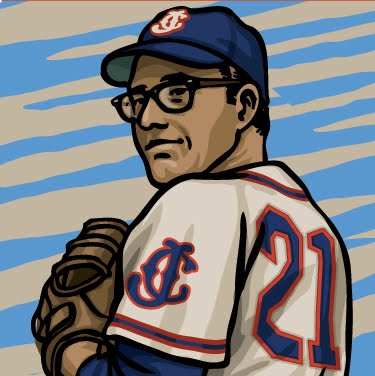
233. Jerry Lewis: Hey, who's the clown on first base?


Whether you think his movies are hysterical (like I do) or dopey (then I pity you), one thing's for sure: you know who Jerry Lewis was. I saw "was", because the comedian passed away this week at the age of 91. Very few performers could boast a career arc as broad as Lewis' seven decades of work. From nightclubs to radio to movies, as part of a comedy team and as a solo act, the name Jerry Lewis is synonymous with American comedy. For over 40 years his Labor Day fundraisers for the Muscular Dystrophy Association helped raise millions of dollars for a disease that was unknown and unpronounceable before he brought attention to it. Millions, maybe billions, of people found comfort in the laughter he created over the years. Even actors and comedians who take cheap shots at his being perceived by the French as a "genius" all owe at least a small amount of credit for their careers to this comedic trailblazer. One can go on for eternity cataloging Jerry Lewis' life in show business, but that's not what this story is going to be about. This post will reveal a little-known side of this giant of American comedy, for beyond the movies and fame, Jerry Lewis was a baseball fan.

Jerome (some say it was Joseph) Levitch was born in Newark, New Jersey in 1926. At a young age Lewis was exposed to the entertainment business - his father was a vaudevillian and his mother was a professional piano player. Much of Jerry's early life was spent being passed off to relatives and family friends while his parents traveled the vaudeville circuit. This transient lifestyle made the only child feel rootless and vulnerable much of the time. It's not recorded where Jerry Lewis first got his appreciation for baseball, but it is not out of line to opine that the lonely boy found solace in being able to follow one team through newspaper box scores and radio, no matter where he was temporarily living. 

When they were able to, the Lewis' took their son with them when they had a lengthy engagement at a club in the Catskills or Jersey shore. As early as age 5, Lewis began appearing on stage with his parents. One of his earliest original comedy bit was to exaggerating lip-sync to a phonograph record - a routine Andy Kaufman appropriated and make his own some forty years later. Lewis knew he was destined for a life in showbiz, and dropped out of high school when he was 15 to pursue his dream. During World War II Lewis was rejected for military service due to a heart murmur, and he spent the war years honing his comedy chops working Manhattan's nightclub circuit. At the Glass Hat Club in 1945, Lewis shared the bill with a slick looking Bing Crosby sound-alike named Dean Martin. The two hit it off and quickly formed a comedy team, Martin and Lewis. With Dean as the suave straight man and Lewis as the zany sidekick, the unscripted act was unlike any other that came before. By 1947 they had reached the pinnacle of New York nightclub acts when they headlined the Copacabana. The following year the duo appeared on Ed Sullivan's "Toast of the Town" TV show. The Sullivan appearance combined with their own NBC radio show quickly made Martin and Lewis the country's most popular comedy act. 

Because of their celebrity, the two comedians were soon making the acquaintance of all categories of celebrity. While Dean gravitated towards the Sinatra crowd, Jerry palled around with ballplayers. One of the first big names Lewis formed friendships with was New York Giants manager Leo Durocher. Leo was a fixture of Manhattan's swankier nightclubs and its only natural that he would have caught Martin and Lewis' act on numerous occasions. Durocher piloted the Giants to the pennant in 1951 and after the World Series returned to his home in Los Angeles. In late October the Giants manager and his opponent in the World Series, Casey Stengel, were asked to manage teams in a charity ballgame. It was only natural that Leo reached out to his pal Jerry Lewis who was in Hollywood with Dean at the time. The comedy duo appeared in the late innings of the game, sharing the field with All-Stars such Warren Spahn, Mike Garcia, Bob Lemon and Hank Sauer. 

By this time, Martin and Lewis had transitioned their nightclub and radio act into a full-blown comedy movie franchise. In the years since their first movie in 1949, Martin and Lewis had made over 12 films before 1954. 

Lewis' baseball connection to Durocher and his Giants continued through the years. Both Martin and Lewis appeared at the Giants spring training camp in Phoenix in 1954 where the two each managed their own team in an inter squad game. Martin, wearing uniform number "00" played third base while his partner donned a jersey with "?" on the back and played first base for his team. Martin managed a triple when the Lewis' outfielders unwisely played him too shallow. Lewis had a single to his credit and his Giants beat his partner 5-3 before 5,000 fans at Phoenix' Municipal Stadium.

Just after their Giants game, both men's love of the game led to the team optioning an original screenplay for a musical called "Safe at Home". The story revolved around two New York Giants players who desert the team to play ball in Mexico. The two get mixed up with a crooked bullfighter and, you guessed it, hilarity ensues. There was even talk of who would play Durocher in the picture (considering Leo's later penchant of TV and movie cameos, it's only natural go imagine the Giants manager playing himself). Unfortunately for both cinephiles and baseball fans, "Safe at Home" was never produced.

Lewis and his wife Patti lived in Pacific Palisades, a neighborhood on LA's westside. The Lewis family consisted of two boys, Gary and Ronnie, and father passed his love of baseball down to his sons. To encourage the boys, Lewis purchased the vacant lot next to the family's home and constructed their own private ball field. Lewis also added his star power and sponsorship to a local kids ball club named the "Jerry Lewis Stars".

In the spring of 1956, Martin and Lewis again combined their love of baseball with their comedy when the two appeared in a charity game at LA's Wrigley Field. The game pitted a team of major leaguers against a squad of PCL League stars. This time Lewis and Martin appeared on the same team, Lewis at first and Martin at third. The duo acquitted themselves well, with newspaper accounts complimenting their teamwork in the infield and Lewis' errorless play at first. Lewis went 0 for 4, but Martin got himself a single in four at bats. 

https://infinitecardset.blogspot.com/2017/02/21-journal-mark-iii.htmlExactly ten years to the day of their debut performance in 1946, Martin and Lewis split up. Dean went on to be a leading man in more serious movies like "Rio Bravo" and "Some Came Running", and teaming up with Frank Sinatra and Sammy Davis, Jr. as the core of the uber-cool "Rat Pack". Jerry forged ahead as a solo act, establishing himself as more than just a sidekick to Dean Martin. Besides his Vegas act, Lewis branched out and recorded a successful album of standards for Capitol Records that shot to number 3 on the charts. A succession of hit movies followed, making Jerry Lewis one of the most bankable performers in the country. 

When the Brooklyn Dodgers relocated to Los Angeles in 1958, Jerry Lewis was reported to be one of the first season ticket holders. With a real big league team in the city, Lewis quickly befriended many of the Dodgers players, Gil Hodges in particular. Hodges was one of the teams most popular players and a perennial All-Star. Hodges was also, like Lewis, a first baseman.

In 1959 Lewis was back again at LA's Wrigley Field for a charity game. This time Lewis was playing for the Los Angeles Dodgers as they faced a Major League All-Star team piloted by Gene Mauch. Wearing number "55", Lewis took the field alongside Dodgers stars Sandy Koufax, Don Drysdale, Johnny Roseboro and Charley Neal. Roseboro's two home runs powered the Dodgers over Mauch's All-Stars, 9-7. Lewis went 0 for 4 against the big league pitching and was credited with three errors of a comedic nature. 

Ever since the movie industry moved from New York and New Jersey to Southern California in the 1920's, both studios and prominent actors formed baseball teams. Fatty Arbuckle, one of Hollywood's earliest and popular comedic actors, even owned the Vernon Tigers of the Pacific Coast League. Tom Mix had a team and Paramount hired Black Sox outcast Fred McMullin as a ringer for their team. Later in the 1940's, Frank Sinatra formed his own team called the Swooners who's rotating roster boasted everyone from Nat King Cole to Robert Wagner and Anthony Quinn. With Jerry Lewis' baseball interest it was only natural that he would do the same, and the "Jerry Lewis Clowns" were formed.

By the early 1960's these celebrity pickup teams had evolved into the Hollywood Entertainment League. Besides the Clowns there was "Garner Gems" led by James Garner, singer Bobby Darin's "Darin's Demons", and Pat Boone's "Boones". Even Lewis' old partner had his own team, "Dean Martin's Dino's". Lewis outfitted his Clowns with home white flannels supplied by Rawlings with "Clowns" in red script across the front. The left sleeve sported a large caricature portrait of Lewis which would become his trademark. Red stirrups with white stripes and a red cap with a white "JL" monogram topped off the uniform. 

Besides owning his own team and appearing as a ringer at first base for the Dodgers, Lewis' baseball interest was acknowledged by the game's writers when he was tapped to be the master of ceremonies for the Baseball Writers Awards in January, 1966. The gig was especially personal to Lewis as the event would also honor his beloved Dodgers, that years' World Series champions. 

With the advent of television and the popularity of football and basketball, baseball's popularity began a steady decline throughout the 1960's. The Hollywood Entertainers League folded by the end of the decade, yet the game still held some popularity among the stars. The Dodgers and Angels hosted "Hollywood Stars" benefit games fairly regularly, and Lewis would suit up with fellow baseball fans like James Garner, Mickey Rooney, Ricky Nelson and Walter Matthau.

Perhaps the pinnacle of Jerry Lewis' baseball career came on July 19, 1973. The Houston Astros were hosting a rare in-season exhibition game against the Detroit Tigers. Lewis' old pal, Leo Durocher, was now skipper of the Astros, and he had a great time writing "Jerry Lewis" batting lead off and playing first base in his line up card. Lewis wore number "9" and hit a single off Detroit's Mike Strahler. Later the Tigers sent their pitching coach, Art Fowler, to the mound, off whom Lewis drew a walk. Tigers first baseman Norm Cash acknowledged that the comedian looked pretty good in his 4 innings of work, noting that he played errorless ball and didn't drop a single throw. 

Jerry Lewis' last big brush with baseball came at the tail end of his long career. Having conquered nightclubs, radio, TV, and film, only Broadway remained unchecked on his list of successes. That changed when he took over the roll of the Devil in the revival of "Damn Yankees". For those of you who don't know the play, the story is about a long-suffering Washington Senators fan who sells his soul to the Devil to become a star baseball player and finally defeat the Yankees. Lewis drew great reviews, then began a semi-retirement with select guest spots in movies and TV shows. 

Jerry Lewis passed away on August 20, 2017 after a long illness. I had wanted to do a card and story on him ever since I found a photo of his Clowns baseball team several years ago. When I was writing my book, The League of Outsider Baseball, I had Jerry penciled in for the "People's Game" chapter which had stories and illustrations of people who you wouldn't think were baseball fans or players. But, unfortunately, Jerry got cut during the outline phase. His baseball interest was a little more dynamic than most, and I wanted more than a page or two in order to give his story a proper telling. Unfortunately, it wasn't until he passed away last week that I revived my story and pulled together all the newspaper clippings I had accumulated and sat down to write. For all the joy his movies gave me ever since I was a kid, and all the good he did with his Muscular Dystrophy telethons, I hope he'd get a kick out of his very own baseball card.


Sunday, August 6, 2017

232. Cy Malis: The best friend we dope fiends have


When I first started this blog back in 2010, I started receiving many requests for players to be profiled and given The Infinite Baseball Card Set "treatment." Out of all the emails, I began to notice that it was not one particular player that was asked for the most, but rather an ethnic group: Jewish ballplayers. Early on I had illustrated cards and written stories on the site of Sandy Koufax and Moe Berg, but I began slowly researching different players who shared the Jewish faith, trying to find characters who would fit in with the kind of stories I like to write - players with interesting stories who may not be known to the casual fan of baseball history. The modest research I did culminated in the Test Issue of "21: The Illustrated Journal of Outsider Baseball" which featured 12 profiles of Jewish ballplayers. This prototype became the model in which I based the current incarnation of "21".

I was never happy with that original product, and eventually I plan to do a more elaborate "21" dedicated to Jewish ballplayers. In the years since the original, I have been steadily adding to my Jewish ballplayers file, one the characters in there being Cy Malis. 

Cy's single game for the 1934 Phillies earned him place in all the books on Jewish ballplayers, but it is the rest of his story that makes him so much more interesting. Plus, digging into Cy's career was for me a researchers delight, as I found that the extent of his pro career that can be found in record books and online is quite incomplete. Old box scores and creative searching enabled me to fill out Cy's minor league career quite a bit more than any other source that I've been able to find. And then, from an artistic point of view, the uniforms worn by one of Cy's semi-pro teams were so visually stunning that I couldn't wait to depict Cy in full color. 

So, with that teaser, I'll get right into Cy's story...

Cy Malis was born in Philadelphia, the second son of Frank and Anna (called "Ray") Malis. Both Frank's parents were from Russia while Ray's father immigrated from Jerusalem and her mother from Russia. Frank worked an an inspector for the Philadelphia Rapid Transit Company and Ray kept house in the family's apartment on 10th Street. Ray and Frank were married around 1905 and their son Charles was born shortly afterward. The Malis' second son, Cyrus came along on February 26, 1907. Both boys played baseball, working their way up the sandlot ranks. Charles was an infielder while Cyrus - who was now going by "Cy" - was, appropriately enough, a pitcher. While Charles played for Central High, Cy starred for Brown Prep School, lettering in basketball and football as well as baseball. In his sophomore season with Brown, Cy posted a 15-4 record and struck out 22 in a game against Villanova Prep. It appears that Cy left school after his second year, joining the vibrant semi-pro baseball circuit around Philadelphia. 

Like other large eastern cities, Philly boasted many top-rank semi-pro clubs. Youngsters began playing for their local neighborhood athletic clubs, then, if they were good enough, were either hired by a large company who sponsored a team or was invited to join one of the semi-pro traveling clubs who were just a step below the minor leagues. 

Cy Malis' first stop was with the Waco Athletic Club. His brother Charles may have preceded him on the team, for both their names frequently appear in box scores at this time. Waco played other medium-level teams in Philadelphia and South Jersey. Then, in mid-August, Cy began pitching for the formidable Hebrews club. 

The Hebrews, also known as the Sphas (South Philadelphia Hebrew Association), were one of the better semi-pro clubs in the Philly-Trenton area. The South Philadelphia Hebrew Association began sponsoring athletic teams around World War I, and by the early 1920's had become known not only for baseball, but for their basketball team as well. In fact, the basketball team actually turned pro, first joining the Eastern League in 1929, then the American Basketball League in 1933. When the NBA was formed after World War II, the Sphas best players splintered off to form the nucleus of the Philadelphia Warriors.

With the baseball Sphas, Cy not only had a first rate ball club backing him up, but he also had good press coverage with would help further his career. His competition was also of a higher class, playing against the various traveling teams that criss-crossed the country before World War II, such as Jim Thorpe's Indians and various Negro League clubs.

Cy's half season with the Sphas earned him an invitation to spring training with the minor league Wilkes-Barre Barons in 1925. The April 24 edition of the Scranton Republican said the Malis "has shown plenty of form in the preliminary workouts", but just two days later he was back in Philly pitching for the Waco A..A. and later the Sphas again. Still only a teenager, Cy had plenty of time to develop into professional material.

Malis' second chance at organized ball came along the following spring when he was signed by Petersburg Broncos of the Virginia League. In his professional debut on April 14, 1927, Malis was sent in to relieve Petersburg starter Lefty Fowlkes, pitching an inning and third, allowing a hit and two walks plus a balk. Richmond scored a run, but it was charged as an error since the outfielder dropped the ball. Soon both Cy and Lefty Fowlkes were shipped to the Northampton Red Sox of the Eastern Shore League. Malis started off the season well, winning five consecutive games, but overuse took a toll on his arm. When Cy asked management for some time off to rest his tired flinger, the Red Sox handed their ace pitcher his release. 1920's baseball was a cruel and impersonal sport, and back then a pitcher, especially a young one, was expected to pitch a complete game every time he took the mound. With minor league rosters consisting of only 15-18 players, clubs couldn't afford to carry too many pitchers, so the ones they had were used as often as possible. When Cy raised an issue about over use, it was only natural that the club would choose to jettison their ace instead of working with him, the reason probably being that if his arm is feeling fatigue now at this low level, how could he make it all the way to the majors? Minor league teams back then made their payroll by selling off their good players to higher level clubs - thus, a sore arm pitcher was of no monetary value to them. Sound front office reasoning in 1927. Fortunately for Cy, one other team in the league, the Cambridge Canners, were willing to take a chance with him. Working out of the bullpen, he finished out 1927 with a 5-6 record. 

Despite a mediocre record, a team quite a bit higher up the food chain than the Cambridge Canners became interested in Cy - his hometown Philadelphia Phillies.  

Like most big league teams, the Phillies were always on the look out for home grown talent, a native son that could blossom into a star that would in turn put more fans in the stands. As the Phils were perennially mired in last place, it would take something or someone interesting to get fans to shell out the money to watch a lousy team. With his well publicized mound exploits with Brown Prep and the Sphas, Cy Malis was a perfect candidate to be that someone interesting. The Phils signed him for 1928 and shipped him off to their Lynn Papooses farm team in the New England League. From the skeleton of statistics it looks like control was Cy's biggest obstacle - for instance in the June 1, 1928 game against Salem, Cy pitched the first 3 2/3 innings, giving up 4 bases on balls and a hit batter, taking the loss. On June 12 Cy lasted 5  1/3 inning against Brockton, issuing five free passes and 12 hits for another loss. By mid-June his record was no wins and four losses in 12 innings pitched. The Papooses released him, and Cy went back to the Philly semi-pro circuit.

Every source I found on Cy Malis has no professional record for him in 1929, but I dug up some newspaper articles that say otherwise. A small article written about Cy a year after his death in 1971 states that he had played in the Philadelphia A's farm system. I thought that perhaps this was a misprint, mistaking the Philadelphia Phillies for the Philadelphia A's. Or, I thought it might have been Cy or a relative of his doing a little creative remembering, switching out the last place Phillies for the 1929 World Champion A's. Much to my relief (I don't relish debunking little white myths held dearly by old ball players and their descendents), the article actually held up to my research.

Seems that Cy had attracted the eye of his hometown's other big league team, Connie Mack's Philadelphia Athletics. The A's were right at the beginning of what would be an incredible three pennants and two World Championships, a team thought to be the greatest ever assembled in Major League history. The A's signed Cy to a minor league contract, sending him to their Martinsville White Elephants team in the Blue Ridge League. I found several box scores that record his record with Martinsville. On April 25, 1929, Cy pitched 4 innings, giving up 6 hits, 2 walks and striking out 2 against Hagerstown. On May 11 he gave up 5 hits in 5 1/3 innings of relief, walking no one and picking up the win over Chambersburg. Cy pitched one more game before he was released, his final 1929 record set at 13 hits, 6 runs, 13 walks, 3 strike outs and a wild pitch in 16 innings.

Once again Cy returned to the Philadelphia scene where he was now a much sought after arm for hire. Besides his regular gig with the mighty Sphas, box scores show Cy appearing for several other teams in the area. The Jersey Shore was a particularly lucrative spot for semi-pro ball, as all the beach communities competed against one another to field the best ball team. Not content to hire just a few ringers to supplement their team, some town hired complete semi-pro outfits to represent them. Cy was with the Trenton Club when they were rented out to represent the town of Bradley Beach.

In 1933 Cy was hired by the Berlin, Maryland team to help them beat rival Dagsboro in the five-game Eastern Shore Championship Series. Malis pitched Game 2, shutting out Dagsboro on six hits. The "Quaker City speedball artist" was tabbed to pitch the deciding Game 5, but served up three home runs early on which gave Dagsboro the game and championship.

In 1934 he was back with the Sphas. On July 29, Malis pitched and won a 14 inning marathon at Paterson, N.J., then came back to Philly where the next night he pitched a one-hitter for the Bartram club. Cy's continued good press inevitably was noticed by the moribund Phillies. For the second time, Philadelphia signed Cy Malis to a contract, but where as back in 1927 he was farmed out to the sticks, this time he was issued a uniform with number 49 on the back and sent to join the big club.

On Friday, August 17, 1934 Cy Malis made his major league debut against the Cardinals at Sportsman's Park in St. Louis. The Gas House Gang Cardinals were on their way to a World Championship with a line up that featured future Hall of Famers Joe Medwick, Frankie Frisch, Pepper Martin and sluggers Ernie Orsatti and Ripper Collins. Their mound corps was led by the Dean Brothers, Dizzy and Paul, who would collectively win 49 games that summer. In the bottom of the 5th, the Cards were up 7-2 with Phillies reliever Reggie Grabowski on the mound. Burgess Whitehead led off with a single and with one out, advanced to second when Frankie Frisch got a base on balls. Joe Medwick smashed a long single to center, scoring Whitehead and moving Frisch to third. Medwick then stole second, sending Grabowski to the showers. https://infinitecardset.blogspot.com/2017/02/21-journal-mark-iii.html

Phillies manager Jimmy Wilson waved Cy Malis in from the bullpen. With men on second and third, Malis faced Ripper Collins who quickly hit a double to riht field, scoring Frisch and Medwick. Cy got Bill Delancey to fly out to center field but then lost Chick Fullis to a base on balls. Now with two on and two away, Leo Durocher stepped in and hit a flyball to right which was caught to end the inning. Wilson left Malis in to pitch the 6th, during which he gave up a single to lead off hitter Paul Dean, then got two quick pop outs. Frankie Frisch reached base on an error but Malis got Medwick to fly out to left, ending the 6th. Cy Malis' spot was first up in the top of the 7th and he reached base when he was drilled by a Paul Dean pitch. Malis watched Dean expertly dispose of the next three Phillie batters and was left standing on second base when the inning ended. In the bottom of the 7th Malis gave a lead off walk to Ripper Collins who was then caught stealing second. A fly ball out and a strike out ended the seventh. The Phils failed to score in the top of the 8th and the score remained 10-2. In the Cards half, Mailis gave up a single to Durocher, followed by a Paul Dean fly out. Burgess Whitehead ripped a triple to left-center, scoring Durocher. Whitehead scored on a long fly out to right field but an infield pop fly by Pat Crawford ended the inning. All the Phillies could manage in their last frame was a harmless single as St. Louis clobbered Philadelphia 12-2. Paul Dean picked up his 13th win of the year and Phillies starter Cy Moore took the loss. 

All told, Cy's big league debut wasn't a disaster, but it wasn't lights out either: 3 2/3 innings, 4 hits, 2 runs, 2 walks and a strikeout. Remember, he was facing the eventual World Champions with a lineup overflowing with powerful bats. Still, that single game was to be the extent of Cy Malis' major league career. The Phillies released him shortly afterward.

Now a free agent, Malis was invited to spring training with the Los Angeles Angels of the Pacific Coast League. Despite reporting to camp overweight, Malis worked hard and lost twenty pounds in three weeks. Sportswriters were impressed with the hard work he put in, as were the Angels, especially after he held the team's veterans to a measly three hits in an intramural game. At this time the Angels were the top farm club of the Chicago Cubs and usually finished at, or near the top of the PCL each season. The Angels pitching staff boasted future Brooklyn Dodgers ace Hugh Casey, 28 game winner Fay Thomas, 20 game winner Mike Meola and future journeyman major leaguer Newt Kimball, but Cy's hard work gained him a spot as a reliever when the 1935 season started. 

On March 28, Malis relieved Hugh Casey in the sixth inning when the Padres jumped on him for 6 runs.  and pitched three innings, giving up three runs on three hits. In the April 3 game against Oakland, Malis was thrown in to stop an Oaks rally, but quickly got knocked off the mound himself as Oakland bulldozed two other Angels pitchers on the way to a 12-3 win. Malis then came down with the flu, which sidelined him for a few games. He pitched 1 1/3 inning of relief on April 12, giving up a hit and two walks. Two days later threw three innings against Portland, relinquishing 5 hits and 2 runs in the 10-4 loss. On April 16, the Angels handed Malis his walking papers. As he had back in Philly, Malis fell back on the semi-pro scene to make a living. In Los Angeles, Cy was eagerly picked up by Twentieth Century-Fox, which played in a league made up of all the major Hollywood movie studios.

Being recruited by a film studio not only let Cy keep a foot in baseball, but also opened up the door to his second career - acting. Malis made his celluloid debut in the MGM boxing picture "The Crowd Roars", as an uncredited extra. At this time dozens of studios were filming in the Los Angeles area and Cy found plenty of work. By 1940, he was married to an Alabama native named Jane, and the couple were living in a residential enclave of movie people on North Argyle Street in LA. Cy listed his occupation as "actor" and was recorded in the 1940 census and pulling in the nice yearly salary of $1500, a nice bump above the average worker at that time.

In 1942, a 35 year-old Cy enlisted in the Navy. It was during his short stint in the service that his life took an unexpected, and what could have been a tragic, turn. While undergoing gunnery training, one of the massive gun turrets swung around and slammed into Cy, breaking his neck and back. The accident landed him in the hospital for what would be a long, painful recovery period. From the start, the pain was so intense that Cy was unable to help loudly thrashing around in his bed and gnashing his teeth. To save both Cy's teeth and let the other patients get an undisturbed night's sleep, doctors prescribed morphine, the highly addictive opiate commonly used at the time for pain management. In small doses, under strict observance and over a short period of time, morphine was perfect for the job. However, in a crowded Naval hospital in wartime, Cy's use of morphine went unchecked.

Months later, when he finally was able to get his broken body out of bed, Cy came to the realization he could not function without morphine. He was hooked. Like shell shock (now called PTSD), morphine addiction was one of those little-talked about side effects of war. Thousands of wounded soldiers were treated and released back to their civilian lives with a dependence on the morphine that was supposed to heal them. Addiction to drugs and alcohol was something not fully understood during this time, yet Cy somehow recognized that his dependence was something he needed to get control of. With no program or treatment readily available to him, Cy began the difficult process of weening himself off the drug. However, behind Cy's morphine dependence was the still crushing pain of his injured neck and back. To make this constant pain manageable, the old ballplayer turned to alcohol. Looking back from the 21st century, we know that this was just substituting one evil for another, but in 1943 being alcohol dependent was much more acceptable than being a junkie. In the spring of 1943 the Navy gave Cy his discharge and he returned to civilian life. While his back and neck gradually healed, Cy went to work ratcheting down his intake of alcohol as a pain killer. It must have been unbelievably hard work, taking almost superhuman inner strength, but somehow he managed to do it.

With his part in the war through and his addiction under control, Cy threw himself back into Hollywood. He quickly became an often used extra, working with famed directors John Ford, William Wellman and Robert Wise. The list of actors he shared the screen with reads like a who's who of Hollywood's Golden Age: Gregory Peck and Lauren Bacall (Designing Woman), Lucille Ball (The Fuller Brush Girl), Cary Grant and John Garfield (Destination Tokyo), John Wayne and Richard Widmark (The Alamo), even Shirley Temple (The Story of Seabiscuit). Malis is even credited with being a stand in in for two different Stooges, Larry and Shemp. Besides his work in front of the camera, Cy was able to leverage his pro baseball experience into a couple technical advisor rolls on the baseball pictures "It Happened in Flatbush" and "Flashing Spikes".

Through all this Hollywood work, Cy still had to deal with his morphine and alcohol withdrawal. In 1953, a forward thinking LA Sheriff's narcotics detective approached an Alcoholic Anonymous member with the idea that a similar organization focusing on drugs might help the growing number of heroin and speed addicts in his city. In mid-July, the very first meeting of what would become Narcotics Anonymous was held in a church in the Moore Park neighborhood of Los Angeles. Among the handful of people present was Cy Malis and Jimmy Kinnon. The small group hashed out the pillars of the budding organization and in a few weeks Kinnon would be elected Narcotics Annonymous' first leader and accepted "founder".

Despite being present at the very beginning and taking part in its initial program, Cy charted his own course separate from NA. In his spare time he appeared before groups telling the story of his own addiction and the long, painful route he traveled in order to kick it. In the 1950's this was a very brave thing to do as drug addicts were considered the lowest of the low, and to admit to being one took an awful lot of guts. By the late 1950's Cy realized that while groups such as Narcotics Anonymous helped people out on the streets, nothing was being done for addicts behind bars. It was in the prison system that Cy Malis found his calling.

Cy Malis now became the main driving force behind helping convicts overcome their addiction and subsequent withdrawal. So successful was Cy that when the assistant warden of San Quentin was being interviewed about drug addiction problems in his prison, the jailer responded "they have improved vastly since Mr. Malis started his program. But perhaps the greatest compliment came from a former inmate and admitted addict who, when introduced to Cy called him "the best friend we dope fiends have". This wasn't a hollow compliment - back in the 1960's when this took place, dope addicts were an ignored and disparaged part of society, one for which good people did not consort with, let alone try to help. In this hostile atmosphere, Cy Malis bravely stepped forward to offer a hand to those who needed it, and he in turn was revered for it.

In between acting and technical advising in Hollywood and offering a lifeline to thousands of addicts behind bars, Cy also found time to coach Little League. The old ballplayer even managed his club to the league championship in his first summer as skipper. A kick by a horse on the set of a movie injured Cy to the point that it effectively ended his movie career and his health deteriorated. Cy's brother told a sports writer that shortly before Cy's death in 1971, the two brothers were visiting New York when a friend showed Cy a copy of the 1970 Philadelphia Phillies yearbook. Inside was a list of all the players who appeared in a Phillies uniform over the course of the team's history. There, under M's was Cy Malis. Charles told the sports writer that his brother was quite pleased at the remembrance of his one day as big leaguer.

Cy passed away on January 12, 1971, just 63 years old. 

Cy Malis' big league career might have lasted but a single afternoon and takes up no more than a single line of statistics, yet his life can not be measured in stats or amount of space in a record book. Cy's personal experience of taking a tragic turn of events and making it mean something helped thousands of people. With them, Cy Malis' winning percentage was 1.000, no matter what the record book shows.

Wednesday, October 12, 2016

223. Bill Crouch: One for the Record Books


Baseball is completely governed by statistics and records. It's the one thing that makes the game unique when compared to other sports. While football, hockey and (especially) basketball have radically evolved over the years in both playing style and equipment, since the introduction of the juiced up ball in 1920 baseball is essentially the same. That means you can pretty much compare a guy like Dazzy Vance, Brooklyn pitching star of the 1920's with Sandy Koufax of the 1960s and then with Orel Hershiser of the 1990's. There's differences of course, like mound height, watered-down talent pool, etc., but much less so than any other big-money sport. That's why baseball's records are more sacred than other sports. Home run totals, hitting streaks, etc, are all measuring sticks we use to gauge how good a ballplayer is. Some records are ever changing, like career home run totals or stolen bases. Others, like single season wins by a pitcher will never be topped because we've learned (and been told by agents and the Player's Union) not to over-use a player. A 30 game season is simply unreachable these days, let alone Hoss Radburn's 59 set in 1884. Johnny Vander Meer's back-to-back no-hitters is one that theoretically could be matched, but the odds are radically against it. Heck, even complete games are rare. Today it's newsworthy when a pitcher makes it past the 7th inning stretch, and that's why the record set in today's story - most strikeouts in one game - will never be broken. Most fans know that Roger Clemens, Kerry Wood and Max Scherzer hold the MLB record for most K's in 9 inning game: 20. When the game gets extended into extra innings, the totals go a bit higher: Tom Cheney struck out 21 in a 16 inning game back in 1962. Trudge into the wild and woolly recesses of the minor leagues and it gets even better: in 1952 Ron Necciai whiffed 27 batters in a 9 inning Appalachian League game and Hooks Iott struck out 30 batters in a 16 inning Class D game in 1941. But one semi-pro pitcher topped even that, in both innings pitched and K's recorded...

It was about as good a debut a rookie could ask for. For five years Bill Crouch had been toiling in relative obscurity on the sandlots of his native Wilmington, Delaware when suddenly in July of 1910 he was signed by the St. Louis Browns. Crouch was twenty-three years old, a hefty lefthander with a good fastball and a serviceable curve who'd carved out an admirable record playing in Wilmington's semi-pro industrial leagues. The first professional baseball contract Bill Crouch signed his name to was the one he'd just signed with St. Louis. Now, the St. Louis Browns in 1910 were a pretty miserable lot. They'd finish the year 47-107, and when a ball club reaches that low a point they'll try just about anything to right the ship. Indeed, twenty different pitchers appeared for St. Louis that summer, and on July 12, 1910, it was Bill Crouch's turn. 

The Browns were in Washington to face the Senators at American League Park. It was a grey, rain-swept afternoon in the nation's capital as the 23 year-old southpaw prepared for his first professional baseball game. For a guy catapulted from the sandlots right into to the big leagues, it must have been a nerve-racking prospect. Pitching on weekends for the DuPont Powder Company baseball team was one thing, suiting up for the St. Louis Browns was quite another. I'm sure it made him even more unnerved when he discovered his opponent that afternoon would be Walter Johnson - on his way to becoming the greatest right handed pitcher in the history of the game. Johnson was in his fourth big league season and would win 25 games for Washington that year. 

The game was scoreless through two frames before St. Louis scored two off Johnson in the third. Washington got to Crouch in the fourth inning, plating three runs. The rookie was a bit wild, walking seven, and he struggled when it came to fielding his position. Washington used this to their advantage and bunted often, resulting in two errors by the hefty lefty. The young Walter Johnson was firing on all cylinders, striking out 13 Brownies until the fifth when his throwing error let in two runs for a 4-3 St. Louis lead. After a pair of rain delays the evening gloom was setting in and just when it looked like Crouch would have his first big lead victory, a few walks capped off with an error by the shortstop let in the tying run. By this time the ballpark was wrapped in darkness and the game was called, forever locked in a 4-4 tie.

It wasn't a bad debut. Dueling Walter Johnson to a tie is never something to sneeze at, and the newspapers the next morning said as much. Considering the Browns' deplorable mound corps, it was expected that Crouch would get another start, but it wasn't to be. Citing his "inexperience", Browns manager Jack Reynolds released the southpaw to the Richmond Colts of the Virginia League. But life in the Bush Leagues wasn't what Bill Crouch had in mind. Telling St. Louis' manager "it's the major leagues or nothing", Crouch took the train back to Wilmington. He had a wife, Effie, and three year-old boy, Bill Jr., and besides, he made more making explosives and pitching on weekends for DuPont than an anonymous minor league pitcher ever could. His one-and-done big league career makes Bill Crouch one of the very few ballplayers to go from the semi-pros directly to the majors without spending any time in the minors. It's quite an accomplishment, and that's where history would have left Bill Crouch, had it not been for an even more extraordinary mound appearance six years after his one and only big league game.

Back in Wilmington Crouch resumed his position as the local sandlot hero. With a big league game under his belt, the southpaw was in high demand, but fate intervened. Arm trouble and an operation sidelined him for all of 1911 and when he came back in 1912 his left arm was useless. Still, his natural talent and name recognition kept him in the lineup as a first baseman on lower-tiered clubs through 1915. Then, the old wing started to come around and by 1916 Bill Crouch was back on the mound. Now thirty and a little bit on the portly side, Crouch took up mound duties for the Brandywine Athletic Association team in the All-Wilmington League. 

The game that would set a world record for Bill Crouch wasn't supposed to even take place. The May 30, 1916 game was an unscheduled make-up tilt between Eastlake and Crouch's Brandywine club. Eastlake scored a run off the old lefthander in the second inning but Brandywine took the lead the next inning with two runs. Eastlake tied it up in the sixth. Crouch hummed along, striking out Eastlake player after Eastlake player. And as good as Crouch was, Ennis, Eastlake's pitcher, was keeping pace with the veteran. The zeros piled up as the afternoon wore on. Eight, nine, ten innings and still no score. Both pitchers has great control with only two walks apiece. While Ennis was retiring the Brandywine players on ground balls and fly outs, Crouch was blowing the ball past the Eastlake bats. Thirteen, fourteen, fifteen innings ticked by and no runs. The crowd stayed put in their seats, everyone knowing they were watching the greatest baseball game ever played in Wilmington. Three hours and forty-five minutes and nineteen innings after the game's start, Wilmington finally got a rally started. A single and some good base running got Brandywine three runs. Crouch came on in the bottom of the 19th and retired the side for the win. When the scorebook was tallied, Bill Crouch had faced 70 batters, given up only a pair of walks and scattered ten hits over 19 innings. But the most remarkable thing was that e has struck out 31 batters - a new world record and one that will most likely never be broken. Crouch's feat made newspapers coast-to-coast but failed to bring any offers to resume his short big league career. With just 16 major league teams in 1916, no club was willing to take a chance on a middle-aged pitcher with a history of arm trouble - world record or no world record. Besides, chances are Bill Crouch didn't want the hassle of starting a new career. He had carved out a nice niche for himself and like many semi-pro stars of the pre-WWII period, made good money on his own terms. 

That was pretty much the extent of Bill Crouch's career in baseball. During the 1930's the Crouch's moved to Michigan where the old ballplayer worked for Cadillac. He passed away a few days before Christmas, 1945, at the age of 59. 

If you look up Bill Crouch in the Baseball Encyclopedia (sorry, that's a force of habit - of course today everyone uses Baseball-reference.com), you'll find his one-line career. But right below you'll see that in 1939, another pitcher named Bill Crouch, this one a righty, made his big league debut for Brooklyn. This was Bill Crouch Jr., son of the old lefthander. Junior had a three year career with the Dodgers, Phillies and Cardinals, posting a 5-3 career record.

I hope you enjoyed this little story. I really enjoy plucking these players from baseball's hidden corners, dusting off the obscurity and letting their stories come to life again. There's ten thousand books and articles on Ty Cobb, and you can find them in any bookstore. To find a Bill Crouch you have to stumble over his story in the dim light of baseball's past. That's what I like, and I hope you do, too.

Thursday, January 7, 2016

210. Joe Gans: Star of the Ring and the Diamond


I've said it before many times, but I'll say it again: one of the best benefits about writing/illustrating The Infinite Baseball Card Set is all the baseball historians, writers and artists I've met. I've asked a few to be a "Guest Author" on here and this week I'm pleased to have Bernard McKenna back for his second appearance. I became acquainted with Bernard due to our mutual interest in Baltimore Negro League history. I've always felt that with all the rich history in that city it has been sorely overlooked when it came to good solid books on the subject. The Black Sox and Elite Giants have been mentioned many times in chapters in books on general Baltimore baseball history, and the Black Sox in particular would make a great book subject. Cue Bernard McKenna. You may have already heard of him as he made some noise a few years ago when he discovered the only aerial photograph of Maryland Baseball Park where the Black Sox played. Up until McKenna's discovery, very few knew what the park looked like or was even located for that matter. Now baseball historians can gauge the dimensions and layout of the part which in turn helps put the feats of the Negro League greats in perspective. 

The last time McKenna was a guest he introduced us to one of the more obscure aspects of Blackball - the umpire. This time he again skirts the obvious and shines some light on the diamond career of one of the early African-American boxing champions...

Joe Gans, the first African-American boxing champion, was a Baltimore guy who, even though he was born in 1874, would fit right in today on the streets near the Broadway Market, in Fells Point, where he was raised. He lived “in a racially mixed community with a tradition of self-sufficiency . . . [and] absorbed a culture that valued grit, determination, and hard work.”1  Gans had an edge to him, even going 42 rounds in a title defense. He inspired Ernest Hemingway and generations of fighters who touch his statue for good luck before fights in Madison Square Garden.2 He knew, first hand, the effects of racial discrimination, and, like many young men growing up in Baltimore, he loved baseball, even, perhaps, more than boxing.  In a city torn by racial violence, baseball fields functioned as one of the few places where blacks and whites had the opportunity to congregate.  

Although they could not help but be aware of the social implications of the games, players and fans were most likely motivated by a love for the sport.  They would have to be.  It was no easy task to follow let alone organize a quality baseball team in such circumstances.  Many did, however, and some established a regional reputation.  In doing so, they would carve a space for the Black Sox, Elite Giants, and other African American athletes both in Baltimore and in the region.  At the turn of the twentieth century, The Baltimore Giants were one such team.  William Tydings managed the club.  He had played for and managed other amateur and semi-pro teams in the city.  William T. Jordan served as the club’s president and, presumably, as its main financial support.  Jordan owned and operated saloons
3 and a billiard parlor4 on East Lee Street.  The Giants’s participation in the “Colored Southern Ball League” set them apart from other African American owned teams in Baltimore.  There is very little information available about the League.  It was apparently a loose organization of baseball teams in Richmond, Portsmouth, Wilmington, Norfolk, Petersburg, Lynchburg, Baltimore and Washington, DC5.   However, it did have some lasting effect in that teams from these cities would continue to play other Baltimore-based teams, including the Black Sox, years after Jordan’s and Tydings’ club folded.  

Those Giants had another legacy, as well.  Joe Gans the first “Colored Boxing Champion,”
6 played for them  when he was not in the ring.  He had managed other clubs, such as the “Dick-de-Doos”7  and the Norfolk Elites8.   Later, he also founded his own team, which was the most influential club of the era.  The team was known as the Middle Section Giants or simply as Joe Gans’ Nine and later, when the name was available, as the Baltimore Giants.
 

He built upon the regional connections, established by Tydings and Jordan, continuing to play the teams from the old Colored Southern League9 and expanding into the north, with games against clubs in Wilmington, Delaware; Philadelphia; and Chester.10  He also expanded deeper into the south, playing teams from North Carolina11 and Georgia.12  In doing so, Gans put Baltimore on the map for black baseball.  Of course, his celebrity helped.  Fans would come to the games to see the boxing champ.  Up to 600 would take the train from Washington, DC to see him play in Baltimore.13  Not only would they catch a glimpse of Gans, the boxer, they would see Joe Gans, the baseball player.   The sports pages describe his fielding as “clever”14 and “brilliant.”15  At the plate, he was “a terror.”16 

His gamesmanship also garnered attention, delighting baseball fans and frustrating others.  After a loss, he would publicly wager on a re-match, putting up his own money.
17  If he could not persuade other teams to play his Giants, he would call out potential opponents betting $50 or $100 that his team was better.18  He even offered the “entire gate receipts to any club outside of the Philadelphia Giants that defeats him.”19  The team’s performance matched his rhetoric: In 1905, the Washington Post described the “Middle Section Giants of Baltimore” as “the strongest team south of Philadelphia.”20  Gans’ success was short lived, however, as he chose to focus on his boxing career, although his health may have been a factor.21 

He continued to play ball through the 1908 season, although he no longer sponsored a team.  In one of his final games, he pitched a shut-out
22 for the Cuban Giants against the Weldon Athletic Club, the team that would become the Baltimore Black Sox.  Gans died of tuberculosis in 1910. However, his legacy as a boxer and as a ballplayer survived him.  Gans’ work in baseball, in particular, made the later success of the Black Sox possible.  His celebrity, at first, and later his skills as a player, owner, and promoter created a regional reputation for Baltimore baseball in general and for black baseball in the city in particular. His clubs and the other black amateur and semi-pro teams of the period established a foothold for African American sports in the region.  

He is also an ideal figure through which to read race and sports in turn-of-the-century Baltimore.  He was a multi-sport athlete, who both had a talent and, as a typical Baltimore guy, a passion for baseball. In both boxing and baseball, Gans dealt with sometimes conflicting notions of racial superiority.  Gans also had to deal with racism, prejudice, and hatred.  John L. Sullivan, and many other white boxers, “never permitted themselves to fight a colored man.”
23 The Baltimore Sun, in its news pages, saw integrated boxing as contrary to the public good.  A headline proclaimed the film of Jack Johnson’s championship match, in which he defeated a white man, a “Revolting Show.” The paper quoted the president of the police board, who characterized it as “humiliating to white people” and the police commissioner, who indicating that it will “give rise to racial prejudice” and, consequently, create a public disturbance.24 

However, as Collen Aycock writes, “Both baseball and boxing cut across racial and economic divides.”
25  As in its coverage of baseball, the Sunpapers’ sports pages focused on the skill of African American fighters.  A sportswriter would point out, for example, that “there was general prejudice against” them but also that “this was temporarily forgotten” in light of their boxing abilities.26  Many of the African American amateur, semi-pro, and professional athletes of the late nineteenth and early twentieth century were the best at what they did, regardless of race, and their skill and professionalism attracted admirers across and in spite of racial boundaries.  They, like Gans, made their “name and fame through sheer perseverance.”27  In doing so, they made the road a little less difficult for those African American athletes who came after them, although hatred and violence persisted. 

Their work countered the supposed moral hegemony of racism with skill and athleticism, which, in turn, created its own imperative.  If white teams or white boxers wanted to proclaim themselves the best, they had to confront the reality of black athletes.  African Americans were still segregated, but they could not be ignored.  They countered segregation and Jim Crow with a social movement of their own: that of continued excellence in athletics, combined with a refusal to stop or to be silent.  In doing so, they would demonstrate the moral bankruptcy of Jim Crowism in baseball and the ethical deficiencies of those men who promoted it.


NOTES
1 Colleen Aycock and Mark Scott, Joe Gans: A Biography of the First African American World Boxing Champion  (Jefferson, NC: McFarland and Company, 2008): 24.
2 Ibid, 255.
3 “Capt. Ward Leads Raid,” Baltimore Sun, July 27, 1902, 14.
4 “Receiver for Billiard Rooms,” Baltimore Sun, January 28, 1903, 6.
5 “Colored Southern Ball League,” Baltimore American, March 20, 1903, 10.
6 “Baltimore Giants Beaten,” Baltimore Sun, July 17, 1904, 10.
7 “Sporting Miscellany,” Baltimore Sun, July 9, 1901, 6.
8 Mark Kram, “It Seemed like it Happened in Another Country,” Baltimore News American, August 9, 1981, 2E.
9 “Gans Arranging Ball Schedule,” Baltimore Sun, July 5, 1905, 8.
10 “Busy Time for Gans’ Nine,” Baltimore Sun, July 14, 1905, 8.
11 “Games for Gans,” Baltimore Sun, August 13, 1905, 10.
12 “Gans Nine to Play Georgia Team,” Baltimore Sun, July 8, 1905, 8.
13 “Gans Team,” Baltimore Sun, July 16, 1905, 10.
14 “Crack Negro Team to Play,” Washington Post, June 25, 1905, SP2.
15 “Gans’ Team Defeated,” Washington Post, July 1, 1901, 8.
16 “Joe Gans a Ball Player,” Washington Post, July 1, 1901, 8.
17 “Gans Nine Defeated,” Baltimore Sun, July 19, 1901, 6.
18 “Gans and His Ball Team,” Baltimore Sun, May 21, 1905, 10.
19 “Games for Gans’ Team,” Baltimore Sun, August 13, 1905, 10.
20 “Crack Negro Teams to Play,” Washington Post, June 25, 1905, SP2.
21 Aycock and Scott, 200.
22 “Weldons Snowed Under,” Baltimore Sun, September 25, 1908, 10.

23 “Pugs Draw Color Line,” Washington Post, January 17, 1909, S2.
24 “To Exclude Revolting Show,” Baltimore Sun, July 6, 1910, 14.
25 Aycock and Scott, 13.
26 “Timely Boxing Talk,” Baltimore Sun, January 29, 1906, 8.
27 Ibid, 200.
 
Bernard McKenna was born and raised in Baltimore City, near Memorial Stadium.  He currently works as an English professor at the University of Delaware.  Much to the delight of his wife and children, he's starting to look for the old Baltimore Black Sox, recently discovering images of their ballparks.


Saturday, August 22, 2015

202. Red Solomon: The Luckiest Boy in the World!


Since my book came out in May I've been lucky enough to have been a guest on over 60 radio shows across the country (you can listen to a selection HERE). At first I was uncomfortable, but after I had a few under my belt I became very at ease with live radio. I even looked forward to each interview as a challenge, not knowing what questions a host would throw at me. I think I had a much easier time than the usual author because with the exception of but one interviewer, I could tell the hosts had actually read my book. Many times the host would tell me before the interview or during a commercial break that they do not always get the chance to or necessarily want to read the books they get in, but the League of Outsider Baseball was an exception. A few of the radio station engineers even told me that the guys in the office were fighting over who got to keep the book! I can't tell you how proud that made me feel inside.
Although the range of questions thrown at me were wildly different (heck, there are 240 pages of stories to choose from!) there were two that always seemed to pop up. The first, and most difficult, was "Who's your favorite player in the book?" That's a tough one as it changes all the time. One day I might like the Frankie Zak story because it was personal to me, while another day I would say the Farmer Dean story because no one ever wrote about him before me. It would have been easier for me to answer a trigonometry question instead of who's my favorite!

The other question that came up often is "How did you find the players in the book?" That one was easier to answer, though there is no single answer. If you've read this blog for some time, you already know that sometimes I find mentions of a player in a book about a better known player - like Ford Meadows. This was the guy who was deemed a better prospect than a young Babe Ruth in 1913 Baltimore. He was briefly mentioned in a Ruth biography and I wanted to know who that guy was - so I did. Or another way I find ideas is like what happened with the Lou Gehrig story in the book. I remember hearing that a young Gehrig played under an assumed name for a town team in New Jersey when he was a student at Columbia. This is briefly touched on in a few Gehrig books but with no details given. I dug and dug and found a guy in Morristown, New Jersey who was also researching this forgotten part of Gehrig's life. He was kind enough to share what he found and I built upon that to the point where I tracked down not only box scores from his time in Morristown but also a team photograph that had once hung in a tavern that had long since closed. The third way I find stories is simply by accident. Sometimes I just stumble upon an interesting newspaper article when researching something entirely separate. That's how I came upon Farmer Dean when I was researching the 1935 Tokyo Giants American Tour. When I do come across those hidden gems I print them out or make notes and put them in a bulging manila folder which I usually take with me on business trips or on airplanes to pass the time. It was on my recent trip to Los Angeles to accept the 2015 Salin Award that I re-discovered the star of today's post: Red Solomon.

In the summer of 1929 the woeful Chicago Cubs suddenly emerged as a National League contender. In the decade since their drubbing in the 1918 World Series by Babe Ruth and the Red Sox, the Cubs had foundered. Chewing gum magnate William Wrigley purchased the team in 1926 and began making positive changes to the club. Backed by Wrigley's deep pockets, Cubs president William Veeck, Sr. began to assemble a team of proven veterans and promising cast-offs. By spring training 1929, the Cubs had a solid roster and was poised to wrestle the pennant from the defending Pittsburgh Pirates. That year's edition of Northsiders fielded a squad of sluggers that rivaled the Yankees Murderer's Row: Hack Wilson, Rogers Hornsby, Kiki Kuyler... all future Hall of Famers. Their pitching staff was among the best in both leagues with Pat Malone leading the NL with 22 victories and Charlie Root and Guy Bush winning 19 and 18 games respectively. And like the Yankees' Murderer's Row, the Cubs also led the league in characters. Pat Malone and Hack Wilson were the life of a seemingly never-ending party of gin-joints, speakeasies and road houses. Their manager Joe McCarthy, a journeyman infielder who never made the big leagues, defied his many detractors and led the Cubbies to 98 wins. In that last summer before the Great Depression descended on the nation, the 1929 Cubs were the last gasp of the Roarin' 20's fun and excess.

Despite all the newspaper and press coverage lavished on the Cubbies that summer, very few moving images exist of the team. One of the rare reels that remain was shot by Movietone News at the Polo Grounds on August 18th. Among the shots of Hack Wilson and Kiki Cuyler and the fellas limbering up before the game is a segment featuring the team's wonder manager Joe McCarthy and a short freckle-faced kid. McCarthy smiles uneasily, obviously still not used to all the attention foisted upon him as leader of the best team in the National league. The freckle-faced kid on the other hand, pounds his glove and looks totally natural in his grey pinstriped uniform with "NY KAWANIS" written across the chest. Remarkably, it's a "talkie", the latest in moving picture technology at the time. After a few false starts McCarthy puts his hand on the boy's shoulder and says "Folks, I want you to meet Red Solomon, the Jewish boy with the Irish face". McCarthy goes on to say that the kid is the youngest ballplayer to sign a major league contract and he'll be 13 years-old next month.

And finally there's a great shot of little Red standing with a group of six Chicago Cubs. Each man has on a dirty road uniform and a scowl on his face - including little Red. Afterwards Red plays catch with a few of his "future teammates", the older men yelling back and forth telling the kid to take it easy as he's too young to have a sore arm. Then the film reel runs out and the Cubs and Red are gone.

Turns out Samuel Solomon - called "Red" for his flaming red hair - was well known around New York City. Red's Kiwanis Club sponsored team played in a city-wide sandlot league run by the impressively-named Captain George H. Maines, former president of the Michigan-Ontario League. The organization Maines put together wasn't just some suburban Little League - the loop boasted over 1,000 teams with more than 15,000 boys - of which Red Solomon stood out as the very best. At the age of 12 Red not only was the team's star third baseman but he also managed the team. The newspaper articles I found seem to all have a line in them about how Red Solomon's timely hitting or robust defense saved or won the game. The 1928 Bronx Kiwanis club finished with a 20-1 record and capped off the season by winning the city-wide sandlot championship.

So Red Solomon was already fairly known to New Yorkers when the announcement came that he was signed by the Chicago Cubs. Back in 1915 the New York Giants had signed 15 year-old Waite Hoyt, but the 75 pound freckle-faced redhead made Hoyt look like he was a grizzled veteran. After Solomon put his signature on a contract, Cubs manager Joe McCarthy told the assembled writers "I consider young Solomon the best natural baseball player for his size I have ever seen". 

After news of the historic signing made the newspapers and newsreels, Red worked out with the Cubs whenever they played in New York, Brooklyn and Philadelphia. Wearing a pint-sized Cubs uniform, Red took batting tips from the great Rogers Hornsby and roomed on the road with outfielder Kiki Cuyler. He was quoted time and again proclaiming himself "the luckiest boy in the whole world". The Cubs put their young prospect on a strict regimen designed to turn him into a future star. Before he signed his Cubs contract, Red told sportswriters that his typical breakfast consisted of a doughnut and cup of coffee. Now the Chicago trainers had the boy eating fresh fruit each morning. 

Realizing that being a big league ball player did not stop after a game, Red was paired with Miss Betty Van Alan who would teach him the proper etiquette expected of a major leaguer. A newspaper printed a list of commandments that Red was to live by under his most unique apprenticeship, of which some are quite obvious:

• Bathe after every baseball game
• Don't smoke or drink
• Brush your teeth

while some are quite quaint:

• Help another boy every day
• Don't ever be late for an appointment
• Study your baseball rules

and others are, well, sort of bizarre:

• Don't butter a whole slice of bread
• Don't drink milk with meat
• Don't cut a salad with a knife
• Don't wash your food down with water
• Don't cut more than one piece of meat at a time

While many news stories portrayed the Red Solomon signing as a feel-good human interest piece, others did not see it so positive. Cubs skipper Joe McCarthy said later that he received many angry letters from mothers berating him for allowing a 13 year-old to play on the same field as grown men. The concerned moms warned of the dangers a screaming liner would do to the 75 pound third baseman. Some sports writers warned of how difficult adult 20 year-old rookies found the pressures and expectations of trying to make good in the big leagues - how would a 13 year-old boy be able to cope with all that?

The Cubs took the National League pennant by 10 1/2 games and prepared to meet the Philadelphia Athletics in the World Series. The '29 A's were perhaps the greatest team ever assembled in the history of the Major Leagues, but Red for one was not worried. In the build up to the Series he was often quoted in the papers as predicting a quick finish to the Philadelphians. Red's optimistic outlook and earnest appeal led to him being picked up as a featured correspondent for United Press International wire service. 

Unfortunately Red's optimism didn't last long. The Athletics completely dismantled the Cubs in 5 games. Red's articles are at first fun to read, written from the perspective of a 13 year-old fan and featuring peppy little "interviews" with the Cubs players. But after each heart-breaking loss Red struggles more and more to stay optimistic. Game 4 saw Chicago's 8-0 lead evaporate in an A's 10 run 7th inning and in the fifth and final game Philadelphia rallied for a 3 run ninth to bet the Cubs 3-2. The humiliating loss was a devastating surprise. Perhaps the first line of Red's final dispatch best sums up the Cubs fans' frustration and dismay: 

"What's the use of writing a story now? It's all over."

The Cubs slinked back to Chicago and Red returned to school in the Bronx. Although he says in his final dispatch that he would be back with Cubs for the 1930 campaign he never did. Like most people already knew, the Cubs signing of little Red was nothing more than a publicity stunt. Capt. Maines, the guy who ran the league Red played in, had drummed up the whole scheme to publicize his organization. Most likely the Captain approached and had been turned down by the local Yankees, Giants and Dodgers before the Cubs took the bait. Bill Veeck, Sr. obviously possessed some of the huckster mentality his more well-known son turned into an art form when he ran the Browns, Indians and White Sox.

Red continued to play superb sandlot ball, first with his Kiwanis club and then with the Bronx Incas. Solomon's name could be found in the New York sports pages throughout the summer of 1932 and 33 when he starred for a team assembled by the New York Yankees. When Red tried to join another amateur league he was temporarily banned because he failed to secure a waiver from his former club - sandlot ball in 1930's New York sure wasn't like today's Little League - these guys were serious! 

Finally in the summer of 1933 Red was old enough to be invited to try out for the Brooklyn Dodgers. On the very morning of the tryout Red was practicing with the Incas at Cretona Park when a runner crashed into him as he covered third base. When the dust settled Red lay in a heap, his left leg suffering a double compound break. Solomon was rushed to Morrisania Hospital where doctors told the newspapers his baseball career was through. Fortunately though, Red had friends in places a normal teen didn't. Joe McCarthy, Cubs skipper back in '29, was now managing the New York Yankees right there in the Bronx. When the Yanks heard of Red's dire prognosis the team sent their own doctors to work on the boy and by the end of September Red was expected to make a full recovery. In the meantime, to help Red's family pay for all the hospital bills a benefit baseball game was held at the Polo Grounds when the Giants were out of town. While he was laid up in the hospital Joe McCarthy came calling with a ball signed to him by Rogers Hornsby, his old teammate from 1929 and now manager of the Browns. Red's old bunk mate Kiki Cuyler dropped by when the Cubbies were playing the Giants and fellow Bronx native Hank Greenberg made an appearance. Red may not have been on a big league roster but he sure had friends of major league quality!

Despite all the rosy predictions, the injury did hamper Red's game. He went south with the Chicago White Sox for spring training in 1934 but failed to make the team. A wire story from the Jewish Telegraphy Service the following spring had Red going to spring training with the New York Giants, but again he didn't make the cut. For the rest of the decade Red Solomon played the game he loved. You can find him playing with semi-pro teams like the Murray Hills and the Paterson Silk Stockings, both of which featured former major leaguers and college stars.

I tried as best as I could to find out what became of Red. I re-read Roberts Ehrgott's great book on the 1920's and 30's Cubs "Mr. Wrigley's Ballclub" looking for Solomon but he's not mentioned. Nor was he included in SABR's comprehensive study of the '29 Cubs "Winning on the Northside". Even the handful of books about Bill Veeck, Jr. fail to bring up his dad's signing of the 13 year-old third baseman. This is perhaps the biggest oversight as I can't help but hypothesize that Veeck Sr's 1929 stunt influenced Veeck Jr's 1951 Eddie Gaedel signing and all his subsequent big league hijinx.

Regardless, after 1940 Red disappears from newspapers and into the unpublicized normal lived most of us lead. My best guess is Red's the Samuel Solomon who passed away in 1991 aged 75, but I'm not positive. If it is, I wonder how Red looked back across all those decades to the summer of 1929 when he was the luckiest boy in the world...


Those who have met me in person know I'm not the kind of guy to toot my own horn. In fact, much to my detriment, I'm lousy about promoting myself. That's why it's hard for me to ask this, but this is something that needs to be done: if you bought a copy of The League of Outsider Baseball, can you please take the time to write a review of it on Amazon, Barnes and Noble or Good Reads? It would mean a lot to me and most importantly give future publishers an idea of what the book reading public thinks of my work. Almost all of the existing reader's reviews have been flattering, but every once in a while some crackpot writes a clunker - like the creep on Good Reads that said I should have had someone who knows English write the copy (that was a surprise as Simon & Schuster's editing process is quite impressive and very rigorous). I for one often look at the reviews on those sites before I spend my money on a book. Reviews aren't the only thing I rely on in my purchasing process but it's certainly a factor, and that's why I'm asking you to please take the time to write your thoughts about my work.