Showing posts with label Guest Author. Show all posts

Sunday, July 2, 2017

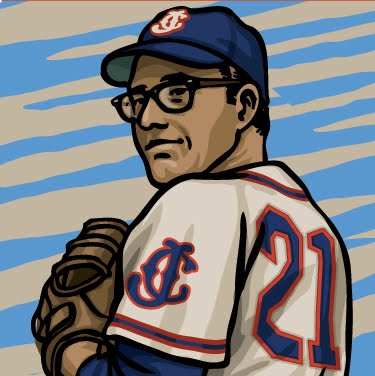
231. Piper Davis: Happy 100th Birthday

  
This week we have a special guest author, John Klima. John wrote the very well reviewed Willie's Boys: The 1948 Birmingham Black Barons, The Last Negro League World Series, and the Making of a Baseball Legend. If you haven't read it already, I highly recommend it. As the title suggests, Willie's Boys is the story of the 1948 Black Barons. Today, the Black Barons are overshadowed by the more well-known teams like the Monarchs and Grays, yet Birmingham can boast some really great alumni, such as Satchel Paige, Mule Suttles, Artie Wilson, Sam Bankhead, Charley Pride, Sam Streeter, Lyman Bostock, and of course, Willie Mays. Throughout the 1940's Birmingham was the strongest club in the Negro American League, winning pennants in 1943, 1944 and 1948. The '48 squad was piloted by by their 4-time All-Star second baseman, Lorenzo "Piper" Davis, and it is Piper who John Klima has so graciously written about, coinciding with the 100th anniversary of his birth. So, without further ado, here's author John Klima...

Happy 100th, Piper Davis
 

Piper Davis was born to play in the big leagues. Time and circumstances got in the way of his destiny but never changed the way he viewed his life. He played until his bones ached and his body became bridle, swinging the bat long enough to afford to put his children into college, and with enough years behind him to influence decades of baseball players who gravitated to his knowing pull. They followed the scent of his swirling pipe smoke and listened to him speak. His voice was booming and robust, soulful and soothing. He saw things in the game others could not readily see and he freely shared his knowledge.
 

There was not a touch of greed within him, and when he died there was no regret or lament. Time had taken a toll on his memories but not his spirit, and from the time he was born on July 3, 1917 to the time he died on May 21, 1997, Birmingham's favorite son was sure of one thing -- though he had never appeared in a major league game, Piper Davis knew he was a big leaguer. Never had a doubt about it. He didn't need you to tell him that. He knew it all along.
 

I got to know Piper, posthumously, when I wrote my book Willie's Boys, which was published in 2009. The book was about how Willie Mays, Piper's young charge on the 1948 Birmingham Black Barons, navigated the world of segregated baseball and was eventually signed by the New York Giants in 1950. I still maintain that this is the greatest single story in the history of free agent scouting, for all the moving parts and behind-the-scenes connections and contacts that made the career of Mays possible. Piper's part in all this was unreported and enormous, and the fingerprints of his character were all over Mays's career. Simply put, Piper put the youngster first.
 

When a talented young amateur player comes around, you will find if you stay in baseball long enough, that greedy adults will do everything in their power to manipulate the player to their advantage. They will do so for personal benefit and at the expense of the young player's development. This dynamic exists today, and it always gets dicey in June and July.
 

Piper was a rarity -- a man of immense character, a man of God and a man of Family, who refused to deviate from the time he knew Mays needed to become a pro.  He taught him and pushed him. He preached and he punished. He left in the bus without him. He also hit him cleanup and played him in center field when he decided Mays was ready. When white scouts came to ask about Mays, it was Piper they sought. Though Piper himself wanted out of the Negro Leagues before it was too late, never once did he tie his future to Mays. He refused to compromise Mays for his own personal gain.
 

Willie's Boys was about Mays but the story belonged to Piper, because the reason baseball had Willie Mays is Piper Davis. When I called Willie, he very genially reflected and said, "You know this stuff better than I do." And when I asked about his fondness for Piper, he simply reflected and said, "He was a very special person to me."
 

Piper had that affect on players he met and people who never met him. So on the occasion of what would have been his 95th birthday, July 3, 2012, I decided to do something that hadn't been done before. I decided to try to get Piper Davis into a major league game.
 

Luck was on my side. The Cincinnati Reds were in Los Angeles, at Dodger Stadium. The manager of the Reds at the time, Dusty Baker, has an affinity for history and a deep awareness of those who came before him. These characteristics were handed down to him as a young man when he was placed under the wing of Henry Aaron and when Satchel Paige made the young Johnnie B. Baker tote his fishing poles. As a Dodger, Dusty admired the heritage of Jackie Robinson and Roy Campanella. Though the decades, Dusty has shown he has a lot of Piper Davis in him, too -- a guy whose instincts and feel for the game, for talking to young ballplayers and older players alike is unique. In the modern era where baseball is a game of massive information drops on a daily basis, there still comes a need for a communicator with the feel of a baseball man. And so Dusty was just the right man for this job.
 

I went to the visiting manager's office at Dodger Stadium and sat down inside one of the old locker stalls and asked Dusty to get Piper into a big league game. My idea was to have him write Piper's initials on his wristbands. Dusty had a better idea.
   

    "What position would he play?" Dusty asked.
   

    "Second base," I said. "Right-handed hitter."
 

So Dusty took his black pen (black for right-handers, red for left-handers) and where his second baseman for the day, Brandon Phillips was written, Dusty instead wrote in PIPER DAVIS, batting fourth, playing second base.
 

Cleanup hitter on a first place club. That would be just fine.
 

Dusty handed the new card to his bench coach, Chris Speier and asked him to print it off. A few minutes later, here comes Chris with the lineup. He hands it to Dusty, who signs it, making it (unofficially) official. Dusty handed me the lineup card. I told him it was going to Birmingham.
 

The Reds lost that game, 3-1, but the only run the Reds scored was an RBI double to center field in the fourth inning off the bat of the cleanup hitter, second baseman Brandon Phillips. Fitting -- it was a short, compact powerful swing from a second baseman, to straightaway center. It was as if Piper was swinging the bat himself. You can dream on that if you like. 

I did.
 

After the game, I made a color copy to keep for myself. I sent the original to Faye Davis, Piper's daughter, who over the years has done an admirable job keeping her father's memory alive. I told her, on Piper's birthday, he finally "appeared" in a major league game. Even got himself a double, so to speak.
 

She was moved by the gesture. She also showed the lineup card to her mother, Piper's widow Laura, who after all those years waiting, finally saw her husband's name in a big league game. A few years later, she passed away, but not before Dusty Baker signed Piper Davis into the big leagues. As Piper always said, without reservation, he knew he was a big leaguer all along.

The path Piper Davis took to professional baseball was as long as winding as the dirt roads leading to the coal mines in his hometown of Piper, Alabama. From the coal mining company teams of his boyhood, Piper realized that baseball was his path to prosperity. He joined the Birmingham Black Barons in 1942 and spent the next two seasons playing baseball in the summer and basketball in the winter for the Harlem Globetrotters. He was an All-Star in the Negro Leagues and was frequently mentioned as an integration candidate for "White Folks Ball," as the black players referred to organized baseball. The St. Louis Browns took an option on him in 1947, which proved to be a fruitless endeavor, and in 1948 he became player-manager of his hometown Black Barons.

https://infinitecardset.blogspot.com/2017/02/21-journal-mark-iii.htmlFrom the moment he perched his front foot onto the top step of the dugout at Rickwood Field, Piper's personality had a pull on his players. He understood how to be their teammate and their manager. He drew lines. He was a married man and so he did not partake in the nightlife. He did not drink or use profanity. The years after 1947 were a trying time for Negro League players, who could see their once proud league dying a slow death, and who recognized that the white majors were not in a hurry to sign them all despite the successful arrival of Jackie Robinson.
 

Piper's 1948 Black Barons were special for the arrival of the young Willie Mays, then a high school sophomore. Mays played with the Black Barons until the time of his high school graduation in 1950. In 1948, the Black Barons beat their rival, the Kansas City Monarchs, to win the Negro American League. They played in the last Negro League World Series, losing to the Homestead Grays.
 

When the Boston Red Sox purchased Piper and made him the first black player the organization purchased, he was released shortly before Mays graduated when it became clear the Red Sox were not going to acquire Mays. Shortly thereafter, Mays was signed by the Giants. The great ballplayers of the '48 Black Barons scattered, including Piper.
 

He settled into the Pacific Coast League in the 1950s, playing his best years for the Oakland Oaks and winding down with the Los Angeles Angels. While with the Angels, he often schooled a young infielder named Gene Mauch, who loved Piper for his personality and his wisdom. Piper finished his career with Fort Worth in the Texas League, playing until 1950.
 

You can find his career path online but to feel his contributions, you had to talk to the people who knew him. When I wrote Willie's Boys, Piper was a constant. I would listen to those who knew him and read what he had to say. When you write books, sometimes you feel as though you "get to know" people who have died long ago. Piper's lessons, as it pertains to developing ballplayers, guide me to this day. Piper once said, in all humility, that "if he had played today, he'd have been a million dollar ballplayer," but never once complained. So here on his 100th birthday, we think it is fitting that we share Piper Davis' story, and how he posthumously made it to the big leagues -- a centennial for a man born to be a big leaguer. 


Wednesday, October 19, 2016

224. Fred Clarke:


I've said it before many times, but I'll say it again: one of the best benefits about writing/illustrating The Infinite Baseball Card Set is all the baseball historians, writers and artists I've met. I've asked a few to be a "Guest Author" on here and this week I'm pleased to have Angelo Louisa. You may have heard of him, he's been the author, co-author or editor of a bunch of solid baseball books, and there's a good chance one of them sits on your bookshelf right now. I know his book on the 1926 Pirates sits on mine, and Angelo chose a character from that very book as the subject of this week's story...

With virtually the same personnel that had won both the National League pennant and the World Series the previous season, the 1926 Pittsburgh Pirates were favored by the majority of preseason prognosticators to capture the pennant for the second year in a row.  But they ended up in third place, four and a half games behind the St. Louis Cardinals.


That failure has largely been attributed to the alleged dissension caused by the presence of vice president and assistant to the manager Fred Clarke on the Pirate bench and to the ramifications of an attempt by several players to remove him, known as the "ABC Affair."   


For the casual fan of baseball history, the name Fred Clarke may not mean anything.  But for the knowledgeable fan or the baseball historian, it may conjure up images of the fiery player-manager of the Louisville Colonels and Pittsburgh Pirates, someone who was elected to the National Baseball Hall of Fame as a left fielder but who could have been elected as either a player or a manager.  As a player, Clarke was an excellent hitter, an aggressive base runner, a daring defender, and a fierce competitor who, according to Baseball-Reference.com (as of September 18, 2016), placed in the final seasonal top 10 in positive offensive and defensive statistical categories 194 times (not including games played, defensive games played as an outfielder, at bats, and plate appearances) throughout his 21-year career in the National League.  As a manager, he led his teams to four pennants, one World Series championship out of two appearances, a remarkable 14 straight first-division finishes, and a .576 regular-season winning percentage (.595 with the Pirates).  And he accomplished these feats while managing against such notable skippers as Ned Hanlon, Frank Selee, George Stallings, John McGraw, and Frank Chance.


However, even the knowledgeable fan or the baseball historian may not be aware that Clarke was much more than a baseball personage.  The ninth of 12 children of a blacksmith-farmer and his homemaker wife, Clarke used his dual passions of baseball and working the soil, his athletic and mechanical talents, and his optimistic nature and belief in fate to become an outdoorsy Renaissance man and a multimillionaire.  During his nearly 88 years in this world, Clarke was an innovative and highly successful rancher whose income skyrocketed when oil was discovered on his land; a Kansas state champion amateur trapshooter; an outstanding equestrian who did riding tricks from the back of his horse; an avid hunter, fisherman, and golfer; and a skillful inventor who created and held patents for, among other things, flip-down sunglasses, sliding pads, and a mechanical apparatus for putting the tarpaulin over the baseball field.


In addition, Clarke was a community leader in Winfield, Kansas, who co-founded the area’s country club, helped to build the town’s current Holy Name Catholic Church, and stood up to the Ku Klux Klan when it tried to harass him for being a Roman Catholic.


Nor would the knowledgeable fan or the baseball historian necessarily be aware that, at the request of Pirate owner Barney Dreyfuss, Clarke returned to the Pirates in 1925 as assistant to the owner, assistant to the manager, and head of scouting and was one of the key people responsible for the Bucs winning the National League pennant and the World Series championship that year.  Clarke remained with the Pirates in 1926, having become vice president of the club during the offseason while retaining his positions as assistant to the manager and head of scouting, and endeavored to aid them in seizing another pennant.  But his efforts came to naught.  A talented Pirate team did not live up to expectations and a scapegoat had to be found to explain the bronze medal finish.  For certain Pittsburgh sportswriters and fans, that scapegoat was Clarke, a belief that some later writers have also held.         


However, in 2006, I began to research the ’26 Pirates in general and the ABC Affair in particular, looking at all five mainstream Pittsburgh newspapers—not just those that criticized Clarke or those that have been digitized—as well as various player interviews and other primary sources and discovered that the blame assigned to Clarke has been mostly misplaced and that the reasons for the Bucs' failure were far more complex.  The result of my research is a book titled The Pirates Unraveled:Pittsburgh’s 1926 Season, which was published last October by McFarland.  But I’ll resist temptation to say anything else about it because I want you to read the details for yourself.  To order a copy of the book, go to www.mcfarlandpub.com. 


Angelo J. Louisa is a researcher, writer, and community educator who lives in Omaha, Nebraska.  A member of the Society for American Baseball Research, he has contributed articles to books, periodicals, and websites, is co-editor of ForbesField: Essays and Memories of the Pirates’ Historic Ballpark, 1909-1971 and Mysteries from Baseball’s Past:Investigations of Nine Unsettled Questions, and is series co-editor of McFarland Historic Ballparks.
 

Monday, February 8, 2016

213. Jimmy O'Connell: The Other Side of a Scandal


Over the years I've been fortunate enough to hear from several of the players whose portraits and stories I've included on my website, and that continued after my book "The League of Outsider Baseball" came out in May. One of the most memorable letters I received from a relative of Jimmy O'Connell. He's in the chapter entitled "The Bad Guys" due to his being thrown out of organized baseball for offering money to an opposing player to throw a game. Jimmy's great-niece wrote to say how bittersweet it was to find her great-uncle Jim in a chapter with a title of "Bad Guys". After telling me about how much she enjoyed the book she added this poignant passage: "So I'd like to put in a word for Jim O'Connell and let you know what a good guy he was. Devoted to his wife, my Aunt Esther, a loving uncle to my mom and her sister and madly in love with the game of baseball, long after it turned its back on him. ". 

Those words stuck with me ever since. These ballplayers I illustrate and write about had families who loved them. The letter made Jimmy O'Connell not just a name from old newspaper articles and box scores, but a very real person. I want to thank Jimmy's relatives for taking the time to write this great piece. The story of Jimmy O'Connell and the 1924 pennant scandal is often told, but never to my knowledge has it been told from the family's perspective. I'm both honored and humbled to be able to showcase this story here on my website. and without further delay, here the O'Connell family's "guest author" post on the old ballplayer they called "Uncle Jim"...

We all know the curdled feeling you get when your ball team loses. It is always at its most intense when the game hinges on a single error and your team ends up sinking a bit deeper in the loss column. But brighter tomorrows come easily in baseball. With its lengthy season and ambling games that always breed hope, the crummy feelings dissipate and faith is restored with one swing of a bat. But for New York Giants outfielder James "Jimmy" O'Connell, a single error of judgement in the 1924 pennant race meant a lifetime ban from professional baseball. The stamp of his poor decision stayed affixed to him and his name has traveled down nine decades of baseball history with a scandal attached.

But for me, the name Jimmy O'Connell doesn't exist solely in places like Gary's excellent book The League of Outsider Baseball. He was also my mother's "Uncle Jim", her lovable, generous and incontrovertibly optimistic uncle, friend and hero. My mom Mary June, her sister Margaret and cousin Bette always kept stories of dashing Uncle Jim alive for their combined 21 children. Although they never denied the fact that in the pennant race of 1924, Jim offered another player $500 if he didn't "bear down too hard ", they also handed down the story, detailed in their aunt's anguished letters, of heartbreak and misguided faith in the men of baseball who held Jimmy's fate in their hands. They told us, too, about the life Jim lived after the scandal, spent on dusty Outlaw League diamonds, and then back in California where some of the shimmer of his days as a San Francisco Seal stood him in better light with old fans and admirers.

In 1921, my grandmother's sister Esther moved from Montana to San Francisco to look for work. She found a secretarial job at accountants Price-Waterhouse and one day she noticed a photo of a young ball player named Jimmy O'Connell in the newspaper and set her heart on him. The handsome Irish-American was a member of the San Francisco Seals and Esther, chaperoned by her visiting mother, left a note for the first baseman at Recreation Park. "We went down to 14th Street and Valencia and left a note at the Seals office. I asked him to call on me at the Palace Hotel, if he wished. I got a call that afternoon," said Esther in an interview recorded on cassette tape before her death in 1978. Their first date was spent at the Pantages Theater seeing comedian Georgie Jessel. Recalling the evening, Esther said, "In his monologue he said, 'Did you ever see O'Connell hit one?'"

The young couple was married on October 2, 1922 and not long after their honeymoon, O'Connell was in the newspapers on both coasts due to the record-breaking sum paid by the New York Giants for his contract. "Babe Ruth Has Nothing on Seals $75,000 Beauty" and "N. Y. Giants $75,000 'Rookie'" sang the headlines. O'Connell went straight to work at the Giants' training camp, gearing up for a switch to the outfield.

The early 1920s were a glittering time in New York City and Esther was a faithful correspondent, describing to her mother and sisters the glamorous Broadway revels and pure excitement of the Polo Grounds. A family of inveterate newspaper clippers, Esther's sisters saved every mention of Jimmy O'Connell from printed game stats to the items in the society page depicting the young O'Connell and his smartly dressed wife on the town.

Then the 1924 season came to a staggering end and with it, the baseball career of Jimmy O'Connell. Books like Judge Landis by J.G. Taylor Spink and John McGraw by Charles C. Alexander have reported the details of what happened on Sept. 27, 1924 and the ensuing meetings held in Judge Kenesaw Mountain Landis' office. The main fact was thus: In a game whose win would only be an insurance policy in a National League pennant race they had nearly captured, NY Giants rookie outfielder Jimmy O'Connell approached Philadelphia shortstop Heinie Sand and whispered, "It will be worth $500 to you if you don't bear down too hard against us today."  Aghast, Sands refused and went straight to his manager to report the offer.  Word traveled swiftly to the ears of baseball commissioner Landis and O'Connell and coach Cozy Dolan were immediately summoned to explain their part in Sands' accusation. (And as it turned out, the Giants didn't need any funny business to win their "fourth straight flag". "Why offer Philadelphia $500 to lose?" one wag quipped. "They're happy to lose for free.")

Esther's side of the story was delivered in a long, tear-stained letter she composed to her mother after sitting out all night with Jim in Central Park to avoid the hordes of reporters that had descended upon their residence.  "He didn't want to but when he asked the older men what to do he was told, 'You know how thick McGraw and Dolan are, so it is orders.'" McGraw was brusque Giants owner John McGraw and those "older men" were future hall-of-famers Frank Frisch, Ross Youngs and George Kelly, who all denied saying anything and escaped punishment.

For a time, the couple remained hopeful. Jimmy never denied having made the offer to Sands, saying that he was told by coach Dolan to send out a feeler. And there is nothing that has ever been published (to my knowledge) that states that Jimmy O'Connell was solely responsible for the offer. Several baseball writers have asked, "Who put together the money?" and a couple have wondered aloud whether it was all a prank against a credible greenhorn. But adjudication was solely in the hands of Judge Landis and he handed Jimmy O'Connell and Cozy Dolan lifetime bans from professional baseball.

Stunned, Jim and Esther left New York and returned to Northern California. Esther wrote to her sister, "Jim has youth and health and we have each other and we can start over again in time." Jim's love for baseball (and his terrific athletic ability) drew him down to New Mexico to play outlaw baseball in a small league that hosted several other banned players and was looked upon with scorn by organized baseball. The Fort Bayard team was sponsored by a group of World War One vets, most of whom were bedridden with lingering wounds and tuberculosis in the post hospital. Jimmy was so popular with the fans and the vets that he eventually formed a team for the Southwest New Mexico League called "Jimmy O'Connell's All-Stars". Throughout his six years in New Mexico, Jim thrived in his roles of team captain and raiser-of-spirits to the men of Fort Bayard Hospital.

There was no shortage of calls and petitions for the reinstatement of Jimmy O'Connell made to Judge Landis. None other than the colorful writer Damon Runyon asked Landis to reconsider. "Don't you think this boy has been punished enough, Judge? I believe the public would be with you if you reinstate him." But Landis never budged and eventually Jim and Esther left the Southwest and headed back to California to begin another chapter in their lives. Jim took a job with Richfield Oil and enjoyed a long career with the oil company, starting as a refinery worker and ending his career in public relations, promoting the development of the Alaska Pipeline.

My mother, Mary June, described a visit to Uncle Jim and Auntie Esther in her 1940 diary, composed when she was nineteen years old. She flew from Cheyenne, Wyoming to San Francisco and stayed for a week in the O'Connell's Sausalito home. Each day she recorded a marvelous sightseeing trip with her Uncle Jim, culminating in a visit to the World's Fair. My mother always treasured the souvenir photograph that Uncle Jim gave her that day. And with good reason. There aren't many photos of Jimmy O'Connell in our family collection and very little memorabilia outside of a silver "Open Gate" medallion given to Jim by the NY Giants in 1924.

When Esther O'Connell returned home from Jim's funeral in Bakersfield in 1976, there was a baseball collector waiting in the driveway. Brushing past him and his inquiries, Esther made a bonfire in her backyard and threw Jim's mitts, uniforms and memorabilia on the flames. Jim had allowed himself to move on, but Esther's anger at baseball had never subsided. Mom's cousin Bette managed to save one box of Jim's things from the bonfire, but Esther had already torn the photos in two. A team photo of the SF Seals, a press photo of Jim and Sox player Willie Kamm, and a photo of Jim shaking hands with John McGraw were poignantly pieced back together with transparent tape. It is a small, but cherished, collection that I hope will spur the curiosity and baseball fever of my grandnieces and nephews as it has mine.

I am so very grateful to Gary Cieradkowski for including Jimmy O'Connell in his book and for creating such a wonderful illustration of Uncle Jim. I wasn't sure if I was just dispatching an email into the wild blue yonder when I wrote to Gary about another side of Jimmy O'Connell's story. HIs gracious reply has allowed me to share these personal reminiscences of my family and provide another view of a man who, by all surviving post-scandal accounts, was admired by just about everyone he came across.

I have been encouraged to write about Uncle Jim for many years by my Aunt Margaret. At 92, she is in full possession of her detailed memories of her beloved Uncle Jim.  I dedicate this blog post to her. She is the last person in our family (and perhaps the world!) to have seen Jimmy O'Connell play baseball. She saw him play on the Richfield Oil company team on a visit to California in 1935. She was eleven years old.

I spoke to her on the phone the other day and asked her if Jim ever talked about his regrets or suffered from the anguish that plagued Esther. She said, "He never said a word about it. It was all in the past. When he walked in the room, he'd look me and Mary June in the eyes and say, "Shall we get an ice cream cone, girls?"


A Note About the Illustration: I wanted to show Jimmy back before he joined the Giants, circa 1923 while with the San Francisco Seals, when his future was bright and the sky was the limit for him. I depicted him in the time-honored baseball chore of "boning" his bat with a horse shoe. This was done back before players used 100's of bats each year. Players would spend spare time rubbing a horse shoe, Coke bottle or steak bone on the bat which closed the pores of the wood, making it rock-hard and less likely to break.
 

Thursday, January 7, 2016

210. Joe Gans: Star of the Ring and the Diamond


I've said it before many times, but I'll say it again: one of the best benefits about writing/illustrating The Infinite Baseball Card Set is all the baseball historians, writers and artists I've met. I've asked a few to be a "Guest Author" on here and this week I'm pleased to have Bernard McKenna back for his second appearance. I became acquainted with Bernard due to our mutual interest in Baltimore Negro League history. I've always felt that with all the rich history in that city it has been sorely overlooked when it came to good solid books on the subject. The Black Sox and Elite Giants have been mentioned many times in chapters in books on general Baltimore baseball history, and the Black Sox in particular would make a great book subject. Cue Bernard McKenna. You may have already heard of him as he made some noise a few years ago when he discovered the only aerial photograph of Maryland Baseball Park where the Black Sox played. Up until McKenna's discovery, very few knew what the park looked like or was even located for that matter. Now baseball historians can gauge the dimensions and layout of the part which in turn helps put the feats of the Negro League greats in perspective. 

The last time McKenna was a guest he introduced us to one of the more obscure aspects of Blackball - the umpire. This time he again skirts the obvious and shines some light on the diamond career of one of the early African-American boxing champions...

Joe Gans, the first African-American boxing champion, was a Baltimore guy who, even though he was born in 1874, would fit right in today on the streets near the Broadway Market, in Fells Point, where he was raised. He lived “in a racially mixed community with a tradition of self-sufficiency . . . [and] absorbed a culture that valued grit, determination, and hard work.”1  Gans had an edge to him, even going 42 rounds in a title defense. He inspired Ernest Hemingway and generations of fighters who touch his statue for good luck before fights in Madison Square Garden.2 He knew, first hand, the effects of racial discrimination, and, like many young men growing up in Baltimore, he loved baseball, even, perhaps, more than boxing.  In a city torn by racial violence, baseball fields functioned as one of the few places where blacks and whites had the opportunity to congregate.  

Although they could not help but be aware of the social implications of the games, players and fans were most likely motivated by a love for the sport.  They would have to be.  It was no easy task to follow let alone organize a quality baseball team in such circumstances.  Many did, however, and some established a regional reputation.  In doing so, they would carve a space for the Black Sox, Elite Giants, and other African American athletes both in Baltimore and in the region.  At the turn of the twentieth century, The Baltimore Giants were one such team.  William Tydings managed the club.  He had played for and managed other amateur and semi-pro teams in the city.  William T. Jordan served as the club’s president and, presumably, as its main financial support.  Jordan owned and operated saloons
3 and a billiard parlor4 on East Lee Street.  The Giants’s participation in the “Colored Southern Ball League” set them apart from other African American owned teams in Baltimore.  There is very little information available about the League.  It was apparently a loose organization of baseball teams in Richmond, Portsmouth, Wilmington, Norfolk, Petersburg, Lynchburg, Baltimore and Washington, DC5.   However, it did have some lasting effect in that teams from these cities would continue to play other Baltimore-based teams, including the Black Sox, years after Jordan’s and Tydings’ club folded.  

Those Giants had another legacy, as well.  Joe Gans the first “Colored Boxing Champion,”
6 played for them  when he was not in the ring.  He had managed other clubs, such as the “Dick-de-Doos”7  and the Norfolk Elites8.   Later, he also founded his own team, which was the most influential club of the era.  The team was known as the Middle Section Giants or simply as Joe Gans’ Nine and later, when the name was available, as the Baltimore Giants.
 

He built upon the regional connections, established by Tydings and Jordan, continuing to play the teams from the old Colored Southern League9 and expanding into the north, with games against clubs in Wilmington, Delaware; Philadelphia; and Chester.10  He also expanded deeper into the south, playing teams from North Carolina11 and Georgia.12  In doing so, Gans put Baltimore on the map for black baseball.  Of course, his celebrity helped.  Fans would come to the games to see the boxing champ.  Up to 600 would take the train from Washington, DC to see him play in Baltimore.13  Not only would they catch a glimpse of Gans, the boxer, they would see Joe Gans, the baseball player.   The sports pages describe his fielding as “clever”14 and “brilliant.”15  At the plate, he was “a terror.”16 

His gamesmanship also garnered attention, delighting baseball fans and frustrating others.  After a loss, he would publicly wager on a re-match, putting up his own money.
17  If he could not persuade other teams to play his Giants, he would call out potential opponents betting $50 or $100 that his team was better.18  He even offered the “entire gate receipts to any club outside of the Philadelphia Giants that defeats him.”19  The team’s performance matched his rhetoric: In 1905, the Washington Post described the “Middle Section Giants of Baltimore” as “the strongest team south of Philadelphia.”20  Gans’ success was short lived, however, as he chose to focus on his boxing career, although his health may have been a factor.21 

He continued to play ball through the 1908 season, although he no longer sponsored a team.  In one of his final games, he pitched a shut-out
22 for the Cuban Giants against the Weldon Athletic Club, the team that would become the Baltimore Black Sox.  Gans died of tuberculosis in 1910. However, his legacy as a boxer and as a ballplayer survived him.  Gans’ work in baseball, in particular, made the later success of the Black Sox possible.  His celebrity, at first, and later his skills as a player, owner, and promoter created a regional reputation for Baltimore baseball in general and for black baseball in the city in particular. His clubs and the other black amateur and semi-pro teams of the period established a foothold for African American sports in the region.  

He is also an ideal figure through which to read race and sports in turn-of-the-century Baltimore.  He was a multi-sport athlete, who both had a talent and, as a typical Baltimore guy, a passion for baseball. In both boxing and baseball, Gans dealt with sometimes conflicting notions of racial superiority.  Gans also had to deal with racism, prejudice, and hatred.  John L. Sullivan, and many other white boxers, “never permitted themselves to fight a colored man.”
23 The Baltimore Sun, in its news pages, saw integrated boxing as contrary to the public good.  A headline proclaimed the film of Jack Johnson’s championship match, in which he defeated a white man, a “Revolting Show.” The paper quoted the president of the police board, who characterized it as “humiliating to white people” and the police commissioner, who indicating that it will “give rise to racial prejudice” and, consequently, create a public disturbance.24 

However, as Collen Aycock writes, “Both baseball and boxing cut across racial and economic divides.”
25  As in its coverage of baseball, the Sunpapers’ sports pages focused on the skill of African American fighters.  A sportswriter would point out, for example, that “there was general prejudice against” them but also that “this was temporarily forgotten” in light of their boxing abilities.26  Many of the African American amateur, semi-pro, and professional athletes of the late nineteenth and early twentieth century were the best at what they did, regardless of race, and their skill and professionalism attracted admirers across and in spite of racial boundaries.  They, like Gans, made their “name and fame through sheer perseverance.”27  In doing so, they made the road a little less difficult for those African American athletes who came after them, although hatred and violence persisted. 

Their work countered the supposed moral hegemony of racism with skill and athleticism, which, in turn, created its own imperative.  If white teams or white boxers wanted to proclaim themselves the best, they had to confront the reality of black athletes.  African Americans were still segregated, but they could not be ignored.  They countered segregation and Jim Crow with a social movement of their own: that of continued excellence in athletics, combined with a refusal to stop or to be silent.  In doing so, they would demonstrate the moral bankruptcy of Jim Crowism in baseball and the ethical deficiencies of those men who promoted it.


NOTES
1 Colleen Aycock and Mark Scott, Joe Gans: A Biography of the First African American World Boxing Champion  (Jefferson, NC: McFarland and Company, 2008): 24.
2 Ibid, 255.
3 “Capt. Ward Leads Raid,” Baltimore Sun, July 27, 1902, 14.
4 “Receiver for Billiard Rooms,” Baltimore Sun, January 28, 1903, 6.
5 “Colored Southern Ball League,” Baltimore American, March 20, 1903, 10.
6 “Baltimore Giants Beaten,” Baltimore Sun, July 17, 1904, 10.
7 “Sporting Miscellany,” Baltimore Sun, July 9, 1901, 6.
8 Mark Kram, “It Seemed like it Happened in Another Country,” Baltimore News American, August 9, 1981, 2E.
9 “Gans Arranging Ball Schedule,” Baltimore Sun, July 5, 1905, 8.
10 “Busy Time for Gans’ Nine,” Baltimore Sun, July 14, 1905, 8.
11 “Games for Gans,” Baltimore Sun, August 13, 1905, 10.
12 “Gans Nine to Play Georgia Team,” Baltimore Sun, July 8, 1905, 8.
13 “Gans Team,” Baltimore Sun, July 16, 1905, 10.
14 “Crack Negro Team to Play,” Washington Post, June 25, 1905, SP2.
15 “Gans’ Team Defeated,” Washington Post, July 1, 1901, 8.
16 “Joe Gans a Ball Player,” Washington Post, July 1, 1901, 8.
17 “Gans Nine Defeated,” Baltimore Sun, July 19, 1901, 6.
18 “Gans and His Ball Team,” Baltimore Sun, May 21, 1905, 10.
19 “Games for Gans’ Team,” Baltimore Sun, August 13, 1905, 10.
20 “Crack Negro Teams to Play,” Washington Post, June 25, 1905, SP2.
21 Aycock and Scott, 200.
22 “Weldons Snowed Under,” Baltimore Sun, September 25, 1908, 10.

23 “Pugs Draw Color Line,” Washington Post, January 17, 1909, S2.
24 “To Exclude Revolting Show,” Baltimore Sun, July 6, 1910, 14.
25 Aycock and Scott, 13.
26 “Timely Boxing Talk,” Baltimore Sun, January 29, 1906, 8.
27 Ibid, 200.
 
Bernard McKenna was born and raised in Baltimore City, near Memorial Stadium.  He currently works as an English professor at the University of Delaware.  Much to the delight of his wife and children, he's starting to look for the old Baltimore Black Sox, recently discovering images of their ballparks.


Tuesday, September 23, 2014

178. Charles "Square Deal" Cromwell: Blackball Umpire


I've said it before many times, but I'll say it again: one of the best benefits about writing/illustrating The Infinite Baseball Card Set is all the baseball historians, writers and artists I've met. I've asked a few to be a "Guest Author" on here and this week I'm pleased to have Bernard McKenna grace this site with a story. I became acquainted with Bernard due to our mutual interest in Baltimore Negro League history. I've always felt that with all the rich history in that city it has been sorely overlooked when it came to good solid books on the subject. The Black Sox and Elite Giants have been mentioned many times in chapters in books on general Baltimore baseball history, and the Black Sox in particular would make a great book subject. Cue Bernard McKenna. You may have already heard of him as he made some noise a few years ago when he discovered the only aerial photograph of Maryland Baseball Park where the Black Sox played. Up until McKenna's discovery, very few knew what the park looked like or was even located for that matter. Now baseball historians can gauge the dimensions and layout of the part which in turn helps put the feats of the Negro League greats in perspective. 
So, when I asked McKenna if he'd like to contribute to The Infinite Baseball Card Set he readily agreed, contributing yet another gem of Blackball research: a short history of a Negro League umpire! I hope you enjoy this extremely rare look into a little-known aspect of pre-war black baseball...

Charles Cromwell had a decision to make, and it wasn’t an easy one.  Rube Foster wanted him to come to Chicago and umpire games for the Negro National League (NNL).1  It was a tempting offer.  Foster had founded the NNL in 1920 and, in part, through sheer force of will, had carved out a successful black-baseball organization, which included the major cities in the Mid-West: Chicago, Detroit, and St. Louis among others.  By 1923, at the time of Foster’s offer, there was talk of cooperation between the NNL and the newly formed Eastern Colored League (ECL), which included teams from Baltimore, Washington, DC, Philadelphia, and New York.

Foster wanted to hire, in the language of the day, “race men,” African American professionals, to serve as umpires but insisted on excellence.  He regretted that there were not more qualified African Americans who could serve as umpires and canvassed the country to find those who were.2  Foster only wanted the best for the league.  He had already lured Billy Donaldson from the Pacific Coast League, where he had established a reputation as one of the best umpires in California, gaining the respect of ballplayers both white and black.
3  If Cromwell went to NNL, he would be at the top of the profession.

On the other hand, he had been with the Baltimore Black Sox since 1917, around the time that Charlie Spedden brought the club and moved them into the Westport Baseball Grounds.
4  Spedden offered to match Foster’s offer,5 so money wasn’t a factor.  If he had given thought to job security, the choice was harder than it might seem today, in hindsight.  At the time, Baltimore was a model franchise, with an ownership fully committed not only to its on-field success but also to improving playing conditions for its players and working conditions for its employees.6  Charles Spedden had just left his job with the Baltimore and Ohio Railroad, so he too was invested in the team’s long-term well-being.  The Black Sox had also recently (1921) built a new home, the Maryland Baseball Park, and had made major upgrades for the past two seasons, making it the “most complete colored baseball park in the country”7    He had other ties to the community as well.  He was a champion bowler, and the Afro American had asked him to write a regular column on the game.8
 
Add to this, Spedden had hired another “race man” to umpire, luring Henry “Spike” Spencer north from Washington, DC.
9  If Cromwell stayed in Baltimore, he too would be part of an elite umpiring crew.  Such a pairing would place him and Baltimore at the top of the profession.  Further, he wouldn’t have to uproot his family, and it could not have escaped his attention that he would then become a role model for and leading member of Baltimore’s African American community.  He chose to stay with the Black Sox.

There must have been times over the next few years that he regretted his decision.  In 1925 the ECL took the job of hiring umpires away from the teams, putting Cromwell out of work for that season.  A white sportswriter from Philadelphia made the assignments and did not favor “colored” umpires.
10  The league suspended that practice the following year, and Spedden brought Cromwell back in 1926.11  However, Spedden was forced to resign from the Black Sox in 1927, and George Rossiter, who had been Spedden’s partner, took control of the team’s business operations.  Rossiter chose not to employ African Americans as umpires, firing both Spencer and Cromwell shortly after Spedden left the team.  Rossiter  “insist[ed] on the use of white umpires” until “Negro umpires . . . prove competent.”12   He would eventually hire Cromwell back, but conditions had changed.  The ballpark, which had been an impressive facility, was allowed to deteriorate,13 even as the Black Sox became one of the best teams in the nation, winning the 1929 championship.  The Depression further exposed the club’s weakened financial position, and the Black Sox would cease to exist as a franchise in the early 1930s.  By that time, Cromwell had moved on.

In 1932, he would be named Lead Umpire in the Southern Colored Athletic Association.
14   Later that decade, he would return to the majors, umpiring games for the Baltimore Elite Giants.  His name appears in box scores and, occasionally, surfaces because of a controversial call.15  However, those times are rare, which bodes well for an umpire.  He did not infuse his personality into the game, preferring instead a quiet yet rigorous professionalism.  In 1941, his doctors strongly advised that he take a break from the game, but he returned a year later.16 His name last appears in a box score in 1947.17  His career spanned four decades and at least thirty-one years.  He was reported to be “one of the ‘finest’ umpires in the East.”18 He also gave back to the community, enlisting in the army during the First World War.  He also rushed into a burning building to save a woman’s life.19

If he had taken Foster up on his offer, Charles Cromwell would have likely served with distinction, ranking with Billy Donaldson and Bert Gholston as the best umpires in the NNL.  Instead, he chose to stay in Baltimore.  As a consequence, his career was twice interrupted because of racism.   He persisted, carving a place for himself in the community and in local baseball.  His years of service, his distinctions, and his work in the community rival those Major League umpires in the Hall of Fame.  Moreover, he worked in a time where a “colored umpire” was often the punch-line of a joke.
20  In this context, it is remarkable we know as much as we do about Cromwell.  For many of the “race men” hired by Rube Foster or who labored in black baseball we will never know their names.  For others, there are a few pictures or the name or partial name in a box score or a rare news story.  It’s worth remembering those we know:  Leon Augustine, Lucian Spaer, Caesar Jamison, William Embry,21 Frank Forbes, Judy Gans, Cooper, Greenwald, Ben Taylor, Peirce, Brown, Craig, and Moe Harris.22  In 1932, Bert Ghoston wrote a column, calling them “The Forgotten Men.”  Indeed, they were and are. 

NOTES
1 “Black Sox Want Cromwell Here,” Afro American, March 30, 1923, 14.
2 “We Need and can use Colored Umpires,” Afro American, January 13, 1922, A8.
3 Foster gets Umpires,” Afro American, April 13, 1923, 1. 
4 “Bowlers get Ready,” Afro American, September 8, 1922, 8. 
5 “Black Sox Want Cromwell Here,” Ibid. 
6 “Black Sox Club to be Real Ball Team,” Afro American, March 10, 1922, 9
7 “Sox sign Catcher and new Pitchers,” Afro American, February 9, 1923, 11.
8 “Charles Cromwell as a Bowler,” Afro American, February 14, 1925, 6.
“Best in the League,” Afro American, September 11, 1926, 9.
10 “Cromwell to Call ‘em at Sox Park,” Afro American, April3, 1926, 8.
11 Ibid.
12 “Can’t Secure Good Umpires,” Afro American, Aug 10, 1929, 15.
13 Bill Gibson, “The Passing Review,” Afro American, May 4, 1929, 15.
14 “Eagles Still Hold Ace Spot,” Afro American, June 23, 1934, 21.
15 “Player Ejected as Elites Split with Cubans,” Afro American, July 22, 1929, 23.
16 “Charlie Cromwell Quits as Umpire,” Afro American, August 30, 1941, 23.
17 “Elite Giants Lose Game,” Baltimore Sun, June 4, 1947, 15.
18 “Cromwell to Call ‘em at Sox Park,” 8.
19 “Both Heroes,” Afro American, April 30, 1927, 20.
20 “A New baseball Ruling,” Baltimore Sun, August 8, 1911, 6.
21 “Rube Foster Signs 7 Colored ‘Umps,’” Afro American, April 27, 1923, 14.
22 “Ghoston calls them the Forgotten Men,” Pittsburgh Courier, December 17, 1932, 14.

Bernard McKenna was born and raised in Baltimore City, near Memorial Stadium.  He currently works as an English professor at the University of Delaware.  Much to the delight of his wife and children, he's starting to look for the old Baltimore Black Sox, recently discovering images of their ballparks.

Wednesday, March 20, 2013

146. Charlie Hoover: Talented But Troubled


When I was looking for any kind of reference on Humpty Badel, I could find only one other person who had written about him in the last 90 or so years - Thom Karmik. His website Baseball History Daily is a joy to read, a fact that I can personally testify to. After reading the Badel story I found myself going deeper and deeper into his archive of past stories until I had to restrain myself - I was getting dangerously off the track of my Badel research. His endless trove of interesting ballplayers and new (to me) stories had me hooked. Seeing that we both share a similar taste in obscure players and stories, I emailed Thom and asked him if he'd be interested in writing a story for my site as a guest author. Lo and behold he agreed and quickly sent me this great bit of original research on a really interesting guy from the early days of the game. So, without further delay, I'll turn it over to Thom Karmik...

Charles E. Hoover is one of a select group; Major League players for whom no information is available about when or where he died.  Like many 19th Century ballplayers he eventually became better known for his demons than for his ability, and eventually faded into obscurity.

Hoover was born in Mound City, Illinois in September of 1865; the town, upriver from Cairo was incorporated just seven years earlier and was the site of the Union Army’s largest hospital in the west and a shipyard that produced three Union ironclads:  the U.S.S. Cairo, the U.S.S. Mound City, and the U.S.S. Cincinnati.

Nothing is known about Hoover’s childhood, but at some point he settled in Hannibal, Missouri, where he would return throughout his life. 

His professional career began in 1886 with the Lincoln Tree Planters in the Western League.  Hoover played for three teams in the Western League in 1887, and his .342 batting average and growing reputation as a solid catcher with an excellent arm earned him a contract with A.G. Spalding’s Chicago White Stockings. 

Between the 1887 and ’88 seasons Hoover’s troubles began.

He was drunk in Lincoln, Nebraska (some contemporary papers said the incident happened in Kansas, but it appears Lincoln was the site) in early December of 1887 when he was arrested for shooting at a carriage driver.  In January a wire service report which appeared in several papers said Hoover had been released from jail and would be joining the white Stockings in the spring:

“(Hoover) has written a letter to President Spalding in which he proves by the court record that the charge preferred against him was entirely fictitious and the work of two men he whipped in a fight.”

The story said a fight broke out between Hoover and the two men and the gun “accidently discharged” and, “Spalding, after investigating all the evidence at hand has come to the conclusion that Hoover, while perhaps a little hotheaded, did nothing especially reprehensible.”

Hoover joined the White Stockings in the spring, but was released to the Western Association before the season began.  The catcher split time between the Chicago Maroons and the Davenport Onion Weeders.  He was purchased for $8500 at the end of the season by the Kansas City Cowboys in the American Association and made his major league debut in October, appearing in three games for the Cowboys.

The following season in Kansas City was a stormy one.  There were numerous reports that he and Kansas City manager Bill Watkins did not get along, and Hoover’s reputation as a talented, but “troubled” player grew.

After another disagreement with Watkins in July, The Sporting Life said:
“Hoover is a peculiar ball player. Fines, bad treatment and threats of expulsion don't seem to  have any effect on him. The management had tried everything on him. It was thought for a time that he would be released, but yesterday he was put in to catch and caught the best game ever played in this city. His work was simply wonderful.”

Then, a few days before the end of the season, Hoover fought with a fan in Kansas City.  The Sporting Life was not ready to give up on him and provided his defense, despite acknowledging he was probably drunk:

“Many a ball player has done worse and has been forgiven readily. Hoover had been drinking. He was mad and angry and when a spectator insulted him, he lost his temper altogether.”

Besides, The Sporting Life said “He did some of the best catching this season in the American Association.”

Despite his defenders, Hoover was finished with Kansas City. When he returned to the Western Association the following season, The Denver Republican said:

“(He) is a good backstop, an excellent thrower, fair hitter and rapid baserunner.  He is cursed however, with a tinder-like temper, which no manager has yet been able to control.”

There are no available statistics for the1890 season.  Hoover began the season with the Kansas City Blues and was acquired in August by the Lincoln Rustlers. 

Hoover’s troubles continued.  The Omaha World-Herald reported that summer that Hoover’s “Mistress” in Lincoln, was the “Keeper of a disreputable house at 6th and M Streets,” and shortly after the end of the 1891 season Hoover was arrested in Lincoln another incident involving Hoover shooting at someone while drunk.

The erstwhile catcher managed to avoid prosecution again when he was signed to a contract with the Sacramento Senators of the California League.  In February, The World-Herald said:

 “At 5 o’clock this morning Charley Hoover was escorted to the Burlington depot by an officer and put upon a train bound for California… (The) ballclub telegraphed $150 and from it he extracted $25 and paid his fine.  If he ever shows up in Lincoln again he will be prosecuted for assault with intent to kill.”

The Sporting Life said Hoover “Who but for his besetting sin, drink, would be one of the great catchers of the profession…He has signed a contract to abstain from liquor, a forfeiture of salary being the penalty for a violation of his agreement.”

By late May Sacramento manager John McCloskey had tired of Hoover and the catcher was released.  Hoover went first to Hannibal, and then signed a contract to play for a semi-pro team in Bozeman, Montana.  The next season he signed with the Omaha Omahogs of the Western League.  The World Herald said Hoover was:

“One of the best backstops in the business…he has been signed on the condition that he keeps straight.”

He didn’t, and was released before the season began.  Hoover spent the year working as a bricklayer in Butte, Montana.

He was next heard from in January of 1893 when The Sporting Life said “Hoover got into several scrapes in Butte, so the town became so hot for him that he shook the dust off his feet and returned to his Hannibal, MO home.”

That spring, Charlie Comiskey was desperate for a catcher to back up Farmer Vaughn and signed Hoover.  The Sporting Life’s opinion of Hoover had soured, and the paper did not support the move:

"Comiskey is sufficiently hard up for a catcher to take chances with an unreliable man, notwithstanding costly experience. He is trying Charlie Hoover, the ill-tempered and bibulously inclined ex-Kansas City catcher."

Hoover’s last chance at the Major Leagues ended when Comiskey chose to stick with Morgan Murphy, who had hit .197 and committed 18 errors in 74 games the previous season, as Vaughn’s backup.  Hoover dropped out of sight for the remainder of 1893, but returned the next two seasons playing in the Southern and Western Associations—the 29-year-old’s professional career was over after the 1895 season.

Hoover returned to Hannibal and was not heard from again until 1899.  Hoover was drunk when he attempted to pass a bad check at the Stillwell Packing Company in Hannibal.  He was arrested, and for the first time convicted and sentenced to prison—for five years. 

In 1902, Missouri Governor Alexander Dockery pardoned Hoover.  The St. Louis Republic said:
 

"Hoover’s propensity to gaze upon the wine when it was red has caused him all his trouble.”

But the paper was hopeful for Hoover’s future:

“He is considering several offers to play ball and will probably accept one of them.”
 

The 36-year-old Hoover did not sign with any professional team.  That was last that was heard from Hoover--one of the few who reached the Major Leagues and disappeared without a trace.

Be sure to visit Baseball History Daily. When I asked Thom to write about what his site is all about, this is what he said: 

“In the days before electronic media the players who toiled in hundreds of small and medium sized towns across North America were heroes, idols and sometimes villains; and they were household names.  While organizations like SABR have provided reams of research on professional baseball, so many of those household names, and the teams and the leagues in which they played, have been lost in the mists of time.”

"What I’ve also discovered is that just as many stories of the players who reached the pinnacle of their profession and played in the largest cities in country have also faded into obscurity."

"What has made it especially fun and satisfying for me is that I have actually heard from ancestors of some of the players I’ve profiled and had them tell me they learned something about a great-grandfather or uncle that they hadn’t known. I’m a former broadcast journalist and also worked on political campaigns for a decade;  I relocated to Las Vegas a year ago and no longer do either of those things." 

Tuesday, December 11, 2012

139. Jimmy Lyston: One of the Big Birds


In the Fall of 1988 I turned up in the city of Baltimore, Maryland for my freshman year of art school. I'd never been to the city before, in fact I never left a 40 or 50 mile radius of Manhattan until I was dropped off on Mt. Royal Avenue that Sunday in August. Growing up within subway distance of the Big Apple, I was sorely disappointed when I first arrived in Charm City - It was small. The people had weird accents. Their subway really didn't go anywhere. They only had big league baseball for less that 35 years (and American League no less!)... there was more, but they all soon became moot points, just the typical reaction of a lonely kid thrust into very different world from what he was used to. In time I grew to love Baltimore - 
the quaintness of the different neighborhoods, its people with their Cockney-Appalachian hybrid accent, the unique quirky qualities many cities sorely lack - but most of all I fell for it's rich baseball culture. The great blackball teams of the 20's, 30's and 40's were a favorite of mine to research, and later the deep major and minor league heritage of the first Orioles caught my attention. This was especially driven home in 1991 when I was doing my research for the graphics I was designing for the new Oriole Park at Camden Yards. I wanted the graphics for the new ballpark not to merely pay homage to those great teams and ballplayers, I wanted it to look like a place they would be proud to take the field, look around, and call home. The Baltimore fans, who I'd come to respect more than anything from the countless afternoons and nights spent in the bleachers of the old Memorial Stadium, deserved a worthy place to house their century of unwavering baseball support.

Even though I left the city over 17 years ago, I still have a soft spot for its ball clubs, the 1920's International League Orioles being a particular favorite. Many baseball historian's call them the best minor league team of all time. Problem is, except for brief mentions in Lefty Grove biographies 
no one has really written about them. It's a part of baseball history that is sorely overlooked and that's why I became very excited when my pal Dr. Bob Hieronymus called and told me he was having an author on his syndicated radio show who'd written a book about his grandfather, Jimmy Lyston, who played on the 1921 Baltimore Orioles. In fact, Dr. Bob said, the book wasn't just about his grandfather, but about a succession of generations of the Lyston's playing pro and semi ball in Baltimore. When the book arrived it exceeded all expectations - this was one of the best books on minor league baseball's glory years that I'd ever read. The author, Jimmy Keenan, traces his relatives as they navigated through the bush leagues from the 19th century to the 1930's. As an outsider baseball historian, a book like this means so much more to me - for every Mickey Mantle and Hank Greenberg, there were thousands of Jimmy Lyston's whose story will never be told. Fortunately for us, Jimmy Keenan was a good enough writer, loving grandson and baseball historian, to pay the ultimate homage to his family's personal connection to the national pastime. 

So it gives me great pleasure to finally have Jimmy Keenan tell you a little about his Grandfather, Jimmy Lyston...


Jimmy Lyston was born on January 18,1903 in the Waverly section of North Baltimore, just a stones throw away from the sites of many of Charm City’s most famous ballparks. He was the fourth child of Katherine and John M. Lyston, a major league pitcher in the late 19th century and the nephew of former professional baseball players, Bill and Marty Lyston. Jimmy’s brother John C. Lyston was a standout pitcher in the Baltimore amateur and semi pro ranks. He signed with Frederick of the Blue Ridge League in 1922.

As a youth, Jimmy worked at Oriole Park at 29th Street and Greenmount Avenue in a variety of capacities, including peanut vendor, batboy and groundskeeper. In the winter of 1921, team president/manager Jack Dunn signed seventeen-year-old Jimmy to a professional baseball contract with the International League Baltimore Orioles. Seven years earlier, Dunn, a cultivator of home grown talent, signed another Baltimore boy by the name of George Herman Ruth to an Oriole contract. Jimmy, who was an excellent student at Loyola High School and a standout quarterback on the local gridiron, turned down a football scholarship to the University of Maryland in favor of pursuing a career in professional baseball.

Dunn’s Orioles were coming off two straight International League championships and they would go on to win five more championships in a row. The 1921 Baltimore Orioles compiled 119 victories against 47 losses, the second highest win total in the history of professional baseball.

Jimmy traveled south with the Orioles to their training site in Goldsboro, North Carolina in the spring of 1921. He performed well and his steal of home off future Hall of Fame pitcher “Lefty” Grove in an inter-squad game was one of the highlights of the camp.

Jack Dunn decided in advance that Jimmy, who had now turned eighteen, would be sent to the Waynesboro Villagers of the Blue Ridge League to gain experience.

A broken finger suffered in practice shortly after his arrival in Waynesboro precipitated a trip back to Baltimore for medical treatment. While recuperating, Lyston worked out regularly with Dunn’s Birds who were in the midst of an amazing 27 game winning streak. In late June, a number of Dunn’s front line players came down with injuries and Jimmy was placed on the Oriole’s active roster.

For the next few weeks, Jimmy, a natural second baseman, saw duty at every outfield and infield position, except first base. The Baltimore newspapers regularly highlighted the great defensive plays that the youngster was making during this time. One of these excerpts from the Baltimore Sun of July 11, 1921, read, “ Lyston Makes Good – Jimmy Lyston played left field and drew the applause of the Buffalo fans by the manner in which he was pulling down flies. He also doubled with two on base, his hit giving the Birds a comfortable lead.”

All of Baltimore’s baseball fans were rooting for the Waverly lad to succeed. There was even a song written about young Lyston by a local musician who penned the verse, “Dunnie made a star out of the Babe and he’ll make a star out of you.”

In early August, on an overcast and rainy day, Jimmy was hit in the right elbow by a mudball thrown by Newark pitcher Joe “Happy” Finneran. The crafty Finnerran, a former major league hurler, knew that rubbing mud on the ball created considerable movement on his pitches and he used this trickery to great effect.
Lyston, unaware that Finneran’s pitch had broken his arm, kept playing for three more weeks until Dunn, noticing that the youngster was unable to throw, sent him to the team physician for an examination. The prognosis was not good as the doctor discovered that Jimmy’s arm had been broken just below the elbow. The Oriole’s doctor said that the break and nerve damage was so severe, there was a good chance that Jimmy would never be able to throw a baseball again.

Proving the doctor wrong, Lyston reported to the Orioles training camp at Winston Salem, North Carolina in the spring of 1922. After another good showing , he was farmed out to Waynesboro of the Blue Ridge League. Jimmy played well at Waynesboro, leading the league in double plays turned by a second baseman (53) while finishing fifth in the loop in stolen bases (23). His contract was sold to Charleston Palmettos of the South Atlantic League in 1923.

The “Class League Rule” was instituted in professional baseball in 1922 and it would have a great impact on Lyston’s career. A “class” man was generally defined as a player or manager that had participated in at least 25 games and 15 games for a pitcher in a league of higher than D classification. Some leagues differed in the variation of the rule but nonetheless, it was incorporated to keep the big name players out of the lower minors. There were also monthly team salary caps put in place for the same reason. Most leagues allowed three class men including the manager, who was usually an active player, on a team roster at any one time.

Jimmy played 33 games at the highest level of the minor leagues as a rookie in 1921 and was now considered a class man. The “Class League Rule” would follow him throughout his professional baseball career. The Baltimore native enjoyed brief yet successful stints with Wilkes-Barre (.333) in 1925, Spartanburg (.412) in 1928, and Hagerstown (.333) in 1931 but he enjoyed his best full seasons as a pro in the Eastern Shore League. Lyston posted career highs in batting average (.304) with the Laurel Blue Hens in 1923 and stolen bases (27) with the Salisbury Indians in 1924.

From 1921 through 1931 Lyston was a player on a number of semi-pro, professional and barnstorming baseball teams. During this time, he played with and against some of the true immortals of our national pastime. Hall of Famers Lefty Grove, Hack Wilson, Jimmy Foxx, Mickey Cochrane, Home Run Baker, Red Ruffing, Frank Frisch plus Negro League icons Oscar Charleston, Satchel Paige, Pete Hill, Jud Wilson and Biz Mackey were just some of the great stars that he crossed paths with on the diamond.

During the thirties, Jimmy played for the great Baltimore Police baseball teams that won numerous championships in the local amateur and semi-pro leagues. In 1964, Lyston retired from the Baltimore City Police Department with the rank of Captain. Jimmy married the former Edith Wade on December 26,1929. The couple had two daughters, Peggy and Nancy along with six grandchildren and ten great-grandchildren.

Lyston was a founding member of the Oldtimers Baseball Association of Maryland and the Maryland Professional Baseball Players Association. He was elected into the Oldtimers Hall of Fame in 1960. Jimmy Lyston died on March 21,1983 and is buried at New Cathedral cemetery in West Baltimore.

I highly recommend you pick up a copy of The Lystons by Jimmy Keenan. I don't think I've ever come across a book that better documents the life of a typical 1920's minor league ballplayer than Keenan has done. Besides being a valuable look at the life and times of roarin' 20's baseball, Keenan's book is a heart-felt tribute to the man who raised him and played such an important part in his early life. There are only so many times you can re-read the same retread bio's of Satchel Paige and Cal Ripken - "The Lyston" shines a bright light on a part of baseball history that is rarely told and that is unceasingly interesting.