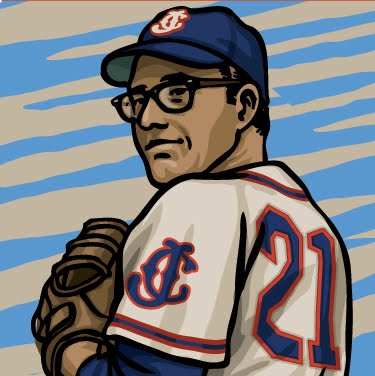
Wednesday, July 10, 2013

155. Willard Hershberger: The Man Who Destroyed Himself (Part 2)


This is the second and last part of the Willard Hershberger story. For part one, please start HERE.


The Sunday morning traffic that moved through the lobby of the Copley Plaza Hotel surged and flowed around the group of ballplayers who sat in the plush arm chairs. Some fiddled with cigarette lighters and watches but most pretended to study the newspapers they hid behind. None were open to the Sunday sports section. A handful of newspaper men went from man to man only to be quietly shooed away after scribbling a few lines in their notepads. After a while, most simply took seats next to the men they were trying to talk to and sat silently as well. Though everyone wanted to be alone, no one took the elevator to their rooms, for upstairs was where Willard Hershberger, catcher for the Cincinnati Reds, had killed himself yesterday afternoon.

Three years earlier when Willard Hershberger arrived at the Cincinnati Reds spring training camp, he found a team in transition. Once the whipping boys of the National League, the Reds had begun a quick resurgence under general manager Larry MacPhail. In a whirlwind of activity he restructured the farm system, installed the first lights in the majors atop Crosley Field, discarded lazy and defeatist players and instilled a winning attitude to the clubhouse. He had moved on to Brooklyn by that spring but the changes he put in motion would bring Cincinnati back-to-back pennants in less than a year. It was an exciting time and the arrival of Willard Hershberger was expected to be a harbinger of future Reds success.

Through the Reds worst years the one bright spot in the line up was future Hall of Fame catcher Ernie Lombardi. Big and cumbersome, he was called "Slug" for his sloth-like speed on the bases and fielding his position. None-the-less was a bonafide slugger and all-star. What he lacked in speed Lombardi made up in his quick, accurate arm. You simply didn't steal against Lom. With his years of experience the pitchers loved having him call the game.

The big man was also a character. He was gregarious and especially popular with the ladies of Crosley Field. His large nose would unleash a snoring barrage that was legendary in both leagues. He was a friendly veteran and was just the kind of mentor Hershie needed in his first year in the big leagues.

The summer of 1938 was exciting indeed. As Hershie rode the pines observing the veteran Lombardi work, the Reds surprised everyone by making a run for the pennant. New manager Bill McKechnie had come over from the Boston Bees and took over the re-made ball club. He was a kind and wise man, known throughout his career as "The Deacon". Though thoroughly in control, he kept the club loose and very quickly they had gelled into a tight-knit group. When Johnny Vander Meer tossed his back-to-back no hitters in June, the city exploded into a Reds fever that hadn't existed since 1919. The pennant race between Chicago, Pittsburgh, Brooklyn and Cincinnati went right down to the wire, Gabby Hartnett's "homer in the gloamin'" famously bringing victory to the Cubs.

Hershie got into 49 games that first year and batted a nice .276. He caught in 39 of those games and proved himself a reliable backup to Lombardi. Smaller and more agile than the lumbering Lombardi, Hershie quickly became a favorite of the Crosley Field fans. He was constantly in motion and soon earned the nickname "Herky-Jerky". It was meant in a good way since his defensive play on pop-ups and covering the bases surpassed Lombardi's skills. As loved as the big catcher was in Cincinnati, many fans were heard to exclaim "Hershie would have got that one!" when Lombardi was slow to catch a fly ball. 

When he wasn't catching, Hershberger was the Reds secret offensive weapon off the bench. For a guy who wasn't comfortable with pressure, he excelled as a pinch hitter. Blessed with a good eye and patience, it was almost impossible to strike him out. In his 402 at bats in the majors he whiffed only 16 times. With men on base, Hershie put the ball in play and the fans appreciated him for that.

With Lom and Hershie, the Reds had themselves the best catching staff in the majors.

1939 was the Reds' year. The team MacPhail put in motion finally came together with the addition of Billy Werber at third and Bucky Walters finding his feet as a starting pitcher. The Reds charged through the summer, all the while beating back a strong St. Louis club which would turn into a powerful dynasty during the war years.

Again the Reds' backup catcher turned in a strong year. He came into his own, performing particularly well off the bench with runners in scoring position. In 174 times at the plate he batted a .345, the best average on the team. Still, he was prone to being inconsolable after a Reds loss and a bad day at the plate ate him up inside.

Off the field his behavior was as quiet and secretive as it was in the minors. He would occasionally take in a movie with his teammates but more often than not he stayed in and read books and magazines about hunting and guns. While the other Reds thought him pleasant enough, his only close friend on the club was Johnny Vander Meer, whose love of fishing and hunting gave the two a common bond. For Hershie, his idea of a good time was scouring the countryside in his new car in pursuit of antique firearms for his collection. As in Binghamton and Newark, the fans gravitated to the quiet catcher and women surrounded him for autographs, hoping for a date. Indeed in a contest, Lombardi and he came in first and second for the ladies' favorite Reds player. Yet he never dated and remained a solitary figure. More than one teammate used the word "loner" to describe him.

He was diligent at putting his money aside and sent much of it home to his mother. In an age when most ballplayers boozed heavily, Hershie drank in moderation, a fact his teammates later made a point of mentioning. On the long train trips between cities, the other players would find him alone, staring out the window at nothing. 

Ably handled by Lombardi and Hershberger, the five Reds starters won a combined 87 games between them. Bucky Walters won 27 and won the National League MVP Award. Paul Derringer won 25 and came in 3rd in the MVP vote. Timely hitting combined with the team's air-tight infield defense helped the Reds take the pennant by 4 1/2 games.

Unfortunately for Reds fans, the post season excitement ended almost as soon as it began. In what was one of the most disappointing losses in Reds history, the Yanks swept the series in 4 straight. Hershie had two at bats with a hit and an RBI. He took his series check and commissioned a house for his mother. Back home in California he spent long hours drawing up the plans for the new home. After the season began he would proudly tell his teammates the fine details of its construction.

The Reds of 1940 was a modified, suped-up version of the '39 team. Jim Turner and Joe Beggs bolstered the already strong pitching staff and rookie Mike McCormick replaced aging outfielder Wally Berger. The superb infield of McCormick-Frey-Myers-Werber was even tighter their second summer together which made all the difference: 41 of their 100 wins were by a 1 run margin. Brooklyn stayed close to the Reds all summer, the two teams trading first place no less than 7 times. It was a strenuous time. With the country still suffering from the great depression, the player's share of the World Series money was a huge incentive to win the pennant again. 

As spring turned to summer, Hershberger began acting even more odd than his teammates were accustomed to. Vander Meer, his closest pal, was sent down to Indianapolis to work out his control problems. Though he was consistently hitting over .350, each time he failed to deliver at the plate he sulked inconsolably. Hershie's hypochondria reached new levels and he was constantly badgering the team doctor to the extent of visiting his hotel room in the evening reporting new symptoms. As a matter of course, the other Reds kidded him about it, it was a way to blow off the pressure of a tight pennant race. Stuffing pill bottles in his locker or telling the hypochondriac he didn't look well was all good-natured fun - to everyone but Hershberger.

On the long train trips he told a few players he thought about killing himself. In 1940, suicide wasn't all that common or talked about. It was something sick or financially ruined people did, not a ballplayer in the prime of his life on a pennant-bound team. As usual, no one took him seriously. 

In late July the Reds were about to begin a crucial eastern road trip. Before they left, Hershberger bought a $500 government savings bond and deposited it in the safe of the Cincinnati hotel where he lived. He made a point of pulling aside roommate Lew Riggs and tell him that if anything happened to him on this trip, he could find that bond in the hotel's safe and that it should be delivered to his mother in California. Like everyone else, Riggs shrugged off the fatalistic talk.

As August loomed, a record heatwave enveloped the eastern half of the country, and Cincinnati began to falter. 

Ernie Lombardi was the first pillar that fell. On July 23rd the big man severely sprained his ankle in Brooklyn and was out of commission. Then pitcher Junior Thompson, winner of 10 games so far, was spiked during an bench-clearing brawl with the Dodgers and was on crutches. It was broiling up and down the east coast and the Reds were at the beginning of a grueling schedule that would take them to Philadelphia, New York and Boston. Hershberger taking over the primary catching duties shouldn't have been a big deal, in fact any other catcher would have killed a man to get that spot on a pennant bound team. But for a guy with a severe inferiority complex and nervous disposition, it was a recipe for disaster. At the time Hershberger was batting well over .350, the best on the team. But as the temperature rose and the pressure mounted, Hershie started to melt. 

First, he began to waste away; reports claimed he lost 15 pounds in the heat. Then the Reds split a four game series against the lowly Phillies. Hershie went 1 for 13 at the plate and his average nosedived. Off the field he was inconsolable. Then the Dodgers started winning. The Reds headed back to Manhattan and pulled into the Polo Grounds. The catcher told a few incredulous teammates that he thought certain unnamed players were conspiring against him. The losses were all his fault he said, and everyone knew it. At the Polo Grounds the Reds lost the first game by a single run and Hershberger went 0 for 4. The morning papers were all full of Brooklyn's winning streak and Hitler's blitzkrieg of France. The world was falling apart before his eyes. The next day he bounded back with 3 hits and an RBI as the Reds won 6-3. The sports page on the morning of Wednesday, July 31st showed the Reds were 8 games up on Brooklyn. It was a good lead but not something to get comfortable with. 

Then came the breaking point.

That afternoon, up 4 to 1 going into the bottom of the 9th with 2 out, the Reds came within 1 strike of winning the ballgame. Instead Bucky Walters put Bob Seeds on base with a walk. Then Walters ran a full count on Burgess Whitehead before he put his fastball into the stands making it a 4-3 ballgame. Bucky Walters was the best pitcher the Reds had and with the game still only one out away from a win, McKechnie left him in. Now Mel Ott stood ready. In the sweltering heat, Walters again ran the count full. Ott kept the bat on his shoulder and was soon standing on first with another walk. Still, McKechnie left Walters in to finish the job. 

In today's game, there would have been no way this scenario could have played out. First of all, today it's rare that the starter lasts past the 7th inning, but in 1940, pitchers were expected to finish the games their own games. If McKechnie would have yanked Walters with 2 outs in the 9th, it would not only have been odd, it would have been insulting to Walters. Today, by the time Walters' walked the second batter, he would have been replaced by a relief pitcher, but this was 1940, not 2013. He stayed in.

With Ott on first, that brought Harry Danning to the plate. The Giants' catcher batted a solid .300 but wasn't a power hitter. Walters bore down and got 2 quick strikes on him. Hershie called for Walters to throw his fastball. The pitcher shook off the call but Hershie insisted. Fastball. Danning saw it coming a mile away and launched it into the stands for a home run to end the game. Hershberger stood motionless behind the plate, frozen in horror at the loss he caused.

That evening the team rode the train up to Boston. A gruelling series of 3 days worth of double headers awaited them. Still, even with the slump and ceaseless humidity, six games against the Boston Bees wasn't so bad - simply put, Boston stunk. It could be just the thing to help the Reds shake off their slump and gain ground in the standings. As the train roared towards Boston, Hershberger told anyone who'd listen that it was all his fault. When Billy Werber tried to talk him out of it he told the third baseman that Walters had won 27 games the previous season; he was too good of a pitcher to have lost the game himself. No, Hershberger claimed he called all the wrong pitches. Lombardi would have called the right ones, he and his bad judgement was solely responsible for the Reds predicament.

The Reds had Thursday off before the 3 straight days of double headers. To pass the time and unwind, many of the players took in movies and that's what Hershie and Werber did. In the darkness of the theater, instead of relaxing Hershberger grew more anxious. Through out the feature he kept getting up to pace the lobby. He couldn't shake the idea that he was dragging the club down. Besides losing the pennant, he was taking money from the player's pocket - that World Series check was like getting a second year's salary. Now all because of him they would lose that as well.

The weather on Friday August 2nd was mild compared to the last couple weeks. The morning paper was full of war talk. Congress was hammering out the final details on re-instituting the draft, Japan was taking over French Vietnam and the previous night Hitler's Luftwaffe flew over London unopposed, dropping leaflets warning the populace of the hell that was to come. In the sports pages, Brooklyn was 6 1/2 back, playing the Cubs who were barely playing .500 ball. In the lobby of the Copley Plaza Hotel, Hershie stopped at the drug store and bought a small bottle of medicine and brought it up to the room he shared with Bill Baker. Then he took a cab to Braves Field for the double header.

The first game was a disaster. The Bees jumped all over Jim Turner in the first scoring 4 runs. By the time it ended Cincinnati lost 10-3. At least Hershberger couldn't blame himself for this one, he sat out the game as third-string catcher and roommate Bill Baker worked the loss. Game two was Hershie's.

Though the Bees stung early with a run in the first, the Reds scored 3 in the 5th to take the lead. The game proceeded easily until the 8th when with 2 away the Braves tied it up with a pair of singles and a double by Max West. Now the game went into extra innings as neither team could score. Hershie came to the plate five times with men on base - his old specialty - and all five times came up empty. That the rest of the Reds bats were silent didn't register in his mind, Hershie carried the weight of the entire team on his back and it began to show. When he failed to field a slow roller in front of the plate, forcing the pitcher to come off the mound to make the play, Bill McKechnie came out of the dugout to see what was wrong with his catcher. 

The Cincinnati fans didn't call him "Herky-Jerky" for nothing, it was an easy play that Hershie should have been all over. Pointing to the area in front of the plate where the ball was fielded, McKechnie asked Hershberger if something was wrong.

"There's plenty wrong with me" he said. "I'll tell you about it after the game."

In the bottom of the 12th the Bees loaded up the bases on reliever Joe Beggs. With two out, rookie Chet Ross knocked a 3-2 pitch into left field scoring the winning run. A glance at the out of town scores showed that Brooklyn lost to the Cubs 4-3. Still, Brooklyn gained a half game and was now 6 games back.

As the Reds players showered and dressed in silence, McKechnie kept Hershberger behind. He wanted to get to the bottom of what was troubling his catcher. Along with coach Hank Gowdy, the three men walked out into the empty stadium and sat down in the bleachers. Hershberger broke down and talked about how he blamed himself for the Reds' slump and his inability to hit and call the right pitches. The skipper and coach attempted to raise his spirits. Hell, the two of them had been around the game for more than 30 years. They'd seen it all before, the slump was just temporary, the Reds will snap out of it. The two men tried to get the catcher to see the bright side of things: he was batting over .300, was still the teams best pinch hitter and though they'd lost some ground, the Reds were still on top of the standings. But, as the sun set behind the bleachers, McKechnie could see that something deeper was bothering Hershie.

Returning to the Copley, McKechnie brought Hershberger back to his suite. Laying on his managers couch, Hershie broke down. Punctuating his story with tears, he told McKechnie he planned on killing himself. It wasn't something new, his father had done it before him and he was going to do it, too. He told the speechless manager that he had purchased a bottle of iodine at the drugstore that morning and was going to drink the poison before he lost his nerve. Then he settled on using a razor but all he had with him was his brand new electric shaver. By then it was time to go to the ballpark.

All this must have been shocking to Bill McKechnie. In 1940, men didn't talk about their feelings, let alone cry and reveal thoughts of suicide. Fortunately McKechnie was a kindly man and something of a father figure to his boys. Still, this was something deep that even he couldn't completely comprehend. All he could do was listen. 

In a stream of consciousness, Hershberger went from the inescapable thoughts of taking his life and the recent Cincinnati losses to his father's suicide and how he knew the other players blamed him. In between he cursed Hitler and sobbed freely. After a few hours, he'd talked himself out. The tears dried up and McKechie felt he'd recovered his senses. He knew the catcher was a sensitive man and different than his other boys, and that the last couple of weeks had been hard on all of the Reds. Talking about suicide was one thing, but doing it was quite another. McKechie felt that all Hershberger needed was a good outlet to blow off steam. Since he didn't drink or carouse like most of the other guys, he didn't have that time-honored outlet for his emotions. This long talk, no matter how unorthodox it was, probably did the trick. Grabbing his hat, he took Hershberger out for a good dinner.

Arriving back at the Copley after eating, Hershie paused to joke with some of the Reds who were lounging around the lobby. Everyone said he appeared fine. 

Later that evening, Bill Baker returned to the room he shared with Hershberger. At first he thought his roommate was sleeping or out, but soon realized he was over by the window, sitting in the dark smoking a cigarette. Turning on the light, Baker could see Hershie staring at something on the floor. He followed his gaze to a coil of radio antenna wire that lay at his feet. The whole scene was odd, didn't make sense. But it wasn't the first time he'd seen his roommate like this. Leaving Hershie to his thoughts, Baker turned in.

On Saturday morning Hershberger woke up and told Baker he didn't feel well. Dressing, he went downstairs and had breakfast with Cincinnati Enquirer sports writer Lou Smith. When Smith tried joking around with the catcher to raise his spirits, he found him unresponsive. Later, he sat in the Copley Plaza's vast lobby. His teammates strode past in small groups, each pausing to ask if he wanted to grab a cab with them. No, he said, he was waiting for a friend. When pitcher Paul Derringer stopped to chat, Hershie smiled and told him he was going to go 4 for 4 that day. When asked if he wanted to share a taxi, Hershie said no. As Derringer's cab pulled away from the curb, Hershberger took the elevator back upstairs to his room.

When Hershberger didn't arrive at the ballpark, McKechnie began to worry. He asked Gabe Paul, the team's traveling secretary, to call his room. After ringing a long time, Hershberger picked up. Sounding annoyed, he told Paul he was sick and couldn't play. The secretary said that was ok, McKechnie said to just come out to the park, he could sit in the stands and watch the games. Hershberger said he would and hung up.

Derringer pitched well in the first game, scattering 11 hits and keeping the Bees scoreless until the 7th inning. The Reds scored first in the 4th, again in the 6th and added another in the 9th to win 3-1. Between games, McKechnie scanned the stands for Hershberger. Realizing that he never showed, the skipper became both annoyed and worried. Being depressed over his performance was one thing, but failing to show up at the ballpark couldn't be tolerated, it set a bad example. He asked Daniel Cohen, a Cincinnati businessman who sometimes tagged along on road trips, to go back to the Copley and bring Hershberger to the ballpark. Meanwhile, McKechnie called his players together in the locker room. He told them that they had a sick man amongst them, a man that should be treated differently from the rest. Everyone knew he was talking about Hershberger. He told them to stop asking him how how he was feeling and to cease playing jokes. This was a man who needed his spirits lifted back up to normal. The players knew this was serious. Playing jokes and needling other ballplayers was an expected part of locker room life. It was unheard of to have a manager ask something like this. As the Reds filed out for the second game, a solemn mood overtook the players.

Earlier, while the first game was entering the 6th inning, Hershberger went into the bathroom and shaved with his new electric razor. While his portable radio broadcast the ballgame in the other room, Hershberger rifled through his roommate's shaving kit. Finding Baker's safety razor, he unscrewed the head and set the blade on the sink. He gathered all the towels and carefully spread them seamlessly across the cool tile floor. Standing, Hershberger took off his shirt and stood bare chested before the mirror above the sink. He picked up the razor, felt for his jugular vein and sliced repeatedly at the side of his neck until he finally hit it. He then knelt down on the towels and leaned over the tub. By the time the Reds scored another run in the 9th, Willard McKee Hershberger was dead.

Dan Cohen banged on the door. He knew Hershie was ill, but had no idea of what he had discussed with McKechnie the night before. Thus, when he got a hotel porter to unlock the door, Cohen wasn't expecting the scene that unfolded before him. Hershberger's lifeless body was draped over the tub, the towels and the drain limiting the mess to the bare minimum. Willard couldn't bare to leave behind the kind of mess his father had done 10 years before.

When Lew Riggs saw Dan Cohen running towards the Reds' dugout in the 4th inning of the second game, he knew something bad had happened. McKechnie spoke hastily with Hank Gowdy, grabbed the team doctor and Dan Cohen and left. Already behind a few runs, all the air left the team and they lost 5-2. In the locker room, Gowdy gathered the players.

"I want to tell you something. Willard Hershberger has just destroyed himself".

The aftermath affected each player differently. That night, McKechnie called a team meeting in his hotel suite. Devastated by the suicide and his failure to prevent it, he reassured his boys that Hershie was a sick man, that all the kidding had nothing to do with his destruction. He told them about his father's suicide and how it affected his mind. More over, the manager revealed that in the talk the previous evening, the catcher revealed other, more personal problems he was dealing with. While McKechnie reassured the players it had nothing to do with anyone on the team, he promised Hershberger he would never reveal what they were. Still, many players, like Eddie Joost and Junior Thompson, resolved never to poke fun at another man so long as they lived. 

In the years since that August afternoon in 1940, rumors have swirled around what caused Hersberger to take his life, and what exactly those personal issues were he revealed to McKechnie. For his part, the manager kept his word and never spoke about it. Silence breeds speculation, and while I was going to list all the suspected reasons other writers have posed for his suicide, I decided it wasn't appropriate or responsible, since there was no evidence to come close to proving any of the theories. 

The memory of Willard Hershberger hung over the Reds for the rest of the summer. McKechnie told the team that they owed it to Hershie to go forward and win the pennant. In tribute to the catcher, each man wore a black armband on the right sleeve of their jerseys. In a novel tribute for the time, the Cincinnati Reds even retired Hershie's number 5 for the rest of the season. Unlike today, numbers weren't taken out of circulation by a ball club after being worn by a good player, but simply handed over to the next guy who needed one. While the retirement of Hershberger's number 5 wasn't permanent, in 1984 it was finally hung up for good - after Johnny Bench, who wore it on his own back for 17 seasons, retired. 

As McKechnie predicted, the Reds started winning again, held off the Dodgers and finished 12 games in front. Hershberger's suicide left the team's catching staff in a terrible state, Lombardi was still not completely healed and Baker was not experienced enough. Going into the World Series against Detroit, the Reds activated their coach Jimmy Wilson, a former catcher. Though he hadn't caught a game in years, he became the hero of the 1940 World Series, catching 6 of the 7 games and batting .353 as Cincinnati won. At the end of October, 1940, the Reds sent Willard's mother a check for $5,803.62 - Hershie's full share of the World Series winner's money.

Carrying the weight of the whole ball club on his shoulders, the boys felt he earned it.


SOURCES
  • Mulligan, Brian The 1940 Cincinnati Reds: A World Championship and Baseball's Only In-Season Suicide (McFarland and Company 2005)
  • Bradley, Leo H. Underrated Reds: The Story of the 1939-40 Cincinnati Reds, The Team's First Undisputed Championship (Fried Publishing, 2009)
  • Nack, William The Razor's Edge (Sports Illustrated May 6, 1991)
  • Mayer, Ronald A. The 1937 Newark Bears: A Baseball Legend (Rutgers University Press, 1980)
  • Various Contemporary newspaper sources including Binghamton Press, Newark Evening News, The Sporting News, Cincinnati Post.

Friday, July 5, 2013

154. Willard Hershberger: The Man Who Destroyed Himself (Part One)


Every time you come across Willard Hershberger it is always in conjunction with the single thing he will be forever known: the only player to commit suicide during a regular major league season. That's how I of course came across him years ago, in a newspaper story accompanied by a photograph of him with a troubled look on his face. Since Willard only played in the majors for 3 short summers, he didn't leave much of a legacy except for that unfortunate way in which he left the world. About 8 years ago Brian Mulligan wrote a book on the 1940 Cincinnati Reds team. Since I was living in Cincinnati at the time, I bought the book and I really knew nothing about those Reds teams that won back-to-back pennants in 1939 and 40. I was always more interested in the Brooklyn and Cardinals teams of the same era and figured I really needed to bone-up on this forgotten team. While spinning a good tale of the 1940 season, the author relates the story of the troubled and mysterious Hershberger and how his suicide played into the Reds mad scramble for the National League pennant. It's a good book about a great team and I highly recommend it. 

I wanted to find out more about the man who took his life in the middle of a gruelling pennant race. Over the years I built up a file of contemporary newspaper articles about Willard and his career in the minor leagues, culminating with the famed 1937 Newark Bears, known as the greatest minor league team of all time. Through my research the picture emerges of not simply a second-string catcher but as one of the more promising catchers of the era. Highly respected for both his energetic fielding and clutch hitting, on paper Hershberger had a fine career to look back on and everything to look forward to. Yet inside, something was wrong.
 

Since almost every photo you see of Hershberger shows him with a despondent frown or biting his lower lip in a stress-induced grimace, I wanted to picture him when he was younger, playing for the greatest team ever assembled in the minor leagues and full of hope for the future.

Willard's early life was like something from the mind of a mediocre Hollywood screenwriter of cheesy bio-pics. He was born into a loving family in the picturesque setting of Lemon Cove, California. His father Claude worked in the oil fields around Fullerton and moved his family to Orange County when Willard was a boy. He doted on his younger sister Lois. The long, warm summers ensured the young Hershberger boy had ample time to play every sport imaginable. When it was too dark for athletics, the boy tinkered with the most modern technology of the time: radio. At Fullerton High he lettered in football, basketball and baseball and became good friends with two men who would go on to bigger things: future baseball Hall of Famer Arky Vaughan and President Richard Nixon. He was president of his class and a top student. The rural idyllic of Orange County allowed him to indulge in manly pursuits such as hunting, fishing and camping. Like his father, Willard developed into an avid hunter and gun collector. He was a great shot and found solace in the woods. He was strong and handsome, shy but pleasant, a natural leader and everyone liked him. By the time he was a senior in high school, it was obvious Willard was bound for a career in professional baseball. A young man couldn't have asked for a better childhood.

November 20th, 1928 was a good day for hunting, and Willard spent the afternoon in the woods. When he arrived home that evening he lazily left his shotgun and shells in the hallway. He figured he'd clean and put them away in the morning. Unfortunately Claude Hershberger found them first.

Claude had been working for Shell Oil since the move to Orange County over ten years ago. While it was a good job, certain things began to go wrong. First he was passed over for promotion and then came a slow but steady decline in his position and pay. At the same time his paycheck shrank, his debts grew. It was a spin cycle Claude couldn't pull out of, and coupled with his introspective personality, would lead him down a dark path. He spent countless sleepless nights worrying about the future and the early morning of November 21st was no exception. Wandering around the sleeping house at 2:30 in the morning, Claude Hershberger found the shotgun and shells and carried them into the downstairs hall bathroom.

A single blast shattered the tranquility of the sleeping household.

Willard was the first to find the body of his father. The horrible mess left by the blast would haunt him for the rest of his life and play a peculiar part in his own tragic end. 

The aftermath was devastating to the Hershberger family. While before they were in debt, at least with Claude they were a family. With him gone they were now both alone and without their breadwinner. The shameful stigmatism of a suicide added to the problems that now enveloped the  Hershberger's. While younger sister Lois sought help by talking with her school teachers about the tragedy, 18 year-old Willard turned inward. What pleasant out-going demeanor he once had now vanished. He was prone to insomnia and began smoking heavily. His quiet confidence evaporated like smoke. Most of all, he blamed himself for leaving that shotgun and shells out that evening. 

Still, his baseball skills were such that as he graduated the scouts started circling. Not only did Fullerton High's class of 1929 produce Willard, but also Arky Vaughan. The Pirates organization was interested in Hershberger while the Yankees dispatched their advance man to sign Vaughan. In what is one of those odd twists of baseball fate, the Yankees man took a detour before going to see Vaughan and the Pirates scooped up the future Hall of Famer instead. Arriving late but still left with a great prospect, the Yankees acquired Willard Hershberger.

"Hershie", as he was quickly known, now entered the vast Yankees farm system. The first stop was the El Paso Texans of the Arizona-Texas League. Originally the team's second-string second baseman, Hershberger got his big break through an odd chain of occurrences. First, the Texans' regular catcher broke his leg. The back-up receiver then broke his thumb beating up a sportswriter. Since Hershie had been primarily a catcher at Fullerton High, he was pressed into service. Before they could get him out of there he had batted .356 and led the Texans to the league championship. It was the first of a string of championship teams he would be a part of.

Hershie began the long climb up the Yankees food chain: Erie Sailors, Springfield Rifles... By 1933 he was in Binghamton, New York with the Triplets. Batting .304 he led the team to the New York-Penn League championship, made the All-Star team and was named the Most Favorite Triplet by the fans. The next year he jumped a few rungs and was sent to the Hollywood Stars of the Pacific Coast League where he hit a steady .307 against the stiffer competition. For 1935 the Yankees brought the kid closer to home by assigning him to the Newark Bears. On any other team, Hershberger would have been promoted to the majors by this time. However, playing for the Yankees organization, while sounding good on paper, was actually a mixed blessing. In New York, almost every position was filled by an All-Star or future Hall of Famer. Ahead of Hershie on the Yankees happened to be one of the greatest catchers of all time, Bill Dickey. Backing him up was Joe Glenn, a solid, proven .270 hitter. Unless something tragic happened, no one was breaking into that line up for years to come.

After spending the spring with the Yankees, Hershie was again sent across the Hudson to Newark. When the Oakland Oaks needed a top-notch catcher, the big club sent him west. When he boarded a plane from Newark Airport after catching a game that afternoon, Willard became the first ballplayer to play in games on the east coast one day and the west coast the next. It was a good swap: along with stars Joe Gordon, Chris Hartje and Jack Glynn, the Oaks won the Pacific Coast League pennant. The next season Gordon, Glynn and Hershberger were brought back to Newark.

The Newark Bears were the Yankees' premier minor league showcase. Located right across the Hudson, the team had a rabid following and a tradition of winning. The close proximity to Yankee Stadium meant every play the Bears made was under close scrutiny from the big club. Many of the Yankees players could be found in the stands on their off days looking over the new crop. The team assembled in 1937 would be known as one of the greatest minor league teams of all time and one of its main stars was Willard Hershberger.

On the Oaks Willard was backing up Chris Hartje; in 1937 he was the Bears' starting catcher. With six minor league summers under his belt, he had developed into a solid catcher. His arm was quick and accurate and he was like an acrobat when it came to fielding his position. His even nature kept his pitchers calm. The staff he had to work in Newark was one of the best ever assembled in the International League. Team ace Joe Beggs was 21-4, Atley Donald was 19-2, Vito Tamulis 18-6 and Steve Sundra rounded out the rotation with 15-4. Each one of those guys would go on to the majors and Hershie proved himself ready for the big show by ably handling each arm, coaxing a great season out of every one. 

The sports writers who covered the circuit recognized his talent both behind the plate and in front of it - at the season's end he was voted the Best Catcher in the International League. Since the IL more than any other league was seen as the highest level before the majors, the award was quite an honor. If anyone on the Bears was major league calibre, it was Willard Hershberger.

Off the field Willard proved to be a complex teammate. He was a hypochondriac in the days before Woody Allan made it adorable, convinced he was ailing from one symptom or another. Back when most players avoided the team doctor like the plague lest the big club get wind of it and think he was frail, Hersh
ie was the Doc's best customer. His teammates claimed he could predict an illness two weeks out - whether this was an example of an athlete extremely in-tune with his body or he subconsciously made himself sick, is anyone's guess. His locker was filled with powders and pill containers and the boys soon took to teasing the catcher about his sicknesses, filling his locker to overflowing with pill containers or telling him he looked under the weather. 

The Newark fans loved him and he was one of the more popular players that summer. Despite, or maybe because of his quiet demeanor, Hershie was the favorite of the young Jersey girls who filled the stands. He was shy though, and even when his teammates set him up on double dates he begged off. The only woman he seemed to have room for was his mother, whom he corresponded with religiously. 

Still, they liked the catcher, especially when he broke out of his introspective shell. At the Bears spring training camp, Hershie and a bunch of the fella's decided to take in a carnival. When the group stopped at the shooting gallery Willard proceeded to win his teammates every prize in the booth until the busted carny took the gun away and kicked him out. He was known as the team's resident technology expert, and if you wanted to know anything about the era's latest gadgets from portable radios to plug-in electric razors, you went to Hershie.

His introvertedness also set him apart from the other Bears. From the first month of the 1937 season, Newark destroyed the rest of the International League. The summer was filled with one celebration after another as the Bears racked up 104 victories. While his teammates caroused and jived like only a pennant-bound team can, Willard stuck to his room after games, venturing out only for a movie or to add to his growing antique gun collection.  Despite, or maybe because of his quiet demeanor, Hershie was the favorite of the young Jersey girls who filled Ruppert Stadium. He was shy though, and even when his teammates set him up on double dates he begged off. 

He was prone to beating himself up over minor batting slumps or bad pitches. More than one teammate called him a "perfectionist". Bears ace Atley Donald related that there were times when he threw a bad pitch resulting in a hit but it was Hershberger who would apologize in the dugout. The other pitchers had the same thing happen. No matter what thing went wrong, Hershie found a way to blame himself for it. Ossie Vitt, who'd managed Hershberger on 3 different teams was convinced he suffered from a inferiority complex. While the drive to make oneself a better player isn't a bad thing to have, Willard's intensity began to wear on him physically. As the triumphant 1937 season drew to a close, his roommate would awake late at night to find him staring out the window into the abyss, smoking an endless chain of cigarettes.

After the Bears beat the Columbus Red Birds in the Little World Series, Hersh
ie returned home to Orange County. The Newark Bears season had been news all across the nation and the citizens threw a first-class banquet to honor their hometown diamond hero. With all the accolades his catching and hitting garnered it was a sure bet he'd be in the majors within a year, if not sooner. Everyone there that night was excited for the future, everyone that is, except Willard.

Even surrounded by his old friends and trying to relax by riding horses and hunting, something was wrong. His mother noticed that this winter, even more than in the past, her boy was deeply bothered inside. Like his roommates in Newark, his mother would find him late at night, staring into the darkness outside his bedroom window, smoking one cigarette after another. She couldn't help but think of her husband Claude.

Meanwhile, in the Bronx, the Yankees front office was evaluating their minor league talent pool. With the Yanks more or less set for another pennant run in 1938, they had a surplus of high-grade talent to deal, especially in Newark. With Bill Dickey still in his prime and Willard pushing 28 years-old, the Yankees were open to a trade. 

In Cincinnati, the Reds were rising from two decades worth of second division muck. Manager Bill McKechnie was quickly assembling the nucleus of a team that would soon pay dividends by winning back-to-back pennants and a World Championship. One hole in their roster was a reliable catcher to back up future Hall of Famer Ernie Lombardi. Fueled by owner Powell Crosley's ample bank account, general manager Warren Giles went out and got them the best catcher in the minor leagues, Willard McKee Hershberger.

The second part of the story, Hershberger's major league career with the Reds and tragic end, will follow soon...

 SOURCES
  • Mulligan, Brian The 1940 Cincinnati Reds: A World Championship and Baseball's Only In-Season Suicide (McFarland & Company 2005)
  • Bradley, Leo H. Underrated Reds: The Story of the 1939-40 Cincinnati Reds, The Team's First Undisputed Championship (Fried Publishing, 2009)
  • Mayer, Ronald A. The 1937 Newark Bears: A Baseball Legend (Rutgers University Press, 1980)
  • Various Contemporary newspaper sources including Binghamton Press, Newark Evening News, The Sporting News, Cincinnati Post.

Saturday, June 29, 2013

Reggie Jackson: For My Mom, One Year Later


I wrote this one year ago...

This week's post ain't about Reggie Jackson, per se, or even about baseball for that matter. This post is about my Mom, Pattie. At the young age of 64 and just 3 years since her husband died, Mom is lying in a New Jersey hospital room on "comfort care." That pleasant term is the nice phrase for the "death watch". Mom was diagnosed with cancer a month ago and in that short period suffered a stroke, endured brain surgery to remove 2 bleeding tumors and is now in a coma dying from a third inoperable hemorrhaging tumor. By the time I post this, she may already have passed away. But that's neither here nor there.

My mother was never a huge baseball fan, she much preferred football, and much later, due to my brother's interest, soccer. However back in the late 1970's and early 1980's my Mom was caught up in that whole Reggie Jackson Mania that was sweeping North Jersey where we lived. Most of my friends and neighbors were as well (including my gorgeous 3rd grade teacher, Ms. Keslo, who broke my heart the day she tacked a poster of a shirtless Bucky Dent on the wall next to my desk). But I, brought up as the third generation of a staunch line of bitter Yankee-haters, didn't have that option. No, instead of reveling in the Yankees' seemingly endless string of World Series victories in that gleaming cathedral in the Bronx, I was left with the 5th-rate Mets and that bus station in Queens called Shea Stadium.

From 1977 on, while my Pop and I suffered through sickening seasons of Metropolitan's baseball, my Mom gleefully latched onto the biggest wave of baseball euphoria since Babe Ruth, Reggiemania. While I tortured myself by staying up late huddled under the covers with my blue transistor radio listening to the Mets drop another game to the Padres, Mom tuned the t.v. in to watch the Yankees making chumps of the Red Sox. I spent my money on packs of baseball cards hoping to get another one of the Mets also-rans while chewing that copper-flavored gum that came with the cards. Mom came home from the market with boxes of scrumptious looking Reggie Bars. The fact that they were made with nuts which I was allergic to just made it seem personal, like a kick to the balls.

I'm kind of rambling here, but bear with me. I guess what I'm trying to get at here is that my Mom seemed to take the game for what it was, a game. Me and my Pop, we took every Yankee win as a person affront, irrefutable proof that there was no fairness in the world. To he and I, the whole world was against us, and they were winning. Mom took the whole ride for just what it was, being part of something exciting.

Reggie Jackson seemed to embody late 70's New York City. He was bigger than life, fallible but he came through when you thought he was all but finished. They booed the hell out of him, even in his own house and still he bounced off the ropes and forced you to admire his talent as he rounded the bases on the way to beating the hell out of you. He fought with the press and they loved it. He pouted and complained and sulked. And he won. Jackson made things exciting again. I can't think of any player in my lifetime who made the game as exciting as I imagined Babe Ruth did. If Muhammad Ali played right field and wore God-awful ugly tinted glasses, I imagine he would have been like Reggie Jackson.

I remember when he said something about being "the straw that stirs the drink" on the Yankees. When asked about team captain and universally admired Thurman Munson, Jackson replied maybe he stirred it up too, but only in a bad way. The papers exploded and so did the fans. No one ever dared to disparage Munson, and Reggie became the guy you loved to hate on a team full of guys you loved to hate.

Now more than 30 years later even a casual fan knows of Reggie Jackson while most know Munson as that guy who crashed his plane.

I hated Reggie Jackson. I held him responsible for all the bad things in my life. The kids I fought with in the neighborhood all wore Yankee caps. The girls I thought were pretty all turned their backs on me, the large number 44 and "JACKSON" arched above it the being last thing I saw as they walked quickly away. Reggie played in a building that was as close to the Sistine Chapel as us Americans can build and my team played in a cruelly enlarged version of the locker room at the Y.

My Mom loved Reggie. She squealed with laughter as he propelled his team to yet another pennant. She felt sorry for him when those mooks in the bleachers threw batteries at him as he stood in right field. When he hit all those home runs to win another world series, Mom spent the winter happy with  boundless optimism for the distant spring.

And when Reggie was traded and the Yankees stopped winning, Mom found something else positive in life to root for. It's just the way she was. Well, I'm rooting for you Mom, but like the 1978 Mets, I know it's a lost cause. But I'm still rooting, just the same. It's just the way I am.

Postscript: Like my '78 Mets, Mom didn't make it. She passed away quietly on Sunday morning, July 1st, 2012. Rest easy Mom and tell Pop I said hi.

Post-Postscript: It's been a long year. The death of one's parents is a hard thing to understand or deal with, even at the wizened old age of 43. Sorrow manifests itself in many different ways, some more difficult to rationalize than others. In 6 weeks I'll be marrying the woman I love more than anything else in this world. The happiness I feel and the anticipation for the future I now am about to embark on is beyond description. Still, that sorrow tugs at my collar when I think that both my parents will never meet Andrea, never sit down to dinner with us or be there at our wedding in sunny California. It's a shame, because I know that if there was one thing in the world that would have made them both happy, it's knowing that I found the woman they always hoped I'd find. The love the two of them had for each other was so strong, so complete, and set the bar so high that it took me until I was in my forties to find a woman who I know I can share that kind of love with. It's a damn shame they can't be here to see it, but I'm sure they'll be looking down on us. 

Hey, maybe they can put in a good word or two for my Mets...

Tuesday, June 25, 2013

153. Mickey Stubblefield: Integrating The KITTY League


Though it's hard for me to focus on one subject for too long, I've been slowly accumulating a roster of ballplayers for my next edition of "21". Unlike the last book, this one will focus on baseball in Kentucky. Why Kentucky you might ask? Though I was born and bred in North Jersey and over the course of my career have lived in many places, Kentucky is my adapted home. Moving to this area back in 1995, I instantly fell in love with the people and coziness of the place. So many places around the country have bled together and lost their uniqueness. It was that regional distinctiveness that made the Cincinnati-Northern Kentucky area something special to me. I like how people still go nuts over fireworks, fight over whether Graeters or Aglamesis Brothers make better ice cream and that crazy Opening Day Parade. Still, my Gypsy blood (honestly, I actually do descend from Carpathian Roma) made me wander away not once, but twice over the years. In an odd twist of fate, I'm probably the only human being who was not born in this area that voluntarily moved here three separate times! There was good reason: The best friends I've ever had were made right here and, right after moving back here for the third time, I met the woman who in 6 short weeks will be my wife. Kentucky has been good to me and this little book will be my way of saying thanks. Over the years I've featured a few Kentucky ballplayers such as Pee Wee Reese and Happy Chandler, but looking deeper there are many more interesting characters who played ball here in the Blue Grass State and I'm excited to shine a light on these neat ballplayers.

Though Jackie Robinson is the man everyone thinks of when it comes to integration of the National Pastime, Robinson broke the color barrier in only two leagues. At the time he took the field for the Brooklyn Dodgers in 1947, there were 52 minor leagues operating in North America, and though Robinson had integrated the International League in 1946, it was up to 51 other brave and talented black men to integrate the remaining circuits. On June 26, 1952, Mayfield, Kentucky's own Mickey Stubblefield became one of those men.

Outside the Mayfield Clothiers' locker room, 1,500 people packed Graves County War Memorial Park. Although Maysfield was mired in last place, the game was completely sold out and the crowd had overflowed into the football stadium bleachers beyond the park's right field wall. Something was happening that day and that something was integration. Maysfield native Mickey Stubblefield was about to become the first black ballplayer in the Kentucky-Illinois-Tennessee League, commonly called the "Kitty League". Buttoning up his home white jersey with "Clothiers" across the front, the team's new pitcher listened with apprehension to the rumble of the crowd. It wasn't the size that bothered him, heck, with the Kansas City Monarchs he'd played to Major League sized crowds. No, it wasn't the size of the crowd, it was the uncertainty of it. The Kitty League had always been a whites-only circuit. Even the Negro Leagues, which had teams in all parts of the country including the deep south, had failed to take hold in any of the towns the Kitty League represented. This was Jim Crow territory and by stepping out onto that field, Mickey Stubblefield was about to deal him a mighty blow.

Mickey was born not too far from the ballpark he was now scheduled to pitch in. The fifth of six kids, his real name was Wilker, after his mother's family. "Mickey" was a nickname given to him as a boy, derived not from the star catcher of the Athletics and Tigers, Mickey Cochrane, but from the oversize used shoes he had to wear: they reminded everyone of Mickey Mouse. Before he was a teen he was orphaned and was shuttled around from one relative to another. One of the only constant things in his life was baseball. At 11 he became the batboy to the Mayfield Clothiers, the Kitty League team he would one day pitch for.

When the war came, Mickey joined the Navy and served at various bases stateside. When he was cut loose from the service in 1946, Mickey didn't have a vocation to return to. When a Navy buddy wrote to him about a spot on a barnstorming baseball team out of Nebraska, and even offered to send money for a ticket, he jumped at the chance.

The Omaha Rockets were an all-black traveling team that covered the dusty plains playing in the small towns professional baseball never reached. Black barnstorming teams were an annual treat for isolated baseball fans and the Omaha Rockets were one of the last of their kind. Soon the advent of television and the recent lifting of baseball's color barrier would spell the end of this rural tradition. 

For the organized Negro Leagues too, baseball's integration marked the beginning of the end. As all the best players were relentlessly signed away, fresh blood was needed to keep the proud black institution operating. The venerable Kansas City Monarchs, winners of over ten Negro American League pennants, were no exception and Mickey Stubblefield soon found himself wearing the uniform of black baseball's premier franchise.

Joining the team for spring training, Mickey had to grow up fast. The Monarchs boasted one of the best pitching staffs in blackball. The rotation was of All-Star calibre: Hilton Smith, Lefty LaMarque, Connie Johnson and of course, the legendary Satchel Paige. Later Mickey would tell how Paige took him under his wing and taught him how to throw his special curve ball. At 5'-9" Mickey was dwarfed by the 6'-3" Paige, thus earning him the nickname "Little Satch". Due to his small stature he wasn't a fireballer like Paige and LaMarque. Mickey had to rely on an arsenal of junk balls and various curves which he threw from various angles to make them break differently.

It was a tough squad to crack. The Monarch's star pitchers were reserved for league games that counted and rookies like Mickey were used to face the semi-pro and town teams the Monarchs took on to turn a profit. The traveling was hard and the team sometimes played two games a day in different towns. When they slept in hotels it was usually a seedy rooming house and meals were either eaten on the bus in transit or at a rare black-friendly roadside diner. It was a tough life and many players succumbed to the temptations of the road. Mickey was more disciplined than many his age and he avoided drinking much and never took up smoking. He even got married and began a family.

After spending the summer pitching to farmers and factory workers, integration finally gave Mickey a chance at the starting rotation. In July Satchel was signed by the Cleveland Indians and others left the Monarchs for the white minor leagues, giving Mickey the chance to pitch against Negro American League opponents. While no statistics exist from the many games he tossed against the semi-pros that summer, it is documented that he won the two league games he appeared in, both complete games, giving up a total of 10 hits and 3 runs. It wasn't a bad record considering it was his first season of pro ball and it earned him a call back for the 1949 season.

With Jackie Robinson firmly established as a superstar and many other blacks now playing in the majors, black newspapers stopped covering Negro League ball as close as they had previously. No record exists from the 1949 season to document Mickey's sophomore year in the Negro Leagues. Though the reasons are not known, he left the Monarchs late in the season and hooked up with the McCook Cats of the Nebraska Independent League. The Cats were an integrated top-notch semi-pro team and Mickey returned the following season where he went 13-6. 

By now Mickey was 24 and a married family man. Thinking about his future, he gave up pro ball and returned to Mayfield, Kentucky. To keep his love of the game alive he played semi-pro ball for the Dr. Pepper bottling plant he worked at. For a veteran of the Negro Leagues, playing industrial league ball was a piece of cake and his advanced level of play soon attracted the attention of the team he was once batboy for.

The Mayfield Clothiers was one of the lower rungs of the Pittsburgh Pirates farm system. The Pirates had barely limped through the war years but now boasted Branch Rickey, mastermind behind the Cardinals and Dodgers dynasties, at their helm. With him in Pittsburgh was his son, Branch Rickey, Jr. and he is the man credited for signing Mickey to a Pirates minor league contact.

Mayfield was stranded in last place and in dire need of pitching. Whether Mickey's signing was the acquisition of a promising prospect or a shrewd way to pack the stands with black fans or a combination of both, is not known. What is documented is that until June 26, 1952, the Kentucky-Illinois-Tennessee League was an all-white affair.

Which brings us back to Mickey and the sold out Graves County War Memorial Park. 

Grabbing his glove, Mickey emerged from the dugout and ran onto the field to start the game against the Paducah Indians. All apprehention subsided when he quickly realised the crowd was cheering for, not against him. Standing atop the mound, he could see that 1,500 black and white fans were on their feet giving him a standing ovation. When he struck out the first batter, Mickey also struck out Jim Crow. 

He won the game 5-4, giving up 6 hits and striking out six Indians. While it would be great to write that the addition of Mickey was the spark that ignited the Mayfield Clothiers to make a pennant run, it was not to be. The Clothiers still had a terrible team despite Mickey's decent pitching and finished dead last. A check of the 1952 Kitty League record book shows that Mickey Stubblefield won 7 and lost 6. His 3.71 ERA was pretty good considering that even the lousiest team in the league scored an average of 5 runs a game that summer. Hampering his usefulness was that only one other Kitty League team would allow him to pitch in their ballparks. Most of the cities that the league operated in still imposed segregation laws prohibiting the races from mixing in publicly owned stadiums. Paducah was the only team that allowed Mickey to pitch. Jackson, Tennessee was willing to have him appear in their park, but the game he was scheduled to pitch was rained out. Although he was probably the second best pitcher Mayfield had, a pitcher who was only available for home games stood in the way of him making his true value to the team apparent. 

Mixing of the races also played into 1952 being Mickey's only year in the Kitty League. The league agreed that beginning in 1953 no other black ballplayer would be signed because of the difficulty finding facilities that would accommodate them. While on one hand, finding separate hotels and restaurants that would serve blacks proved a problem, it was a technical way of saying that with the exception of Mayfield and Jackson, no other city was willing to change their Jim Crow laws just yet. 

But Mickey Stubblefield's year as a racial pioneer had deeper repercussions in the civil rights movement. His appearance in the previous all-white league joined with all the other individual strives made against segregation. Right there in Mayfield, the tide of integration once again swept into the little town in 1956. Ten black students enrolled in the all-white Mayfield High instead of the all-black Dunbar High, Mickey's Alma mater. It was a brave move and one that ended peacefully as the ten teens attended class without anything more serious happening than a meager walk-out demonstration. Within 2 years, segregated Dunbar High was a thing of the past.

As for Mickey, after the 1952 season he moved on to the Duluth Dukes of the Northern League. He was 2-0 when his arm went bad. Again, trying to mix a career with baseball, Mickey rejoined the McCook Cats and worked in a Chevy dealership. He liked Nebraska and made it his home, raising 10 kids. His days as a star ballplayer with the Cats made him a popular figure after he retired from the game. He even had his own radio show on WKTM called "Kick with Mick" and was the Grand Marshall of the 2011 Heritage Days Festival. With his kids grown, Mickey moved back to Mayfield in 1970. When he passed away in 2013, Mickey Stubblefield could look back with pride at the modest but important part he played in making baseball truly the National Pastime.

Friday, June 14, 2013

The Making of an Artist (and a painting)

While cleaning out my Mom's house after she passed away last summer, I came across a painting I did way, way back in 1985. It was hidden behind a bookcase that was placed in front of it sometime after I left home to go to college. Looking at it again after all these years, I had pause to remember why I became an artist in the first place. So many years have passed since the days I spent locked in my room experimenting with paints and chalks, discovering perspective and learning how to make something look real. We didn't have money growing up, and through necessity I drove myself to master drawing and painting in order to have the nice things I wanted to put on my walls, but could not afford. Later when other kids found I could draw, they would "hire" me to turn out posters and paintings for them as well. Painted jean jackets were popular back then and I made a nice nest egg for college painting Jimi Hendrix and Black Sabbath on the back of those worn-in jackets. Diner parking lots frequented by burn-outs became my very own art show every time a greasy-haired punk turned around.

This painting of Satchel Paige was done at a special time for me because I was in the process of discovering the Negro Leagues for myself. There weren't very many books back then, no Internet and newspapers were on microfilm or in big bound books in forgotten sections of the library. I guess that was what was so much fun - the discovery part. At 14, 15 or 16 years old, I felt like a dumpy version of Indiana Jones, compiling rosters for the Newark Eagles or reading a contemporary account of a Josh Gibson home run. I felt like I was finding something important that needed to be uncovered again. Box scores and Xerox copies of newspaper articles were nice, but I wanted my own visuals to represent what I loved studying. Not able to find any good pictures of the blackball greats I was learning about, I took a fresh canvas and created my own. I can remember doing this very painting - my easel was set up in a corner of my bedroom and I was playing The Jesus and Mary Chain's Psychocandy LP on my old record player. I was experimenting with a technique called "dry brush" which is just what it sounds like - you put a very small amount of paint on your brush and gently move across the canvas, increasing the pressure to make dark sections and ease back to make it lighter. Up close, the painting becomes a mass of abstract brush strokes, but when you pull back and take it all it, it comes together an almost photo-realistic photograph. I wanted to give the painting a grainy, newspaper feeling to it, and I was pretty happy with how it turned out. So happy, it hung on the wall all through my high school days and continued to hang there long after my old room was turned into the storage space that all kid's rooms eventually become after they leave home.

Necessity is an odd way of finding a talent, but that's really how I became an artist. The same could be said for this blog as well. Being a designer and illustrator I decided to create my own baseball cards - featuring all the players I wanted to see and written the way I wanted to read about them. In short, to make the set I always wanted when I was a kid. And there you have it: The Infinite Baseball Card Set. It was kind of neat to look at this painting and think that I'm still doing the same thing I did all those years ago - make my own when I could not find or afford what I wanted.

So anyway, I no longer need the painting. Just seeing it again after 25 years was good enough and I have other things on my walls now. I rarely keep any of my old art. I'm always afraid that I'll dwell in the past if I surround myself with older work and usually toss whatever I complete into one of the 4 steamer trunks that are packed with decades of old work. Problem is, a painting won't fit in one of those and I thought I would give someone else the chance to enjoy ol' Satch. I'm putting him up on ebay here. I figure is he sells I'll buy some new paints, brushes and canvas and start painting again. I hope he goes to a good home and whoever gets it knows that for this little-known artist and amateur baseball historian, it was a very important piece of work!


Wednesday, June 5, 2013

152. Jimmy Horio: The Japanese Ty Cobb


While learning about the Negro Leagues years ago, I became interested in the various teams they competed against when not playing against other black teams. Back before the Second World War there was a whole parallel universe of baseball operating just out of bounds of the recognized leagues affiliated with major league baseball. Researchers Scott Simkus and Gary Ashwill seem to have coined the perfect phrase for these teams and the games they played: "Outsider Baseball". From flickering microfilm and disintegrating yellowing newspapers I learned about the bearded House Of David religious colony from Michigan which sent out as many as 3 different traveling teams a season to play all over the country. I heard about the Nebraska Indians, made up of, you guessed it, Native Americans. I read about barnstorming teams made up of major league stars angling to make a buck. All-Girl teams. Teams of washed up players sponsored by a shoe company. Prison teams. The F.B.I. had a team which J. Edgar Hoover never failed to come out and support. And I also came across the Japanese All-Stars which toured North America in 1935.


Among the Japanese players was a lone American, Jimmy Horio. I was fascinated by what little I could find out about him and when I started this site Horio was among the first players I featured. It was a much too short overview of a career which spanned two continents and 2 decades and heavily influenced the way the game was played in Japan. Over the years I have received many emails asking about him and the original story is consistently one of the most-read pages on my site. Information about Jimmy is hard to find in English, but over the years I have been digging up every article I could find about the 1935 Tokyo Giants and their players. Rob Fitt's beautifully written book "Banzai Babe Ruth", about the 1934 Tour of Japan, features Horio as a minor character and offers some good insight into his time with the Dai Nippon team. I also managed to have some key articles translated from the Japanese by a colleague of my fiancĂ© which helped me gain much insight on how Horio was treated in the Japanese Baseball League. Now I believe I can say this is the most comprehensive article about one of the most interesting and little-known players in "Outsider Baseball" history.


At the same time immigrants from Europe began flooding into the Eastern United States, on the other side of the world there began a similar exodus as thousands of Japanese emigrated to Hawaii and California. At the turn of the 19th century, the Horio family from Hiroshima were one of the many hopefuls to sign a contract to become indentured servants to one of the vast Hawaiian sugar plantations in exchange for free steamship tickets and the chance at a better future.

If at first it seemed too good to be true, the Horio's found out they were right. Passage to Hawaii was spent in the rancid steerage section of the ship packed in with hundreds of other immigrants. When the horrific crossing was over the new immigrants found that life on a Hawaiian plantation was anything but easy. Guards armed with whips made sure the back-breaking field work was done swiftly while the whole Horio family and others like them labored from dawn to dusk under the brutal tropical sun. The Horio's eventually had 8 children of which Jimmy was the seventh and the fifth one born in Hawaii. By the time he was six the family decided to head back to Japan.

Upon returning to Hiroshima, Jimmy Horio entered school and played baseball. However, times were still tough in Japan so Mr. Horio packed up the whole family again and sailed back to Maui in 1919. Continuing his ball playing, Jimmy grew up to be quite tall for the time, 5'-11" and this helped propel him to become a star athlete in his high school, playing basketball and track in addition to baseball. Outside of school Horio made local headlines with his advanced play in the semi-pro Maui plantation league. 

Once again Horio's father decided to head back to Hiroshima, but this time Jimmy stayed behind. He was an American and he never was able to speak Japanese without a halting, heavy accent. He dropped out of high school and dedicated himself to fulfilling his dream - becoming the first Japanese-American to play in the major leagues. Since Hawaii didn't have anything more advanced than sandlot and factory league teams, and the chance of being spotted by a major league scout was slim-to-none, Jimmy decided to try his luck in Southern California.

Los Angeles had a thriving Japanese community and like every other ethnic enclave in the country, the Japanese had their own baseball teams. Horio got a job as a truck driver and played a season with a lower-tier team sponsored by the Grand Central Market. When the Grand Centrals met the L.A. Nippons, California's best Japanese team, for the 1930 Southern California Japanese League title, the Nippons invited Horio to join them. One of his new teammates was Yoshio Takahashi, a fellow Hawaiian and in a few years the two would be among the pioneers of the pre-war Japanese Baseball League. The Nippons visited Japan in 1931, a tour that helped spread the popularity of the game in that country. Since Jimmy was bigger than a typical Japanese male at the time, he particularly impressed local fans with his hitting and outfield play. He had become a switch hitter by now, also a rarity in Japan as almost every player hit right-handed. Since he spoke Japanese, something many of the second-generation players on the L.A. Nippons did not, Horio cultivated friendships with many of the opposing players, a connection he would put to use later on in his career.

When the Nippons returned to Los Angeles and no professional scout came to offer a contract, Horio went looking for them. In the spring of 1934 he earned himself a place on the Sioux Falls Canaries of the Nebraska State League. The Canaries were an unaffiliated Class D club and none of his teammates would make it to the bigs, but at least he had his foot in the door.  His spirited play earned him the nickname "The Yellow Peril" and though his average was only a meager .250, he ran the base paths with abandon and his play in the outfield was stellar. In August a news wire service picked up on Horio and ran a syndicated story under the headline "Nippon Slugger Really Hits' Em" along with his picture. Another story lauded him as one of the attractions of the league and claimed that he "takes to professional baseball like a hobo to a hand out." Kind of a clumsy analogy but at least the establishment was taking notice of the Hawaiian. A Cardinals scout came to Sioux Falls to take a better look at Horio, but by the end of the 1934 season nothing ever came of it and he returned to Los Angeles.

Although he told reporters in Nebraska he was 21, Jimmy was now 27, married, and facing a rapidly closing window of opportunity to get to the majors. It was while contemplating his future in the fall of 1934 that he read about the major league tour of Japan that winter and the Japanese national team that was being formed to oppose them. With stars like Babe Ruth, Lou Gehrig and Jimmie Foxx, there was bound to be lots of opportunity to show what he could do - if only he could get a place on the Japanese team. Horio reasoned that the Japanese would surely value his American expertise and they'd have to let him join the team - they just didn't know that yet. Like his Father before him, Jimmy packed up his wife, boarded a ship and sailed off into an unknown future.

When Horio reached Japan he wrote to the new Japanese team's manager, Daisuke Miyake, and got himself a tryout. Showing the fast, aggressive way of play he learned as an American he easily earned himself a place on the Dai Nippon (meaning "All-Japan") club. He was disappointed to learn there was no salary paid to any of the ballplayers but he must have figured the chance to showcase his talents against the best big league players in the world was worth the risk. Miyake also told Horio that after the exhibition games against the Americans there would be a new professional Japanese league and when it began the Yomiuri Shinbum newspaper, who was sponsoring the Dai Nippon team, would pay him retroactively.

Before the Americans arrived Horio helped train the Japanese players. The press, both American and Japanese, had covered the lead-up to the tour with considerable enthusiasm and Horio knew that the opportunity to play against a team like the American All-Stars was a once in a lifetime chance. At first he performed well. His daring base running made him stand out from the other Japanese players and he fielded impressively as well. However as the tour wore on Horio was hampered by sickness and became more and more ineffective. His fielding suffered and his hitting, which was never his strong suit, fell off drastically. After 15 games he batted a disappointing .195. His one highlight was a dramatic 3-run homer hit off Washington Senators ace Earl Whitehill. Horio told a Japanese newspaper that while he was disappointed with his performance, a few of the big leaguers were kind to him and offered constructive advice to improve. But when the Americans sailed away in the beginning of December, the elusive contract he was hoping for from a big league team failed to materialize. Still without a paying job, Horio signed on with the Dai Nippon team for their tour of North America which was departing in February. At least he would get free passage back to America.

The team was called "The Dai Nippon Tokyo Yakyu Kurabu" (Great Japan Tokyo Baseball Club), but by the time they played their first game in America they'd been renamed the "Tokyo Giants" by Lefty O'Doul, who helped arrange the team's schedule. 

The Giants' toured extensively, playing all-levels of ball clubs from small town factory teams to AAA level minor league teams. Gauging their success and talent is not an easy thing to do as they did extremely well against amateur teams and decent against minor league opposition, however the games against minor league teams were during spring training and many of the teams did not field their best players. None-the-less, the tour was very successful and huge crowds packed the ballpark when the Japanese came to town. American audiences were fascinated by their cultural differences such as tipping their caps and bowing deeply to the umpire when coming to bat or being thrown out steeling. Particularly noted during the tour was Jimmy Horio's excellent fielding and newspaper accounts are filled with mentions of the Japanese-American's exploits in the center field. He was also promoted as their power hitter and in the Giants' batting lineup he was often featured in the cleanup slot. His fluency in Japanese and English made it much easier for the tour to navigate it's way through the back roads of North America. It is reported that the Tokyo Giants' record for the 1935 tour stood at 74 wins and 34 losses. More importantly to Jimmy Horio was that the acclaim he received on the tour led to that elusive professional contract.

After the Japanese players went home in July, Horio happily stayed in the United States as he'd signed a contract with the Sacramento Senators of the Pacific Coast League. The opportunity to play in the PCL might have been initiated by a helpful recommendation from "Lefty" O'Doul who was now playing-manager of the San Francisco Seals. Again, news wire services picked up Horio's story and made him a minor news item across the country as he began playing in the highest rung of minor league baseball. The Senators had a working agreement with the Brooklyn Dodgers and more than half of his teammates would go on to play in the majors. With Brooklyn's lousy record leaving them perpetually mired in the second-division along with bleak prospects, it was not far-fetched to assume Jimmy Horio might actually become the first Asian-American in the major leagues. He got into 10 games and was batting .260 when tragedy struck.

Horio's wife Yoshiko had been in a car accident earlier that spring from which she seemingly recovered. However in late July while Jimmy was playing for Sacramento she was rushed to a Los Angeles hospital. With Jimmy at her side she passed away on August 2nd. Two weeks later Horio returned to the Senators, but understandably distracted, he wasn't very effective.

Throughout the Pacific Coast League local Japanese fans turned out to stage "Jimmy Horio Days" when Sacramento came to town. On August 25th San Francisco held their tribute to the only Japanese-American in professional ball. Japanese Boy Scouts marched on the field and women who dressed in traditional kimonos were admitted free. When Sacramento traveled to Los Angeles to play the Angels on September 1st, the local Japanese community delegation presented Horio with a bouquet of flowers when he came to bat in the first inning. With 9 out of 10 fans in the stands of Japanese decent that day, Jimmy reciprocated by smashing a single and scoring two runs as the Senators beat the Angels.

The "Jimmy Horio Day" in L.A. was the high watermark of his season. In the 10 games he played in after returning from his wife's death in he went 5 for 21 and his average stood at the .250 mark when the season ended.

Now a 30 year-old widower with a mediocre season of minor league ball behind him, Horio was at a cross-road. He was seething about not being paid his retro-active money by the Yomiuri Shimbun when a Japanese League failed to emerge in 1935 and he desperately cast around for a new team to play for. Finally, the Seattle Indians invited him to their spring training camp in Santa Monica. Among the exhibition games Seattle had lined up was one against the 1936 edition of the Tokyo Giants. The Yomiuri Shimbun newspaper decided to once again send a team to North America, but this time it wasn't a mere exhibition tour - this was spring training for the inaugural Nippon Professional Baseball League season.

Still sore about his money, Horio begged Seattle manager Dutch Reuther to play him against his former team. Boiling over with anger, the Giants former center fielder hit a two-run single that led the way to a 9-0 route of the Japanese. Despite his timely hitting against his old team the Indians declined to give him a contract when they broke camp and started the season.

Apparently Jimmy patched things up with the Giants, because a month after the game in Santa Monica, Horio was back with the team and was given much ink in a feature article in the Spokane Daily Chronicle. After the Giants' spring training Jimmy returned to Japan and officially joined the Nippon Professional Baseball League. Although the Giants declined to sign him, Horio joined the Hankyu Ball Club which was managed by Daisuke Miyake, the man who led the Dia Nippon and Tokyo Giants. Again, although his averages were low, .233 for the first half of the split season and .217 for the second, his influence on the game in Japan well out-weighed his offensive output. The press dubbed him "The Ty Cobb of Japan." 

Though recognized at the time as being a great influence in how the Japanese played the game, like most innovators, he was far from popular. Due to his rudimentary Japanese, Horio had trouble fitting in with his teammates who almost to a man had attended the best universities in Japan. Horio had dropped out of high school and had lived a far from ideal life as had most of his teammates. On the field he was stoic and unemotional. His face was described as fearless with a perpetually stubbly chin.  Horio's great height, combined with strength said to be superhuman, made him the most imposing player in the islands. Unlike the other players in the league, Horio swung-away like American sluggers, highly unorthodox and offensive to the "hit and run" John McGraw-like way the Japanese played the game. While his average may not have showed it, Horio was famous (or infamous) for the furious speed of his line-drives which no other player on the island could match. While most players owned only a single bat, Horio travelled with several dozen which the conservative Japanese must have viewed as frivolous. 

Horio steadily increased his batting average, batting over or close to .300 for the 1937-41 seasons. He further made himself unpopular among Japanese fans when he switched from Hankyu to the Hanshin Tigers, Hankyu's hated rival. He starred for the Tigers until 1941 when he and Tadashi Kameda, another American player in Japan, left the island due to the deteriorating political situation between the two countries.

Jimmy continued to play semi-pro ball in Hawaii during the war, playing until he was 39 years-old. Back in Hiroshima his father passed away in 1943 and he lost a brother when the United States dropped an atomic bomb on the city in August of 1945. Jimmy Horio died from bone cancer in 1949 and although he never reached his goal of becoming the first Japanese-American in the majors, his influence on the game in Japan is still felt, forever known as "The Ty Cobb of Japan".


Sunday, May 26, 2013

Memorial Day


By the morning of March 4th, 1945, the boys of G Company, 2nd Battalion, 11th Infantry Regiment, 5th Infantry Division had become hardened veterans. Most had just arrived in Europe barely 3 months before and now those same freshly minted young soldiers had checked the Germans at the Battle of the Bulge, chased their asses back across the Rhine and were now slugging their way into the Third Reich itself. The war was close to being over with, the Allies gaining more momentum everyday and the enemy knew it. If the Germans were only fighting the western powers they most likely would have caved in already. However, on the other side of Germany the Soviets were smashing towards Berlin and every day they held out meant more Germans could make their way west to be captured or at least get to an area occupied by the western Allies. No one wanted to be around when the Russians came so the war ground on.

The boys of G Company probably didn’t care much about the reason why the Germans still fought them tooth and nail. Each man had had his life interrupted and shipped half way around the globe to stop an evil that was threatening to swallow the whole world. The boys of G Company had left pretty young wives, anxious mothers, college classrooms or good jobs and took up a Garand Rifle to do their part. Complaining about what they were missing out on was pointless - the fella next to you had the same story. Maybe even better than yours. Nah, complaining wouldn’t do any good. Best thing was to keep marching forward and get this over with. As they wearily crossed the makeshift bridge built over the Kyll River they just cared about the fight they had ahead of them that afternoon and the one after that and the one after that until these Krauts threw in the towel.

If any of the boys in G Company were still sleepy, chances are the mortar fire that greeted them as the crossed the bridge woke them up. The enemy they’d been chasing since Luxembourg had dug in around the town of Erdorf. As the German lines collapsed and contracted the enemy became more dense, more desperate. Besides regular infantry, G Company was marching right into redeployed artillery and Panzer units. As they pushed forward the resistance became stiffer and more determined. Each gain was met with vicious counter-attacks and artillery barrages.

G Company was deployed to sweep the fields around the village of Erdorf. This was pleasant farm land of rolling little green hills and blooming trees. To the boys of G Company, the area they were clearing of enemy troops looked a lot like familiar places in the northeast and Midwest United States. Perhaps more than a few were suddenly lost in thoughts of an afternoon spent in surroundings much like this. The boys of G Company thought back to little places they left behind called Sussex County, Washington Courthouse, Mechanicsburg or Crescent Springs.

To the officers of G Company, this place was just called Hill 378.

The company spread out and took a low hill like they had countless other times in the last three months. All very textbook. Regrouping and moving forward, they entered a wooded area where entrenched German troops and the Panzer tanks were waiting. This obstacle, too, was eventually beaten aside by G Company and just like every other hill and wood and field G Company had cleared in the past three months, they left behind some of their own. As the troops emerged on the other side of the wood and continued eastward into Germany, one of the 32 boys they left behind that afternoon was 22 year-old Private First Class Bill Niemeyer of Crescent Springs, Kentucky. The life he had put on hold in order to beat back the evil that darkened the world consisted of his young wife Marie, infant daughters Deanna Gail and Mary Johanna and a promising pitching career in the Chicago Cubs organization.

Even though Bill Niemeyer never made it up to the Cubs, I wanted to depict Bill in a Chicago uniform. Was he good enough to have eventually made it to Wrigley Field? I don’t know. We will never know. The same as we will never know what any of the other boys in G Company who died that afternoon in Germany would have accomplished in their lives. The one thing I do know is that is their sacrifices, all veteran’s sacrifices, made it possible for me to have a good life in the greatest country in the world. As I sit here writing this, I can see and hear my neighbors enjoying this beautiful Memorial Day weekend. The shouts of the boys next door, the couple across the street putting a pair of mountain bikes in their SUV and the girl on the corner attempting to train her new puppy on her green front lawn. In a few hours I will be going over to see my fiancĂ© who I love very much, and share a nice, lazy summer evening. All that I see and hear right at this very moment was possible because of men and women like Bill Niemeyer, a 22 year-old promising ballplayer who once lived right down the street from where I sit right now, the place he left to go off to war and never saw again.

Many thanks to Gary Bedingfield who is the foremost authority on baseball and World war II. While looking around for a ballplayer to feature this Memorial Day I of course consulted his amazing website www.baseballinwartime.com. Consulting a page he constructed showing the many professional ballplayers who died fighting for our country, Bill Niemeyer jumped off the screen. He was born and raised right where I was sitting. I might even pass his relatives at the market or live next door. The fact that he came from this place made his sacrife a bit more personal for me, especially as I sat there with a nice fresh cup of coffee by an open window enjoying the beautiful Kentucky scenery he never saw again. The place of his death was even more interesting as that part of Germany looks very similar to what he had grown up in. I’m glad I found Bill’s name on that website and I encourage every other baseball fan to take a look at Gary Bedingfield’s monumental work. His site features in-depth articles about hundreds (actually it might even be thousands of entries by now!) of players who found themselves in the service during the war. Gary is also an author of two indispensable books on the subject, "Baseball's Dead of World War II: A Roster Of Professional Players Who Died" and one of my personal favorites, "Baseball In World War II Europe (part of the Images of Sports series)."