Showing posts with label Newark Eagles. Show all posts

Thursday, October 24, 2013

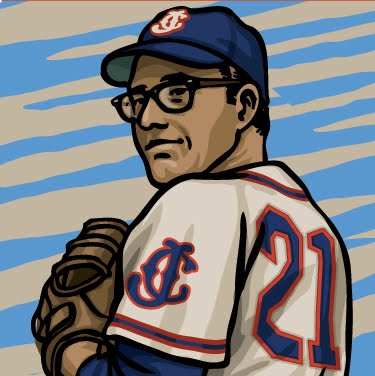
162. Max Manning: The Honor & Integrity of Dr. Cyclopse


There's no doubt that baseball's full of stories about guys who got the short end of the stick. When you're talking about the Negro leagues, the list gets even longer. Even after the majors were integrated there were precious few slots open to the black players and many men of doubtless talent were left languishing in the minors or never received the call they hoped for. Max Manning is one who received that longed-for call. When I learned about the life and career of Manning, known by the frightful nickname of Dr. Cyclopse, from his former teammate Leon Day, I figured if anyone had the right to be bitter, it was this guy. When I was fortunate to sit down with Dr. Cyclopse himself in the summer of 1992, I was pleased to see that he wasn't in the least bit bitter about the way things shook down for him. On the contrary, I found the former All-Star to be a gracious, friendly man who readily shared his observations of over 10 years in the Negro Leagues with me. 

In the spring of 1948, honor and integrity was the only thing that stood between Max Manning and his shot at the big leagues. Manning was relaxing at his New Jersey home, fresh from another successful winter season in Cuba where he went 10-8 for Cienfiegos. That he had that many losses stemmed from his trying out new pitches, namely a straight change-up taught to him by Carl Erskine of the Brooklyn Dodgers. In a few weeks Negro Leagues spring training would start and he and those new pitches were ready to go. Two years earlier Manning got out of the service and had roared back into action with the Newark Eagles, posting a 9-1 record in '46 and following that up with 15-6 in '47. 1948 promised to be even better.

Then one chilly spring afternoon the telephone rings. On the other end is Alex Pompez, former owner of the New York Cubans of the Negro National League, now a scout for the New York Giants. Jackie Robinson, Don Newcombe, Dan Bankhead and almost two dozen other black ballplayers have already been signed to play professional ball. Three of his teammates with the Newark Eagles, Larry Doby, Monte Irvin and Ray Dandridge, have been signed to play in the white leagues and now, according to Pompez, it was Manning's turn.

All the tall, lanky pitcher had to do was go up to the Polo Grounds, add his signature on a contract Pompez had on hand and he was property of the New York Giants. Sounded great, but there was a problem: Manning had already signed a contract to play for the Newark Eagles in 1948. To most black ball players and the white teams that signed them, that little technicality was conveniently overlooked, which was exactly what Alex Pompez and the New York Giants expected Manning to do. 

Suddenly the black Bakelite telephone receiver weighted 100 pounds in Manning's hand. Sorry, he couldn't break his word: the Giants would have to negotiate with Newark owners Abe and Effa Manley. No doubt Pompez brought up all the other ball players who jumped their Negro League contracts: Roy Campanella, Larry Doby, Monte Irvin, Willard Brown, Hank Thompson... but those guys weren't Max Manning. Taken aback, the scout asked again if he wanted to pitch in the major leagues, to which Manning replied "more than you could ever know, but if you don't have honor, what do you have?"

It wasn't the first time Max Manning had a cruel brush with the Majors. Back at Pleasentville High, Manning had tossed a couple no-hitters and a 23 strike-out game, he made the papers quite a few times. One day in 1937 a letter arrived from former Athletics star Max Bishop, now a scout for the Detroit Tigers. The letter, accompanied by a questionnaire, told young Max Manning that the Tigers were looking forward to seeing him in the spring for a tryout with the team. Obviously super-scout Max Bishop had just read the sports pages and not looked any further than Manning's stats. The letter was a mistake. A cruel mistake, but a mistake all the same.
Manning pitched on weekends with a semi-pro outfit out of Atlantic City called the Johnson Stars. His teammates were Pop Lloyd, Rats Henderson and a bunch of other ancient blackball stars. These oldsters taught the teenager how to pitch like a pro. At 18, Manning was a slim 6 foot 4. He possessed a side-arm fastball that would eventually register in the 90's and he had a streak of wildness. That speed coupled with his thick glasses made his wildness all the more scary to opposing batters. Leary batsmen soon called the skinny kid "Dr. Cyclopse".

Since a Major League career with the Tigers was not an option, Manning entered his father's alma matta, Lincoln University. His teammate on the baseball team was Monte Irvin and soon the two had attracted the attention of the Newark Eagles of the Negro National League. With his father's permission, Max Manning embarked on a career in baseball.

The Newark Eagles team Manning and Irvin joined seemed to always be a bridesmaid and never the bride. The powerful Homestead Grays with Josh Gibson and Buck Leonard never failed to swoop in and take the pennant every year, but the Eagles had some good talent. Pitcher Leon Day was the equal of Satchel Paige and also happened to be one of the teams best sluggers as well. Shortstop Willie Wells and third baseman Ray Dandridge anchored what was dubbed the "Million Dollar Infield", Mule Suttles' bat added the power hitting pop to the line up and catcher Biz Mackey was a 20-year vet who most consider the best receiver in blackball history. All those men would eventually end up in Cooperstown.

By 1939 Manning was the team's number-two started after Leon Day. Though young and as thin as a reed, Dr. Cyclopes earned the respect of opposing batters with a dose of 90 MPH medicine thrown with a side of wild. He broke even his first full season with a 4-4 record. In '40 he busted out a 14-7 slate and became the Eagles ace after Leon Day jumped ship for Mexico. That he resisted the temptation of the big money Mexico waved in front of black ballplayers should have made Manning popular with the Eagles' husband-wife owners, Abe and Effa Manley, but it didn't. Manning, who was a bit more educated than the average ballplayer of the time, knew how much his arm was worth and his annual salary disputes with the Manley's kept him from being a front office favorite. While Effa's affections were slathered all over fellow pitcher Terris McDuffie, Manning, who had a better record, was held in contempt by Effa and their relationship never improved.

At the height of his career, Manning was drafted into the Army. With his couple years of college, Manning would have been ushered into officer training had he been white, but as it were, he became a truck driver. As part of the famed "Red Ball Express", Manning drove ammo round the clock to Patton's Third Army during the Battle of the Bulge. Manning's reaction to Army racism earned him a stint in the brig and his time in the service left him with a bad taste in mouth. Honorably discharged in January of 1946, Manning was ready to re-start his baseball career. 

After dropping his first decision, Manning went on a tear that had him winning every other game he pitched that year. He and Leon Day led the Eagles to the Negro National League pennant and he took home the Champion Pitcher Award, the blackball version of the Cy Young. Facing the fabled Kansas City Monarchs in the World Series, Manning beat Satchel Paige in Game 2 to even the series at a game a piece. Starting Game 5, Manning lost to Hilton Smith and the series was again even up at two games each. Newark eventually won in seven games and the 1946 edition of the Eagles have gone down as one of the best teams before integration. Two of his teammates, Monte Irvin and Larry Doby would make it to the majors and the Hall of Fame, and Johnny Davis, Pat Patterson, Rufus Lewis and Jimmy Wilkes would play in the minors. Leon Day and Biz Mackey would also eventually have a plaque in Cooperstown. It was a heck of a team and for that very reason it was quickly destroyed. Among the thousands of fans in the stands at the 1946 World Series was a whole corps of major league scouts. With Jackie Robinson, Johnny Wright and Roy Partlow already in the minor leagues, the big leagues were scouring the Negro Leagues trying to figure out the best talent they could grab. Not only were the two teams that played in the series that year stocked with great talent, as far as the majors were concerned, it was free for the taking.

Since black ballplayers for generations had taken the contracts they signed each spring with a grain of salt, "jumping" became common in the Negro leagues. Ball players were used to looking out for themselves and following the money and the owners very rarely had to money or legal staff to fight contract disputes. Since many of the owners, including Newark's Abe Manley, were gangsters who did not want to attract the kind of attention a court battle would bring, they grudgingly let the players jump from team to team with little retribution other than a small fine at best.

So, as the white teams came calling, black ball players didn't hesitate to jump. When Branch Rickey signed Robinson, Wright and Partlow, the Kansas City Monarchs, Newark Eagles and Homestead Grays, their respective ball clubs, were not compensated a single cent. While the Monarchs and Grays let the matter drop, the Manley's were angered. Effa in particular was incensed. With Rickey being given God-like status for his racial sensitivity, Manley made as much of a stink as she could protesting what she considered stealing from the Negro Leagues. No one cared; white newspapers loved the controversy black ballplayers would unleash and the black press were ecstatic about the doors being opened for the first time in almost 50 years. When the Bill Veeck plucked Larry Doby for his Indians and then Horace Stoneham pulled Monte Irvin for the Giants, Effa swore to fight any other white owner who took any of her boys. Didn't really matter: there was only so many slots available for the influx of black talent and there were plenty of other teams to raid. That was why when Alex Pompez hung up the phone after Max Manning told him to negotiate his contract with the Manley's, the smart scout knew to look elsewhere. No one who knew Effa Manley wanted to negotiate with her.

For Max Manning, in the spring of 1948 he was in great shape, a young 29 and at the prime of his game. Sure he'd stood on his moral ground and it would keep him from going to spring training with the Giants, but his word was his word and that had to mean something. Of all the Newark players, Manning could especially make a case of jumping the club. Unlike Irvin and Doby, who were Effa's personal favorites, Dr. Cyclopse wasn't shown any particular love from the Manley's, but at least he could look himself in the eye every time he shaved. He was confident another team would come knocking. That winter in Cuba, many of the white major leaguers he played with and against told him he was of big league caliber, but he already knew that - white, black or brown skin, his fastball set 'em on their asses. He'd post another good season, augmented by that Erskine change-up, and then see what kind of offers came in.

But things don't always work out the way they should. It was a few weeks into the 1948 season that Manning separated his shoulder, and just like that, his baseball career was over. Manning consulted doctors and tried to hang on, pitching in Venezuela and Canada as the Negro leagues collapsed, but the fastball left and the pain was too intense. Now married, his wife talked him into going back to college. With help from the G.I. Bill, he graduated from Glassboro State and began a teaching career that would last for 28 years, retiring as Pleasentville's most beloved 6th grade teacher.

Perhaps it's this second career that kept Manning from being bitter. Or, more likely it's the fact that until the day he died in 2003 at the age of 84 that every time he ran a razor across his chin, he could look himself straight in the eyes, knowing his honor was intact.

SOURCES
  • Author's meeting with Max Manning, Baltimore circa 1992
  • 1946 Negro Baseball Yearbook (Sepia Publications, 1946)
  • Holway, John B., Black Diamonds (Stadium Books, 1991)
  • Holway, John B., Complete Book of Baseball's Negro Leagues (Hastings House, 2001)
  • Martin, Alfred M. & Martin, Alfred T., The Negro Leagues in New Jersey (McFarland, 2009)
  • The Press of Atlantic City (June 25, 2003)


Thursday, December 29, 2011

99. Leon Day: The 1945 G.I. World Series


Writing up the Subway Sam Nahem story last month, I related how I learned about him from Negro League All-Star and Baseball Hall Of Fame member Leon Day, who'd played with Nahem during the war on one of the first, if not the first, integrated military baseball team. Like I related in the Nahem story, Leon told me that the game he was most proud of in his long and storied career was the one he pitched against Patton's 3rd Army team in the 1945 G.I. World Series. It's a great and little known part of baseball history and I thought it deserved a place here at the Infinite Baseball Card Set...

By 1942 Leon was one of the best pitchers in baseball. During that year's East-West All-Star Game Day entered the game in the 7th inning and beat Satchel Paige, striking out 5 of the first 7 batters. The next year Newark had a lousy team, hampered by players entering the service and Day fell to 4-5 but he pulled extra duty as an outfielder and hit a nice .304 before he too got the call from Uncle Sam.

Day shipped out to England with the 818th Amphibian Battalion and went ashore on Utah Beach on June 6th, 1944. Leon drove a DUKW, a six-wheeled amphibious vehicle, across France and Belgium throughout 1944 and '45. When the war ended, Day was recruited to pitch for the Com Z OISE All-Stars baseball team that represented the Forward Base at Reims, France. With the war over and thousands of troops anxiously waiting around to go home, baseball leagues were organized to take the men's minds away from mischief. The U.S. Army had a plethora of former big league ballplayers and each unit fielded a competitive team with the local champs going through a serious of playoffs culminating in the G.I. World Series to be held in September, 1945.

The OISE All-Stars were a scrappy hodge-podge made up of former semi-pro players and low-level minor leaguers put together by former Brooklyn Dodgers and St. Louis Cardinals pitcher Subway Sam Nahem. With the inclusion of Leon Day and former Kansas City Monarch slugger Willard Brown the All-Stars became one of the first integrated ball clubs in the military. Against all odds, the OISE team decisively beat team after team, steadily advancing through the playoffs.

Meanwhile, on the other side of Europe in occupied Germany, the 71st Infantry Division Red Circlers team pounded their way through the playoffs. Led by Cincinnati Reds pitcher Ewell Blackwell and St. Louis Cardinals star Harry Walker, the Red Circlers boasted an alarming 9 former major leaguers and 3 more who'd play in the bigs right after the war. Representing General George Patton's 3rd Army, the Red Circlers were the odd-on favorites, and just to be sure, Patton had 7 former pro ballplayers transferred to the 71st Infantry just in time for the opening game of the G.I. World Series.

On September 2nd, 1945, 50,000 GI's packed Nuremberg Stadium to see the first game of the best of 5 series. Armed forces radio was on hand to broadcast the games to the thousands of other GI's stationed throughout Europe and Africa. It wasn't the real world Series, but there was enough major league talent on hand to make it enjoyable. During the course of World War II, no less than 500 big league ballplayers and 4,000 minor leaguers were in the service, and all the best ones seemed to be on Patton's team. As expected, the Red Circlers' beat up on Bobby Keane, former Brooklyn Bushwicks semi-pro hurler, and won the first game 9-2.

The next day was Labor Day in America and in Nuremberg 45,000 soldiers filled the stands of Hitler's former stadium expecting to watch another one-sided contest. Coach Nahem gave the ball to Leon Day. Facing major league talent was nothing new to Day, heck he was a veteran of the Negro National League and had out-dueled Satchel Paige himself on numerous occasions. The Red Circlers may be more well known than the OISE All-Stars, but that didn't mean Leon Day couldn't handle them. Facing off against minor leaguer Walter "Ole" Olson, Day was simply magnificent, holding the big league sluggers to just 4 hits and not allowing a single run for the first 8 innings. However Olson also did well, keeping the game scoreless despite being hit hard by the All-Stars. OISE's first baseman Tony Jaros, a 6'-3" giant who played Big Ten basketball for Minnesota before the war, belted out 3 doubles in the game and Subway Sam Nahen added two doubles of his own to the mix. Finally in the sixth with no one out, St. Louis semi-pro Joe Herman singled followed by a walk to Roy Marion. That brought up Kansas City Monarch All-Star Willard Brown who banged out an RBI singles scoring Herman. Jaros came up next but went down swinging. Nick "Warehouse" Macone popped out and then Olson fanned Ty Richardson to get out of the inning. The next inning the All-Stars jumped on Olson again, this time Emmet Altenburg tripled to right-center field followed by Coach Nahem's double to the same place, pushing across a run.

The next inning Patton's men came to life and finally tapped Day for a run. With two outs, St. Louis Cardinals All-Star Harry "The Hat" Walker got a double off of Day and then Cincinnati Reds' second baseman Benny Zientara doubled him home. With the tying run on second and the go-ahead run at the plate in the form of Pittsburgh Pirate Johnny Wyrostek, Leon Day, proving that the previous 2 years in the service didn't hamper his pitching, struck him out to end the inning. It was a surprising upset and Day proved he could more than hold his own against white major league talent. All told, Day had struck out 10 batters and walked only 2 that day and the OISE All-Stars evened the series at 1 game a piece.

The series then shifted to Reims, France where the OISE All-Stars were based. Subway Sam penciled himself in as the starting pitcher and tossed a great game, winning 2-1. With the All-Stars now unbelievably up 2 games to 1, Leon Day was tapped to pitch game 4.

Unfortunately Leon didn't have his stuff that afternoon and by the 4th inning he's given up 4 runs on 6 hits and was taken out of the game. The Red Circlers won 5-0 and evened up the series. The fifth and deciding game was a see-saw event with the All-Stars eventually scoring the winning run in the 9th inning to take the game and the series, 2-1. Now OISE was supposed to be headed to Rome to take on the Mediterranean champs but unfortunately things got fowled up. Not content with being the losing team, many of the major league players on the Red Circlers got themselves transferred to the OISE All-Stars and many of the unknown semi-pros who were the heart and soul of the scrappy team were left behind in Reims. Leon was still bitter about that years later when retelling the story. But, in the end I guess it didn't matter all that much, Leon got his honorable discharge and in his first Negro League game threw a no-hitter against the Philly Stars on opening day, 1946. While not as flashy and well known as Satchel Paige, Leon Day was shown the ultimate tribute when a panel of his peers elected him into the Baseball Hall of Fame shortly before his death in 1995.


Sunday, January 23, 2011

64. Larry Doby: Playing For Uncle Sam


If you haven't noticed yet, sometimes I like to combine my love of baseball history with my other passion, military history. Although I'm not a big WWII aficionado, I do enjoy studying the role baseball played during that great conflict. It's hard to fathom these days, but back in the 1940's baseball was the only sport there was. Football and basketball were distant runners up for the title of "National Pastime." I know from my own family's experience as immigrants in the 1910's that learning the ins and outs of baseball was as important as learning English. In these times of hyphenated-Americans we forget that a mere 75 years ago that it was all an immigrant could do to try to blend into the fabric of their new country and become, above all, an American. Learning the game helped put an immigrant on the same level as a native, giving them at least one common thing to bridge the cultural gap between them. The rise of football, basketball and the dreaded soccer and golf has changed that whole dynamic, leaving nothing in its wake to fill the important role once filled by the game of baseball. Anyway, with that background, it is easier to see how and why the game played such a big part during the war. Not only did it help give servicemen and war industry workers much needed recreation and morale boost, but it gave the country a sense of stability - that the countries own sport, baseball, will carry on despite all the suffering and deprivations that grips the nation. The game helped people relax and be able to concentrate on the work needed to be done. One place that baseball played a major role was in the military. As early as 1941 the Army and Navy made an effort to field teams made up of the major and minor league players that found themselves in uniform. Every base had at least a single ball team and most ships and training bases had whole leagues, sometimes with first and second ranked divisions. The sport helped build an feeling of pride within the units and kept the men out of finding trouble during their off-duty time. While much has been written, especially recently, about major league players in the war, not much has been documented about the 119 negro league players who served during the war. Some of them eventually played on one of the many baseball teams fielded by their respective units. Although they did not get the same publicity as the special service teams that featured stars like Joe DiMaggio and Bob Feller, these teams helped build morale for the black soldiers and sailors during the war. This week I want to feature Larry Doby and his service in the U.S. Navy during the war. As a kid my Grandfather told me about seeing the great Newark Eagles play in Ruppert Stadium, specifically mentioning their star infielder, Larry Doby. Growing up in Northern New Jersey, I played ball on many of the fields Doby, who grew up in Paterson, did years before. Even many decades after his time as a high school athlete old-timers still talked about this incredible sports star.

Larry Doby was the best athlete Paterson, N.J.'s Eastside High had ever seen. Hell, he might even have been the best all-around athlete to ever come out of New Jersey for that matter. A good student with a personality that made him liked by everyone he met, Doby earned a staggering eleven varsity letters in baseball, basketball, football and track. To say he was a rising star would be an understatement to say the least. In the summer he played semi-pro ball around North Jersey, testing his skills against the best touring negro league teams like the New York Black Yankees and Cuban Stars. In the winter he played basketball with the Harlem Renaissance, a popular touring team.

Long Island University gave Doby a basketball scholarship - his dream was to become an athletics instructor and return to Eastside High to teach. A free education was nice, but he needed to make a living as well, so taking the name "Larry Walker" he signed with the Newark Eagles in 1942. The Eagles were a strong team featuring future Hall of Famers Leon Day and Monte Irvin. Doby quickly settled into the Eagles lineup and positively clobbered opposing pitching to the tune of .391 his rookie year. He cooled off a bit in 1943, batting a respectable .282, and along with Monte Irvin he brought a fresh, youthful atmosphere to a team of aging veterans.

Unfortunately World War II loomed over him and in 1943 he put his career on hold and enlisted in the U.S. Navy.

Adjusting to life in the segregated service was hard for Doby. Although he spent his early childhood in the south, he'd grown used to the relative freedom of urban New Jersey. It must have been even worse knowing that he could be called upon to give his life for the very same country that wouldn't allow him to drink from the same water fountain as a white man.

Taking his basic training at the massive Great Lakes Naval Training Center outside Chicago, Doby joined the base's Negro Varsity baseball team called the Great Lakes Sailors. Since 1942 when former catcher Mickey Cochrane took over the baseball program, the Great Lakes base continuously fielded virtual all-star teams stocked with former and future major league players. Bob Feller, Virgil Trucks, Johnny Mize, Walker Cooper, Gene Woodling, Billy Herman, Schoolboy Rowe and Ken Keltner are some of the bigger stars that played for the Great Lakes Bluejackets ballclub during the war. The team toured the Midwest playing against other teams from military bases and defense plants. The Great Lakes team was good publicity for the Navy and seeing famous ballplayers doing their part for the country's war effort just like everyone else did wonders for the nation's morale. The Great Lakes Bluejackets were a powerhouse and easily defeated all competition. But, like the Navy itself, the Bluejackets baseball team was segregated.

The Great Lakes Naval Training Center facilitated the basic training of black sailors as well, but they had their own training companies, their own barracks and starting in 1944, their own baseball team. Officially called the Negro Varsity Team, they also featured a heavy contingent of professional ballplayers. The pitching staff included Herb Bracken of the Cleveland Buckeyes, Luis Pillot of the Cincinnati Clowns and Johnny Wright, the veteran Homestead Grays star. Catching them was former Chicago American Giant Leroy Clayton. The outfield boasted Leroy Coates and Bill Randall of the Homestead Grays and the infield had Al Paschal and Stephen Summerow of the Cleveland Buckeyes and Earl Richardson and Larry Doby of the Newark Eagles.

The Negro Varsity team competed in the Midwest Servicemen's Baseball League which in 1944 consisted of 6 teams from both the Army and Navy. Besides official league games the Sailors played against a long list of other non-affiliated military, semi-pro and defense plant teams.

With Larry Doby playing shortstop, the Great Lakes Sailors went on an 18-game winning streak through June and July. In addition to a great season, seven players from the team were selected to play on the Midwest League All-Star team in a game that pitted them against the all-white team from the Great Lakes Naval Training Center. Lead by former A's catcher Mickey Cochrane the white Bluejackets were practically a major league all-star team and at that point had an undefeated record of 14-0. Herb Bracken pitched a masterful one-hitter against Cochrane's team but still lost 3-0 due to that single hit, walks and fielding errors. Despite this heartbreaking loss, the Negro Varsity team had a final record of 32-10 for 1944. Unlike the white Bluejackets team which kept meticulous statistics, no comprehensive batting or pitching records exist for the Sailors although it is known that Johnny Wright's record stood at 18-3 and Herb Bracken was 13-1 at the conclusion of the season. These two men's performance in front of an integrated audience helped them get the publicity that led their eventual signing to play in the minor leagues when it was integrated in 1946. Infact Johnny Wright was signed by Brooklyn at the same time Jackie Robinson was.

At the conclusion of the season, Doby was shipped overseas and stationed on a remote island in the South Pacific called the Ilithi Atoll. The island had a good harbor and was used as a staging base for the invasion of the Philippines. Doby and hundreds of other negro sailors were posted there to act as manual laborers loading and unloading the continuous stream of war material that flooded the tiny island. By sheer coincidence two former major league players also found themselves on this miserable piece of real estate, Mickey Vernon of the Senators and Billy Goodman of the Red Sox. Vernon became the athletic director on the island and all three men found themselves playing on the base's integrated softball team. The three men quickly formed a bond and the three sailors would take turns throwing baseball batting practice for each other keeping their skills sharpened as best they could. The two white players knew the way the wind was blowing regarding integration and did their best to encourage Doby. They knew he had the skills to make the major leagues one day. It was on Ulithi Atoll that Doby heard that the Brooklyn Dodgers had signed a black ballplayer named Jackie Robinson.

In June of 1945 the U.S. Navy officially abolished segregation of its sailors and blacks were finally given the same treatment as whites. Unfortunately it did not seem to apply to the Great Lakes Bluejackets baseball team. Unlike the Center's football team which was integrated by coach Paul Brown, the baseball team now led by Cleveland Indians superstar Bob Feller remained an all-white affair during its final season.

Larry was discharged from the service and his old friend Monte Irvin encouraged him to join him in the Puerto Rico Winter League. The island at this time had a highly competitive winter circuit that attracted the best players of all colors. Both Irvin and Doby joined the San Juan Senators. When he arrived in San Juan Doby was at a crossroads as to whether or not to pursue a career in baseball or complete his college education and return to his beloved Eastside High as a teacher. The answer came to him after he tore apart league pitching: in 153 at bats Doby averaged .349, knocked in 42 runs and belted 12 home runs. His little winter sojourn in Puerto Rico encouraged him to stick with baseball.

The integration of The American League was right around the corner...

If you are interesting learning more about the role of baseball in WWII and about the major and minor league players who served during it, you absolutely have to check out Gary Bedingfield's website at www.baseballinwartime.com. A Brit, Gary is THE man to talk to when it comes to baseball during the war and his site features in-depth articles about hundreds of players who found themselves in the service during the war. Gary is also an author of two indispensable books on the subject, "Baseball's Dead of World War II: A Roster Of Professional Players Who Died" and one of my personal favorites, "Baseball In World War II Europe (part of the Images of Sports series)."


Sunday, February 21, 2010

1. Leon Day


For my first card, I thought I'd start off with Leon Day. Back when I was a kid, my Grandfather would tell me stories about back in the late 30's seeing the Newark Bears and the Jersey City Giants, farm teams of the Yankees and Giants. He also told me about the Newark Eagles which was a negro team. A negro team? What the heck was that? He explained that before Jackie Robinson joined Brooklyn in 1947 blacks had their own leagues, the Newark Eagles being one of them. This piqued my interest and I searched in vain for any other mention of these mysterious black leagues, but this was back in the early 80's and information was scarce to say the least. Finally I stumbled across Robert Peterson's "Only The Ball Was White" and I got the story at last and a life-long interest in the Negro Leagues began. Fast forward to 1991 and I'm designing the graphics for Oriole Park at Camden yards in Baltimore. I get interviewed on local tv and I meet presenter Dr. Bob Hieronymus. Somehow or other we start talking about the Negro Leagues and find out we are both deeply interested in the subject. Dr. Bob introduced me to Leon Day, the great pitcher for the Eagles who lived in my neighborhood. I was fortunate enough to start up a friendship with Leon and I spent quite a few hours in his baseball room talking about his career and his contemporaries. Leon was a terribly modest man, never really bragging about how great a pitcher he had been back in the day. Getting him to talk about his career was tough, but he was quick to point out all the great players he shared the field with. Because of he and Dr. Bob I got to meet many of the living negro league players when they would get together for reunions. Leon would tell the other guys I was ok and not one of the scumbag baseball memorabilia dealers that would try to scam them out of their souvenirs. The stories I was privy to during these dinners were amazing! Thanks to Dr. Bob's efforts, Leon was finally given the honor he so deserved when the Baseball Hall of Fame opened it's doors to him in 1995. He learned about his enshrinement while lying in the hospital and died a day or so later. So it's only natural that card number 1 in the Infinite Baseball card Set belongs to my friend, the great Leon Day.

Leon Day had a screaming fastball and a sharp curve that made him one of the negro leagues most successful pitchers. He was a dangerous hitter as well as a fast base runner. Day was as complete a ballplayer as you’d want. He pitched from the stretch without winding up and he held the record for strikeouts in the Negro National League, Puerto Rican Winter League and the East-West All-Star Game. Day was the ace of the Newark Eagles staff from 1936 to 1943 and he went 13-0 in 1937, 16-7 in 1939, 6-0 in 1940, 3-0 in 1941 and 7-1 in 1942. He served in Europe with the Army and was an integeral part of the team that won the European championship in 1945. On opening day 1946 he pitched a no-hitter against the Philadelphia Stars and went 13-4 leading Newark to the World Series beating the Kansas City Monarchs. He played minor league ball in Canada until retiring in 1955 and he died in Baltimore in 1995.