Showing posts with label 1935 Japanese All-Stars. Show all posts

Sunday, September 11, 2011

89. Fujio Nagasawa: Hats off to the Tokyo Giants


Please excuse the lack of updated for the past 2 weeks, I have been in the process of moving from California to Kentucky and the past weeks have been filled with packing, moving and storing capped off with a severely injured back due to a freak accident when I tried to stop a file cabinet from tipping over while standing one one foot. Live and learn I suppose. Also, if you are interested, on my Facebook page I just posted a card of a certain 1970's Red Sox relief pitcher named Sam "Mayday" Malone and I'm soliciting writers to come up with the story that will accompany it...

This week's card and story is about Fujio Nagasawa and the 1935 Tokyo Giants. You can get the back story on the tour in the story I did about the team's star outfielder Jimmy Horio.

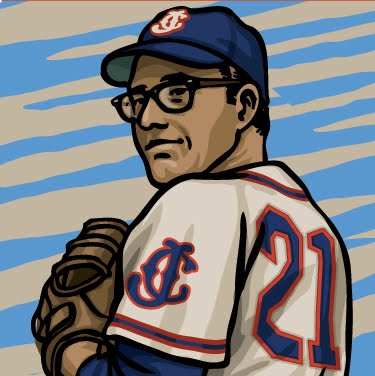
Hailing from the island of Hokkaido in the northern-most part of Japan, first baseman Fujio Nagasawa was the star of his college team from Hakodate Commercial School. After graduating he continued to play ball for the Hakodate Oceania Baseball Club. His talent was such that at the “advanced” age of 30 was recruited to represent Japan against the Major League All-Stars in the winter of 1934.

Led by Babe Ruth and Lou Gehrig, the All-Stars wiped the floor with the Japanese team but the Americans came away with the impression that the Japanese players they faced were at a AA level. Nagasawa himself hit .226 in 11 games against major league pitching. With practice against good, professional competition, American sportswriters speculated they would improve quickly. Major Leaguer Lefty O'Doul was on that 1934 team and had previously played on tours that stopped in Japan earlier in the decade. Through his friendships with influential businessmen eager to start a Japanese league, O'Doul suggested sending the Dai-Nippon team to the United States in the spring to play against the American professional teams that held spring training on the west coast. O'Doul was newly named manager of the San Francisco Seals and offered to act as intermediary in arranging other ball clubs to play against the Japanese.

Besides acting as middle-man for the Japanese, the publicity-savvy O'Doul made a few suggestions to the Dai-Nippons - the first of which was to change their name: The Dai-Nippon Tokyo Yakyu Club was just too much of a mouthful for the American public to digest. O'Doul suggested the "Tokyo Giants" and the name has held to this day. Other suggestions by O'Doul was for the Japanese to capitalize on national customs that would be unique to their team when they toured America. Despite the fact that Japanese baseball teams all used English words and numbers on their uniforms, for the tour jerseys would sport the player's number in traditional Japanese kanji characters on their backs and the kanji characters for "Tokyo" would appear on their sleeve. O'Doul instructed them to continue the tradition of tipping their caps and bowing as a group to the crowd before and after a game. Each batter was told to also tip their cap and bow to the umpire before each at bat and even after being thrown out on the base paths runners were to do the same. Another unique aspect of a Tokyo Giants game was their football-like huddle before each inning. Newspaper scribes in America were kept busy debating just what was being discussed during these mysterious huddles. Curious little things like that really made a difference to the American public and the team was awarded with decent-sized crowds and much newspaper publicity.

Among the photographs that accompanied the Tokyo Giants press kit was a much-reproduced photo of Fujio Nagasawa tipping his cap to the home plate umpire. American sportswriters commented favorably on his fielding skills and he batted right around .300 on the 6 month tour. The success of the tour back in Japan led to the formation of the nation’s first professional league and Nagasawa was signed to be the Tokyo Giants first baseman. As the Giants lead off hitter, Nagasawa became the very first batter in the Japanese Baseball League when play began in 1936. Now in his early 30's, Fujio Nagasawa's playing days were coming to an end and the arrival of first baseman Tetsuji Kawakami, soon to be known as "The God of Batting" led to his retirement in 1943. Nagasawa then switched gears and became a successful reporter for the Hokkaido Shimbun newspaper, dying at the age of 80 in 1985.

This card and story stems from the large file of research I have been slowly accumulating on the 1935 Tokyo Giants. Often a footnote in other baseball history books, no volume of its own has ever been published in English. In Japan, baseball writer and historian Yoichi Nagata has written the definitive study of this tour - unfortunately it is in Japanese and no translation has been done of this interesting work. Through a speech he gave at a SABR convention a few years ago, Nagata related how his research uncovered Lefty O'Doul's part in helping the Tokyo Giants create a unique persona through the continued use of the "football huddle" and the bowing and tipping of their caps. I am planning to release the drawings I have done of the 1935 team along with the story of their tour in a future edition of "21".

Sunday, October 10, 2010

53. Jimmy Horio & the 1935 Japanese All-Stars


While learning about the negro leagues years ago, I became interested in the various teams they competed against when not playing against other black teams. Back before the Second World War there was a whole parallel universe of baseball operating just out of bounds of the recognized leagues affiliated with major league baseball. Researchers Scott Simkus and Gary Ashwill seem to have coined the perfect phrase for these teams and the games they played: "Outsider Baseball". As a young amateur historian I found out about the bearded House Of David religious colony from Michigan which sent out as many as 3 different traveling teams a season to play all over the country. I heard about the Nebraska Indians, made up of, you guessed it, Native Americans. I read about barnstorming teams made up of major league stars angling to make a buck. All-Girl teams. Teams of washed up players sponsored by a shoe company. Prison teams. The F.B.I. had a team which J. Edgar Hoover never failed to come out and support. And I also came across the Japanese All-Stars which toured North America in 1935.

The team that toured North America in 1935 was an off-shoot of the Japanese "All-Nippon" Team that was assembled in the fall of 1934 to challenge the American All-Star Team that visited the island nation that year. I briefly talked about this tour in my Moe Berg post back in July. Although stocked with the best college ballplayers on the island, the Japanese lost all 17 games against the Americans. While it was looked upon as a national embarrassment, it inspired the formation of a regular professional team sponsored by the Yomiuri Shimbun Newspaper. In the Spring of 1935 the team, now called "The Dai Nippon Tokyo Yakyu Kurabu" (Great Japan Tokyo Baseball Club), embarked on a tour of the United States and Canada. Among it's players was a 28 year-old Hawaiian named Jimmy Horio.

Jimmy Horio was born in Maui, Hawaii in 1907. Like most Americans, he learned baseball at an early age and was fortunate in growing up in Hawaii as the island was a hotbed of very talented teams made up of Japanese-Americans. He lived in Japan for a few years with his grandparents and later returned to Maui. He dropped out of high school with the ambition to become the first Japanese-American to play in the Major Leagues. The speedy Horio was signed by the Sioux Falls Canaries of the Class D Nebraska State League in the Spring of 1934. Jimmy batted .264 in 110 games. After the season ended he learned of the up-coming tour of Japan by the Major League All-Stars and wrote to the Japanese National Team's manager sending his semi-pro and minor league records and asked to be a part of the team.

Horio became the team's centerfielder but against the Big Leaguers didn't do too well, batting a lowly .196. But hey, he was batting against Lefty Gomez and Earl Whitehall, winners of 26 and 14 games that season. Jimmy's biggest contribution to the team however was not his bat, but the practical experience he brought with him as a bona-fide American Minor League player, which he readily shared with his teammates.

When the Dia Nippon team was formed, Jimmy Horio was again selected as it's centerfielder. In February of 1935, Japan's first all-professional baseball team sailed out of Yokohama Harbor, destination North America to try their lot against a full schedule real baseball competition. The Dia Nippon's toured extensively playing all-levels of ballclubs from small town factory teams to AAA level minor league teams. Gauging their success and talent is not an easy thing to do as they did extremely well against amateur teams and very good against minor league opposition, however the games against minor league teams were during spring training and many of the teams did not field their best players. None-the-less, the tour was very successful and huge crowds packed the ballpark when the Japanese came to town. American audiences were fascinated by their cultural differences such as tipping their caps and bowing deeply to the umpire when coming to bat or being thrown out steeling. Particularly noted during the tour was Jimmy Horio's excellent fielding and newspaper accounts are filled with mentions of the Japanese-American's exploits in the centerfield. His fluency in Japanese and English made it much easier for the tour to navigate it's way through the back roads of North America. It is reported that the Dia Nippon team's record for the 1935 tour stands at 74 wins and 34 losses.

After the Japanese players went home, Horio stayed in the United States where he was signed by the Sacramento Senators of the Pacific Coast League. The opportunity to play in the PCL might have come from a recommendation from Frank "Lefty" O'Doul who was part of the U.S. team in 1934 and now playing manager of the San Francisco Seals. Jimmy hit .250 in 20 games for Sacramento which at that time was part of the Brooklyn Dodgers farm system. The following year the Japanese team was back in the States, this time as the Tokyo Giants, now part of the first Japanese Baseball League. And this wasn't an exhibition tour, it was a serious spring training to get the team ready for the inaugural 1936 Nippon Professional Baseball League season.

Horio returned to Japan and joined the Hankyu Ball Club where he batted .233 for the first half of the slit season and .217 for the second. Again, although his averages were low, his influence on the game in Japan well out-weighed his offensive output. Horio steadily increased his batting average, batting over or close to .300 for the 1937-41 seasons. Horio starred for the Hanshin Tigers from 1939 to 1941 when he and Tadashi Kameda, the other American player in Japan, left the island due to the deteriorating political situation between the two countries. Jimmy continued to play semi-pro ball in Hawaii during the war, playing until he was 39 years-old. Jimmy Horio died from bone cancer in 1949 and although he never reached his goal of becoming the first Japanese-American in the majors, his influence on the game in Japan is still felt, forever known as "The Ty Cobb of Japan".

I'd like to thank two historians whose grateful sharing of their research made this post possible. Scott Simkus, co-proprietor of The Outsider Baseball Bulletin (www.outsiderbaseball.com) lent me his newspaper files on the 1935 tour as well as his painstakingly compiled statistics culled from available box scores. Robert Fitts, Japanese baseball card expert and author of two major books on Japanese baseball history: "Wally Yonamine: The Man Who Changed Japanese Baseball" and "Remembering Japanese Baseball: An Oral History Of The Game", helped me out with identifying and translating Japanese photo captions and generally sharing his knowledge of early professional baseball in Japan. I am also anxiously awaiting his book on the 1935 U.S. Tour of Japan, "Banzai Babe Ruth!" which is due to be released next year. (www.robfitts.com)