Showing posts with label Detroit Tigers. Show all posts

Saturday, July 4, 2015

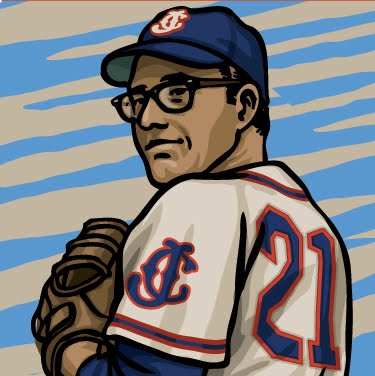
199. Bill Faul: Rise and Fall of the Loony Tune


Last month I was honored to be a guest on the C-Dot Show here in Cincinnati (you can listen HERE). The all-baseball show is hosted by Reds beat writer C. Trent Rosecrans and pro comedian Josh Sneed. The two have Reds players, front office guys and sports writers on there and it's recorded live on stage at a bar called MOTR in the Over the Rhine section of town. MOTR's owner, Chris Varias, not only runs a great joint to drink and eat in, but also brings in live bands from all over the country to play every night. Varias is also a big baseball fan and the place is decorated with many pieces of baseball history. When I met Chris he asked me if I had heard of Bill Faul. I said I hadn't and he proceeded to tell me about this local baseball hero. This one's for Trent, Josh and Chris - thanks for having me on your great show and introducing me to this week's addition to The Infinite Baseball Card Set...

Indianapolis, 1969.

Everybody was staring at him, including the green-headed parakeet he had clutched in his hand. He was the oldest guy in the room - The Old Man. He was 28. Seven years earlier he was the best collegiate pitcher in the country, even made the front cover of the official college baseball guide. He'd played in the big leagues, been a Tiger and a Cub, had feature stories written about him in Life Magazine and the Chicago Tribune, yet now he was in the low end of the farm system of a lousy expansion team. The parakeet suddenly bobbed its head and took a bite out of his hand.

"That's it!" he yelled and bit the head off the bird, the feathers exploding into a cloud of bright green, temporarily separating him from the rest of the world.

Bill Faul was the best pitcher to ever come out of the University of Cincinnati. Since the university is known more for their basketball program and architecture school that might not seem like much, but you need to consider that Sandy Koufax pitched there, too. And Bill Faul was better. So good that the Cincinnati native became UC's first All-American and in 1961, his junior year, he was named the best college pitcher in the nation by the American Association of College Baseball Coaches. His side arm motion set baseball records at UC that still stand, including 24 strike outs in a game and lowest season season ERA - a microscopic 0.82 in '62.

But Faul was a flake. He was on a whole different planet than everyone else. There was the one time when he told UC's trainer he had a sore arm. The trainer had him position the ailing arm under an ordinary reading lamp. Fifteen minutes later Faul's sore arm was magically gone. Or take that 24 strike out game. The night before Faul's teammates informed hm that he'd be dropped into the ball park via parachute. Terrified, Faul couldn't sleep all night. Maybe it was the sudden release of his anxiety that made him loose enough to strike out those 24 batters.

Flake or no flake, when the official guide to collegiate baseball hit the newsstands in 1962 it featured Bill Faul of the University of Cincinnati on its cover.

The Detroit Tigers won the bidding war for Faul's services and after graduation he was sent to the Knoxville Smokies of the South Atlantic League to finish out the 1962 season. The college kid went 6 and 2 with an ERA just over 2 and next thing he knew he was up to the Detroit Tigers. The team was in Metropolitan Stadium on September  19, 1962 playing the Minnesota Twins, a measly 6,000 in attendance for the Wednesday day game. When starter Hank Aguirre started hemorrhaging runs in the fourth inning, manager Bob Scheffing took him out for a pinch hitter and sent Bill Faul to the bullpen to warm up. 

As the bottom of the fifth started, Faul took the mound. The Twins were up 4 to 2. He was welcomed to the big leagues by Bernie Allen lining a single to right field, then walked Zoilo Versalles. Faul caught his breath and struck out Dick Stigman and Lenny Green in quick succession, then got Vic Power to ground out to second. Inning over, score still 4-2 Twins.

Bill Bruton opened up the Tigers' 6th with a tremendous home run but no one else could follow that up and Detroit still trailed by a run when Faul took the mound again. Richie Rollins hit an easy grounder to short and was tossed out, but that brought up Harmon Killebrew, the Twins slugger. Wielding one of the most powerful bats in the American League, The Killer knocked the next ball into the bleachers. 5-3 Twins. Faul began wavering. He beaned Bobby Allison who then wound up on third when Earl Battey singled to center. He retired Bobby Allen on a fly ball but Allison crossed the plate on a single by Versalles. A walk to Stigman loaded them up and another free pass scored Battey. Scheffing called Bob Humphreys in from the bullpen and sent Faul to the showers. Minutes later Vic Power knocked in all the runners with a grand slam.

It wasn't he greatest debut, but the Tigers were excited by Faul's potential. The pitcher spent the off-season teaching elementary school in Cincinnati and practicing karate, mastering the latter so well that he registered his hands and feet with the local cops as lethal weapons before reporting to spring training in 1963. He easily made the team.

The 1963 Tigers were a sluggish team going nowhere so Faul's 5-6 record doesn't look too bad when you put it in perspective. While he wasn't making waves with his fastball, he was causing ripples with his eccentricities. He showed up at spring training wearing a cowboy suit and riding a bicycle. When he was issued a Tigers uniform he insisted he wear number 13. New manager Charlie Dressen, a rough hewn, no-nonsense and all-business kind of guy, was perplexed by Faul. "You watch him for a while, watch how he acts, talk to him, spend some time with him, and you figure either he's the dumbest guy in the world or the smartest you've ever met." 

The Tigers coaches tried to work with Faul. He had the pure ability but needed polishing. His delivery was all screwy - he'd flail around in a wind up and by the time he released the ball he was spread out like an octopus on the mound - somebody likened him to an impatient marionette. The coaches warned him over and over again that he'd be unable to field his position and sure enough, one game Faul was beaned in the keister by a screaming line drive. He also had a tendency to lose concentration and get wild, his fast ball rising up to the sweet spot where hitters love to see it. When old-school coaching methods didn't help, the college-educated pitcher turned to a more modern solution - Faul visited a psychiatrist.

Now in 1963 going to a psychiatrist - still referred to as a shrink or even head-shrinker in newspapers of the day - was pretty wild. The psychiatrist's prescription was even more out there: self hypnosis. The pitcher immersed himself in the theory behind hypnosis and began using it on himself, believing through the power of suggestion he could make his right arm keep his pitches low. Faul studied hypnotism throughout the off season and when the 1964 season started he spooked his manager Charlie Dressen and his teammates by putting himself in a trance before his first start. This unorthodox training regimen coupled with six earned runs in 5 innings got him a ticket to the minors. Faul struggled to a 4-7 record with Salt Lake City and in the winter doubled-down on the hypnosis. He'd just received his diploma from the Scientific Suggestion Institute when he found out the Chicago Cubs bought his contract.

While his hypnosis met with static on the stodgy Tigers, the Cubs club house was a bit more open. That's not to say his teammates weren't a bit spooked when Faul set up a record player on which he played a 45 that repeated "You're going to keep the baaaalllll dowwwwwn. You're going to pitch loooowwwww and awwwwaaaayyyy" over and over as he slipped into a hypnotic state. When the record ended he declared himself ready to pitch.

At first it seemed to work. In July and August Faul tossed three complete game shutouts. The other Cubs players soon warmed to Faul's hypnosis routine and even played along, snapping their fingers in his face after an inning as if the release him from a trance. It scarred the heck out of the opposing players and even manager Leo Durocher put up with it as long as he won.  Opposing players tried teasing him, hollaring things and dangling swinging pocket watches at him from the dugout. Somewhere along the line he was given the nickname "Loony Tune", but still Faul had a respectable year, going 6 and 6 with a 3.54 ERA. The '65 Cubs were another in a long line of mediocre to bad teams, but they did make history by turning three triple plays in one season - and if that wasn't odd enough, they all happened when Faul was on the mound.

In the off season Faul practiced his karate, honed his hypnosis technique and earned a degree as a doctor of divinity in the Universal Church. When he joined the Cubs for 1966 he was a minor celebrity as the press fixated on him for lack of anything else interesting on the Cubs that spring. The Chicago Tribune wrote a long Sunday Magazine section on him and he figured prominently in a Life magazine feature where he shared his thoughts on the power of suggestion. But something was missing in 1966 and after a 1-4 record he was shipped to Tacoma. 

It was in the minors that Bill Faul's eccentricities really went into over drive. Whether it was to scare or impress his younger teammates is not known, but the veteran pitcher began telling stories how he'd killed guys and liked to bite the heads off of cats and dogs as a kid. He also began eating live frogs because he claimed they put more hop on his fastball. The other bullpen pitchers would catch and rinse off the little green things and Faul would eat 'em with a glass of water, spitting out the tiny bones. As he slid further and further into the depths of the minor leagues, Faul's increasingly younger teammates were both scared and fascinated by him. It was while playing in the new expansion Kansas City Royals farm team out in Omaha that he made the big leagues of baseball lore by biting the head off that parakeet.

Bill Faul made it back to the majors for seven relief appearances with the San Francisco Giants in 1970 before he was sent back down for good. He returned to Cincinnati where he led a comparatively quiet life, passing away in 2002. 

Wednesday, April 22, 2015

195. Bill Leinhauser: Ty Cobb for a Day


When it came down to delivering the manuscript for my book, The League of Outsider Baseball, I found I had run way past my intended target of 240 pages and had about 100 extra pages. Then began the excruciating process of having to edit out dozens and dozens of great stories and illustrations. In the end I admit the final product is much leaner and taut - it's Major League quality. Still, the cuts left a slew of ballplayers who wont get their due in this book. Today's story and illustration is from a two-page spread I had done depicting the 1912 Replacement Tigers. I decided to go with one character today to represent the group of nine guys who went from the street corner to the majors in the span of one day in 1912. If my book does well then perhaps the other eight will make it into a second volume next year!

Earlier that morning Bill Leinhauser was hanging out on his street corner in Philly with a handful of his pals. Now it was two in the afternoon and he was waiting to take the field in Shibe Park as a member of the Detroit Tigers. 

How did Bill Leinhauser go from a Philadelphia street corner to replacing Ty Cobb in the Tigers outfield?


Most casual baseball fans know about Ty Cobb's horrifying temper. The one story usually told to illustrate the point is how he once leaped into the stands and beat an armless man who dared heckle him to a bloody pulp. When someone cried "That man has no hands!" Cobb defiantly yelled between kicks of his cleats "I don't care if he has no legs!" and continued pummelling the man until cops and teammates dragged him away. The story, though told over and over so many times, is essentially true.

The incident took place at New York's Hilltop Park on May 15, 1912. Cobb, the best ballplayer in the American League, was a natural target for hecklers. One guy sitting in the third base stands was especially vocal. Claude Lucker was a former printer who lost eight of his ten fingers in a press accident. Now he pushed Ty Cobb into the red zone when he called the Georgia Peach one too many racial slurs. Cobb did indeed vault into the stands and kick and beat the defenceless Lucker, uttering the infamous line "I don't care if he has no legs!"


As would be expected, the American League suspended the slugger, but what was unexpected was that his teammates - who cared for Cobb about as much as he cared for them - fully supported him and voted to go on strike unless he was reinstated. When the Tigers rolled into Philadelphia to begin their series against the World Champion Athletics, neither the League nor the striking players were willing to budge. Tigers manager Hughie Jennings had a big problem: if Detroit didn't field a team that afternoon at Shibe Park, the American League would forfeit the game to the A's and bring forth all kinds of costly fines.


Jennings met with A's manager and owner Connie Mack. It became obvious Jennings had only one choice - find a team. Since time was tight he couldn't bring up any Tigers prospects or players under contract with Detroit. He had to find local amateurs. Both Jennings and Mack knew any pick-up team would get murdered going up against the A's juggernaut. Mack's men were the defending World Champs, some say the greatest team ever assembled. The kindly Connie Mack told the Tigers manager that he would hold back his regulars and field his scrubs that day. Reassured, Jennings only had one more thing to do - find a team!


Since he was unfamiliar with the local baseball scene, the Tigers skipper turned to a local sportswriter named Joe Nolan. He in turn tapped Allan Travers, the assistant coach of the St. Joseph's College baseball team to find the players. The 20 year-old went to his neighborhood and scooped up eight "ballplayers" and herded them to Shibe Park. Each man was instructed to sign an official American League Player's Contract for a salary of $25 and told to suit up in the unused Tigers road uniforms. Travers received a $50 contract because he claimed he could pitch.


The real Tigers wore their street clothes and sat in the stands. If Jennings felt relieved that he had a team, it was short-lived. When the line up cards were exchanged he discovered that Connie Mack had duped him - every position was manned by one of his regulars including three future Hall of Famers. 

The game was a slaughter. The A's pounded Allan Travers for 24 runs. At one point many of the 16,000 fans demanded their money back but were refused. A riot was close to breaking out but was somehow avoided. After the game Cobb begged his teammates to end the strike, which they did. Each of the striking Tigers were fined $100 - $50 more than Cobb's original fine for beating Claude Lucker back in New York! In their next game Detroit fielded their normal lineup sans Cobb who would return from his suspension on May 25th.

The guy who took Ty Cobb's place in center field and even wore his uniform was William Charles Leinhauser. He was a local sandlot player and accomplished welterweight boxer, but he wasn't Ty Cobb. Leinhauser went 0 for 4 with 3 strike outs against the World Champs. Besides his failure at the plate Leinhauser also managed to get hit on the head by a fly ball. Perhaps he could be forgiven since Travers was serving up gopher balls all afternoon and the replacement Tigers were run ragged chasing flies. Cobb's replacement never appeared in another professional ballgame, but he did go on to to become a highly decorated Philadelphia Police Captain and retired as head of the city’s narcotics squad.  

The Replacement Tigers became a footnote to baseball history, significant in that it added eight players to the Baseball Encyclopedia whose entire career lasted only a single game. Only one of those nine would ever effect baseball history a second time, and not for his play on the field but off it. The starting third baseman that day was Billy Maharg, a scrappy neighborhood corner boy. He went hitless in his only plate appearance and left the game early when a line drive slammed into his mouth, knocking out a handful of teeth. He continued to hang around the fringes of professional baseball and by 1916 was a trainer and chauffeur with the Phillies. In 1916 Maharg got one more chance to appear in a big league game. He did as well in his second major league game as he did in his first: 0 for 1. He did however play a few innings in the outfield, this time without any damage to his choppers. The next time he appeared in conjunction with the national pastime was when he and pal Sleepy Bill Burns helped cobble together the fix of the 1919 World Series.

Monday, February 7, 2011

67. Johnny Mohardt: He Batted 1.000 - You Can Look It Up!


This post is by guest author Dan Cichalski, whose research interest lies in fellow Notre Dame alumni who made it from that prestigious Midwestern university to the major leagues. One of the reasons (besides giving me a little break) I try to encourage "guest authors" on my site is because it helps broaden the subject matter covered here. See, my main interests rest mostly with players from the 1930's and 40's - I have a pretty good working knowledge of players, both black and white, as far back as the turn of the century, but it is always a great benefit when someone else with different interests can step in and introduce us to a new time period and genre of story. The history of this great game of ours is so long and varied that sometimes I fear I can get too myopic in the subject matter I write about. Thanks to Dan and all the other writers who graciously donated their personal research efforts to make this site as varied and interesting as possible...

John Henry Mohardt was born in Pittsburgh on Jan. 21, 1898, but grew up in Gary, Indiana - from one steel town to the next. His high school education stopped after the 10th grade, when he dropped out to work in the steel mills to help support his family. This was in Gary's infancy - the settlement first took root in 1906 and became a city - with 16,000 inhabitants - only in 1909. By 1920, 55,000 people lived in Northwest Indiana's largest city.

After two years in the mills, Mohardt applied to Notre Dame and, as written in Cappy Gagnon's Notre Dame Baseball Greats, was given two tests (according to Mohardt's son): running and throwing. The right-hander passed these "tests" - presumably with flying colors - and enrolled at Notre Dame in the fall of 1918, when he was 20.

Mohardt saw athletic action right away - as the third-string right halfback on the Fighting Irish football team, playing under their first-year head coach, Knute Rockne, and assistant Walter Halas, whose brother would soon found the Chicago Bears. A year later, Mohardt had moved over to left half as the third-stringer behind starter George Gipp, whom he backed up the following fall. In 1921, after Gipp's untimely death, Mohardt became the starter and led the Irish with his feet and his arms - 781 rushing yards, 10 touchdowns, 995 passing yards (completing 53 of 98 attempts) and nine touchdowns - in an All-American campaign. His passing numbers wouldn't be surpassed until Angelo Bertelli threw for 1,027 yards in '41 and 10 TDs a year later. Mohardt's rushing records were not bettered until Creighton Miller rushed for 911 in '43 and Neil Worden scored 11 times in 1953.

From 1919-21, with Mohardt on the team, the Irish were 28-1, winning a national championship in 1920. Besides the legendary Gipp, his teammates included Paul Castner, who also had a brief Major League career, and Curly Lambeau, who went on to found the Green Bay Packers. When he wasn't playing football, Mohardt was a part of Notre Dame's baseball and track teams, serving as captain of the Notre Dame nine in '21. In his three years on the squad - from 1919-21 - Mohardt played center field and third base and compiled a 6-1 record on the mound.

In the summer of 1920, he was one of several Irish players who suited up for a semi-pro ballclub in Iowa - a common practice at the time. Though it was against the rules, it was a regulation that was not strictly enforced. Still, Mohardt and his teammates took some precaution, using aliases during their summer employment. As Jake Kline, then a teammate and later the coach of Notre Dame's baseball team for four decades, recalled, he hit .394 that summer to Mohardt's .309. But Mohardt - who used as his alias the name John Cavanaugh - scored off the field, falling in love with a local Iowa girl. She wrote to him when he returned to campus, but because Mohardt never revealed his actual name, her letter addressed to John Cavanaugh at Notre Dame went to the priest of that name - who happened to be the university president. Though Cavanaugh was not pleased with this development, Mohardt went unpunished.

No discipline resulted from Mohardt's summer ballgames in Iowa, but in January 1922, he found himself caught up in a major football scandal after it was discovered that several Irish players had suited up for a match in what was described as the "bitter rivalry" between the Illinois towns of Taylorville and Carlinville on Nov. 27, 1921. An Associated Press story that appeared in The New York Times on Jan. 30, 1922, reported that "Carlinville people bet approximately $50,000 on the game, it is said, after hiring ten college players for their eleven, only to find that Taylorville had learned of the plan and procured nine Illinois athletes for its team, which won, 16 to 0." Taylorsville was said to have played its regular "townies" for the first half, taking a 7-0 lead into halftime, then bringing out the Illini ringers to close out the game.

The nine Illinois players were disqualified from further college competition, but the investigation revealed that only eight Domers showed up to play for Carlinville for an alleged $200 apiece. While Mohardt was originally one of the 10 Irish suspected of playing in the game, the eight who actually did play - and were thereafter suspended from college competition - exonerated Mohardt and Gus Desch, a bronze medalist in the 400-meter hurdles at the Antwerp Olympics. The 17 college players who were disqualified all claimed that they took no money for playing in the game.

Though Mohardt was cleared in that scandal, he later admitted to playing for Racine in an exhibition game against Lambeau's Packers on Dec. 4, 1921, in Milwaukee. Though the investigation didn't lead to Mohardt's admission until February 1922, local papers in Wisconsin reported openly on his performance in the days after the game: "Johnny Mohardt, late of Notre Dame, made his first professional appearance." As a senior, Mohardt's football career had ended by that point, but the university suspended him from playing baseball the following spring. A science major, he went on to graduate on schedule and enroll in medical school. But in order to pay for it, he needed to earn some money first, so he turned pro in both baseball and football. His football career lasted from 1921-26, during which time he suited up for the NFL's Chicago Cardinals, Racine Legion and Chicago Bears, as well as the Dayton Triangles of the American Professional Football Association and the Chicago Bulls of the American Football League. Alongside the 27-year-old Mohardt in that 1925 Bears backfield was a 22-year-old Red Grange, both of them playing under the papa Bear, George Halas.

Mohardt's baseball career, however, lasted just five games. Courted by the Pirates, Indians, Reds, Cubs and Cardinals, he signed with the Tigers on Feb. 6, 1922, after player/manager Ty Cobb assured Mohardt that he'd be able to leave the team in the fall in time to begin medical school. A feature with the headline "Mohart student as well as athlete" in the Sporting News on March 16, 1922, described "the flash of Notre Dame" as having "all the prospects in the world, and that he is likely to add professional baseball honors to the list of his achievements." Record-keeping back then wasn't nearly the science it is today, so the article lists Mohardt's accomplishments in general terms:

"Johnny sports baseball, football and track insignia, earned while a student in South Bend. He has registered fast time in the sprints; he has won fame in the gridiron and he has batted for something like .330 for his years in college. But it is also said that when Mohardt entered Notre Dame he assumed one of the stiffest academic courses available and he leaves the institution with a ranking of something above 90 per cent."

Mohardt made Cobb's squad out of spring training and made his Major League debut in the Tigers' third game, on April 15 at Cleveland, drawing a walk in a pinch-hitting appearance for center fielder Ira Flagstead. After scoring a run, Mohardt finished the game in center. The next day, at Chicago's Comiskey Park (where the Bulls played their home games four years later), Mohardt was sent into the game as a defensive replacement for first baseman Lu Blue, but never came to the plate.

Back in Detroit on April 20, Mohardt got into his third game, finishing out the first game of a doubleheader in left field in place of Bobby Veach, but again not getting a turn at bat. That at-bat would come the next day, when he again replaced Veach in left. Mohardt singled, setting his batting average at 1.000 and upping his on-base percentage to 2.000, but was caught stealing on the basepaths. Finally, on April 22, Cobb sent himself in to pinch-hit for pitcher Ole Olsen in the seventh, then asked Mohardt to run for him. Mohardt came around to score his second career run.

With the Tigers' outfield packed with Cobb, Veach and Harry Heilmann, Mohardt was sent to Syracuse of the Class AA International League. He hit .185 in 21 games before finishing the season in the Class A Western League with the Denver Bears, for whom he hit .188 in 10 games. The next summer, he signed on with the Greenville Spinners in the Class B South Atlantic League, but called it a career after playing just 15 games and batting .280.

Medical school and his desire to become a surgeon were too hard to resist. After earning his degree and beginning his career, part of which was spent on staff at the Mayo Clinic in Minnesota, Mohardt used his talents and steady hands to serve his country. When World War II broke out, he enlisted in the Army, eventually serving with the 12th General Hospital Unit in North Africa and Italy and earning his discharge as a Lieutenant Colonel. Later, he went back into government service as the chief surgeon at a veterans hospital and the assistant director of the V.A. Surgical Service. Sadly, on Nov. 24, 1961, Mohardt took his own life at age 63, bleeding to death at his home in La Jolla, Calif., after cutting the femoral artery in his groin. He is buried in Fort Rosecrans National Cemetery in San Diego.

Mohardt's legacy covers two sports, four major leagues and the deadliest war of the 20th Century. He played under the legendary Knute Rockne, Ty Cobb and George Halas and counted among his teammates George Gipp, Curly Lambeau, Red Grange, Harry Heilmann and the same Cobb. He served his country under FDR. And he remains one of just 66 no longer active players to have a career batting line that reads 1-for-1, 1.000.

Dan Cichalski is a writer and editor who ruminates on the national pastime at www.njbaseball.net His latest obsession is collecting cards, autographs or photos of the 77 players who went on to the Major Leagues from Notre Dame, hence this post. Other profiles in the ND to MLB series can be found at http://njbaseball.blogspot.com/search/label/ND%20to%20MLB