Showing posts with label Federal League. Show all posts
Thursday, January 8, 2015
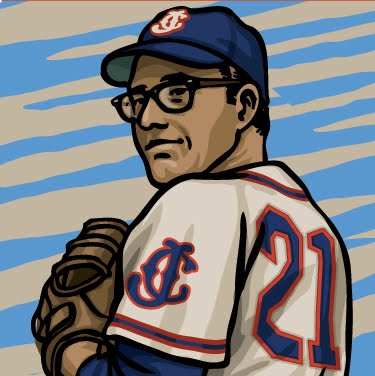
184. Mysterious Mitchell: His Name Says It All
The race for the 1910 Pacific Coast League pennant was tight. Going into the last week of August Portland, Oakland and San Francisco were virtually neck and neck. Clearly, each team could use a little something extra that would put them over the top and keep them in first place. On the last day of August, fate walked into Portland's Vaughn Street Park.
A big, athletic-looking fellow presented himself to Portland's manager Judge McCredie as a professional pitcher. When the man refused to elaborate on his previous experience McCredie blew him off. He then walked across the ballpark and entered the visiting San Francisco Seals clubhouse. Whatever he said to Seals captain Kid Mohler must have piqued his interest because he was soon ushered into a private office to talk with manager Danny Long. The man stated that he was a professional pitcher and wanted to play for the Seals. It was quickly evident that this was not going to be an ordinary contract negotiation. When pressed on his credentials, the man stated that his name and previous occupation wasn't anyone's business. As long as he made good on the mound he need not reveal anything about himself. This was all very irregular, but whatever he revealed to Long and Mohler it must have been impressive. A contract was quickly drawn up for an unheard of $100 a week plus an undisclosed bonus if he won 76% or more of his decisions. Along with the extravagant salary the pitcher was exempt from playing on Sundays and Long and Mohler agreed to keep the man's identity a secret.
When the door finally opened, the press was told only that the Seals had signed a right handed pitcher named Fred Mitchell. No details about the pitcher's past record were given and sportswriters and fans alike figured this new guy was just some kid from the bush leagues - extra bullpen fodder to give the San Francisco starters some much needed rest. The Seals were on an extended road trip and headed to Southern California for a two week series against the Vernon Tigers and Los Angeles Angels. With the ink on his contract still wet, the club started Mitchell the very next afternoon against Vernon. The new-comer pitched 5 innings before leaving the game with a 6-2 lead and the victory. Six days later he faced the Tigers again and this time went the full nine, earning another win. It was after this second victory that people began to ask the question:
Who the heck was this guy?
Mitchell, though only in his early 20's, pitched like a seasoned veteran. The right hander demonstrated a cool efficiency on the mound and employed his repertoire of fastball, curves and spitball with such expertise fans and sportswriters wondered why this guy was pitching in the minor leagues? Almost immediately he caused a stir when he refused to pose for pictures. This seemed odd. The camera was still a fairly new concept and photographers couldn't conceive of why a young pitcher trying to make a name for himself wouldn't jump at the chance to get his mug in the papers. Who knows, maybe the kid was superstitious.
A week after his complete game win over Vernon, Mitchell faced the Los Angeles Angels in the first game of a double header. The affair was a nail biter, tied going into the 10th inning before the Seals took the lead. Mitchell scattered seven hits and pitched all ten innings for the win. Then he took the mound for the nightcap, this time pitching a six-hit complete game win!
Who the heck was this guy?
The local beat reporters peppered the pitcher with questions but Mitchell ducked and weaved - he wouldn't even reveal where he hailed from. On the long train ride back to San Francisco, the scribes descended on Mitchell's teammates for clues. They were no help; not only wouldn't he share any tidbits about himself in the locker room, when the game ended he would disappear, refusing to associate with any of his teammates. The press, smelling a good - no - great story, circled like sharks. While the north-bound Bay Area sportswriters were trying to pry info out of Mitchell, Los Angeles reporters were firing off queries to newspapers and sportsmen all across the country. The air was rife with rumours - some said Mitchell was a former Cubs prospect named Bob Mitchell. This sounded promising, same last name. A little digging found that Bob Mitchell was a young fireballer from the University of Mississippi. The Cubs were hot to sign the kid but told him to get lost after he refused to pitch on Sundays - he was the son a minister. Bingo - that jives with Mitchell's no-Sundays clause. The White Sox took a chance and signed him to a minor league contract. A barrage of cross-country cables dug up more about this Bob Mitchell. He was last seen pitching for the Lincoln Railsplitters. Telegrams fired off to Nebraska finally torpedoed the Bob Mitchell ID - the U of M pitcher was described as "small of stature" about 155lbs - a good 25 or 30lbs lighter than the mysterious Seal hurler. Then someone remembered that Bob Mitchell was a southpaw. The press kept digging.
By the time the train made it to San Francisco the new phenom was christened "Mysterious Mitchell". With the atmosphere surrounding the Seals home stand already charged by the tight pennant race, the addition of a mysterious new pitcher made it explosive. Before the team even took the field at Recreation Park a whole legion of reporters and photographers lay in ambush. Mitchell, as if to live up to his new nickname, refused to leave the clubhouse for warm-ups if there were cameras present. Finally he was ushered out to a secluded place in the outfield to unlimber his arm. Finished, he made a bee-line to the dugout. The cameramen lugged their equipment close to the Seals bench and readied their cameras for Mitchell's emergence. Now it got weird. The pitcher flat-out refused to come out unless all the photographers were removed. Even the newspaper men who customarily sat on the bench with the players were told to vamoose. In a ground-breaking ruling, umpire Van Haltren ejected all the photomen from the stadium. He argued that their number and overanxious behavior disrupted the game. The indignant men of the press refused to leave until a policeman got involved. Mitchell took the mound and perhaps unnerved by all the attention, lost to Vernon 3-1.
But all the cameras had not been ejected that afternoon. A tech-savvy photographer had hidden himself far up in the stands, and using a new-fangled telephoto lens, snapped a number of clear shots of the pitchers face. That evening copies were dispatched by train to all the major cities on the coast. With any luck, Mysterious Mitchell wouldn't be mysterious any longer.
Who the heck was this guy?
On September 17 Mitchell faced Vernon again and was clinging to a 6-5 lead when he was removed from the game. Mitchell openly wept as he relinquished the mound to Cack Henley in the bottom of the 8th and the capacity crowd made their disapproval of the switch known. The ace made a beeline for the showers where he was heard slamming doors before emerging in his street clothes. Instead of leaving the park, Mitchell took the long way to the street, passing through the stands where the crowd was whipped into a frenzy, cheering and pawing at the mysterious phenom. Traffic was reportedly shut down by the crowd that followed Mitchell out of the ballpark and the mystery man was induced into making a short speech to his fans. After thanking them for their support, Mitchell reassured his admirers that he was totally behind the Seals management. The crowd burst into cheers as he disappeared behind the managers office door.
Meanwhile, Mysterious Mitchell was using up any good grace his teammates had for him. He treated bellhops and clubhouse men like peons or servants. Some days he didn't even bother to show up at the park; the mystery man seemed to do as he pleased. According to a few Seals, Mitchell refused to associate with the boys, acting like they were mentally inferior to him and not in the same talent class as he. At one point during a game manager Danny Long questioned Mitchell's deliberately walking a batter to load the bases. Mitchell loftily responded "Now see here, I want you to keep still. I don't want any suggestions. I have worked under men who managed pennant winners and I know my own business". The outburst thoroughly humiliated Long and further alienated the pitcher from his teammates. Then Mitchell may have inadvertently gave away a vital clue to his past by blurting out "Matty told me that was the thing to do". By "Matty" everyone on the bench knew he was referring to the great Christy Mathewson of the New York Giants. Did this guy play for John McGraw's famous New York Giants?
On September 21st second place Oakland came to town. Mitchell shut out the Oaks through seven inning before giving up a run. The score stayed knotted until the 10th when Pinky Swander smacked a not-so mysterious Mitchell offering over the right field fence for the win. Several newspapers made cracks about whether or not he cried after this heartbreaking loss like he did after being removed in the Vernon game. Mitchell's record now stood at 5-2 and although he was not unbeatable, he still ranked at the top of the Seals rotation and more importantly put fans in the stands. Outside the ballpark, Mitchell quickly fell in with a fast society crowd. He claimed he spent his free time penning poems and songs and several vaudeville management companies were vying for his post-season appearance.
After the disappointing Oakland loss, a wire came in from Philadelphia - Frank Mitchell was Phillies ace George McQuillan! A few weeks earlier Philadelphia management had had enough of the pitcher's chronic boozing and night crawling and suspended him for insubordination. McQuillan packed a bag and took off for points unknown. His written description seemed to match Mitchell - dark hair, athletic build, same height. However, this identification caused a problem. If he was a big leaguer on the suspended list, he would thus be ineligible to play professional ball anywhere. That would mean all the wins he'd racked up with San Francisco would have to be voided or worse - forfeited. The two clubs vying for the pennant with San Francisco hoped that Mitchell was indeed a "ringer". A series of forfeitures would KO the Seals chance at taking the pennant. Oakland manager Harry Wolverton chomped at the bit to play the Seals again. He'd played with McQuillan and would know him by sight if he had the chance to get a close look. Portland contacted their former shortstop Phil Cooney who used to be teammates with McQuillan. As soon as they had a good photograph of this Mysterious Mitchell they were going to get it into Cooney's hand so he could ID this guy.
While the press still found Mitchell a mystery, the opposing Pacific Coast League batters did not. The Seals pitcher began giving up hits like it was batting practice. He managed to beat Sacramento to make his record 6-2 but his effectiveness was wearing thin. And his aloof mystery act was wearing thin on the rest of the Seals. Even the police got into the act. Seems that the ace was caught speeding through the streets of San Francisco with a group of society swells singing songs at the top of his lungs. The cops threw him in the klink and slapped a $10 fine on him for disturbing the peace.
The second week in September the Los Angeles sports writers came up with a great lead. Informants from the Midwest believed Mysterious Mitchell was, in fact, Floyd "Rube" Kroh of the Cubs. Just weeks before "Mitchell" showed up on the coast, Kroh had a bust up with Chicago manager Frank Chance and was kicked off the team. Kroh was a notorious bad character and had racked up a slew of curfew violations that summer. When he left the team to illegally pitch a semi-pro game in Atlantic City, the Cubs had enough and suspended him. His current whereabouts were unknown.
The Kroh identification seemed credible. Mitchell pitched with the confidence of a big league veteran and his height and build matched the disgraced Chicago ace. Even the "bad character" description seemed to match up. The problem was Kroh was a blond. OK, the writers hypothesized, he could have dyed his hair to disguise himself. Then everything fell apart when someone took a Spalding Baseball Guide off the shelf and discovered Rube Kroh was a lefty.
Who the heck was this guy?
Meanwhile, management of The American Theatre in Portland announced that Mysterious Mitchell agreed to appear on their stage. The pitcher's act was described as a long monologue followed by a talk on whatever stoked the star's fancy at the moment. The five week engagement called for a staggering $400 a week contract. The original offer called for $500 but Mitchell refused to work on Sunday. The American Theatre management tried in vain to get Mitchell's real name.
In the last week of September newspapers up and down the coast finally broke the PCL's greatest mystery - Mysterious Mitchell was no longer mysterious. This time, the reports were correct. Although preliminary reports called him Fred Collings, writers quickly corrected their stories and peeling back the mysterious hurlers past like an onion.
His name was Fred Mitchell - Frederick Mitchell Walker that is. Born in Nebraska in 1884, he moved to Chicago's swanky Hyde Park neighborhood as a kid. Strong and athletic, Fred entered the University of Chicago and starred on their baseball, football and basketball team. It was a halfback that Walker made his name, so well regarded that newspapers habitually referred to him as one of the best all-around football players in the nation. Walker wasn't a slouch on the baseball diamond either - from 1904 to 1906 he was the Maroon's ace. Walker left the University of Chicago a few credits shy of graduating and went west to become the athletic director of Utah State University. He led the football team to a 6-1 season in 1907. Midway through the 1908 season one of Walker's players was killed on the field during a game and the school disbanded the football program. Walker finished the season as the assistant football coach at Denver University before returning to Chicago. Like many athletes, Walker made extra money as a baseball mercenary playing in Chicago's vaunted semi-pro city league. His pitching for the Rogers Park team brought a "name your price" offer from the White Sox but Walker turned it down. He returned to his Alma mater, University of Chicago, as the Maroons' assistant football coach, then headed south to coach at the University of Mississippi. It is interesting that an early lead on "Mitchell's" identity led to the University of Mississippi, just not to the right guy.
In the spring of 1910, Walker coached the U of M to the Southern College Championship. He then entered professional baseball when he accepted a contract with the Cincinnati Reds. Walker rode the pines with the big club throughout the early summer before he was finally inserted into a game. On June 28th he pitched three innings and gave up four hits and a run. Unimpressed, the Reds let him go but he was quickly snatched up by the New York Giants. Now it begins to get interesting.
For some insane reason, the Giants made the well-traveled college boy roommates with the troubled alcoholic never-do-well pitcher Bugs Raymond. Raymond was such a loose cannon that Giants manager John McGraw kept a team of private detectives on payroll to shadow the troubled ace. Maybe McGraw, who had a particularly high opinion of college educated players, thought Walker would be a good influence on Bugs. He wasn't.
Within weeks of joining the Giants, Walker was out carousing with his roommate and drinking to excess. On night of August 17th, Walker was at his room at the Hotel Braddock in Harlem. Details are sketchy but apparently the pitcher assaulted a chambermaid by the name of Miss Carrie Hunter. Her screams brought elevator operator Pilgrim Rako running to her rescue. While Walker beat the unfortunate elevator man to a pulp, Miss Hunter escaped to the hotel managers office. In the confusion that followed, Walker fled the Braddock before police arrived. Rako was rushed to a hospital and a warrant was issued for Fred Walker's arrest. The next afternoon NYPD officers staked out the Polo Grounds looking for the pitcher but he failed to show. Another squad of officers swarmed Grand Central Station looking for Walker, and when the Giants arrived at the station to take the overnight to Cincinnati, detectives screened every man getting on that train. It was no use, Walker had disappeared.
The news of Mitchell's real identity made the papers from coast to coast. For the weeks the mystery had lasted, it was a great yarn. It sold countless newspapers, filled the stands and made an already tight pennant race even more enjoyable. However, once Mitchell's background was known he became less successful both as a box office draw and as a pitcher. Fans couldn't cheer for a suspected masher and besides, the spitballer seemed to forget how to win ball games. By the first week of October Mitchell was 6-4 and the Seals pennant dreams were slipping away. That $100 a week paycheck became awfully hard to justify. The last straw has on October 11th. Manager Long watched with disgust as Mitchell/Collings/Walker, or who ever the heck he was, loftily commanded the clubhouse attendant to pack his equipment bag for a trip across the bay to play Oakland. When the haughty ace left the bag behind, casually remarking that he would send a boy from the hotel to carry it to the ferry, Long had enough. He threw the pitcher off the team.
Walker took his new nickname with him back east. Somehow he got out of the New York City assault charges and re-joined professional baseball without any repercussions. After a stint with the Columbus Senators he made the majors again, this time with Cleveland, all be it for just a single inning. He spent 1913 with the Brooklyn Supurbas where he managed a 1-3 record. He resurfaced the next season with the Pittsburgh Rebels of the outlaw Federal League. He was a workhorse, pitching 35 games but ending the season with a 4-16 record. He moved over to the Brooklyn Tip Tops for 1915 but only managed a 2-4 record. He bounced around some low level minor league clubs before hanging up his spikes for good following an 8-9 record split between the Newark Bears and Binghamton Bingoes.
Outside of baseball season, Walker continued to coach football and basketball. 1911 found him with Oregon State, then as the coach of a semi-pro basketball team in San Francisco where he was suspended for decking a referee. He then was assistant coach at William & Jefferson College before winding up back with the University of Chicago in 1916. Each year Walker seemed to find himself at another institution. Williams College was next, followed by Dartmouth. Perhaps helping to explain Walker's ever-changing employment resume, according to the New York Times, the Ivy League college dismissed him after "dissatisfaction of the student body, together with methods of coaching that were described as not in keeping with the council's idea of how a Dartmouth team should be coached".
Walker served as a Naval officer commanding an athletic program during World War I and somehow found time to marry and began a family. As soon as the war ended he resumed his wandering coach career: University of Rhode Island, State University of New York at Farmingdale, University of Chicago again, DePauw University, Michigan State, Drury College, Loyola New Orleans and Texas State. All the while he was credited with running successful football and basketball programs, but something besides wanderlust must have attributed to Walker's transient lifestyle. Surely with the winning record he left in his wake he could have carved out a successful long-term career at a major university. Walker wasn't coaching community colleges in the sticks, his resume reads like a who's who of big time universities. However by 1932 he was coaching high school ball in Cicero, a suburb of Chicago. At one point he was canned by the athletic director for being late to class, letting the boys take equipment out without leaving a deposit and failing to keep the shower room clean. Walker was quickly reinstated and the athletic director himself fired so these charges could be read as petty allegations from a petty bureaucrat against a popular coach.
By 1940 Walker finally settled permanently in Chicago. Perhaps demonstrating how he could have succeeded had he stayed in one place longer than a year, he quickly became a successful investment banker, eventually becoming vice president of his firm.
Fred Walker, alias Fred "Mysterious" Mitchell, died of a heart attack in 1958.
I have to say, this was one of my favorite stories to write. Every so often I would come across a mention of Mysterious Mitchell in a book or article and long wanted to write up his story. I figured it would be a quick piece, but the more I uncovered and pieced together, the longer it became. My "file" on Mysterious Mitchell consisted of dozens and dozens of pages of newspaper clippings that I eventually bound together to make a chronological time-line of his saga. I took this now-bound file with me to Southern California over Christmas and read and re-read it until the story came together in my head just the way I wanted it to unfold. I'm glad I saved it to begin the new year with. 2015 promises to be the most important of my 20-something year career as an artist and I owe it all to my Pop and the readers who have faithfully followed this blog through the years. I wish you all a Happy New Year and good luck in 2015!
Friday, March 1, 2013
145. Humpty Badel: Almost Major League
Although I'm originally from New Jersey, I've come to adopt the Commonwealth of Kentucky as my home. It wasn't a quick decision - over the years I'd moved here and then left 2 times - yet last year when I was looking for a place to settle after 6 years in Los Angeles there was only one place that truly felt like home - Kentucky. I live right across the Ohio River from Cincinnati and within minutes I can go from a Reds game to the beautiful farm where my girlfriend boards her horse, Lefty (great name, huh?). For some reason, of all the places I've called home over the years, Jersey, Baltimore, Chicago, Colorado - Kentucky is where I want to be. And as a little private way to say thanks to my adapted state, I like to feature players with Kentucky roots like Pee Wee Reese, Carl Mays and Bill Niemeyer.
But there's one team I always wanted to do a card for: the short-lived Covington Blue Sox. Covington, Kentucky is the city directly across the Ohio River from Cincinnati and in 1913 was host to a franchise in the newly-formed Federal League. That first season was a trial run for what in 1914 would become almost a third major league. The Blue Sox lasted only a few months before they were forced to move west to Kansas City, becoming known as the Packers. Since I lived in Covington and know the spot Federal Park once stood, I have been avidly searching for the perfect player to represent Covington's brush with baseball history. After rummaging through pages and pages of 1913 Cincinnati newspaper files, I found that certain player and his story was better than I could have hoped for...
At a time when the only way someone with a handicap could get onto a professional ball club was as a mascot, hunchback Fred Badel came surprisingly close to making the major leagues. Badel came from Carnegie, one of the many gray steel towns outside Pittsburgh. He was born in 1881, or maybe before that, we just don't know for sure - like many ballplayers throughout the history of the game, he probably shaved a couple of years off as he grew older. Newspaper stories during his playing career make note of his peculiar accent and that he spoke German so he was probably the son of immigrants, of which the greater Pittsburgh area had no shortage of. He suffered from a severe curvature of the spine called Kyphosis which caused a hump to form on Badel's back. In those pre-politically correct times it inevitable he would be known as "Humpty". He could neither read nor write and contemporary sportswriters weren't shy in declaring Badel a bit on the slower side of things. He apparently had trouble remembering simple instructions and one manager said he lacked common sense. Newspaper articles called him "odd" and "picturesque." Humpty could, however, play ball.
Badel got his professional start around 1902 or 1903 playing for Youngstown in the Ohio-Pennsylvania League. In 1905 he surfaced with the Johnstown Johnnies of the "outlaw" Tri-State League. The "outlaw" brand meant that the league wasn't affiliated with the minor or major leagues which fell under the umbrella of the National Association. While playing outfield for the Johnnies, Badel attracted the attention of the Buffalo Bisons of the Class A Eastern League, which was the equivalent of today's AAA.
The manager of the Bisons was George Stallings, later manager of the 1914 World Champion Boston Braves. Stallings became very smitten with Badel during spring training. Accounts state that he was above average contact hitter with a good eye. On the base paths he was described as a "whirlwind" and fearless. Moreover, Badel used his disability to his advantage: due to his hump and curved spine his strike zone was quite small making him a hard man to pitch to. By the time the Bisons broke camp and headed towards Buffalo, he was penciled in as the starting right fielder.
Playing their way north, the Bisons stopped in Cincinnati to play the Reds. After a short series between the two clubs reds manager Ned Hanlon offered Stallings $5,000 then and there for Badel but was rebuffed. Stallings felt he had a budding star and wanted him for himself.
The presence of a hunchback on the club was as much a source of interest and amusement for press as it was for his new teammates. It was a different time and like black children and midgets, hunchbacks were considered good-luck charms by superstitious ballplayers. "Rubbing the hump" for luck was as time-honored a tradition in baseball as spitting. Unfortunately for Badel, some of his new teammates couldn't differentiate between the ball-playing Badel and the lucky hunchback Badel.
Bisons' ace pitcher Rube Kisinger was so infatuated with Badel's hump that he would wait for him to come in from the outfield after each inning and rub his hump all the way to the dugout. While Kisinger probably meant no disrespect doing what a newspaper at the time called an "affectionate demonstration", Badel was mortified by the superstitious ritual and pleaded to the Bisons' management for relief. None came. Rube Kisinger was a former big leaguer and the best pitcher on the Bisons. Though Badel was warmly accepted by the Buffalo fans and he was holding his own in the league, by July the "humpstroking business" became unbearable. He was also having a hard time learning the club's field and batting signs and his teammates began to poke fun at his illiteracy and ignorance. Badel was also disgruntled with his pay on the Bisons which was less than what he was getting in outlaw ball. A 1907 Sporting Life article relates that Badel borrowed $100 from Stallings then told him he was jumping the club. A hundred bucks in 1906 was a hefty sum and Stallings had to have his lawyer talk him out of physically attacking Badel and beating his money out of him. On July 6th he quit the club.
By leaving the Bisons Badel effectively KO'ed his chances at making the majors. Breaking a professional baseball contract, especially one in the high minors, was career suicide. Not only would a club think twice about signing a known "jumper" but in most instances couldn't because the rebellious ballplayer would be blacklisted from any league that was part of the National Association. That's exactly what happened to Badel who had no other choice but to return to Johnstown. He hit a nice .302 for the remainder of the season but suffered a setback when health problems and the death of his mother and brother kept him off the diamond in 1907.
Back with the Johnnies in 1908, Badel played for Ed Ashenback, a life-long minor leaguer who also wrote a very funny and insightful book about his career called "Humor Among the Minors". Ashenback describes how Badel couldn't comprehend simple hit-and-run signs or any other instructions for that matter. Discovering Badel spoke fluent German like himself, Ashenback tried simply shouting base running instructions in that language. This too came to naught since Badel would become excited while speaking German and get picked off base.
Badel spent the next decade in and out of baseball, mostly in the low minors or Midwestern independent and outlaw leagues. In 1912 he was with the outlaw Cincinnati Pippins. The Pippins were part of the United States League which was formed to challenge the National Association's vice-grip on professional baseball. The league tried to place teams in many big league markets but their brand of ball was of a much lower standard than the majors and fans stayed away. Badel was popular with the sparse Cincinnati fans who did turn out for Pippins games and in May was batting a smooth .364. Unfortunately poor attendance and sub-standard talent forced the league to fold after less than 30 games.
In late July Badel surfaced in the South Atlantic League where he managed the Columbia Comers. Stats show he hit a paltry .203 but he made headlines when he took the mound for the Comers and pitched a complete game win over Columbus.
For 1913 Badel returned to the Cincinnati area. Crossing the Ohio River to Kentucky he joined up with the Covington Blue Sox. Covington was a franchise in the new Federal League which grew in part out of the ashes of the defunct United States League. The 1913 season was to be a trial run for the Federals who aspired to become a third major league. By this time Badel was mostly playing first base, likely due to his age being somewhere in the mid-thirties range. He apparently still possessed his legs because in June he was listed as leading the Federal League in doubles. The Blue Sox played in a bread box of a stadium called Federal Park that held a cozy 6,000 and boasted outfield dimensions of 218 feet down the right field line, 267 feet to center and 194 feet down the right field line. With the big league Reds a trolly car ride away, the Blue Sox couldn't make ends meet and wisely moved to Kansas City in June.
Badel had one more year of baseball with Maysville, Kentucky of the Ohio State League, batting .246 before he was released in June. After that I could find no other mention of Badel anywhere. Giving it one last try I stumbled on a very impressive blog by Thom Karmik called Baseball History Daily. Karmik wrote the only modern summary of Badel that I've come across and it was through his story that we can get one last glimpse of him (as well as his approximate date of birth and name of the condition he suffered). According to his World War I draft registration, Badel moved back to Ohio and became a carpenter. After 1919 he simply disappears from history.
SOURCES
- The Sporting Life (July 1, 1905)
- The Sporting Life (March 2, 1907)
- Washington Evening Star (January 23, 1907)
- Washington Times (August 3, 1912)
- Ashenback, Edward, Humor Among the Minors (M.A. Donohue & Company, 1911)
- Okkonen, Marc, The Federal League of 1914-1915 (Society for American Baseball Research, 1989)
- Thom Karmik (Baseball History Daily)
Saturday, September 8, 2012
129. Benny Kauff: Stealing bases and Automobiles

I've been working on three new cards and stories the past few weeks and much to my chagrin, each one became pretty complex (especially the one you're about to read). I try to update the site every week but due to the research and writing (I'm a hunt and peck kind of typist) it took much longer than I had wanted, but in the end I think it was time well spent. I hope you enjoy reading them as much as I enjoyed researching, drawing and writing them.
It was the week before Christmas, 1919 when James Brennan parked his new Cadillac outside his father's apartment building at 789 West End Avenue on the Upper West Side of Manhattan. As he spent an enjoyable winter evening with his Pop, three men were cruising the neighborhood looking for a Cadillac exactly like Brennan's. It was, as the stockier one of the three had proclaimed earlier that evening, a "good night for stealing autos."
The three men had walked all over the Upper West Side looking for a new Caddy. That stocky fellow, who was the leader of the group, already had an eager buyer waiting for a "discounted" Cadillac and if they could boost one tonight, it was easy money in their pocket. Sure enough, turning onto West End Avenue they spotted one that would do just fine. Two of the men went back and waited at the end of the block looking out for the cops while the stocky one jimmied the lock with a screwdriver and hot-wired the Caddy. Pulling away from the curb he paused just long enough to pick up his two accomplices before they sped off, headed south.
The three men were car thieves, something relatively new since the mass-produced automobile was less than a decade old. With fore-sight, Manhattan already had a dedicated police unit that dealt with auto theft. Because usually only the most influential and wealthy citizens of the city owned cars, the NYPD Automobile Squad was crewed by some of the department's best plain-clothes detectives. A Cadillac like Brennan's that they just boosted cost about $3500 off the lot - over $40,000 in 2012 dollars. Ths was a serious crime and the three thieves surely knew they had to act fast if they wanted to get away with this heist.
The men brought the car to a garage and auto parts store on Columbus Avenue between West 68th and 69th Street that the stocky man owned. They needed to hide all traces that would link the Caddy back to its original owner. First, one of the men removed the motor number plate located on the engine block and handed it off to the second man who took it over to the work bench and ground out the original numbers and added new ones. Now the stocky man and the other man jacked up the Cadillac and replaced its tires and rims with new ones. With the altered motor number plate bolted back on the men hopped back in the car and drove up to 137th and Lenox Avenue in Harlem to give the Caddy a new paint job. Once it had its new color it would be sufficiently unrecognizable except under close scrutiny. While the paint was drying the stocky man arranged for a phony bill of sale to be drawn up to show the car was purchased from a William Dorst and carefully dated a few months prior to the theft. With the fake paperwork in hand he telephoned the man who wanted the new Cadillac. They had been introduced to each other a few days earlier by a mutual friend, ruthless racketeer, bootlegger and murderer Dutch Schultz. When the phone call went through the stocky man told Ignatz Engel that for $1800 cash he had that Cadillac he wanted.
The transaction went smoothly and after he handed off the cash Engel drove away in the Cadillac and the stocky man went back to his two accomplices and divided up the loot.
A few months later it all fell apart. Detectives Martin Owens and Thomas Moran of the NYPD Automobile Squad showed up at the Hotel Monterey and knocked on the door of the stocky man. Earlier that month two hoods named James Whalan and Jim Shields had been pinched after stealing a $5000 automobile. Facing some seriously steep charges, it didn't take much for the two thieves to rollover and offer up some information on their boss, the stocky garage owner. The detectives busted Ignatz Engel and recovered the Cadillac. After giving the Caddy a thorough going over it was obvious to the veteran cops that the body had been repainted and the motor number plate altered. After putting the screws to Engel he gave up the guy who sold him the car, the stocky garage owner on Columbus Avenue, whose door they were now knocking on.
The man who opened the door was well known to the two detectives as well as to most of New York's sporting public - the stocky man they put in hand cuffs was the star center fielder of the New York Giants, Benny Kauff.
10 years before, Benny Kauff came bursting like a comet out of the miserable coal fields of eastern Ohio. Mining coal underground made his 5'-7" stocky frame strong but agile enough to be as fast as deer. In the minors he hit for power as well as average and besides playing the outfield with great skill he stole bases like he owned them. It was only a short time before the big leagues noticed him and in 1912 the New York Highlanders brought him up to take a look. The kid batted .273 in 5 games but he couldn't beat out the veterans already stationed in the Highlanders' outfield. He was sent back down to the high minors where he continued to make waves especially when he led the Eastern League the following season with a .345 average. This time the Cardinals bought his contract and made plans to send him to the Indianapolis Indians who they had a working agreement with. With their own outfield already set, St. Louis had no immediate use for Kauff but wanted to keep him tucked safely away in Indianapolis, just in case. Kauff, who by this time had developed quite a cock-sure attitude about himself, seethed. He felt - no, he knew he belonged in the major leagues. At 24 he was afraid of spending the best years of his career buried in the bushes, but as property of the Cardinals there wasn't anything he could do about it. Or was there?
1914 happened to be the debut year of the Federal League. Founded in 1913 as an unaffiliated minor league, the Federal League emerged the next season aiming to be a third major league. The 8 team league strategically placed their clubs all around the eastern half of the country, selecting major league cities like Chicago, Brooklyn, St. Louis and Pittsburgh as well as the big minor league markets of Baltimore, Indianapolis, Kansas City and Buffalo. The Federals then commenced a raiding spree on the major leagues. Aging and underpaid stars like Three-Finger Brown, Germany Schaefer and Eddie Plank joined up eagerly signing contracts paying them much more than what their major league teams did. Besides these disgruntled big leaguers the Federal League offered a way out for ballplayers like Benny Kauff who felt trapped down in the minors. Major League Baseball called the Federal League an "outlaw league" and considered any ballplayer who jumped their contract to join them ineligible to play in organized ball again without being officially reinstated.
The brash outfielder signed with the Indianapolis Hoosiers for $4000, a nice jump from his bare-bones minor league contract. Right from the start Kauff made headlines. By June he was knocking the cover off the ball and stealing bases left and right. Every week the newspapers seemed to be talking about another great catch he made in the outfield. Instead of veterans like Brown, Schaefer or Plank being the stars of the Federal League, it was Benny Kauff who was the undeniable superstar. The sportswriters took to calling him "the Ty Cobb of the Federal League."
Benny Kauff lived his life as one would expect the a star to live - he bought racks of expensive suits and covered his stocky figure in diamonds and gold jewelry. When out on the town he astonished lesser men with his ability to chew tobacco, smoke a cigar and down mugs of beer - all at the same time. Besides his brilliant all-around play on the field he led the league in trash-talking. It was reported that Kauff would get on base and announce when he was going to steal a base. And then he would proceed to do so, safely. He was tossed out of games for arguing with the umpires. Brash and a complete show-off, Kauff was a surprisingly good teammate and a soft touch when it came to picking up the tab.
Kauff and teammates Bill McKechnie, Al Scheer, Edd Roush and Frank LaPorte added the spark the Hoosiers needed to win the first Federal League championship after an exciting pennant race that went right down to the wire. When the dust settled the record book showed Kauff led the league in batting average (.370), runs scored (120), hits (211), doubles (44), on base percentage (.447) and stolen bases (75). Benny Kauff was the face of the new Federal League.
But to Kauff, the Federal League was still the Federal League. He yearned to bring his talent to the other major leagues, specifically to the mighty New York Giants. In the off season Kauff had started talking with Giants manager John McGraw. By spring, 1915 McGraw had convinced Kauff to jump over to the Giants. Kauff didn't believe he was breaking any contract with the Federals - his Indianapolis team folded and what was left was hastily relocated to Newark, New Jersey and renamed the Peppers. Indianapolis sold Kauff's contract to the leagues' Brooklyn team but since Kauff had specifically signed to play in Indianapolis he argued that his contract was null and void. After a typically boastful press conference Kauff tried to take his place in center field that afternoon against the Braves but Boston would have none of that. The team's owner who just happened to be at the game that afternoon, protested to the umpires that Kauff was not eligible to play because he had been a member of an outlaw league. After much back and forth Kauff was removed from the field and he slinked across the East River to join the Brooklyn Tip Tops.
Not one to disappoint, Kauff picked up where he left off the previous season and was again the star of the league. By the time 1915 ended he led the Federal Leagues in batting average (.342), on base percentage (.446), slugging (.509) and of course stolen bases (55). More important to Kauff, the Federal League called it quits at the conclusion of the 1915 season and he was free to sign with the Giants for the 1916.
With the Giants Kauff was a good ballplayer, but all his headlines and his own bragging worked against him. No one, not even Benny Kauff, could possibly live up to all the hype he'd generated. His first season in New York he batted a mediocre .264 but he got on base at crucial times and McGraw made him the Giants' regular center fielder. In 1917 he improved to .308 and in the world series that year hit 2 homers in one game. Kauff wasn't setting the National League on fire but he was an integral part of the Giants juggernaut and his larger than life persona made him an instant favorite amongst New Yorkers.
So by 1919 Benny Kauff was the toast of the city. In New York City he found that even his name garnered additional attention: "Benny Kauff" was assumed by many to be a typically Jewish name. In fact Kauff wasn't a Jew, but a large chunk of the Giants' fan base were Jewish immigrants from Eastern Europe and their belief that he was one of their own made him all the more popular. He circulated in the highest circles of the sporting world - and that meant gangsters and gamblers. That many of the prominent gamblers in the city who he palled around with were Jews probably intimated to many that Kauff indeed was Jewish as well.
It was from running around with this crowd that Kauff made the acquaintance of the city's most ruthless gangster, Dutch Schultz, and the East Coast's premier sportsman, Arnold Rothstein. Prior to the revelation that the Chicago White Sox had fixed the 1919 series it was common for ballplayers to be in the company of known gamblers and fixers, often called "sportsmen" or "sports." Being in New York, the Giants always seemed to be dogged by allegations of crooked play and it was no surprise to insiders when it came to light that two Giants players, Heinie Zimmerman and Hal Chase tried to fix a few games at the tail end of the 1919 season. When they tried to rope Kauff into the scheme he went and reported the whole thing to McGraw. By the end of the year both Zimmerman and Chase were released by the Giants and on the surface, Kauff seemed to come off as an upstanding and honest ballplayer.
That winter Kauff went back to his off-season profession - auto parts dealer. The year before Kauff and his half brother Frank teamed up with Giants pitcher Jess Barnes and bought an auto accessory store on Columbus Avenue in Midtown Manhattan. Unfortunately Kauff was a better ballplayer than he was businessman and by the fall of 1919 the store was hemorrhaging money so bad that he and Barnes borrowed money from the Giants to stay afloat. With the store going down the drain and now in debt to the Giants for future earnings coupled with his taste for the high-life, Kauff was in serious financial trouble.
When Kauff was indicted for petty larceny in February 1920 he pleaded not guilty and claimed to have not known the Cadillac was stolen when he sold it to Ignatz Engel. Kauff came up with the story that he did indeed want to buy the Cadillac and while he went out of town on a trip he left money with store employee James Shields to buy it if the owner wanted to part with it for a reasonable price. When he returned the Caddy was sitting in his garage waiting for him. Shields and Whalan both turned on their boss and for a plea bargain signed statements naming Kauff as the mastermind behind the theft.
Kauff was released on bail and he went to spring training with the Giants. He continued to play good ball and when the Giants opened the 1920 season Benny Kauff was in center field. Behind the scenes ugly rumors started swirling around and threatened to turn into a hurricane. That the 1919 series wasn't played on the level started to make the papers and people started asking why veterans Hal Chase and Heinie Zimmerman suddenly retired from the game. Kauff's legal troubles lumped him into the same dirty pool and by July McGraw sold his star center fielder to the minor league Toronto Maple Leafs. It's probable that McGraw did so to get the heat off of the Giants because by the end of the season, in which Kauff hit .343 for Toronto, he told reporters that he expected him to be back with the Giants in 1921.
John McGraw was wrong. Baseball had named former Judge Kennisaw Mountain Landis to be the commissioner of baseball in the aftermath of the Black Sox scandal. Landis was determined to rid the game of undesirable elements and in his zeal to do so sometimes got a bit too overenthusiastic. Before the 1921 season Landis met with Kauff and decided that he was suspended until his auto theft case was sorted out.
The trial took place the second week in May. The first 2 days found Shields and Whalan testifying against Kauff and fingering him in open court as the ring leader. They described in detail how he set up the job and recruited his two employees, how Kauff personally broke into and hot-wired the Cadillac and how the three men met in a restaurant on a specific night to split the $1800 three ways upon Kauff and Engel completing the sale. Witnesses stated that Kauff attempted to refund the $1800 purchase price after everyone was pinched. One one hand it could appear that Kauff was a stand-up guy who wanted to do the right thing, while on the other it could look like he was trying to hush the whole thing up. It seemed like almost every witness for the prosecution was one low-level scumbag after another - even Detectives Owen and Moran, the two Automoblile Squad cops who busted up the theft were now under indictment themselves in another unrelated case for accepting bribes.
Things didn't look too good for Kauff when the lovely Mrs. Kauff took the stand on the third day with a surprise revelation: on the evening Shields and Whalan claimed to have met in the restaurant to split the dough, Kauff was with her having dinner with a friend. During dinner she testified that her husband left the table to sell the Cadillac and returned a half hour later. After dinner Kauff and his wife returned to their apartment at the Hotel Monterey where Kauff handed her the full $1800. It took the jury an hour to find her husband not guilty.
Believing he was now clear to join the Giants, who had re-acquired his contract from Toronto, Kauff applied to Landis for reinstatement. The commissioner took his time to rule on the request and then decided against reinstating him. Landis proclaimed that the Giants center fielder's "mere presence in the line up would inevitably burden patrons of the game with grave apprehension as to its integrity." Furthermore the commissioner felt that the trial "disclosed a state of affairs that more than seriously compromises your character and reputation."
In short, Benny Kauff was banned from organized baseball. Newspapers and fans alike speculated how he could be denied reinstatement when he was found innocent by a court of law. The real reason was a bit deeper than the alleged auto theft.
Remember Hal Chase and Heinie Zimmerman? When Landis started to look into the game fixing accusations revealed by Kauff at the end the 1919 season, Zimmerman turned around and implicated Kauff as well as a few other Giants in fixing games. He also threw out a few tidbits regarding Kauff and stolen cars. When the whole filthy Black Sox scandal was being sorted out Benny Kauff's name got brought up as well. None other than old pal Arnold Rothstein supposedly claimed Kauff had requested $50,000 from the gambler to bribe White Sox players. It was all hearsay but together with the auto theft charge it was more than enough for the commissioner to shut the door on Kauff's baseball career.
Incredulous, Kauff hired a lawyer to get Major League Baseball to allow him to play again. The case went to the New York Supreme Court but it ruled that it had no grounds to intervene but one judge commented that in his opinion Kauff suffered an apparent injustice.
After suing the New York Giants for the balance of his 1921 contract the disgraced former ballplayer returned with his wife to Ohio. To add insult to injury Kauff was used by auto magnate and rabid anti-Semite Henry Ford when he wrote his paranoid pamphlet "The International Jew." Twisting a quote by sportswriter Hugh Fullerton out of proportion and perpetuating the belief Kauff was a Jew, the former outfielder and his pal Arnold Rothstein are held up by Ford as prime examples of a "sport spoiler," meaning they and all Jews are detrimental to the game of baseball and sports in general. (When I read in Craig Burley's great article in The Hardball Times about Kauff's inclusion in Ford's publication, I had to verify it for myself. Dredging up a copy of "The International Jew" which I had come across referenced many times but never looked into personally, I was truly sickened when I read through the part on Jews and sports. I can only assume the rest of that vial pamphlet was just as evil. It's shocking what a sick and twisted man Henry Ford was.)
In 1930 Kauff made the papers again when he was banned from a race track in Columbus, Ohio for "practices detrimental to horse racing" which probably meant either some kind of gambling or a race fixing accusation. The next year he topped that by being banished from the entire city of Columbus, Ohio for violating prohibition laws. He then became a scout for the New York Giants, a job he held for over 22 years. At the time of his death in 1961 he'd switched careers, and putting his past experience of being a fashion plate in his youth, Kauff was employed by the John Lyman Company in Columbus as a clothing salesman.
SELECTED SOURCES
- Burley, Craig, Free Benny Kauff (The Hardball Times www.hardballtimes.com April 12, 2004)
- Coshocton Tribune (November 20, 1961)
- Jones, David, Benny Kauff in Deadball Stars of the National League (SABR, 2004)
- Reno Evening Gazette (May 5, 1915)
- Galveston Daily News (May 11, 1921)
- New York Evening Telegram (May 11, 1921)
- The Washington Post (May 11, 1921)
- Bridgeport Telegram (May 11, 1921)
- The Washington Post (May 11, 1921)
- Rome Daily Sentinal (May 11, 1921)
- Boston Globe (May 9, 1921)
- The Washington Post (May 11, 1921)
- Wiggins, Robert Peyton, The Federal League of Base Ball Clubs (McFarland and Company, 2009)
Friday, May 13, 2011
75. Guy Zinn: Going Rogue

There was some problems with Blogger yesterday and my last post on Guy Zinn was wiped off the face of the earth, so here it is again...
After finally completing the design of the next issue of 21: The Illustrated Journal of Outsider Baseball in a coffee-fueled Jack Kerouac-like marathon work session, I was in the process of saving the file to my online back up when my screen went blue. Now I'm computer literate enough to know that blue is bad and that field diagnosis was confirmed when I took the machine to a tech guy. I spent a few agonizing days waiting to hear if the file that held the new 21 issue could be salvaged and was relieved to hear that it was. So after buying a whole new machine and all the accompanying software, I am back up and running. So why do I share my problems with you? Well, I was unable to write a good story this week for this site. Following up Bill Staples' great Kenichi Zenimura story would have been hard enough, but I thought I'd throw out the story of a fella I found while researching the first issue of 21, Guy Zinn...
Prior to 1914, when a major league team sent a player down to the minor leagues there was nothing the player could do about it unless he wanted to be blacklisted from organized baseball forever. But in the winter of 1914 when Guy Zinn found out the Boston Braves had sold him to Louisville, he never showed up. He went rogue.
Founded in 1913 as an unaffiliated minor league, the Federal League emerged the next year as an aspiring third major league. The 8 team league strategically placed their clubs all around the eastern half of the country, selecting major league cities like Chicago, Brooklyn, St. Louis and Pittsburgh as well as the big minor league markets of Baltimore, Indianapolis, Kansas City and Buffalo. The league then commenced a raiding spree on the major leagues. Aging and underpaid stars like Three-Finger Brown, Germany Schaefer and Eddie Plank joined viable young talent like Benny Kaugh and Ed Rouch. Many other stars of both major leagues used the threat of signing with the Federals as leverage to get better pay. For a veteran like Guy Zinn, the Federal League was a way to hold on to the dream.
Born in Holbrook, West Virginia, Zinn started out in the local Pennsylvania-West Virginia League in 1909 and quickly worked his way up through Macon, Memphis, Toledo and Altoona before he was signed by the New York Highlanders, now known as the Yankees. The young outfielder batted only .148 in 9 games during the 1911 season but he made the starting lineup the following year. Batting leadoff on Opening Day in Boston, Zinn became the first batter ever to step up to the plate in Fenway Park. After drawing a walk he later scored a run, also becoming the first player to score a run at Fenway. On August 15, 1912 the speedy Zinn made a name for himself again by stealing home twice in one game, a record that has been equalled 10 times but never surpassed. He also pounded a team record 6 home runs earning himself the formidable nickname “The Gunner”. Despite his memorable season, New York sold him to the Rochester Hustlers of the International League. Although the International League was the highest minor league at the time, it was still the minors. A disappointed Zinn batted .287 and hit 4 home runs. The Boston Braves noticed and purchased his contract at the tail end of the 1913 season. Guy batted .297 in 36 games including 8 doubles 2 triples and a home run but during the winter break he found out he had been sent down to the minors again, this time to Louisville.
Baltimore of the Federal League eagerly signed the proven Zinn. The Terrapins were heavily favored to win the pennant and they started out strong, outdrawing the established Baltimore Orioles so much that they were forced to sell their biggest star, 19 year-old pitcher Babe Ruth, and relocate to another city. The Gunner started great as well but then after batting .280 with 10 doubles, 6 triples and 4 homers as well as 6 steals, he broke his ankle running the bases. The team tanked during the second half and finished a disappointing third. Zinn recovered and the next year hit .269 and had 18 doubles, 3 triples and 5 homers despite the Terrapins finishing dead last in the league. But the league’s days were numbered.
Baltimore as well as the rest of the club’s attendance had dropped substantially and the Federal League finished the season in the red. The Major Leagues recognized victory over the upstart league but made a few concessions to some of the Federal League club owners: St. Louis Terriers owner Phil Ball purchased the St. Louis Browns while Chicago Whales owner Charles Weeghman was allowed to buy the Chicago Cubs. Weeghman moved the Cubs into the more modern stadium he had built for the Whales which years later would be known as Wrigley Field. The American and National Leagues skimmed off the best of the Federal League’s talent and cast adrift the remaining players.
With the demise of the Federal League, the aging Zinn bumped around the minors again, stopping off at Wilkes-Barre, Scranton, New Orleans, Louisville, Bridgeport, Newark, Jersey City and finally Hamilton, Ontario. He retired in 1922 and returned to his family in West Virginia.
Now go back up your files!
Subscribe to:
Posts (Atom)


