
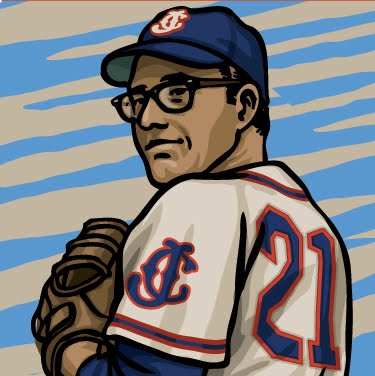


The race for the 1910 Pacific Coast League pennant was tight. Going into the last week of August Portland, Oakland and San Francisco were virtually neck and neck. Clearly, each team could use a little something extra that would put them over the top and keep them in first place. On the last day of August, fate walked into Portland's Vaughn Street Park.
A big, athletic-looking fellow presented himself to Portland's manager Judge McCredie as a professional pitcher. When the man refused to elaborate on his previous experience McCredie blew him off. He then walked across the ballpark and entered the visiting San Francisco Seals clubhouse. Whatever he said to Seals captain Kid Mohler must have piqued his interest because he was soon ushered into a private office to talk with manager Danny Long. The man stated that he was a professional pitcher and wanted to play for the Seals. It was quickly evident that this was not going to be an ordinary contract negotiation. When pressed on his credentials, the man stated that his name and previous occupation wasn't anyone's business. As long as he made good on the mound he need not reveal anything about himself. This was all very irregular, but whatever he revealed to Long and Mohler it must have been impressive. A contract was quickly drawn up for an unheard of $100 a week plus an undisclosed bonus if he won 76% or more of his decisions. Along with the extravagant salary the pitcher was exempt from playing on Sundays and Long and Mohler agreed to keep the man's identity a secret.
When the door finally opened, the press was told only that the Seals had signed a right handed pitcher named Fred Mitchell. No details about the pitcher's past record were given and sportswriters and fans alike figured this new guy was just some kid from the bush leagues - extra bullpen fodder to give the San Francisco starters some much needed rest. The Seals were on an extended road trip and headed to Southern California for a two week series against the Vernon Tigers and Los Angeles Angels. With the ink on his contract still wet, the club started Mitchell the very next afternoon against Vernon. The new-comer pitched 5 innings before leaving the game with a 6-2 lead and the victory. Six days later he faced the Tigers again and this time went the full nine, earning another win. It was after this second victory that people began to ask the question:
Who the heck was this guy?
Mitchell, though only in his early 20's, pitched like a seasoned veteran. The right hander demonstrated a cool efficiency on the mound and employed his repertoire of fastball, curves and spitball with such expertise fans and sportswriters wondered why this guy was pitching in the minor leagues? Almost immediately he caused a stir when he refused to pose for pictures. This seemed odd. The camera was still a fairly new concept and photographers couldn't conceive of why a young pitcher trying to make a name for himself wouldn't jump at the chance to get his mug in the papers. Who knows, maybe the kid was superstitious.
A week after his complete game win over Vernon, Mitchell faced the Los Angeles Angels in the first game of a double header. The affair was a nail biter, tied going into the 10th inning before the Seals took the lead. Mitchell scattered seven hits and pitched all ten innings for the win. Then he took the mound for the nightcap, this time pitching a six-hit complete game win!
Who the heck was this guy?
The local beat reporters peppered the pitcher with questions but Mitchell ducked and weaved - he wouldn't even reveal where he hailed from. On the long train ride back to San Francisco, the scribes descended on Mitchell's teammates for clues. They were no help; not only wouldn't he share any tidbits about himself in the locker room, when the game ended he would disappear, refusing to associate with any of his teammates. The press, smelling a good - no - great story, circled like sharks. While the north-bound Bay Area sportswriters were trying to pry info out of Mitchell, Los Angeles reporters were firing off queries to newspapers and sportsmen all across the country. The air was rife with rumours - some said Mitchell was a former Cubs prospect named Bob Mitchell. This sounded promising, same last name. A little digging found that Bob Mitchell was a young fireballer from the University of Mississippi. The Cubs were hot to sign the kid but told him to get lost after he refused to pitch on Sundays - he was the son a minister. Bingo - that jives with Mitchell's no-Sundays clause. The White Sox took a chance and signed him to a minor league contract. A barrage of cross-country cables dug up more about this Bob Mitchell. He was last seen pitching for the Lincoln Railsplitters. Telegrams fired off to Nebraska finally torpedoed the Bob Mitchell ID - the U of M pitcher was described as "small of stature" about 155lbs - a good 25 or 30lbs lighter than the mysterious Seal hurler. Then someone remembered that Bob Mitchell was a southpaw. The press kept digging.
By the time the train made it to San Francisco the new phenom was christened "Mysterious Mitchell". With the atmosphere surrounding the Seals home stand already charged by the tight pennant race, the addition of a mysterious new pitcher made it explosive. Before the team even took the field at Recreation Park a whole legion of reporters and photographers lay in ambush. Mitchell, as if to live up to his new nickname, refused to leave the clubhouse for warm-ups if there were cameras present. Finally he was ushered out to a secluded place in the outfield to unlimber his arm. Finished, he made a bee-line to the dugout. The cameramen lugged their equipment close to the Seals bench and readied their cameras for Mitchell's emergence. Now it got weird. The pitcher flat-out refused to come out unless all the photographers were removed. Even the newspaper men who customarily sat on the bench with the players were told to vamoose. In a ground-breaking ruling, umpire Van Haltren ejected all the photomen from the stadium. He argued that their number and overanxious behavior disrupted the game. The indignant men of the press refused to leave until a policeman got involved. Mitchell took the mound and perhaps unnerved by all the attention, lost to Vernon 3-1.
But all the cameras had not been ejected that afternoon. A tech-savvy photographer had hidden himself far up in the stands, and using a new-fangled telephoto lens, snapped a number of clear shots of the pitchers face. That evening copies were dispatched by train to all the major cities on the coast. With any luck, Mysterious Mitchell wouldn't be mysterious any longer.
Who the heck was this guy?
On September 17 Mitchell faced Vernon again and was clinging to a 6-5 lead when he was removed from the game. Mitchell openly wept as he relinquished the mound to Cack Henley in the bottom of the 8th and the capacity crowd made their disapproval of the switch known. The ace made a beeline for the showers where he was heard slamming doors before emerging in his street clothes. Instead of leaving the park, Mitchell took the long way to the street, passing through the stands where the crowd was whipped into a frenzy, cheering and pawing at the mysterious phenom. Traffic was reportedly shut down by the crowd that followed Mitchell out of the ballpark and the mystery man was induced into making a short speech to his fans. After thanking them for their support, Mitchell reassured his admirers that he was totally behind the Seals management. The crowd burst into cheers as he disappeared behind the managers office door.
Meanwhile, Mysterious Mitchell was using up any good grace his teammates had for him. He treated bellhops and clubhouse men like peons or servants. Some days he didn't even bother to show up at the park; the mystery man seemed to do as he pleased. According to a few Seals, Mitchell refused to associate with the boys, acting like they were mentally inferior to him and not in the same talent class as he. At one point during a game manager Danny Long questioned Mitchell's deliberately walking a batter to load the bases. Mitchell loftily responded "Now see here, I want you to keep still. I don't want any suggestions. I have worked under men who managed pennant winners and I know my own business". The outburst thoroughly humiliated Long and further alienated the pitcher from his teammates. Then Mitchell may have inadvertently gave away a vital clue to his past by blurting out "Matty told me that was the thing to do". By "Matty" everyone on the bench knew he was referring to the great Christy Mathewson of the New York Giants. Did this guy play for John McGraw's famous New York Giants?
On September 21st second place Oakland came to town. Mitchell shut out the Oaks through seven inning before giving up a run. The score stayed knotted until the 10th when Pinky Swander smacked a not-so mysterious Mitchell offering over the right field fence for the win. Several newspapers made cracks about whether or not he cried after this heartbreaking loss like he did after being removed in the Vernon game. Mitchell's record now stood at 5-2 and although he was not unbeatable, he still ranked at the top of the Seals rotation and more importantly put fans in the stands. Outside the ballpark, Mitchell quickly fell in with a fast society crowd. He claimed he spent his free time penning poems and songs and several vaudeville management companies were vying for his post-season appearance.
After the disappointing Oakland loss, a wire came in from Philadelphia - Frank Mitchell was Phillies ace George McQuillan! A few weeks earlier Philadelphia management had had enough of the pitcher's chronic boozing and night crawling and suspended him for insubordination. McQuillan packed a bag and took off for points unknown. His written description seemed to match Mitchell - dark hair, athletic build, same height. However, this identification caused a problem. If he was a big leaguer on the suspended list, he would thus be ineligible to play professional ball anywhere. That would mean all the wins he'd racked up with San Francisco would have to be voided or worse - forfeited. The two clubs vying for the pennant with San Francisco hoped that Mitchell was indeed a "ringer". A series of forfeitures would KO the Seals chance at taking the pennant. Oakland manager Harry Wolverton chomped at the bit to play the Seals again. He'd played with McQuillan and would know him by sight if he had the chance to get a close look. Portland contacted their former shortstop Phil Cooney who used to be teammates with McQuillan. As soon as they had a good photograph of this Mysterious Mitchell they were going to get it into Cooney's hand so he could ID this guy.
While the press still found Mitchell a mystery, the opposing Pacific Coast League batters did not. The Seals pitcher began giving up hits like it was batting practice. He managed to beat Sacramento to make his record 6-2 but his effectiveness was wearing thin. And his aloof mystery act was wearing thin on the rest of the Seals. Even the police got into the act. Seems that the ace was caught speeding through the streets of San Francisco with a group of society swells singing songs at the top of his lungs. The cops threw him in the klink and slapped a $10 fine on him for disturbing the peace.
The second week in September the Los Angeles sports writers came up with a great lead. Informants from the Midwest believed Mysterious Mitchell was, in fact, Floyd "Rube" Kroh of the Cubs. Just weeks before "Mitchell" showed up on the coast, Kroh had a bust up with Chicago manager Frank Chance and was kicked off the team. Kroh was a notorious bad character and had racked up a slew of curfew violations that summer. When he left the team to illegally pitch a semi-pro game in Atlantic City, the Cubs had enough and suspended him. His current whereabouts were unknown.
The Kroh identification seemed credible. Mitchell pitched with the confidence of a big league veteran and his height and build matched the disgraced Chicago ace. Even the "bad character" description seemed to match up. The problem was Kroh was a blond. OK, the writers hypothesized, he could have dyed his hair to disguise himself. Then everything fell apart when someone took a Spalding Baseball Guide off the shelf and discovered Rube Kroh was a lefty.
Who the heck was this guy?
Meanwhile, management of The American Theatre in Portland announced that Mysterious Mitchell agreed to appear on their stage. The pitcher's act was described as a long monologue followed by a talk on whatever stoked the star's fancy at the moment. The five week engagement called for a staggering $400 a week contract. The original offer called for $500 but Mitchell refused to work on Sunday. The American Theatre management tried in vain to get Mitchell's real name.
In the last week of September newspapers up and down the coast finally broke the PCL's greatest mystery - Mysterious Mitchell was no longer mysterious. This time, the reports were correct. Although preliminary reports called him Fred Collings, writers quickly corrected their stories and peeling back the mysterious hurlers past like an onion.
His name was Fred Mitchell - Frederick Mitchell Walker that is. Born in Nebraska in 1884, he moved to Chicago's swanky Hyde Park neighborhood as a kid. Strong and athletic, Fred entered the University of Chicago and starred on their baseball, football and basketball team. It was a halfback that Walker made his name, so well regarded that newspapers habitually referred to him as one of the best all-around football players in the nation. Walker wasn't a slouch on the baseball diamond either - from 1904 to 1906 he was the Maroon's ace. Walker left the University of Chicago a few credits shy of graduating and went west to become the athletic director of Utah State University. He led the football team to a 6-1 season in 1907. Midway through the 1908 season one of Walker's players was killed on the field during a game and the school disbanded the football program. Walker finished the season as the assistant football coach at Denver University before returning to Chicago. Like many athletes, Walker made extra money as a baseball mercenary playing in Chicago's vaunted semi-pro city league. His pitching for the Rogers Park team brought a "name your price" offer from the White Sox but Walker turned it down. He returned to his Alma mater, University of Chicago, as the Maroons' assistant football coach, then headed south to coach at the University of Mississippi. It is interesting that an early lead on "Mitchell's" identity led to the University of Mississippi, just not to the right guy.
In the spring of 1910, Walker coached the U of M to the Southern College Championship. He then entered professional baseball when he accepted a contract with the Cincinnati Reds. Walker rode the pines with the big club throughout the early summer before he was finally inserted into a game. On June 28th he pitched three innings and gave up four hits and a run. Unimpressed, the Reds let him go but he was quickly snatched up by the New York Giants. Now it begins to get interesting.
For some insane reason, the Giants made the well-traveled college boy roommates with the troubled alcoholic never-do-well pitcher Bugs Raymond. Raymond was such a loose cannon that Giants manager John McGraw kept a team of private detectives on payroll to shadow the troubled ace. Maybe McGraw, who had a particularly high opinion of college educated players, thought Walker would be a good influence on Bugs. He wasn't.
Within weeks of joining the Giants, Walker was out carousing with his roommate and drinking to excess. On night of August 17th, Walker was at his room at the Hotel Braddock in Harlem. Details are sketchy but apparently the pitcher assaulted a chambermaid by the name of Miss Carrie Hunter. Her screams brought elevator operator Pilgrim Rako running to her rescue. While Walker beat the unfortunate elevator man to a pulp, Miss Hunter escaped to the hotel managers office. In the confusion that followed, Walker fled the Braddock before police arrived. Rako was rushed to a hospital and a warrant was issued for Fred Walker's arrest. The next afternoon NYPD officers staked out the Polo Grounds looking for the pitcher but he failed to show. Another squad of officers swarmed Grand Central Station looking for Walker, and when the Giants arrived at the station to take the overnight to Cincinnati, detectives screened every man getting on that train. It was no use, Walker had disappeared.
The news of Mitchell's real identity made the papers from coast to coast. For the weeks the mystery had lasted, it was a great yarn. It sold countless newspapers, filled the stands and made an already tight pennant race even more enjoyable. However, once Mitchell's background was known he became less successful both as a box office draw and as a pitcher. Fans couldn't cheer for a suspected masher and besides, the spitballer seemed to forget how to win ball games. By the first week of October Mitchell was 6-4 and the Seals pennant dreams were slipping away. That $100 a week paycheck became awfully hard to justify. The last straw has on October 11th. Manager Long watched with disgust as Mitchell/Collings/Walker, or who ever the heck he was, loftily commanded the clubhouse attendant to pack his equipment bag for a trip across the bay to play Oakland. When the haughty ace left the bag behind, casually remarking that he would send a boy from the hotel to carry it to the ferry, Long had enough. He threw the pitcher off the team.
Walker took his new nickname with him back east. Somehow he got out of the New York City assault charges and re-joined professional baseball without any repercussions. After a stint with the Columbus Senators he made the majors again, this time with Cleveland, all be it for just a single inning. He spent 1913 with the Brooklyn Supurbas where he managed a 1-3 record. He resurfaced the next season with the Pittsburgh Rebels of the outlaw Federal League. He was a workhorse, pitching 35 games but ending the season with a 4-16 record. He moved over to the Brooklyn Tip Tops for 1915 but only managed a 2-4 record. He bounced around some low level minor league clubs before hanging up his spikes for good following an 8-9 record split between the Newark Bears and Binghamton Bingoes.
Outside of baseball season, Walker continued to coach football and basketball. 1911 found him with Oregon State, then as the coach of a semi-pro basketball team in San Francisco where he was suspended for decking a referee. He then was assistant coach at William & Jefferson College before winding up back with the University of Chicago in 1916. Each year Walker seemed to find himself at another institution. Williams College was next, followed by Dartmouth. Perhaps helping to explain Walker's ever-changing employment resume, according to the New York Times, the Ivy League college dismissed him after "dissatisfaction of the student body, together with methods of coaching that were described as not in keeping with the council's idea of how a Dartmouth team should be coached".
Walker served as a Naval officer commanding an athletic program during World War I and somehow found time to marry and began a family. As soon as the war ended he resumed his wandering coach career: University of Rhode Island, State University of New York at Farmingdale, University of Chicago again, DePauw University, Michigan State, Drury College, Loyola New Orleans and Texas State. All the while he was credited with running successful football and basketball programs, but something besides wanderlust must have attributed to Walker's transient lifestyle. Surely with the winning record he left in his wake he could have carved out a successful long-term career at a major university. Walker wasn't coaching community colleges in the sticks, his resume reads like a who's who of big time universities. However by 1932 he was coaching high school ball in Cicero, a suburb of Chicago. At one point he was canned by the athletic director for being late to class, letting the boys take equipment out without leaving a deposit and failing to keep the shower room clean. Walker was quickly reinstated and the athletic director himself fired so these charges could be read as petty allegations from a petty bureaucrat against a popular coach.
By 1940 Walker finally settled permanently in Chicago. Perhaps demonstrating how he could have succeeded had he stayed in one place longer than a year, he quickly became a successful investment banker, eventually becoming vice president of his firm.
Fred Walker, alias Fred "Mysterious" Mitchell, died of a heart attack in 1958.
I have to say, this was one of my favorite stories to write. Every so often I would come across a mention of Mysterious Mitchell in a book or article and long wanted to write up his story. I figured it would be a quick piece, but the more I uncovered and pieced together, the longer it became. My "file" on Mysterious Mitchell consisted of dozens and dozens of pages of newspaper clippings that I eventually bound together to make a chronological time-line of his saga. I took this now-bound file with me to Southern California over Christmas and read and re-read it until the story came together in my head just the way I wanted it to unfold. I'm glad I saved it to begin the new year with. 2015 promises to be the most important of my 20-something year career as an artist and I owe it all to my Pop and the readers who have faithfully followed this blog through the years. I wish you all a Happy New Year and good luck in 2015!


