Tuesday, November 29, 2011

Limited Edition Pete Hill Card!


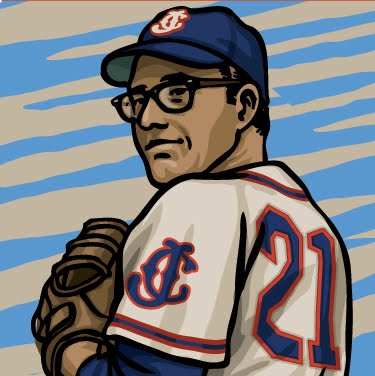
As a bonus for Pre-Ordering the Pete Hill card set you will also receive this additional Pete Hill card depicting him in the distinctive flannels worn by the 1906 Philadelphia Giants. This card is not part of the Pete Hill card set and is only available as a special offer!

Pete Hill was the complete ballplayer, an excellent fielder and a hard hitter who rarely struck out. He was most compared to Ty Cobb for his natural ability and fiery play. His skill on the basepaths was unrivaled. Hill played for some of the greatest early negro teams starting with the Pittsburgh Keystones, then the Philadelphia Giants from 1904 to 1907 and the Leland Giants from 1907 to 1910. He also played 6 winters in Cuba. With Rube Foster’s American Giants in 1911 Pete hit safely in 115 of 116 games and he won the Cuban batting title that same year with a .365 batting average. Hill was captain of the American Giants and Foster considered him his "field general.” In 1919 and took over as manager of the Detroit Stars, and batted .391 in 1921. Hill finished up his career in 1925 as the player-manager of the powerful Black Sox of Baltimore. Pete Hill died Buffalo in 1951 and was inducted to the Hall Of Fame in 2006.

Just in time for the Holidays! Joining forces with famed Negro League researcher Gary Ashwill and Pete Hill's great nephew, Major Ron Hill I am proud to bring to you a beautiful 15 card tribute to one of the greatest black ballplayers of all time - PETE HILL. Many of you are familiar with Pete's career which spanned the first quarter of the 20th century. Each of the cards picture Pete on one of the many teams he played for - The Philadelphia Giants, Havana Reds, Chicago American Giants, Leland Giants, Baltimore Black Sox, Detroit Star, Cuban X Giants - and many more - Pete Hill's baseball odyssey found him playing on some of the greatest blackball teams of the dead-ball era. The illustrations I did for this set are some of the best ones I've done and the amount of research I put in trying to make each uniform as accurate as possible is something I'm really proud of. Working on this set I was so tempted to slip one or two into the website to show them off, but I held myself back in order to make all 15 of these illustrations new to everyone. The back of each card tells the life story of this talented Hall of Famer, all written and painstakingly researched by Gary Ashwill. Besides the narrative Gary has also gone so far as to compile Pete's statistics for his career in the Negro and Cuban Leagues as well as his career totals against Major and Minor League competition.


I can't tell you how unique this card set is, as far as I know no one has ever attempted to do something like this before and speaking for myself, I'm proud to be part of it! The first run will be of 1000 numbered sets for $25 each.


Thursday, November 24, 2011

New Card Set Dedicated to the Career of Pete Hill!


Just in time for the Holidays! Joining forces with famed Negro League researcher Gary Ashwill and Pete Hill's great nephew, Major Ron Hill I am proud to bring to you a beautiful 15 card tribute to one of the greatest black ballplayers of all time - PETE HILL. Many of you are familiar with Pete's career which spanned the first quarter of the 20th century. Each of the cards picture Pete on one of the many teams he played for - The Philadelphia Giants, Havana Reds, Chicago American Giants, Leland Giants, Baltimore Black Sox, Detroit Star, Cuban X Giants - and many more - Pete Hill's baseball odyssey found him playing on some of the greatest blackball teams of the dead-ball era. The illustrations I did for this set are some of the best ones I've done and the amount of research I put in trying to make each uniform as accurate as possible is something I'm really proud of. Working on this set I was so tempted to slip one or two into the website to show them off, but I held myself back in order to make all 15 of these illustrations new to everyone. The back of each card tells the life story of this talented Hall of Famer, all written and painstakingly researched by Gary Ashwill. Besides the narrative Gary has also gone so far as to compile Pete's statistics for his career in the Negro and Cuban Leagues as well as his career totals against Major and Minor League competition.

I can't tell you how unique this card set is, as far as I know no one has ever attempted to do something like this before and speaking for myself, I'm proud to be part of it! The first run will be of 1000 numbered sets for $25 each.

Just in time for the Holidays! Joining forces with famed Negro League researcher Gary Ashwill and Pete Hill's great nephew, Major Ron Hill I am proud to bring to you a beautiful 15 card tribute to one of the greatest black ballplayers of all time - PETE HILL. Many of you are familiar with Pete's career which spanned the first quarter of the 20th century. Each of the cards picture Pete on one of the many teams he played for - The Philadelphia Giants, Havana Reds, Chicago American Giants, Leland Giants, Baltimore Black Sox, Detroit Star, Cuban X Giants - and many more - Pete Hill's baseball odyssey found him playing on some of the greatest blackball teams of the dead-ball era. The illustrations I did for this set are some of the best ones I've done and the amount of research I put in trying to make each uniform as accurate as possible is something I'm really proud of. Working on this set I was so tempted to slip one or two into the website to show them off, but I held myself back in order to make all 15 of these illustrations new to everyone. The back of each card tells the life story of this talented Hall of Famer, all written and painstakingly researched by Gary Ashwill. Besides the narrative Gary has also gone so far as to compile Pete's statistics for his career in the Negro and Cuban Leagues as well as his career totals against Major and Minor League competition.


I can't tell you how unique this card set is, as far as I know no one has ever attempted to do something like this before and speaking for myself, I'm proud to be part of it! The first run will be of 1000 numbered sets for $25 each.


Friday, November 11, 2011

Buck O'Neil Illustrations at the Orioles' Spring Training Facility


Earlier this year I was honored to be commissioned to illustrate 3 panels depicting the baseball career of Buck O'Neil. Anyone who's watched Ken Burn's documentary "Baseball" knows who Buck is, his great camera presence and lively commentary on the Negro Leagues made him the instant star of that epic mini-series. I'd met Buck a few times in the late 80's and early 90's and illustrating this triptych to pay homage to one of the games' leading goodwill ambassadors was a great thrill. Buck would be 100 this year and the Baltimore Orioles made the great decision to honor Buck by naming their Twin Lakes, Florida complex after him.

From the Baltimore Sun...

Orioles to honor Buck O'Neil on Sunday

The Orioles will hold a ceremony Sunday to honor Negro leagues pioneer Buck O’Neil at their minor league facility in Sarasota, Fla.

O’Neil, who died in 2006, would have been 100 years old Sunday. The star first baseman and manager spent part of his childhood in Sarasota, home to the Orioles’ Buck O’Neil Baseball Complex at Twin Lakes Park. O’Neil, who went on to scout and coach in the major leagues, worked to preserve the history and promote awareness of the Negro leagues.

The Orioles will unveil three illustrated baseball cards of O’Neil created by artist Gary Cieradkowski, whose works honor Negro leagues players who never had cards of their own. The O’Neil cards have been displayed at the minor league complex. An honorary plaque will also be hung at the main entrance to the complex’s administrative building.

Sarasota County commissioners Carolyn Mason and Joe Barbetta will also proclaim Sunday Buck O’Neil Day in Sarasota.

I'd like to thank Orioles Vice-President of Planning and Development Janet Marie Smith for recommending me to Art Director Keith Kellner to commission me to do the Buck O'Neil illustrations.

Veterans Day, 2011


I originally posted the story of Captain Eddie Grant, former New York Giants 3rd baseman, 1 year ago in honor of Veterans Day. To show my respect and gratitude to all the men and women who interrupted their lives in order to serve and protect this country, I'd like to post it again, my small way to say thank you.

On a day like today, Veteran's Day, I want to feature a real hero. These days it seems anyone who does anything can be termed a hero. We are losing the real meaning of that word and that is something that really bothers me, especially when I learn about ordinary men and women who somehow rise to the top and emerge as real heroes. Miners trapped in Chile may be survivors and noteworthy, but they are not heroes. But, instead of writing an introduction outing the many pseudo-heroes that the media seems to create, I will let the story of a real, bona-fide hero speak for itself.


They called him "Harvard Eddie." At a time when most ballplayers barely had a high school education, third baseman Eddie Grant, Harvard Class of 1909, was a member of the Massachusetts Bar, a full-fledged lawyer. He was also a darn good third baseman, batting .322 for Jersey City and leading the Eastern League during his first year in pro ball. The next season, 1907, Grant was called up to the Philadelphia Phillies. He quickly gained attention, not from his bat or fielding skills, but for what he would say on the field: when calling out his claim on a pop fly, instead of yelling the common "I GOT it!", Harvard Eddie called out the proper phrase, "I HAVE it!" much to the amusement of his more modestly educated teammates.

During off seasons Grant returned to Boston to practice law, but each spring he took up baseball again. Traded to Cincinnati in 1911, he lost something at the plate and his batting average plummeted. The death of his wife after barely 9 months of marriage might have been the reason why. In 1913 the New York Giants picked Grant up and although he rode the bench more often than not, John McGraw took a liking to the scholarly third sacker and made him the Giants' bench coach. As much as he loved the game, Grant disliked the life of a part-time coach and player and a the age of 32, retired to pursue his law career full-time.

The Great War had been raging in Europe for 3 years by now and many of Grant's Harvard classmates were active participants even before the U.S. entered the war. Whether they drove ambulances for one of the volunteer organizations operating just behind the trenches or flew airplanes for the French in the Lafayette Flying Corps, college educated men of that era felt a sense of duty and adventure that sadly seems lacking these days. Once America entered the war in April of 1917, even more of these privileged men from wealthy families left their lucrative careers and easy lives to become officers in the rapidly expanding U.S. Army. Back then the Army assumed that a college educated man made a natural leader and "Harvard Eddie" was made Captain of Company H, 307th Infantry Regiment, 77th Division of the American Expeditionary Forces. After a period of training on Long Island with his men, Grant sailed for France in the summer of 1918.

The American Army was eager to prove itself to their Allies, France and Britain and the Meuse-Argonne Offensive was its chance. Launched on October 2nd, 1918, the Battle of the Argonne was one of the fiercest fights in American military history. The 77th Division charged into the Argonne Forest and strait into the solidly entrenched veteran German Army. It was during the confusing first day of the battle that Major Whittlesey, a New York attorney, got isolated and pinned down deep within the dense forest. Although forever known as "The Lost Battalion", Whittlesey knew exactly where he and his men were, it was just that no one else in the U.S. Army did. After a few anxious days, American aviators braved the dense German anti-aircraft fire and finally located Whittlesey and his battalion. Pilot Lieutenant Harold Goettler and his observer Lieutenant Erwin Bleckley volunteered to circle the forest with the idea that the place that did not fire back at them would be the the location of the lost battalion. They were right and after taking heavy fire which mortally wounded both men, their DH-4 aircraft crashed just short of the French lines. The French soldiers rushed forward to help the downed aviators. Goettler was already dead but Bleckley, with his last dying breath pressed a bloody note into the hands of the closest French soldier. On it was a map showing the location of Whittlesey and his men! With this new information, Captain Eddie Grant and Company H was among the units rushed into the Argonne to rescue the Lost Battalion.

By the morning of October 5th, Eddie Grant and his men had been on the front line and in the thick of the fighting for 4 days. No one, most of all Captain Grant, had had any time for sleep. Being awake and constantly under enemy fire for 4 days must have been a terrible feeling. Add on top of that the responsibility for the lives of the 150 men of his company and you can imagine the stress Grant must have been under. Taken out of the line that day for rest, a fellow officer described the captain as barely able to lift his arm to bring a cup of much needed coffee to his lips. But his company's reprieve was short-lived. The Lost Battalion had been found. When orders to move-out came, Grant got to his feet and took his place at the head of his Company. He led them right back into the Argonne.

The Germans threw everything they had at the Americans rushing into the forest. If Whittlesey and his dwindling men could be captured or killed it would be a devastating blow to the upstart fresh Americans as well as their weary Allies. The story of the Lost Battalion had made newspapers all over the globe and its rescue would come as a giant shot in the arm to the young nation eager to prove itself to the world in the greatest war mankind had ever known. As the 307th Regiment marched forward the German artillery pounded the road leading into the forest. Men and horses were torn to bits by the constant exploding shells but still Captain Grant and the American Army moved forward through the hail of shrapnel.

Among the wounded being brought back past the advancing infantrymen was Major Jay, commander of Grant's battalion. Recognizing Eddie he waved him over. All the other ranking officers were either dead or wounded. Harvard Eddie was now in charge of the battalion.

Though it didn't seem possible, the shelling increased. The Germans knew they had to destroy the Americans before they reached Whittlesey. The whole road had become a deathtrap but everyone knew they had to move forward. Grant called his officers together to brief them on the situation. At that moment a shell exploded, tearing apart the two young lieutenants standing next to Eddie. Grant tried yelling over the screams and explosions for a stretcher bearer. Signaling his men to take cover and waving his arms wildly in desperation for medics that never came, the next shell exploded directly on top of Harvard Eddie. He died instantly.

New York sports writer Damon Runyon was a war correspondent in France during war and had known Eddie Grant well during his time with the Giants. He wrote a stirring eulogy for the former third baseman entitled "Eddie Grant Sleeps In The Argonne Forest". The story was reprinted widely including in the 1919 Spalding Guide and Grant, the only major leaguer killed in the war, gained posthumous fame. In 1921 the New York Giants dedicated a plaque commemorating the former infielder and bench coach in front of which a wreath was placed each Memorial Day in a solemn ceremony started by his old friend, John McGraw. That plaque was famously stolen after the last Giants game at the Polo Grounds in 1957. Historians searched in vain for the plaque or any trace of who the scumbag was who stole it but it wasn't until 1999 that a couple moving into their new Hohokus, New Jersey home discovered a plaque wrapped in a blanket hidden in the attic. Turns out the home was formerly owned by a New York City cop named
Gaetano Bucca. Officer Bucca, whose police beat in 1957 included the neighborhood surrounding the Polo Grounds, had apparently stolen the memorial. But baseball historians aren't positive the plaque is the real one stolen from the Polo Grounds. The San Francisco Giants for their part didn't seem to care as they try to distance themselves from their former life in Manhattan. First World War historians did however finally get the team to install a replacement in the new ballpark a few years ago. You can see it near the Lefty O'Doul entrance, but in this day and age of so many "heroes", this modest memorial to a fallen soldier who gave his life for his country just doesn't seem to be enough.

Dedicated to Captain Eddie Grant and every other serviceman and servicewoman who gave their life so I may live free in this great country of ours. Thank You.

Monday, October 31, 2011

95. Buck Lai: The Celestial Speed Demon


If you've been reading my stories for a while, you'd already know that before the 1950's, the best ballplayers weren't all in the major leagues. The Negro Leagues had their stars as did the Cuban and Puerto Rican leagues. Here in the States we had a thriving semi-pro circuit and that is where guys like Buck Lai plied their trade on Saturday and Sunday afternoons throughout the 1920's...

Three times Buck Lai came perilously close to becoming the first Asian-American to play Major League ball. The first time was 1915 when the Chicago White Sox invited Lai, then known as Lai Tin, to join the team for spring training. Sox manager Nixey Callahan had seen Lai play ball when he toured with the Chinese Travelers. The team was made up of Hawaiians and each summer toured extensively throughout the States. The son of Chinese immigrants and a native of Hawaii, Lai was a star athlete back in Honolulu not only in baseball but he held the high school record for the 100 yard dash and running broad jump. Though newspapers reported his expected presence at Chicago’s camp that spring, Callahan was sacked as manager and apparently so was Lai’s direct link to the the Sox.

By 1916 Buck had married a Brooklyn girl named Isabel and was living in Audubon, N.J. While working as an inspector for the Pennsylvania Railroad he played semi-pro ball against top-notch Negro League teams and other touring ball clubs, continuing to make a name for himself in the press becoming known by the nickname "Speed Demon". Two years later the Philadelphia Phillies came knocking and after a tryout was signed to their farm club in Bridgeport, Connecticut. His first year there he batted a respectable .293 and along with Chinese-American teammate Andy Yim, was a favorite of the Bridgeport Americans’ fans. According to newspaper accounts the two “Celestials” sometimes serenaded the crowd, Buck belting out the hits accompanied by Yim on ukulele.

The next year he suffered an injury to his hand which dogged him for the rest of his life and effectively ended his hopes of making the big leagues. Lai played a total of 4 seasons with Bridgeport and batted around .260, about average for the league.

Still keeping his day job, Buck joined the Brooklyn Bushwicks, a major league-quality semi-pro team and was their starting third baseman for more than 10 years. The Bushwicks played 4 games a week and often out-drew the Dodgers in attendance. Besides Buck the Bushwicks boasted quite a few former and future major league players and they played against the best teams in outsider baseball.

Baseball researcher Scott Simkus reviewed 248 Bushwick box scores for games played against top-tier Negro League competition and found Buck hit an astonishing .297! He then compared that record with another contemporary third baseman, Negro Leaguer and Hall of Famer Judy Johnson who hit .295 against the same teams as Buck. Since the Bushwicks were very well-known around the New York area, it was just a matter of time before John McGraw of the New York Giants came calling.

In the spring of 1928, 33 year-old Buck Lai travelled to Augusta, Georgia to join the Giants. Though Buck played third his whole career, New York already had the best third-sacker in the league, Freddie Lindstrom. Buck was offered the chance to win the job at second base but failed to make the cut. Newspaper accounts reported that while Buck was not the best fielder, he more than compensated with his base running, batting and all-around smart sense of the game. Despite all this the Giants thought he was too small to last a season in the majors. Reluctantly Buck agreed to join the Giants top farm club. Lai played 4 games for the Jersey City Skeeters before calling it quits and rejoining the Bushwicks.

In the mid-1930’s Buck formed his own travelling team called the All-Hawaiian Nine featuring the best players of Chinese, Japanese and Hawaiian decent. As the they toured the U.S. showcasing the skills of Asian-Americans, a few of his players were offered tryouts by pro ball clubs. Taking after his Pop, Buck’s teenage son, Lai Jr., joined the All-Hawaiians as well. By 1939 Buck had retired from playing ball and resettled back in Audubon, N.J. While working at a ship building company, Buck stayed active in the game by managing a few semi-pro teams in the Camden area and scouting for the Dodgers. With a lifetime of brilliant outsider baseball behind him, Buck Lai passed away in March, 1978 at the age of 83.


Monday, October 24, 2011

94. Sam "Mayday" Malone: Cheers to a TV Icon


A few weeks ago I finally got around to drawing a card for "Cheers" bartender Sam Malone. Ted Danson's beloved character on the long-running tv show was at one time a relief pitcher for the Boston Red Sox and his former pitching coach named, well, "Coach" was an employee behind the bar in the shows early years. Although I wasn't a particularly devoted fan of the show when it was on, I have always wondered what a "Mayday" Malone baseball card would look like. After a few hours of work at the drawing table I had my answer, but, like I said, Cheers wasn't my favorite show (I was more of a "Rockford Files" kind of guy) so I decided to ask for help with this week's post. Enter Tom Zappala. Tom, besides being a Red Sox fan, is also author of a book - "The T206 Collection - The Players and Their Stories" - of which I own a well-used copy. Tom and his co-authors wrote a nice biography of each and every player featured in the famous T206 tobacco card set and for a fan interested in baseball at the turn-of-the-century, this book is a must-have. So not only was I happy to get some time off from researching a story, but I got to meet the author of a book I particularly enjoy. So with out further chit-chat, I'll let Tom tell you about Sam "Mayday" Malone...

If Sam “Mayday” Malone paid as much attention to honing his pitching skills as he did to booze and beautiful women, he would have gone down in Red Sox annals as one of the greatest relief pitchers in the history of that organization.

One of the most colorful characters to ever don the Red Sox uniform, Sam was drafted as a “bonus baby” in 1966 right out of Sudbury High. Known for his “slider of death” as well as his nasty curve ball, Malone at 6 feet 3 inches tall was a can’t miss prospect. However, he languished in the minors for six years because of poor pitch command and poor judgment outside of the lines.
In 1971 Malone finally put together a decent season in the minors, going 7-2 as a reliever, while being mentored by Pawtucket Red Sox pitching coach Ernie Pantusso. As a result, Malone was finally called up to the big dance in 1972. In his first MLB appearance, he hit the two first batters he faced and then proceeded to strike out the next three.
Over the next six years “Mayday” showed flashes of brilliance, but became a gate attraction because of his off-field antics. The nickname was given to him because one never knew when disaster would strike while Sam was on the mound. A key member of the American League Pennant winning team in 1975, Malone walked over to the Boston Beer Factory in uniform after the clincher, jumped over the bar and became the unofficial bartender for the remainder of the night. Unfortunately, he drank more beer than he served, and was suspended from the playoffs.
For the next few seasons Sam Malone toiled for the Sox. He was released in 1978 after he gave up 4 consecutive home runs in a game and walked off the field while tipping his hat to the crowd that was actually cheering for him, because they had never seen anything like that before!
Malone eventually addressed his drinking, successfully completing a rehab program, and today, although a green tea drinker, is a very successful tavern owner in Boston. Not only does he accommodate patrons and fans with pictures and stories about his MLB days, but he is also one of the most charitable sports personalities in Boston. “Mayday” Malone has raised thousands of dollars for children's charities and elderly causes throughout the city of Boston. His “Mayday Charity Baseball Game” held the first Saturday in May at Fenway draws thousands. Today he is a beloved Boston hero, and his antics during his playing days simply add to his renown.

Tom Zappala
is a businessman in the Greater Boston area who has a passion for anything related to baseball history. He has had a particular interest in the T206 collection for about 20 years, focusing on player profiles and backgrounds, and enjoys the hunt for new and exciting information on the lesser-known players. He is also the cohost of a popular talk radio show broadcast in northern Massachusetts and southern New Hampshire. He loves his wife, his four great kids, and his Red Sox. Those things, along with a Grey Goose martini and two baseball-size olives, make life great.

Friday, October 14, 2011

93. Jim Thorpe: A Minor Oversight


Back in 1983 I was in my 8th grade English class when this kid named Brian sitting next to me dropped a copy of Sports Illustrated which he was secretly reading and was cleverly hidden in his textbook. The magazine hit the wooden floor, gathered air beneath its spread-out pages, accelerated and shot across the aisle, coming to a halt under my chair. The teacher was this tall, mustachioed thug who liked slapping us kids around for minor infractions, so I quickly snapped up the magazine so that Brian didn't get caught. I didn't particularly care for Brian, but that teacher was a full-blown dangerous psychotic and it was an unwritten rule that while in his class us kids all looked out for one another. I slipped the magazine in my desk and that sick teacher never noticed. Not only did I save Brian from a beating, but I discovered Jim Thorpe that day. The main article was on the International Olympic Committee giving the long-deceased Thorpe's 2 gold medals back to his children. Jim Thorpe, the greatest athlete of the 20th Century, I learned, forfeited his gold because he played two seasons of baseball in the minor leagues...

After excelling in every sport the Carlisle Indian Industrial School had to offer - football, track, baseball and even lacrosse, Jim Thorpe jumped at the chance to make a few bucks playing low-level minor league baseball in North Carolina. A few of his schoolmates had already accepted offers to play down south and in the spring of 1909 he joined his former Carlisle teammates Joe Libby and Jesse Longdeer on the Rocky Mount Railroaders of the Class-D Eastern Carolina League. Making about $15 a game, Thorpe played most positions in the infield and outfield but mostly was utilized as a pitcher. Rocky Mount was the worst team in the league that year and Thorpe registered a 9-10 record at the season's end, but upon a closer look he didn't have as mediocre a season as it appears. 6'-1" and powerful, Thorpe was raw and sometimes wild but had a few good games including 2 shutouts. In August before a home crowd "The Big Chief" as he was called, pitched both ends of a doubleheader against the Goldsboro Giants, dropping the first but winning the second game.

Rocky Mount was a town that had no love for people of color, even if they played on the towns own baseball team. "Coloreds" (which apparently included Native Americans) were expected to stay out of the downtown area and use a "colored road" outside of town to go from one part of town to the other. Thorpe and his two Carlisle teammates, Joe Libby and Jesse Longdeer, discovered this the hard way when they cut through town on their way to the ball field and were set upon by a local cop. When the officer shoved Thorpe he promptly knocked him out cold. The three ballplayers spent the night in jail and Libby and Longdeer left the team short there after.

Away from the discipline of the Carlisle Indian School, Thorpe seems to have cut loose during the season and he had a few additional scrapes with the law due to alcohol. One story has him wandering drunk downtown and smashing his head through a store window on a $5 bet. Another night he and teammate Marvin O’Gara went at each other in a drunken brawl and Thorpe had to be physically cuffed and dragged to the police station by a team of cops. O’Gara wound up being arrested as well after he was apprehended antagonizing Thorpe through the bars of his cell window.

Thorpe reported to Rocky Mount the next season and during spring training injured his arm. The Railroaders made another poor showing in 1910 but Thorpe's pitching kept the team competitors. Although he wound up with a 10-10 record, 5 of those loses were by a single run. The Rocky Mount team eventually traded Thorpe to the Fayetteville Highlanders near the end of the season. In his only game on the mound for the Highlanders Thorpe was unimpressive and got the loss. Manager Charlie Clancy decided to move the big fellow over to first base and his batting started to get a little better by the time the season ended. Unfortunately Thorpe didn't get along with Charlie Clancy, probably because of his thirst for the nightlife. His propensity towards alcohol fueled mischief followed him to Fayetteville and one time an inebriated Thorpe fought off 5 police officers before smashing his head through another window. Still refusing to submit to the law, the police called in the president of the Fayetteville team to try to calm him down, all to no avail. Finally an officer lassoed Thorpe, tied up the big man and subdued him with chloroform him until he was docile enough to be taken to a hospital.

By all reports he showed promise as a pitcher but needed a lot of coaching, both on the field and off. At the plate he hovered around .250 and had trouble with curve balls, something that would haunt him throughout his baseball career. On the base paths he was pretty fast and stole 11 bases in 1910. For unknown reasons Thorpe didn't return to Fayetteville the following season but concentrated on amateur track and field events. Technically, Thorpe forfeited his eligibility to compete because he accepted money to play baseball.

In 1912 as a member of the United States Olympic Team, Thorpe won 2 gold medals and was declared by the King of Sweden to be the world's greatest athlete. A hero upon his arrival back in the states, Thorpe's new-found fame quickly turned dark fast. Almost at once rumors started to swirl about him playing professional baseball somewhere down south - a no-no if you want to be eligible for the Olympics. While many college athletes played sports for money and kept their eligibility, Thorpe neglected to do what they all had done: use a false name. It wasn't hard to find records pertaining to Thorpe's 2 years in the Eastern Carolina League and there was one guy in particular who helped make sure the story had legs.

Fayetteville manager Charlie Clancy seems to have gone out of his way to make the story of Thorpe's baseball career known. Not only did he volunteer the story to a local reporter, he sweetened the pot with a few seamy stories about the Olympian's taste for the nightlife and even called him "yellow" on the mound because he claimed he would develop a sore arm after 7 innings and would magically be fine the next day. The story was picked up in a few newspapers and that, coupled with an anonymous teammate ratting him out to another newspaper effectively sealed Thorpe's fate. He came clean about playing in North Carolina but claimed he did not know it was against the Olympic rules. Charlie Clancy, for what it's worth, backtracked and tried to redact his story but the dam had burst. His 2 gold medals were swiftly taken away from him.

Jim Thorpe went on to become a household name during the teens and twenties as he played professional baseball with the Giants, Reds and Braves from 1913 to 1919 as well as what passed for pro-football with the Canton Bulldogs, Cleveland Indians, New York Football Giants and Chicago Cardinals. After his athletic career ebbed he struggled to hold a job, the boozing he started in his minor league days finally developing into alcoholism. He died almost penniless in 1953 at the age of 64.

In January of 1983 the International Olympic Committee officially gave Jim Thorpe's 2 children his gold medals back.

I had been wanting to do a Jim Thorpe card for quite a while but it took me a while to gather enough info on that part of his life. 2 books that were really helpful were Kate Buford's "Native American Son" and William Cook's "Jim Thorpe: A Biography." For a much more in depth look at the pre-Olympic baseball career of Jim Thorpe, please go to Brian McKenna's classy and well-researched Baseball History Blog. Don't just stop at the Thorpe article, there are a whole lot of other nice pieces by Brian on there that are very interesting.

Monday, October 10, 2011

92. John Gedsudski: All Hail The Chief


Unlike most of the other fathers in their neighborhood out on Staten Island, John Gedsudski's pop pushed his boy to go farther than just high school. Tadeusz Gedsudski valued a good education and his boy was going to be a college man, and God willing, a lawyer or doctor. Mr. Gedsudski and his wife Zofia were from the old country and fully grasped the opportunity their new country offered not just to them, but to their only son. As far as those two were concerned, the sky was the limit for young Johnny.

Although stocky and but 5'-4" tall, John Gedsudski was a star athlete at Curtis High School, lettering in 3 sports (basketball, football and baseball). Clever with his hands as well as mind, as a Boy Scout he made the coveted Eagle rank in what was at the time a record three years and in school led the debate team to the state finals. His play on the gridiron induced New York University to offer Gedsudski a scholarship and he easily made the varsity squad his freshman year. Besides a full academic schedule (Gedsudski now had the ambition of becoming a lawyer) he supplemented his income by working for a youth program called "The Comanche Club" designed to keep young city kids out of trouble in their spare time. It was his role as leader of his Comanche Club group that he became known as "Chief", a moniker he initially shied away from, but over time it stuck fast, ultimately usurping John as his first name for the rest of his life.

In 1926 "The Chief" just missed being named to the College Football All-American team when he was beat out (by a single vote) by Lloyd Yoder of Carnegie Tech. On the diamond he held down first base for N.Y.U. batting .389 in his first year and .453 his sophomore year. More over, Gedsudski finished both seasons without a single error, the first time it had been done by a N.Y.U. player.

Of course it was only a matter of time before John McGraw of the New York Giants got wind of the stocky young first baseman. In the late spring of 1926 Gedsudski received a hand written note most cordially inviting him to try out for the New York Giants' baseball club at the Polo Grounds.

On the morning of May 23rd, 1926, Chief Gedsudski made the trek up to Harlem and knocked on the clubhouse door at the Polo Grounds. Traveling secretary Jim Tierney showed the young man around the clubhouse and outfitted him in a well-used Giants road uniform before accompanying him onto the field to be introduced to John McGraw.

The Giants in 1926 were a team in transition, some of the older stars who made the team world champions at the beginning of the decade were being replaced or retired and the team now was about half fresh talent handpicked by the Giants' savvy manager. Older first baseman Highpockets Kelly was being moved to second to make room for the rookie phenom Bill Terry, and The Chief, knowing how highly acclaimed Terry was, knew he had a slim chance of replacing him at his natural position.

Tierney and Gedsudski walked across the outfield grass towards the Giants dugout. Deep inside the shaded recess McGraw was studying a newspaper which, upon approach was revealed to be a racing form. A tall, thin man, too old to be a player so probably a coach, stood next to him. "Mr. McGraw, this is John Gedsudski" said Tierney. The stubby looking McGraw looked up slowly and squinted at the two men and suddenly a flash of recognition washed over him and he enthusiastically responded "yes, yes, of course, the N.Y.U. first baseman. Glad you could make it, son."

Far from being the angry, imposing man the newspapers all wrote about, Gedsudski later said that McGraw emanated a sort of casual regality, a powerful man comfortable with his position and secure in the knowledge that he need not lord it over anyone. In this split second between McGraw's greeting and Gedsudski's response, The Chief made a fateful decision - knowing Bill Terry had first base all but tied up, he mentally scanned the Giants line up and noted the weakest spot. The Chief shook McGraw's hand and said: "Pleasure to meet you Mr. McGraw, I am also a left fielder."

McGraw's eyes widened a bit. He turned slightly and nodded to the tall, thin coach who made a note on a folded piece of paper. The Giants starting left fielder was Irish Meusel, a 10-year veteran who was as of late fast showing his age in the Polo Grounds' vast left field. Although his average hovered around .280, his days were clearly numbered. McGraw nodded his square head at the tall, thin coach, and then: "Good. Take a bat and let me see you swing in the cage."

Gedsudski grabbed one of the bats spread out in front of the dugout (one of Frankie Frisch's The Chief later said) and followed McGraw and the tall, thin coach to the batting cage. Without a word, using his beefy hands to communicate, McGraw pulled Ross Youngs out of the box and directed Gesudski to the plate. He swung a few times to limber up and then faced the pitcher. The first pitch was a fastball which he promptly lined into left field. The next pitch was knocked into left center just behind the where the shortstop would be and the next 2 pitches The Chief pounded into the upper deck. Initially nervous, Gedsudski now swung free and easy, peppering the field with his hits. When he swung a missed a few, he remained unshaken and followed those rare misses with towering shots that fell into far-away grandstands.

He was in such a natural groove that it took the pitcher to straiten up and stop throwing for The Chief to realize McGraw had called a halt to the pitching exhibition. The manager talked with the tall, thin coach who finally called out to Gedsudski to grab his glove and go out to left field.

Being a first baseman, Gedsudski of course only had a first baseman's mitt with him. Designed to take throws from the infield, the design of a first baseman's mitt was decidedly different than the type an outfielder would use. Armed with the wrong equipment, The Chief jogged out to left field and stationed himself in front of the blue Arrow Collars sign.

John McGraw himself lumbered out to the plate and hit screaming liners out to Gedsudski whose 5'-4" stocky body struggled to field. Solidly built for a first baseman, he was just not properly constructed to roam the Polo Grounds' cavernous left field. His first baseman's mitt also hampered him as he tried to make running catches - the ball popped out time after time. After about a dozen or so missed opportunities, The Chief could see McGraw stop and look intently at him. After a long moment he waved the tall, thin coach over who shrugged his shoulders and walked slowly back behind the batting cage. McGraw grabbed another baseball and hit a high pop-up to shallow left, just behind the infield dirt. Gedsudski ran his fastest but the ball dropped about a foot in front of him. By the time he recovered and looked towards the plate, McGraw was walking back to the dugout and the tall thin coach was walking out towards him, crossing something out on that folded piece of paper.

It was a long ride back downtown from the Polo Grounds, but The Chief was undaunted. He may have failed his tryout with the mighty New York Giants but he truly was more interested in getting accepted into N.Y.U.'s law school next fall. Sports were fun and rewarding, but more than that they were a vehicle with which he could use to obtain a higher profession in life. Where as his father could hope to do no better than his job as a cutter in the garment industry, The Chief had the goal of becoming a prosecutor for the City of New York. Two months after his tryout with the Giants he was formally accepted into New York University School of Law.

With the need to earn money to support himself while in law school, Gedsudski took a larger role in the Comanche Club's activities. One of the few club leaders who held a driver's license, Gedsudski worked extra hours driving the organizations' converted school bus. The Chief poured himself into his leadership role and taught his boys how to play football, baseball, box and build fires (not actually lawful in Central Park, but Gedsudski was an expert at putting out fires as well as starting them). The first aid expertize the Chief displayed when mending a wounded Comanche coupled with his unwavering honesty in umpiring their sporting events earned the unbending respect of a whole generation of grammar school street toughs. When the sun was too hot or the rain too hard, The Chief would gather his boys around inside the converted bus and tell stories to pass the time. Some, told in his shy, modest way, recalled his past stardom on the football field and the Comanche's never tired of hearing about his brush with the great John McGraw. But it was the fictional stories, told in serialized form, which The Chief made up out of thin air that really fascinated the boys. Some were so good his Comanche's actually wished for a rainy day in order to hear the next installment. One, which he called "The Laughing Man" featured a hideously mutilated superhero accompanied by a wolf, a giant, a dwarf and a strikingly beautiful half European-half Asian girl who spent their time fighting evil Chinese bandits.

Even with his law studies and Comanche Club duties, Gedsudski found the time to fall in love. Mary Hudson was a fellow law student and though both were from very different backgrounds (her family was the Connecticut Hudsons, her grandfather was Pierce Hudson III, founder of the New York and Northeastern Railroad), the two hit it off on an intellectual level. When Mary showed up at a Comanche Club baseball game and playfully demanded a place on one of the teams, her surprise prowess with the bat and speed on the bases not only won over the boys but made The Chief love her even more. Then, as so often happens, Mary and The Chief found themselves in a bit of trouble - Mary was pregnant.

The Hudson's, already biting their tongue at Mary's relationship with the son of recent immigrants who they deemed to be below their daughter's station, now brimmed over with anger and resentment. The contemporary plan of action called for Mary to be sent on an extended vacation (say 6 months in a secluded Swiss resort for women), returning perhaps a few pounds heavier but sans an embarrassing baby and her suitor to be rebuffed and sometimes paid to walk away.

The Chief had other plans.

After many heart filled and some downright inflammatory conversations with Mary, The Chief made the decision to leave law school and take a job beside his father in the garment factory. It wasn't high wages, but it would be enough to raise a family on. They would be married as soon as possible so as to avoid unpleasant rumors. The Chief pledged his love to Mary. One afternoon the boys in the Comanche Club, watching from a far, even saw him get down on one knee before her.

In May of 1928 Mary went to Switzerland and John finished law school.

Upon graduation, The Chief took a position with a small but respectable firm on Long Island that specialized in immigration law. Sometime around 1934 or so, The Chief boarded a train to Jersey City where he waited patiently on the dock for a small boy recently arrived from overseas on the S.S. Bremen. Carrying a Swiss passport, the stocky 6 year-old was quickly processed through Ellis Island and was deposited on the New Jersey shore. The Chief, his tongue twisted like a pretzel trying to speak hastily-learned French, welcomed his son home. On the long train ride back to Long Island, The Chief entertained the boy with the first installment of a new fictional story.

His son, chin resting on his knee, listened intently.

------------------------------------------------------------------------------------
Thanks to J.D. Salinger.

Wednesday, September 28, 2011

91. Bullet Benson: A Cup of Coffee with the Senators


From the beginning, the best unplanned benefit I get out of this website is the new people I meet through it. Since the origins of this site stemmed from the sudden death of my Pop and my lack of having anyone to share those stories of obscure baseball players with anymore, the amount of baseball history fans I've met in the past year and a half has just been staggering. Through many of them, I've learned about players that I've never heard of before, which is always a welcome thing. About 2 weeks ago Mark Hornbaker emailed me about a pitcher for the old Washington Senators, Allen "Bullet Ben" Benson. Mark had researched and wrote an article about Bullet Ben and once he gave me a brief description of why this fella was interesting, I knew he had to have his own card and story. Fingers crossed, I invited Mark, a writer by trade, to be the newest guest author here at the The Infinite Baseball Card Set...

A few weeks ago I visited Gary Cieradkowski’s website for the first time. I was extremely impressed with Gary’s baseball stories and his custom baseball cards. I could tell right away Gary and I had something in common. We both like to share stories about ball players most people have forgotten.
I sent Gary an e-mail and told him about a story I just wrote for MASNsports.com, titled Bullet Ben's cup of coffee with the Washington Senators. After Gary read the story he contacted me to tell me he really enjoyed the story. Gary also wanted to know if I would share Bullet Ben’s story with his readers and he would create a custom baseball card of Bullet Ben. It didn’t take me long to reply back to Gary and tell him yes, I would like to share the story with your readers.
..

Since April 2007, I've been writing stories mostly about Washington D.C. baseball history at Nationals Daily News. A lot of my stories are based off of a date in time in D.C. baseball history. Today's story is about a pitcher, Allen "Bullet Ben" Benson, who made his Washington Senators debut this week in 1934.

What makes this story so different than any of my other stories is the way I learned about Benson. It happened a little less than two years ago when I received an e-mail from a person who wrote the following message to me:

"Mark, I have spent the last 20 years of my life trying to find more information out about my grandfather's career. He played with the Senators in 1934; he got a call up in August of that year, and pitched in two games. His name is Allen "Bullet Ben" Benson. Do you have any info on this subject??"

The person who sent me the message did not give me their name, only an e-mail address. Name or not, I was happy Benson's grandson took the time to reach me. I like to put on my detective hat on whenever I get the chance. After reading his question, I wasted no time in researching Benson's baseball past.

First, I looked his name up at baseball-reference.com. Even though there wasn't much more than the basic player profile there, I did see something that caught my eye. Allen Benson made his major league debut with the Washington Senators on August 19, 1934 and played in his last major league game one week later on August 26. Benson's grandson was right, his grandfather only played in only two games with the Senators. Not much of a story, if you are only interested in big names and big historical events.

For some reason, I kept on searching for more information about this player with the cool "Bullet Ben" nickname. I am glad I did because a half-hour later I found a Web site that listed major league players who were born in South Dakota. It was at this site I found a great deal of information about Benson's baseball career. Below is what was written about him:

"Allen Wilbert Benson was born in Hurley (Turner County), SD, on March 28, 1905 (prior to 2009, his birth date was listed incorrectly as July 12, 1908). He lived there his whole life.

"As a young man, Allen played amateur ball in and around Hurley. He also played with a Sioux City Stockyards team and professionally in the Texas League. In 1925 he was in one game for Waco and, in 1927, he pitched 5 games for Dallas (2-1, 2.74). It was also reported in "The Sporting News" that he appeared in games that year for Waterloo, IA.

"Benson's 1928 season was at Akron of the Central League where he appeared in 14 games with a 4-10 record and a 3.57 ERA. He started out with them again in 1929 (35 games, 12-7, 4.67) and then went to the Minneapolis Millers with whom he was in 3 games (16 innings) with a 0-1 record and an 8.44 ERA. In 1929 he returned to his preferred life on the ranch in South Dakota. "TSN" also reported that he had played in Charlerol, Des Moines, Wilkes-Barre and the House of David for three years.

"In a "TSN" article in August 1934, it was reported that he had to return to baseball because making a living on his land became very difficult under conditions during the Depression. In the summer of 1934 he was with The House of David team (beard and all) and was signed by Washington after the manager of Albany, Joe Cambria, saw him pitch an exhibition in Baltimore. [Benson told the team that he also had an 18-5 record for the amateur team - the Benton Harbor Tourists.] Cambria set up a try out for him where he pitched against the Senators' regular players. Washington management decided that he had sufficient speed, a good curve ball and change up to be inked to a contract.

"He first started a major league game on August 19, for the seventh place Joe Cronin led team and lasted until the 8th inning when he was removed with a blistered finger. When he arrived with the team, he continued to have facial hair. There were reports of his Senators' teammates being upset with his whiskers because they found 'the addition to their ranks of a sideshow curiosity as belittling their profession and take the view this pan should be operated on by a barber if he really is a pitcher and not merely a clown.' Senators' management said he could keep the whiskers, fans were sharply divided and Benson himself was said to be 'undecided ... but seemed inclined to favor retention...'

"Jaded members of the press charged that the signing of Allen was actually as a box office attraction similar to team owner Clark Griffith's employing characters such as Germany Schaefer, Nick Altrock, Al Schacht and Art Shires.

"In two starts that year, Benson pitched 9 2/3 innings and allowed 19 hits, 5 walks and struck out 4 for a 0-1 record with a 12.10 ERA. His son, Donald, wrote in 2004 that all he mentioned about his days with the Senators was 'I was in the major leagues just long enough to have a cup of coffee.' After his less then great pitching performance for the Senators, the beard was shaved.

"His nickname during his baseball years was "Bullet Ben" and in 1935 he made 2 stops to complete his pro career - at Albany of the International League (1-2) and Harrisburg of the New York-Penn league (8-9, 3.07).

After baseball, Allen returned to the Hurley area to farm and 'feed cattle' for more than 50 years. He died on Nov. 16, 1999."

I was very pleased with my findings, so I sent the information to Benson's very grateful grandson. Since that time, I read a very interesting ESPN story, "The Greatest Moments in Baseball Hair History" that was written by Paul Lukas in April 2008. In the story Lukas notes, "1934: Minor league journeyman Allen Benson gets a cup of coffee in the majors, appearing in two games with the Washington Senators. He sports a full beard, making him the first bearded big leaguer in 50 years - and the last one for nearly 40 more". I personally was pleased to find out Benson's cup of coffee with the Washington Senators was truly a little piece of baseball history.

Mark Hornbaker grew up in Darnestown, Maryland, where he was an avid Washington Senators fan. He currently resides in Poolesville, Maryland, with his wife Linda. Mark has been writing about the Nats and the history of baseball in Washington D.C. at Nationals Daily News since April, 2007. He also shares his views on baseball in D.C. at MASNsports.com.

http://www.nationalsdailynews.com/history/

http://www.nationalsdailynews.com/columnists/?blog=mark

http://www.masnsports.com/index_nationals.php

https://www.facebook.com/groups/60009109815/

http://twitter.com/#!/ezmark


Sunday, September 11, 2011

89. Fujio Nagasawa: Hats off to the Tokyo Giants


Please excuse the lack of updated for the past 2 weeks, I have been in the process of moving from California to Kentucky and the past weeks have been filled with packing, moving and storing capped off with a severely injured back due to a freak accident when I tried to stop a file cabinet from tipping over while standing one one foot. Live and learn I suppose. Also, if you are interested, on my Facebook page I just posted a card of a certain 1970's Red Sox relief pitcher named Sam "Mayday" Malone and I'm soliciting writers to come up with the story that will accompany it...

This week's card and story is about Fujio Nagasawa and the 1935 Tokyo Giants. You can get the back story on the tour in the story I did about the team's star outfielder Jimmy Horio.

Hailing from the island of Hokkaido in the northern-most part of Japan, first baseman Fujio Nagasawa was the star of his college team from Hakodate Commercial School. After graduating he continued to play ball for the Hakodate Oceania Baseball Club. His talent was such that at the “advanced” age of 30 was recruited to represent Japan against the Major League All-Stars in the winter of 1934.

Led by Babe Ruth and Lou Gehrig, the All-Stars wiped the floor with the Japanese team but the Americans came away with the impression that the Japanese players they faced were at a AA level. Nagasawa himself hit .226 in 11 games against major league pitching. With practice against good, professional competition, American sportswriters speculated they would improve quickly. Major Leaguer Lefty O'Doul was on that 1934 team and had previously played on tours that stopped in Japan earlier in the decade. Through his friendships with influential businessmen eager to start a Japanese league, O'Doul suggested sending the Dai-Nippon team to the United States in the spring to play against the American professional teams that held spring training on the west coast. O'Doul was newly named manager of the San Francisco Seals and offered to act as intermediary in arranging other ball clubs to play against the Japanese.

Besides acting as middle-man for the Japanese, the publicity-savvy O'Doul made a few suggestions to the Dai-Nippons - the first of which was to change their name: The Dai-Nippon Tokyo Yakyu Club was just too much of a mouthful for the American public to digest. O'Doul suggested the "Tokyo Giants" and the name has held to this day. Other suggestions by O'Doul was for the Japanese to capitalize on national customs that would be unique to their team when they toured America. Despite the fact that Japanese baseball teams all used English words and numbers on their uniforms, for the tour jerseys would sport the player's number in traditional Japanese kanji characters on their backs and the kanji characters for "Tokyo" would appear on their sleeve. O'Doul instructed them to continue the tradition of tipping their caps and bowing as a group to the crowd before and after a game. Each batter was told to also tip their cap and bow to the umpire before each at bat and even after being thrown out on the base paths runners were to do the same. Another unique aspect of a Tokyo Giants game was their football-like huddle before each inning. Newspaper scribes in America were kept busy debating just what was being discussed during these mysterious huddles. Curious little things like that really made a difference to the American public and the team was awarded with decent-sized crowds and much newspaper publicity.

Among the photographs that accompanied the Tokyo Giants press kit was a much-reproduced photo of Fujio Nagasawa tipping his cap to the home plate umpire. American sportswriters commented favorably on his fielding skills and he batted right around .300 on the 6 month tour. The success of the tour back in Japan led to the formation of the nation’s first professional league and Nagasawa was signed to be the Tokyo Giants first baseman. As the Giants lead off hitter, Nagasawa became the very first batter in the Japanese Baseball League when play began in 1936. Now in his early 30's, Fujio Nagasawa's playing days were coming to an end and the arrival of first baseman Tetsuji Kawakami, soon to be known as "The God of Batting" led to his retirement in 1943. Nagasawa then switched gears and became a successful reporter for the Hokkaido Shimbun newspaper, dying at the age of 80 in 1985.

This card and story stems from the large file of research I have been slowly accumulating on the 1935 Tokyo Giants. Often a footnote in other baseball history books, no volume of its own has ever been published in English. In Japan, baseball writer and historian Yoichi Nagata has written the definitive study of this tour - unfortunately it is in Japanese and no translation has been done of this interesting work. Through a speech he gave at a SABR convention a few years ago, Nagata related how his research uncovered Lefty O'Doul's part in helping the Tokyo Giants create a unique persona through the continued use of the "football huddle" and the bowing and tipping of their caps. I am planning to release the drawings I have done of the 1935 team along with the story of their tour in a future edition of "21".