Friday, August 13, 2010

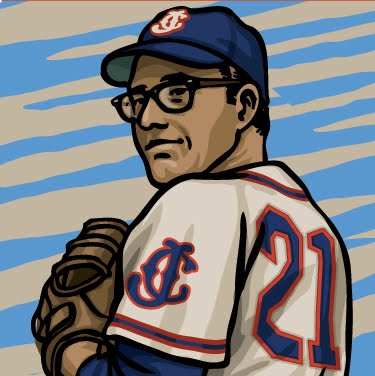
44. Slim Jones - The Greatest Pitcher of 1934


One of my favorite things about baseball, and history in general for that matter, is the big "what if..." question. You know, what if the South won the Civil War, what if Babe Ruth stayed a left- handed pitcher, questions that would have changed everything in a radically different way than events turned out. And then there are the little what if questions. Stuart "Slim" Jones is one of those nagging little questions and for a long time a player I have been fascinated with...

Jones was was a tall thin lefty from Baltimore and although he grew up playing softball, hardball was where the money was if you wanted to escape the grim depression then gripping the country back in the early 30's. Like Leon Day shortly after him, Jones tried joining the hometown Baltimore Black Sox. The once proud powerhouse had fallen on hard times and all its stars had fled to better paying teams, but the club still attracted the best black local talent and gave many players their start in professional baseball. So Stuart, now nicknamed "Slim" for obvious reasons, brought his 6'-6" frame to a tryout with the Sox but just didn't have enough to stick with the team. The next year he had developed a nice curve to compliment his blazing fastball and under manager Dick Lundy's watchful eye Jones stuck with the club and registered a 4-2 record for 1933.

Back before the 1960's most ballplayers, no matter how good they were, black or white, had to have a job during the winter to support themselves and family. Some of the most talented were able to get a berth on a team in the Cuban, Puerto Rican, California, Mexican or South American winter leagues. Because spaces on the teams were limited and players of all colors and nationalities were trying out, only the best were eligible to play down in paradise. In the winter of 1933, Slim Jones, with barely 1 year of professional experience with a marginal ballclub, made the Puerto Rican Winter League. It was down there that Jones really had his breakthrough. The reason for his dramatic rise is lost to history, maybe it was the experience of being around great veteran players in the islands or perhaps the 21 year-old just matured, but Jones struck out a resounding 210 men down there and the Philadelphia Stars of the Negro National League came looking for that tall lefty as soon as he and his luggage arrived back in the States.

1934 was all about Slim Jones. Right from the start of the season everyone that followed negro league baseball knew that someone special was in their midst. Jones simply dominated not only the various semi-pro and town teams the Stars played against, but the professional teams in the Negro National League as well. By mid-season Jones garnered enough fan votes for the annual East-West All-Star Game to eclipse the reining giant of negro league ball, Satchel Paige. Slim started the game instead of Satchel, a clear indication of his popularity with the fans and a nod to his talent on the mound. Pitching against the best players the West had to throw at him, Jones kept them hitless in the first inning but in the second he gave up a walk and a hit and now had runners on second and third with no outs. Slim bore down and struck out the powerful Sam Bankhead for the first out. Larry Brown of the Chicago American Giants was up next and hit a scorcher to third baseman Jud Wilson who knocked it down and threw out Mule Suttles at the plate as he tried to score. Two out, two men on base. Nashville's Sammy T. Hughes was up next. Hughes was one of the best clutch hitters who ever wore spikes but he too hit the ball to Wilson who made the long throw to first, inning over. Jones pitched the third inning as well and all told against the best negro league players of 1934 he pitched 3 innings, gave up 1 hit, walked 1 and fanned 4. Not bad for a 20 year-old in his first year in professional ball.

Negro League baseball has always been known for its showmanship as well as talent and in 1934 fans had the perfect storm. Everyone wanted a duel between the one and only Satchel Paige and the young upstart Slim Jones. On September 9th, the stars aligned at Yankee Stadium in New York City as the Paige's Pittsburgh Crawfords met Jone's Philadelphia Stars. Paige drove all night from a freelance pitching assignment and slept in his car outside the stadium. Jones told his teammates before the game "get me 2 runs and I'll win."

From the start everyone knew they were watching something special. Paige and Jones fanned batter after batter, double plays were turned as if it were a life or death battle and through 6 innings both men were pitching 1 hit shutouts. Then in the top of the 7th Dewey Creacy got a hit off Paige and scored on a double by Slim's catcher Biz Mackey. With 2 outs Jake Dunn hit a long fly to right fielder Ted Trent to made a spectacular shoe-string catch. The base umpire called it a trapped ball however and Mackey scored from second but then the home plate umpire ruled it a legit catch. No run scored, inning over and the score remained 1-0 Philadelphia.

For Slim's half of the 7th an error by second baseman Dick Seay and 2 singles tied the ballgame before he could extradite himself out of the inning. The next inning both pitchers ran into trouble but each time they pitched themselves out of it. Night was starting to descend on Yankee Stadium and going into the 9th each pitcher bore down harder. Fans were already calling it the greatest game ever played and Slim Jones retired the Crawfords in the top of the inning. Satch took the mound in the bottom of the ninth and set the Stars down one after another to end the inning. By now it was too dark to continue and fans ran on the field. Slim Jones had struck out 9 and gave up 3 hits, Paige wiffed 12 and relinquished 6 hits. The greatest game ever played was frozen for all eternity in a 1-1 tie.

Press coverage was incredible and the fans clamored for more. This is America after all, there has to be a winner and a loser. There must be a re-match! One week later, the two teams met again at Yankee Stadium in front of 30,000 fans. Dancer and honorary Mayor of Harlem Bill "Bojangles" Robinson presented both pitchers with a set of leather luggage - a very thoughtful gift seeing how much traveling the negro league teams did at the time. Jones struck out 6 and spread 5 hits over 9 innings, but Paige and the Crawfords bested the Stars, winning by a score of 3-1. Paige struck out 18 that day, gave up but 2 hits and forever sealed his reputation as the best clutch pitcher in the negro leagues.

So by the end of the 1934 season Jones had racked up the wins going 22-3 in league games and winning an additional 10 more games against semi-pros and lesser competition. In the hot pennant race of 1934 the Stars won the second half of the split season and now faced the first half winners, the venerable Chicago American Giants. In game one Jones came on in the ninth inning of a tie 1-1 game. Dewey Creacy made a bad throw on an easy out and Mule Suttles got a cheap hit through the infield scoring the winning run. Jones started game two but lost to Chicago's Ted Trent 3-0. Philly then evened the series forcing an eighth game after the 7th game ended in a tie due to darkness. Jones was at his best spreading 5 hits over the course of 9 innings and even smashed a double in the seventh scoring a run as the Stars cruised to a 2-0 shutout championship.

What else could top off such a spectacular year for a 20 year-old? How about pitching against the best pitcher in the white major leagues? The great Dizzy Dean, fresh off his 30 win season and marvelous world series performance against Detroit was barnstorming around the country with his brother Paul, also a star pitcher (19 wins) and a pick-up team of semi-pro players. Although the quality of Deans backing players may be suspect, Slim Jones still beat the Dizzy Dean All-Stars at Shibe Park capping off what may be the single greatest season ever recorded by a pitcher in baseball history.

So where do you go from here? Unfortunately for Slim, it was all down hill, and fast. Feted as the greatest pitcher in generations, Jones made the rounds of the bars and taverns in the off-season basking in the attention and indulging way too much. When he reported to the Stars at the start of the 1935 season he was out of shape and his ego inflated to a monstrous porportion. He fought with the management demanding a higher salery and at one point left the team in protest. His skills had eroded over the winter and by the middle of the season had still not registered a win. The fans still loved Slim and he received the second highest amount of votes for a pitcher that year for the East-West Game. Slim performed magnificently throwing 3 shut-out innings and had 2 hits including a two-run homer. But while that one day in Chicago may have reminded everyone of Jone's great promise, he finished 1935 with a 5-10 record. Winter of 1935-6 was spent back in Baltimore making the rounds of the clubs and bars cashing in on his reputation and when he returned to Philadelphia in 1936 his drinking had spiraled out of control. He finished the year 1-2, was 1-1 in 1937 and then 2-1 in 1938.

By the winter of 1938 Slim Jones, now a hopeless alcoholic barely holding on to a career as a ballplayer was out of cash and desperate. That winter was one of the worst in Baltimore history and Jones wired the Philadelphia Stars owner Ed Bolden for an advance on his next years salary. Bolden refused, partly because of Jone's declining performance and partly because of the precarious financial position his club was in. Like all negro league clubs the Stars barely turned a profit year after year and money, especially in the off-season, was tight. So now Jones, formerly the greatest pitcher in the world was desperate and thirsty wandering the streets of Baltimore searching for a drink. He sold his only overcoat to buy a bottle of whiskey and caught pneumonia. He died just before New Years, aged just 25.

Baseball is littered with stories like Slim, players who for a little while seemed to be the greatest in the game, only to have it all go away in a flash. Dizzy Dean, who Slim bested in 1934 had his brilliant career curtailed in 1936 due to an arm injury as did his equally talented brother Paul. Countless players drank themselves out of the game or were used up too fast because the fans wanted to see their hero pitch every time they went to the ballpark. But not many players had such a remarkable single season as Jones did in 1934 and he remains, at least for me, one of the biggest "what if" questions in baseball history.


Monday, August 9, 2010

43. Dom DiMaggio: Brother Number Three


Well, when I initially posted the first DiMaggio brother's card, I said that I completed these quite some time ago and had promptly forgot about them. Said that for the life of me, I couldn't remember why I shelved them. Now I remember. For the past 7 months since I started this site, I have consistently received emails after each post I made, either people like it, dislike it, have suggestions, offer memories, all kinds of responses, but the point is, they were cards and players that elicited a response, the need to share a comment. Each and every message means a lot to me and I respect the people who take the time from their busy day to make a comment on my artwork. Since I started the DiMaggio series, nothing. Nada. Zip-o. Think I saw a tumbleweed blow by my studio window this morning. Now I know why I never posted these cards. Frankly, the DiMaggios are boring. Yeah, they were talented. Joe is in the Hall Of Fame and hit safely in 56 straight games, no one else is going to do that- but so what. Does Joe DiMaggio really give you that chill when you see him come to the plate in old footage? Nah. He just always looked distracted and bored. Vince, as mediocre a player as he was, has been more interesting to me than his more famous brothers. Well, anyway, with this last card I'm thankfully wrapping up this boring trilogy and after this I will promise to leave what ever old drawings I find in my files where I found them. Unseen.

So now ol' Giuseppe has 2 of his boys playing professional baseball. It ain't fishing, but heck, it's a living and it pays well. Now he starts to play the part of that most American of all fatherly types, the Dad that pushes you to play sports and lives his dreams through you. So the youngest DiMaggio, Dominic begins playing baseball. Despite being small, frail looking and wearing glasses, he ain't bad at all. In fact he's pretty darn good. Not as natural an athlete as Joe, Dom has to work harder, but it pays off as he makes the San Francisco Seals in 1937. A natural lead-off hitter he hits the ball at a .300 clip and gets on base consistently. Again, despite his diminutive size, Dom is a natural leader and after a spectacular 1939 season where he hit .360, the Boston Red Sox came knocking, purchasing his contract at the end of the year. By spring, 1940, all 3 DiMaggio boys were playing in the majors.

This concludes the DiMaggio trilogy. Next week I will get back to real stuff, forgotten minor leaguer's, negro league players that never got the chance to show what they got, guys trapped down in the low minors their entire career and hometown ballplayers who should've been someone, but just didn't. I'm talking about the real players that make up The Infinite Baseball Card Set.

Sunday, August 8, 2010

42. Joe DiMaggio: Brother Number Two


Going through my old drawings trying to find yet another thing I misplaced, I found the cards I did of the 3 DiMaggio Brothers depicting them on the San Francisco Seals. For the life of me I can't remember why I shelved them, but for some reason they never saw the light of day. I brought out Vince the other day, now it's his younger brother Joe's turn... maybe you've heard of him?

The eldest DiMaggio boy made the hometown San Francisco Seals team halfway through the '32 season and with three games left in the schedule, the team found itself short handed when a couple of the regulars jumped ship to barnstorm in Hawaii. Vince recommended his middle brother Joe to the manager as a fill-in shortstop. Just 17 at the time, he was already a neighborhood legend for the way he could hit the hell out of the ball. The younger DiMaggio batted just .222 in 9 at bats, but remember, he was still a teen and was playing in what could almost pass as a third major league. Anyway, it was good enough to merit a call back the next spring when the Seals went into their training camp.

The first thing the Seals did was move Joe to the outfield, he had a great arm but was wild. In the outfield they could make better use of his long legs and strong arm. Free from the pressure to perform in the infield, DiMaggio concentrated now at destroying the Pacific Coast League pitching. On May 28th he went 1 for 4 against the Portland Beavers, and continued to have a hit in every game for the next 61 games! The younger brother was becoming the star of San Francisco and along with the thousands of strangers who followed his career closely was his father Giuseppe, whose negative view of the game of baseball began to dissipate when he found out Joe was making more a month playing ball than he did as a fisherman. The old man welcomed the eldest brother Vince back into the family as well and Giuseppe remained a fan of the game until his dying day. On a side note, Vince, the reason Joe was even on the Seals to begin with, was released by the team after the start of the season. Fortunately he was quickly snatched up by the Hollywood club and his career remained on track, reaching the majors in 1937. But if you read the entry on Vince DiMaggio, you already knew that. Back to Joe...

So his first full season in organized ball not only shattered the league record for hitting safely in continuous games but he also hit and monstrous .340. Not bad for an 18 year-old! The country became transfixed by the young Italian from the coast as news of his great talent splashed across the sports pages. Italian-Americans, one of the biggest growing ethnic groups in the country, embraced Joe as a hero, much like Hank Greenberg did for the Jews in America at the same time, instilling pride that one of their own made good in America's Game. In the modern context it is hard for us to fully comprehend how important the sense of belonging was to recent immigrants and their children. Unlike today when too many people hyphenate their nationality and try to separate themselves from the fabric of the country, Joe DiMaggio gave Italians a star player of their own to rival any other player of what ever ethnic origin who came before him. Joe DiMaggio made them belong.

The next year Joe's career almost ended as quickly as it began. The official story was he was getting out of a cab while visiting his sister and twisted his knee in the gutter between the taxi and curb. Later stories came out he was injured while getting into his own car after a big night out at the Market Street nightclubs in San Francisco. Who knows what the real story was, the result was that he tore all the ligaments in his knee, a career-ending injury back in 1934. Surgery for such an injury didn't come about until decades later and all the doctors could do was put him in a cast and hope for the best. Because of his 61 game streak and great season the year before, Joe DiMaggio was already a known name in the baseball world, regarded as the next big thing. Now the scouts from the majors became nervous and kept their distance. All except one team. This particular ballclub, always the shrewd headhunter of talent, recognized that the best baseball prodigy in the land could now be had for a bargain price. The disappointed Seals agreed to sell their former star for a quarter of what they were asking before the accident. $25,000 and Joe DiMaggio became property of the New York Yankees.

Joe's knee healed up just fine and he played the last half of the 1934 season batting a promising .341. When the Yankees bought DiMaggio's contract they agreed to let him play the 1935 season with the Seals and he promptly hit a colossal .398 and smashed 34 home runs. Let there be no doubt, Joe DiMaggio was ready for the big time.

But waiting in the wings, urged on by his old man and the drive to be as good as his brothers was the youngest DiMaggio, Dominic...

Friday, August 6, 2010

41. Vince DiMaggio: Brother Number One


Going through my old drawings trying to find yet another thing I misplaced, I found the cards I did of the 3 DiMaggio Brothers depicting them on the San Francisco Seals. For the life of me I can't remember why I shelved them, but for some reason they never saw the light of day until now. Or at least Vince will today.


Everyone knows Joe DiMaggio. Stupid novelty songs were written about him, his 56 game hitting streak is legend and his dour mug hawked Mr. Coffee machines to a whole generation of coffee fiends in those simple, care-free days before the fancy coffee-drink revolution. And those urban folksters Simon and Garfunkel even mentioned him in a hit song for Christ's sake! And speaking of Christ, that brings me to Joe's older brother Vince. Why mention the Son of God and the DiMaggio boys in the same sentence? Well, I'm guessing that being the sibling of Joltin' Joe DiMaggio was a bit like being Jesus' brother. "Why can't you be more like your brother?" Must have been rough for the oldest, Vince, and the youngest, Dom. But each had a good career in baseball, however overshadowed by Joe. See, there I go talking about Joe when I really am focusing on Vince.

As a boy, Vince DiMaggio had two dreams in life: to become an opera singer or a professional baseball player. The opera career remained elusive, but young Vince excelled at baseball. Being the eldest boy of a strict, uneducated Italian immigrant, Vince had to leave home in order to pursue his diamond dreams, bringing down the wrath of his father who disowned the wayward son. Undaunted, Vince made the Tucson Lizards ballclub in 1932 and later that season after hitting .347 with 25 home runs he was brought up to his hometown San Francisco Seals, batting .270 for them. The Seals played in the Pacific Coast League. In the days before the Dodgers and Giants moved west, the Pacific Coast League was regarded as almost a third major league. In fact many players played their whole career on the coast despite having the talent to interest major league clubs. The pay, play and of course weather was sometimes better than the big leagues could offer.

Vince quickly became known as a speedy and talented outfielder and though he sometimes connected for power, struck out a lot. The next year Vince convinced his manager, Ike Caveney to take a look at his younger brother Joe, also an outfielder. This must have really burned up his old man, who had effectively shunned Vince. Now two of his boys were turning away from the life of a fisherman. Joe's natural talent suitably impressed the Seals and he was signed to a contract. In order to make room for their new outfielder Vince was traded to Hollywood and Joe went on to hit .340 for the Seals. Vince knocked around the high minors for a few years and finally got his chance in the big leagues with the Boston Braves in 1937. By this time his father, realizing that his boys playing that crazy game of baseball wasn't going to lead them down a path to ruin, repaired his relationship with Vince and became an avid follower of the game.

With Boston he was a mediocre batter but was 10th in the league in home runs and also led the league in strike outs. In 1938 after setting a record for strike outs that would stand for almost 30 years he was traded to the Yankees who sent him to their top farm team in Kansas City where he hit a league leading 46 home runs. Cincinnati picked him up at the end of the year though he was quickly traded to the Pirates where he spent the majority of his career.

Starring for Pittsburgh during the war years, Vince was one of the few sluggers who was able to pound the special deadened baseballs used during the war. Because rubber was essential to the war effort, a substance called "balata" was used and the usual high-grade cork and rubber mixture at the center of the ball was replaced by granulated cork. The result was a dead ball with no bounce. None-the-less, Vince finished in the top 10 home run leaders 6 times during his 10 major league seasons. It ain't no Joe DiMaggio numbers, but it ain't nothing to sniff at either.

Vince, despite being shunned by his father and over shadowed by his more talented younger brothers, was a laid-back and good-natured player and well liked throughout the National League. Besides a great personality he was blessed with a superb singing voice and often sang arias to amuse himself while playing the outfield. After his career ended in the majors, Vince played minor league ball for another 6 seasons and became the manager of the Pittsburg, California Diamonds. On July 14, 1949, "Vince DiMaggio Night" at City Park, both Vince and opposing manager Ray Perry of the Reading Browns played all 9 positions for their respective teams. Each player-manager made one error and Pittsburg won 11-2.

Unlike his brother Joe who became practically a recluse after his playing days ended, Vince DiMaggio remained an affable fellow and lived with his family in California until his death from stomach cancer in 1986 at age 74.

Friday, July 30, 2010

40. Frankie Zak, my favorite player


Recently, I was reminded of the ballplayer whose story, more than anyone else, got me into researching obscure players and teams from baseball’s past and tell their stories.

 Way back when I was a kid, I remember asking my grandfather if he ever knew anyone who made it to the major leagues. My grandfather said yes, as a matter of fact he did know a major leaguer, and his name was Frankie Zak. Frankie was a buddy of my grandfather from the old neighborhood in Passaic, New Jersey, an industrial city a few miles west of Manhattan. Frankie, like everyone else on Fourth Street, was the son of Polish immigrants. Thomas and Victoria, his parents, had immigrated from the Galicia region of Eastern Poland. Born in 1922, Frankie was the youngest of the four Zak kids. 

 Just like my grandfather and the rest of the gang on Fourth Street, Frankie played baseball, but the game didn’t really interest Frankie. Sure, he tagged along when my grandfather and his cronies were devising schemes to sneak into Newark’s Ruppert Stadium to see the Yankees top farm club play, but baseball wasn’t Frankie’s thing. Just under 5’-10” and with a lean, athletic build, Frankie excelled at football, tennis, and especially track, where his fast speed earned him medals in the 60-yard dash.

 When he graduated Passaic High in 1940, Frankie went to work in a wire cable factory. The stable life of a blue collar factory worker seemed to be his future, but that’s when fate stepped in.

 In the summer of 1941, Frankie and a couple neighborhood pals decided to bum around the country in an old jalopy. With $30 bucks between them, they ventured south to visit another neighborhood pal (and an uncle of mine) Eddie Sudol. Back in the neighborhood, Eddie was the guy everyone thought would go all the way to the major leagues one day, and sure enough he was now playing his second year of organized ball with the Tarboro Orioles in the Coastal Plain League. This was Class D ball, the bottom rung of the minors at the time. While most teams at this level were not owned by a big league club like they are today, the Tarboro team had recently signed a working agreement with the Baltimore Orioles, an independent minor league team at the time.

 So anyway, Frankie Zak and his two pals turn up in Tarboro one hot and humid June day. As Eddie told the Pittsburgh Post-Gazette, “That night I went to the park, not because I liked baseball, but just to see my friend play. I wasn’t very much impressed, and the next day was making ready with my two pals to shove off, when my ball-playing friend rushed into the room and said: “Come on to the park. You’re goin’ to play for us tonight.”

 In another interview with the Paterson Morning Call, Frankie recalled that Eddie, “came up and told me their shortstop quit and I was going to play that night. I’d played a little amateur and sandlot ball, but didn’t care much about the game. But the manager, Poke Whalen, said he would pay me for it–and I needed the money. So I played. I hit one for three and didn’t make any errors. He signed me to a contract after the game, and I stayed.” But it was only temporary, you know, ‘cause Frankie didn't really care for baseball.

Though he had been a second baseman back in Passaic, Frankie eased right into his new job. And the sportswriters who covered the Coastal Plain League were delighted with the newcomer because they no longer had to write out the name of the shortstop Frankie replaced: Olesciewicz!

 So Zak finishes the season with the 6th place Orioles, bats a lean .255, and fields his position with a .905 percentage, right about in the middle of the league. Not bad for a rookie who never played the position before. In normal times, it would be a tough call to say whether his first season at Tarboro was good enough to keep him in professional baseball, but these were not normal times. During the off season the Japanese attacked Pearl Harbor and the country was thrust into a two-front war. Any able-bodied men who didn't rush to volunteer were being scooped up by the draft, and baseball at all levels was being affected. It was a time when men like Frankie Zak got their chance at baseball immortality.

With the war picking up steam, Frankie's rookie season was deemed good enough to be picked up by the Pittsburgh Pirates organization. The Bucs sent the 20-year-old shortstop to the Class D Hornell Maples in the Pennsylvania-Ohio-New York League (mercifully known as the PONY League). While he didn't exactly tear up the circuit, he did boost his average to .271 in 129 games as the Maples’ starting shortstop. He had 39 RBI's and belted 2 home runs, the only ones he ever hit in his career. The baseball odyssey of Frankie Zak was fully underway.

Spring training for the Pittsburgh Pirates in 1943 was held in Muncie, Indiana due to wartime restrictions, and Frankie worked out under the tutelage of the greatest shortstop who ever played, Hall of Famer Honus Wagner. Though he didn’t seem ready for the majors quite yet, Frankie always managed to endear himself to those around him. This included the legendary managers he played for, such as Casey Stengel, Frankie Frisch, and Burleigh Grimes – all gruff veterans and Hall of Famers who did not normally take to young ballplayers. Yet something about the kid from Passaic made these normally taciturn skippers take on an almost big brother role when it came to Frankie.

 Throughout his career, the slight but enthusiastic ballplayer who was descried in an Associated Press wire story as “dynamic, effervescent,” never failed to make a positive impression on those around him. He was ever eager to hone his craft, showed unselfishness at the plate, willing to take a walk and get on base instead of swinging for the fences, and was a non-stop chatterbox of whistles and encouragement to his teammates when he was manning shortstop. The other ballplayers began calling Frankie, “The Voice.”

While Frankie didn’t impress Pirates skipper Frankie Frisch enough to make the big club, he was promoted to Pittsburgh’s highest minor league team, the Toronto Maple Leafs of the International League. The 1943 Leafs were managed by Burleigh Grimes, the cantankerous former Brooklyn Dodgers spitball pitcher and later manager. Grimes quickly became a Frankie Zak fan, singing his praises to both the young ballplayer and the press. The Leafs skipper told one sportswriter that his shortstop, “is better than Pee Wee Reese was when he came to the Dodgers” and Frankie later told the Pittsburgh Post-Gazette that Grimes “told me I would be a star in the majors, but I thought it was just encouragement, that’s all.”

Besides being the Leaf's starting shortstop, Frankie became noted for his speed on the bases. He batted .246 with 9 doubles and a triple in all 150 games played that year, the only player on the team to do that. He swiped 22 bases, led the league with 104 runs scored, and was second in the league with 104 walks as Toronto won the pennant. He did, however, commit 50 errors at his position – but then again, who can find fault with that, ‘cause Frankie didn’t care for baseball very much...

In 1944, the major league talent pool had been decimated by the war. By then pretty much every player who could pull a trigger was in the service. Those still playing were high school aged kids, geezers too old for the service, guys who were just plain lucky their draft number hadn’t come up yet, and those given a 4-F deferment by the draft board. 4-F was given out for a wide variety of reasons why a person was not acceptable for military service, in most cases a physical ailment. Afflicted with what was described in newspapers as a “kidney ailment,” Frankie was one of the 4-F’s.

It was under these circumstances that Frankie Zak put on a Pirates uniform with the number 14 on the back and stepped out onto the field as a real major leaguer.

Frankie’s big league debut came on April 21, 1944, in Forbes Field against the Cincinnati Reds. With the Pirates losing 4-2 in the bottom of the ninth, with 11,377 fans in the stands, Frankie Zak was put in to pinch hit for veteran catcher Al Lopez. He wound up being stranded on first when the next batter hit into a forced third out – but still, Frankie Zak, the guy from the old neighborhood who didn't care for baseball, was now a major league baseball player!

Pirates manager Frankie Frisch continued to use Frankie exclusively as a pinch hitter through the first two months of the season until his regular shortstop, Frankie Gustine, went into a batting slump. Frankie made his batting debut on June 1 in Ebbets Field against the Brooklyn Dodgers. In his first major league at bat, Frankie hit a single off Curt Davis in the top of the third. With Rip Sewell at the plate, the over enthusiastic Frankie danced too far off the bag and was picked off by Davis. However, Davis’s throw was off target and Frankie scampered into second on the error. Frankie clipped Davis for another hit in the fifth before he was taken out for a pinch hitter in the eighth inning.

Throughout the summer the young shortstop played backup to Frank Gustine and got into 87 games, frequently used as a pinch runner. Zak batted a hearty .300 with 3 doubles, a triple and 6 stolen bases thrown in there for good measure. But breaking the .300 mark was not the highlight of Zak's 1944 season – getting named to the 1944 All-Star Game was! Yes, Frankie Zak, rookie back-up shortstop and occasional pinch-runner was named to represent the National League at the 1944 All-Star Game.

How the heck did that happen? Well, it's like this: The 1944 All-Star Game was to be played on July 11 at Pittsburgh’s Forbes Field. Marty Marion of the Cardinals and Eddie Miller of the Reds were picked as the National League shortstops for the game. However, on the eve of the game, Miller was injured and could not play. National League manager Billy Southworth needed a backup to Marion ASAP, but because of wartime travel restrictions it would be impossible to import a player from out of town. He needed to grab someone present in Pittsburgh.

Southworth’s first choice was the Pirates second baseman, Pete Coscarart. Unfortunately, Pete was using the All-Star break to go on a fishing trip out of town. Fortunately, Frankie Zak had decided to stay in town. And just like that, Frankie Zak, the guy who didn’t care for baseball all that much, became an All-Star.

Although he didn't get into the game (Marty Marion played all 9 innings), Frankie had the best seat in the house as the National League won, 7-1. He did, however, manage to get into the official team portrait, mixed right in there with the best National Leaguer players of 1944.

Frankie, who was batting .330 at the All-Star break, cooled down slightly to an even .300 at the end of the season. Though he more than held his own in his rookie season, Frankie’s major league career would last only 36 more games spread over the next two years. But Frankie Zak made up for lack of playing time with a couple of legendary baseball stories that are still told by old timers.

The first one takes place sometime in the 1944 season. The Pirates were playing Chicago at Wrigley Field and Frankie was trying to score on a double by outfielder Jim Russell. As he rounded third, the Cubs nasty little third baseman, Eddie Stanky, gave him a hard shove. Thrown off balance and now out of control, Frankie careened out of the basepath and tumbled all the way to the dugout. The ump waved in the run but neglected to discipline Stanky. Pirates manager Frankie Frisch vowed to even the score for Frankie, and sure enough on the next play Jim Russell comes sliding into third, spikes high, as does manager Frankie Frisch, sliding in spikes high from the coach’s box! The ump, Hall of Famer Jocko Conlan, calls Russell safe and Frisch out of the game.

Another great Frankie yarn took place on Opening Day, 1945. Pittsburgh is leading the Reds 1-0 in the fifth at Crosley Field and Frankie Zak beats out a bunt. Now there's two men on base. Reds pitcher Bucky Walters looks in to pitch to Jim Russell and Zak, noticing his shoe is untied, calls time. The first base umpire throws his hand up calling time out, but Walters and the home plate ump didn't hear it in time. Walters throws and Russell belts the ball into the right field bleachers for a home run. Only it wasn't. The run wasn't allowed and after much argument, Russell returned to the batter’s box while Frankie hung his head in shame, tying his cleats. The best the Pirates could do was score one run that inning and as luck would have it, they lost the game 7-6. The next day Frankie Frisch got a telegram from Casey Stengel “Am rushing a pair of button shoes for Zak.”

Then there’s the time in spring training when the Pirates were playing an exhibition game against the Cleveland Indians. Frankie was the leadoff batter in the Pirates half of the first inning. The pitcher was a giant Native American from Oklahoma named Allie Reynolds. Eager to show his stuff, Reynolds wound up and threw his hard one. Frankie swung and connected solidly – everybody heard it – but nothing happened. There Frankie was, standing at home plate, his hands empty and his bat laying on the ground – Reynolds threw so hard it literally knocked the bat out of Frankie’s hands! Pirates manager Frankie Frisch fell off the bench laughing so hard. Allie Reynolds would go on to be known for his overpowering fastball and pitch the New York Yankees to a couple World Championships.

The last Frankie Zak story comes from the old catcher, Al Lopez. When he was the manager of the Cleveland Indians he used to tell this story:

“I never like to see women in the dugout. In the first place they don't get a very good view. In the second place, they don't know how to duck. I even knew a fellow whose romance was broken up by a foul ball in the stands. His name was Frankie Zak – a shortstop when I was catching for Pittsburgh – and he fell in love with a Chicago girl. There was only one hitch. The girl's mother didn't want her daughter to have anything to do with a professional ballplayer. Frankie thought he knew how to break down a mother’s prejudice. He arranged for the girl to bring her mother to a game. We were in Wrigley Field and it was Ladies' Day – 20,000 women in the park. And of all those people, who do you suppose got the foul ball in the face? That's right. The girl's mother. She was really hurt, too. And that was the end of the romance.”

So what became of Frankie Zak? As the war wound down in the summer of 1945, former big leaguers began rejoining their old clubs. Frankie bounced back and forth between the Pirates and their farm team in Kansas City. He made the most of his demotion, leaving anyone who saw his work at shortstop come away impressed. The Kansas City Star went so far as call him, “one of the more talented tenders of that position in Kansas City’s baseball history.”

The start of the 1946 season marked the return of real baseball and replacement players like Frankie Zak became redundant. To allow both the returning vets and the replacements to have a fair shot at staying in the majors, the usual 40-man roster was enlarged to 48 players for the season. Frankie opened the season with Pittsburgh, but after batting a flat .200 in 20 at bats he was given his release by Pittsburgh. Fortunately, Frankie’s time in KC the previous summer had impressed his manager, Casey Stengel. Even though he was now managing the Oakland Oaks, when Casey heard the Pirates had cut Frankie loose, he contacted his former bosses in Kansas City and told them to sign Frankie ASAP. As Kansas City was now a Yankees farm club, Frankie was now part of their vast organization.

Again, Frankie’s fielding and speed made him stand out, with the Kansas City Star musing, “the fact remains he is considerably above the average shortstop in fielding and is a definite threat on the cushions. His inability to drive in many runs is all that prevents his becoming outstanding as a major leaguer.”

After the ’46 season, Frankie became eligible for the Rule 5 Draft. This was MLB’s way of preventing teams such as the Yankees from keeping too many talented players down in the minors when they could be used by another major league club. The St. Louis Browns snatched Frankie up, but before he could report he was thrown in to sweeten the pot of a Browns-Yankees trade and he again found himself part of the Pinstripe Empire.

The Yanks sent him to their top farm club, the Newark Bears, the same team Frankie and my grandfather’s gang would try to sneak into watch years before. He batted a weak .206 for 1947 and then spent the next three seasons with Portland, San Diego, Oklahoma City, and finally Tacoma.

His nine-year baseball odyssey at an end, Frankie returned to Pittsburgh. He had married a Smoke City gal named Helen in 1945 and had two daughters. Sometime in the late 1950s Frankie made his way back to Passaic and took a job at United Wool. He stayed active in the area’s semipro baseball scene and in 1967 was inducted into Passaic High’s Athletic Hall of Fame along with his old pal Eddie Sudol, the same guy who started Frankie on his unlikely baseball career. The National League All-Star passed away of a heart attack just a few days before his 50th birthday in February 1972.

Well, that's a lot to write about a guy who played only 123 major league games, right? Wrong. It's players like Frankie Zak who make this great game so interesting. For every Mickey Mantle and A-Rod, there are thousands of Frankie Zak’s out there, every one of them with their own bunch of stories just waiting to be told. It just takes a little digging, and you'll find them. I did.

Look up Frankie Zak today and you’ll find a bunch of mediocre articles churned out by lazy sportswriters that label Frankie “The Worst All-Star of All-Time” or some similar click-bait title. They rehash the ’44 All-Star Game replacement story and how Frankie hit just .269 in his three year MLB career and essentially was a nobody that went nowhere. The one thing all those articles have in common is that the writers didn’t look any father into Frankie’s story than his entry in Wikipedia or maybe his stat line on Baseball-Reference.com. They don’t go into how and why Frankie got to the time and place that made him an accidental All-Star. Their curiosity ceases after the 36 games Frankie played after his All-Star Game season.

Do a bit of research and you find that far from being a joke at the time, contemporary sportswriters found Frankie Zak’s story inspiring. He was given the title of “Baseball’s Cinderella Man.” Like the original “Cinderella Man,” James J Braddock who in 1935 went from being a washed up thirty-year-old New Jersey fighter to the heavyweight boxing champion of the world, the sportswriters appreciated how Frankie made the most of his unlikely career and turned into a real major leaguer. In 1944, Frankie’s story was an inspiration, something people could hold onto when their options looked bleak. Frankie proved that any man could become a “Cinderella Man.”

And that label of “worst All-Star?” Frankie was batting .330 at the All-Star break. If we use the same level of research those writers put towards their stories, one can make a case that the mantle of “worst All-Star” could be given to Willie Mays who played in the 1972 game despite hitting a sad .211 on the year – or Hank Aaron who was an All-Star in 1975 despite batting a sub-Mendoza .234. But do Mays and Aaron deserve title of “worst All-Star?” No, of course not once you look past the numbers. And neither does Frankie.

Frankie Zak was the beginning of my interest in baseball research. Where else would I have heard of the Tarboro Orioles? Or learned that before the Orioles fielded a major league team in 1954, there was a team by the same name with a proud heritage and enough success that it could support a farm system of its own, independent of the major leagues? I learned every box score and faded photograph holds the potential to launch a great yarn. That's why Frankie Zak, the guy from the neighborhood who never cared much for baseball, is the Patron Saint of The Infinite Baseball Card Set.


Wednesday, July 21, 2010

39. Old Hoss Radbourn - The Man Who Won 59 Games

I remember watching the All-Star Game in 2002 with my old buddy Charlie Vascellaro and the game goes into extra innings... really good game, extra innings, 7-7 tie, the best players in the game at the time, how much more better does this get? Well, not much more, apparently. The teams ran out of pitchers. Everyone was already in the game, and no one wanted to let the present pitchers continue. So what did they do? The officials called the friggin' game! Why didn't and outfielder step forward and say "I'll pitch!" or an infielder, taken with the honor of being picked by the fans of this great game say "it's just so great to be here tonight, give me the ball coach, I love this game!". But none of that happened. They called the game at a tie, just like some European soccer game. The best players in the game, all on one field at the same time, and it ends in a tie. It was such a disgrace, it gives me agida (look it up) just writing about it tonight. In fact, that's all I'll say about that.

To cleanse my palette after that remembrance, let's take a look at "Charlie "Old Hoss" Radbourn. "Old Hoss" as he was known, had a respectable career going for him, winning 25, 33 and then 48 games for the Providence Grays but midway through the 1884 season the irritable Radbourn and the equally surly Charlie Sweeney, the Grays other pitcher, took their rivalry to another level when they fought violently after a game in which Sweeney showed up drunk. Sweeney was suspended, effectively crippling the ballclub. You see, back then, players had to play the whole game, when a pitcher was tired or getting hit bad, instead of heading for the showers, he switched places with an outfielder or infielder, who doubled as a pitcher. Loosing their other starting pitcher mid-season was a death sentence to the Grays who needed to win the pennant in order to stay financially solvent. With his team faced with disbanding, Old Hoss volunteered to start every game left in the season in exchange for a raise and a release from the reserve clause that bound him to his team and be given free agency at the season's end. An agreement was struck and he went on to pitch more than 678 inning and won a staggering 59 games! What a season and for God's sake, what an arm that guy must have had. When guys today pitch 5-6 innings every 4 days at the most, this guy must have been like having 3 tender modern-day pitchers on the Gray's staff.

Radbourn gained his free agency after the season, and elected to stay with Providence. Old Hoss had a good career afterwards, really showing no ill effects from his monstrous season of 1884. In a side not, if you look at the team portrait of the 1886 Boston Beaneaters, there's Old Hoss, back row, far right, giving the cameraman what is probably the earliest documented middle finger salute. After his career ended, the vain Radbourn lost an eye and was disfigured in a hunting accident and spent the rest of his life hidden away in the back room of the saloon he owned in Bloomington, Illinois, dying in 1897. He was elected to the Hall of Fame, class of 1939.


Saturday, July 10, 2010

37. Judy Johnson

Teammates, opponents, sportswriters and fans all agreed on one thing, Judy Johnson was the smartest third baseman ever to grace a diamond. Johnson instinctively knew where a ball was going and how to get at it and put it where it needs to be. His baserunning gave the Hilldale Daisies an edge many other teams couldn’t compete with and his clutch hitting was legendary.

Born on Maryland’s Eastern Shore and raised in Delaware, Johnson’s father wanted his son to become a boxer and physical training was a part of his life from an early age. As a boy he was batboy for his father’s semi-pro baseball team and decided on making it a career. After working on the New Jersey docks during the first world war, Johnson played for a succession of semi-pro teams and was eventually signed by the mighty Hilldale Daisies from the outskirts of Philadelphia. Hilldale was just at the beginning of its period of dominance over black and white ballclubs and the team was stocked with old professionals and up and coming stars, of which Johnson was one.

The great John Henry Lloyd took Johnson under his wing and taught the promising young ballplayer the ropes. Lloyd’s tutelage paid off in dividends as he turned out to be the preeminent third baseman of the 1920’s and 30’s.Johnson swung a heavy 40 ounce bat and while he did not hit with tremendous power, he smacked out timely base hits that seemed to evade the opposing fielders. Time and time again his clutch hitting saved the day as Hilldale marched to top of the Eastern Colored League in 1923, 1924 and 1925. In 1925 Johnson and the Hilldale Daisies defeated the Kansas City Monarchs of the Negro National League 5 games to 1 in the second Colored World Series.
Throughout his career Judy Johnson consistently batted just under .400 but it was his ability to drive in runs during a clutch and his levelheadedness in any situation that made him such a well respected player. He was known throughout the league for his fair play and good sportsmanship in an era where violence and cheating was just another part of the National Pastime. Johnson studied the game from a scientific point of view and became a world-class sign stealer, knowing exactly what the opposing team was going to do at any time. He became the rock on any team he played for, the steady, quiet influence that players like Lou Gehrig and Gil Hodges were later known for.

When Hilldale folded in 1932 he signed with the Pittsburgh Crawfords and became the cornerstone of what is now seen as the best negro league team of all time. After his playing days were over Johnson became the first black coach in the majors when he joined the staff of the Philadelphia Athletics. Later he scouted for the Phillies organization, signing future stars Bill Bruton and Dick Allen. In 1975 he was elected to the Baseball Hall Of Fame, the sixth negro league player to be enshrined in Cooperstown.

Judy Johnson’s great attitude and cheerful disposition was always remembered by those who played with him. I’ll leave the last words to his teammate “Cool Papa” Bell: “He would never let you down. he was always up and optimistic. He brought sunshine into your life. When things got rough for us, Judy would always say, somewhere the sun is always shining.”


Monday, July 5, 2010

35. Sammy T. Hughes

The only problem with the Baseball Hall of Fame is that Sammy T. Hughes ain’t in it yet. During the 1930’s and 40’s Hughes was the best second baseman in black baseball and perhaps all baseball.

Hughes was a true rarity for the time, a franchise player back when contracts meant nothing and jumping from one club to another was just another part of the game. Born in Louisville, Kentucky in 1910, Hughes started out as a first baseman with his hometown semi-pro Louisville White Sox in 1929 and two years later the team turned pro and joined the Negro National League. 1932 saw Hughes join the Washington Pilots where he switched to second base and when that franchise folded later that year he joined the Columbus Elite Giants. Owned by black businessman Tom Wilson, the Elite Giants started out in Nashville but were destined to keep changing home base as they searched for a good city with an appreciative fan base. Hughes was the Elites’ man at second through their moves from Nashville to Columbus to Washington, D.C. and finally in 1938, Baltimore, Maryland.

In Charm City the Elite Giants found a city with black fans hungry for a team. The great black newspaper, The Afro-American, was based in there and provided good coverage of the Elites during their tenure in Baltimore. The team thrived in the environment and the fans were rewarded in 1939 when they won the Negro National League Championship in a 4-team playoff between the Homestead Grays, Philadelphia Stars, Newark Eagles and Elite Giants.

Sammy T. Hughes was described by his contemporaries as the complete ballplayer, he was a superior baserunner, solid hitter, rifle for an arm, artful bunter and he played the game smart. Fans acknowledged his skill and he was voted to the annual east-West All-Star game 5 times in his career, more than any other second baseman. He consistently batted over .300, and usually batting second in the lineup, he was considered a great hit-and-run man.

In 1942 the Communist newspaper “The Peoples Voice” arranged a tryout with the Pittsburgh Pirates for Hughes, fellow Elite Giant Roy Campanella and New York Cubans pitcher Dave Barnhill. Hughes and the other players jumped their teams and travelled to Pittsburgh but the tryout was never held when the Pittsburgh owner got cold feet. However, writers both black and white figured Hughes to be a can’t miss candidate to break the color line.

Black Yankees player Dick Seay had this to say of Hughes: “a nice fellow. He wasn’t one of those guys that was drinking and all. He’d stay in the hotel and go get his girl and visit her.”

After serving with the army in the Pacific he returned for one last year with Baltimore and although he hit only .277 he rendered an even greater service by acting as mentor the Elites’ young second baseman Junior Gilliam, later a star for the Brooklyn and Los Angeles Dodgers. Hughes settled down in Los Angeles and worked Hughes Aircraft Company, passing away in 1981. Cooperstown is not complete until Sammy T gets in there.


Thursday, June 10, 2010

32. Bump Baily

Like many baseball fans, I was fascinated by the 1984 movie "The Natural" when it came out. The story was pretty mediocre and in fact it took me a few watches to realize that Glen Close's son was actually Roy Hobbs' son also. Maybe I was too busy paying attention to Kim Basinger at the time to fully comprehend such a slow curve of a plot twist. But anyway, the one thing that truly stands out is the great portrayal of baseball in 1939. I mean everything looked good, the uniforms, the outfield wall advertising, the stadiums, the way the ball players looked and talked, even the newspaper articles they showed close-ups of. It all looked absolutely fantastic. As a designer, I have to tip my hat to the artist that developed the uniforms for the fictional New York Knights because they looked like they would have been around in 1939. As someone who does graphic props for Hollywood, one of the hardest things for a movie designer to do is to get the right feel and look for a particular time period. So many details can throw the piece off like typeface, color, phrasing or style. So many movie sets fail to get the details right and it ruins the whole movie for nit-wits like me who spent way too many hours studying such minutia as typography and design history and wonder why the stupid artist couldn't do the same. But that's enough about films that didn't do it right because "The Natural" did.

I mentioned earlier about the mediocre plot. When I found out the movie was based on a book by Bernard Malamud I dug up a copy and read it expecting to read the same story as the movie. What a big shock, but it wasn't the same story. Not even close. The beginning was basically the same, young phenomenon on his way to a sure-thing tryout with the Chicago Cubs gets shot by a deranged psychopathic nymphomaniac. But now Malamud's Roy Hobbs becomes a dark, mean spirited jerk. He had a dishonest streak perhaps driven into him by the hard road he travelled after being shot and now that he has crawled his way back to the majors after 16 years he will let no one stop him in his quest to become the best there ever was. Robert Redford's Hobbs seemed like a nice guy, humbled by his experiences. Malamud's Hobbs is the opposite. He is just out for himself. Guy doesn't even like kids who ask him for his autograph. I won't spoil the rest of the book, because it will make a good, fast summer read for anyone who hasn't read it, but I will say the ending sure ain't like the movie!

Now back to the cards. I have been wanting to do a card of a New York Knights player and settled on one of Bump Baily. He was the Knights' star outfielder who died when he crashed through the outfield wall, paving the way for Roy Hobbs to get into the lineup. Bump was also a thug, womanizer and crooked. He was being bribed by the Knights owner to throw games so the team did not win the pennant. In the movie tough guy Michael Madsen portrayed Bump rather well. He had a rough voice and the proper thuggish attitude that the book described. When I decided to do a Bump Baily card, I made my depiction a hybrid of Madsen and another great slugger of the late 1930's - Joe Medwick. I leaned heavily on Medwick because he was exactly as I would picture Baily - a rough, mean and a powerful slugger. He was cocky because he was that good, he even won the Triple Crown in 1937. He was quick with is fists to the point of KOing his own pitcher during a game when he dared to criticize Medwick's error in fielding a ball. Teammate Dizzy Dean said of Medwick "Dawgonnit. That Medwick don't fight fair at all. You argue with him for a bit and then he beats you before you've even had a chance to speak your piece." (To set the record strait, Medwick was all these things BUT not a dishonest ballplayer.) For the fictional 1939 statistics on the card I went through some old newspapers and figured out what Medwick was batting in mid-May of '39, the time when Bump Baily met his demise in the outfield of Knights Field. The drawing leans heavily on the facial features of Michael Madsen combined with the scowl and slouching, cock-sure body language of Joe Medwick. The last thing was how to spell his name. In the book Malamud spells it "Baily" and in the movie it is spelled "Bailey". I like the story in the book better so I stuck with the original. Malamud must have had his reasons and who the heck am I to change it. So here you have it, Batholomew "Bump" Baily on his first and only baseball card.


Tuesday, June 1, 2010

Anatomy of a card


From time to time I have had people commission me to make cards for their relatives who played ball but never had a baseball card of their own or from people who thought it would be really neat to have a card with themselves on it picturing them playing for the Homestead Grays, New York Knights or some other old-time team. Here is one such request I recently did and got permission to show the process...

Gary,
I love your cards, the stories and drawings are great. I was wondering if you do custom cards, because I would really like to have one made of my grandfather Eddie. He played for a few Navy teams during the war and I'd really like a card of him back in his playing days. Would you be able to create a card of him, in the style of your card set and have some printed? We don't have any pictures of him playing baseball, but do have a few pictures of him when he was in the Navy.
Thanks and keep up the great work,
-Jay

Jay,
Yes, I can do custom cards. If you send me one or more photographs of your grandfather when he was young I can find a suitable ball playing pose that would work. I will send you a sketch of the card and when you approve it I will color it and add a background. Let me know if you would like a stadium, fence with trees, buildings, etc. I'd probably suggest a fence with trees because it would be more appropriate for a military base back during the war. Let me know what teams he played for and I will try to find out what the uniforms looked like. Once you ok the finished card, I can get 500 of them printed just like my cards and will also give you an 4" x 6" print of the card you can frame for a price of $200. Let me know if this is what you'd like to do.
-Gary C.

Gary,
Yes that would be great! I am attaching a scan of my grandfather taken during the war as well as a file with the story I'd like on the back of the card. Can you have him play for the Sampson Naval Training Station? I don't know what the uniforms looked like. He threw and batted right and played 2nd base.
Let me know if you need any more to work with,
-Jay

Jay,
Here is the sketch of your grandfather. I posed him with his hand in his glove. I could not locate a photograph showing the Sampson baseball team but I found a good uniform type that will be visually interesting and I attached it to this email. I will place an "S" on it for "Sampson". It is the second one from the left with the star on the sleeve. I think the story you wrote will work fine for the card. Please let me know if the drawing looks good to you and I will color and detail it out for you.
Thanks,
-Gary C.

Gary,
The drawing looks really nice, I can't wait to see how it looks in color! I think the uniform you picked looks the best out of all of them...
-Jay

Jay,
Here is the finished card, front and back in color. What do you think? Please re-check the story on the back and make sure everything is spelled correctly. I'd hate to print your grandfathers' first and only baseball card with his name misspelled! If it meets with your approval, I'll send it to the printer and you should have everything in a week.
Thanks,
-Gary C.

Gary,
I just received the cards today... THANK YOU SO MUCH! They look fantastic and I can't wait to give these to my relatives! THANK YOU, THANK YOU, THANK YOU!
-Jay