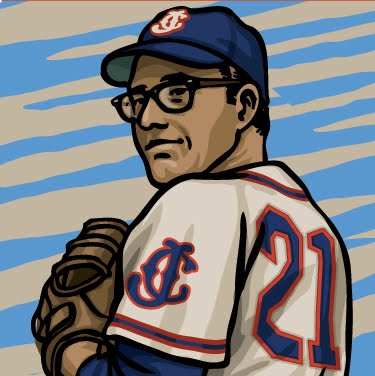
Friday, July 29, 2011

86. Teang Wong Foo: The Greatest Story Ever Told (sort of?)


March, 1887
Shanghai, China


No one thought much when the sturdy looking Chinaman in the yellow silk tunic and matching sash approached the men playing a pick-up game of baseball in a clearing just beside the docks. The two teams battling that afternoon were made up of New England sailors from the clipper ship Cyclopes and Navy men from the gunboat U.S.S. Monocacy. Although the crowd was originally filled with the few Americans that knew of and appreciated the game, by the 4th inning a sizable crowd had assembled. The bars of Shanghai's infamous Blood Alley had emptied of all U.S. Navy men who'd come to cheer on their own and hopefully scrap with the clipper men or who ever else looked eligible at the game's conclusion. The clipper's cheering section had grown to include a few missionaries and assorted bookkeepers and clerks from the American companies whose offices overlooked the bustling waterfront. A smattering of Europeans, mainly British and French, sauntered over to see what those curious Americans were up to now. A growing number of Chinese workers paused to look on, talking quietly amongst themselves, lest they be shooed away by the white devils.

The clipper men were leading by 2 runs but now the gunboat sailors had runners on first and second and their best hitter, Boatswain's Mate 2/c Spalding, was at the plate. Boatswain's Mate 2/c Spalding was from Chicago and in the not-to-distant past had played baseball around the windy city and held his own against the best semi-pros in town. When the Chinaman walked directly onto the field and made a bee-line for the pitchers mound, the Americans finally took notice of Teang Wong Foo.

According to Protestant missionary Reverend Herbert Chestnut who officiating at the game, the mysterious Chinaman gestured to the clipper's pitcher for the ball and out of sheer good-naturedness, he tossed the big fellow the ball. Slight laughter wafted from the players and spectators and a cacophony of Chinese voices welled up from the growing group of Chinese who had stopped to watch the curious game.

Foo took the ball without a word. He shifted his braided pony-tail over his shoulder and spat twice on the ground. Looking over his broad shoulders, three times he checked the runners on base. A few cat-calls (which the good Reverend Chestnut refused to record) emanated from the gunboat sailor's bench, bringing howls of laughter from the clipper men on the other side of the field. With a smile, Boatswain 2/c Spalding took up his batters stance.

Foo rocked quickly back on his right leg, curled his left around behind him and then swung his body almost completely around before snapping back and releasing the ball overhand.

There was a sound - some say it was like a train in the distance or the noise a canvas sail makes before hitting the deck - and Boatswain 2/c Spalding wound up in a heap before home plate. The crowd was silent until the sailor jumped up and dusted himself off. Then the jeers started. The clipper men cheered their "relief pitcher" and the gunboat sailors cried fowl, all the while was the incessant jingle-jangle of Mandarin being hollered from the growing Chinese section. Boatswain 2/c Spalding held up his arm to silence the crowd and regained his batting stance before home plate.

The clipper's catcher threw Foo the ball which he caught with his bare hand. Looking in, Foo duplicated his pretzel-like windup and threw another ball past Boatswain 2/c Spalding who didn't even take the bat off his shoulder. Again the crowd erupted in cheers, jeers and Mandarin. Boatswain 2/c Spalding rushed the mound dragging the Reverend/umpire Chestnut by the collar, demanding to see the ball. Standing next to Foo, who now everyone realised was quite large for a Chinaman, about 6 foot, Boatswain 2/c Spalding and Chestnut examined the ball. Besides normal grime and a few scuffs, there wasn't a thing altered on the sphere. Boatswain 2/c Spalding shook his head in amazement and walked slowly back to the plate. The Reverend returned the ball to an apathetic-looking Foo and called for play to resume.

With his former smile replaced by lips tightly closed, a determined Boatswain 2/c Spalding faced Foo. Again the curious wind-up and just like that, Boatswain 2/c Spalding swung and missed the ball. "Strike Three!" cried the Reverend/umpire Chestnut, thrusting three fingers skyward.

Roars engulfed the playing field and coins could be heard clanging as bets were settled in a dizzying array of languages. Boatswain 2/c Spalding shouldered his bat and started back to the bench. Half-way there he stopped, reversed course and headed towards the mound where Foo stood. The gunboat men rose as one and picked up bats, bracing for a fight. The clipper men discussed amongst themselves whether to stick up for "their Chinaman" or sit this one out. The British stood fast, observing, and the French evaporated into the crowd. In the ever larger Chinese section, all was quiet.

Boatswain 2/c Spalding held out his right hand. Foo, his chin slightly raised, handed the ball to him. Boatswain 2/c Spalding pushed it aside, instead shaking Foo's right hand and smiling broadly. Foo's face broke out into a wide grin as well.

The crowd erupted once again. The gunboat sailors put down their bats. The clipper men walked cautiously toward "their Chinaman" with open arms. The British noted the Americans "good show of sportsmanship" and the French reappeared and led the charge towards Foo. The Chinese started throwing firecrackers onto the field.

With Foo surrounded by his new-found admirers, missionary Chestnut translated for Foo. "he is from the village of Uwachu in the province of Kiangton. He learned to throw from need to hunt small birds after he was orphaned as a boy. A local warlord happened to see his skill killing birds with stones and adapted the young boy, elevating him at the age of 10 to be the warlord's Chief Hunt Master."

The crowd pushed closer to hear Chestnut translate and the missionary milked the undivided attention for all it was worth.

"It was in his capacity of the Chief Hunt Master that brought him to Shanghai this day, purchasing provisions for his master in Kiangton."

"I've never seen a ball curve like that!" exclaimed Boatswain's Mate 2/c Spalding. "Ask him if he can do that every time." Chestnut relayed the question to Foo.

"He says he can. He says he developed it that way because after many dead birds the game in his province became wise to Foo's great accuracy with a a stone. He says he trained himself to throw a stone around a tree so he could remain hidden from a bird's sight."

"Amazing!" exclaimed Boatswain's Mate 2/c Spalding. "Let's try something here."

Boatswain's Mate 2/c Spalding ran towards the bench his team had been using and returned with 3 bats. The first bat he erected about 20 feet in front of the pitching mound. He paced off about 10 more feet and started embedding a bat there. Seeing what he had in mind an unnamed Englishman came forward and took the other bat and with a nod from Boatswain's Mate 2/c Spalding, erected it just in front of home plate. Boatswain's Mate 2/c Spalding took a stone about 4 inches round and placed it upon the end of the bat before home plate. He walked briskly back towards Foo.

"Tell him to hit the stone." Boatswain's Mate 2/c Spalding instructed Chestnut. Informed of the plan, Foo kicked the dirt at his feet and the crowd backed off slowly, making a clear shot towards home plate. With that curious motion, Foo twisted around and fired the ball to the left side of the first bat where it abruptly curved right, cleared the second bat and abruptly curved again striking the stone on the bat at home plate.

"Amazing!" exclaimed Boatswain's Mate 2/c Spalding again and again. The way the good Reverend Chestnut relates it, Foo repeated the same throw 3 more times before darkness descended upon the Shanghai waterfront and broke up the crowd. The gunboat sailors, with the exception of Boatswain's Mate 2/c Spalding, headed back to the bars of Blood Alley. The clipper men returned to the clipper ship Cyclopes which was scheduled to depart the next morning for the long trip back to New England. The British and the French headed to their private clubs for dinner, all the while sniffing about how the Americans were always mingling with the Chinese too much for their taste.

The dispersal of the crowd left only the Reverend Chestnut, Boatswain's Mate 2/c Spalding and Teang Wong Foo. Speaking through the Reverend, Boatswain's Mate 2/c Spalding asked for and received Foo's contact address (really only the names of the province his Master had his palace) and promised to be in touch with him. Duly translated by Chestnut, Foo shrugged his shoulders and headed off into Chinese section of Shanghai.

While his shipmates drank and brawled on Blood Alley, Boatswain's Mate 2/c Spalding headed towards Shanghai's main telegraph office. He had an important wire to send to his cousin in Chicago.

02 MARCH 1887
MR. ALBERT GOODWILL SPALDING
SPALDING SPORTING GOODS CO.118 RANDOLPH STREET CHICAGO, ILLINOIS U.S.A. AL - DISCOVERED NATIVE RIGHT-HANDED PITCHER WITH UNRIVALED CURVE BALL FOR YOUR WHITE STOCKINGS. BALL BREAKS 3 FEET. AM NOT INTOXICATED NOR UNDER NARCOTIC INFLUENCE. LONG DETAILED LETTER TO FOLLOW. TEANG WONG FOO, KIANGTON PROVINCE, VILLAGE UWACHU. WIRE REV HERBERT CHESTNUT, GRACE CHURCH, SHANGHAI FOR MEDIATION. -COUSIN THOMAS (BM 2/C U.S.N.)

Boatswain's Mate 2/c Spalding's cousin happened to be THE Albert Goodwill Spalding, part owner of the Chicago White Stockings of the National League. Always one to cover all the angles when it came to baseball, Albert Spalding capitalized on a successful career as a pitching star when he established what would quickly become the world's largest sporting goods outlet.

Upon receipt of the telegram, Albert Spalding immediately set about contacting his foreign prospect. He knew his cousin well enough that despite his propensity towards drink, was quite an astute judge of baseball flesh. Not one to exaggerate, Albert Spalding trusted his cousin implicitly. His own White Stockings, despite the aging superstar Cap Anson at 1st base, were mired in 3rd place behind the Detroit Wolverines. A whirlwind of a pitcher could be the difference between 1st and 3rd place. Besides, imagine the spike in attendance from the addition of not only a Chinaman on the White Stockings, but a damn-talented Chinaman!

After a series of telegrams sent to the Reverend Chestnut, translated and relayed by runner to Foo in Kiangton, Spalding was able to negotiate the terms that would bring Teang Wong Foo to America as a member of the 1888 Chicago White Stockings. Besides the salary Foo would earn as a White Stocking, a modest sum was settled upon to appease Foo's master in Kiangton to compensate for the loss of his adapted son and Chief Hunt Master and Albert Spalding also made a not-insignificant donation to the Reverend Chestnut's Grace Church Mission in Shanghai.

In Albert Spalding's eyes, one major obstacle remained before the was truly comfortable with adding Teang Wong Foo to his roster: White Stocking team captain and superstar, Cap Anson. Known as a hot-head and notoriously racially intolerant, Anson famously made headlines by repeatedly refusing to play against teams that fielded Negro ballplayers. Why, just as recently as this season Anson refused to have his team play against the Newark Little Giants when they sent Negro League star George Stovey out to the mound to pitch against Chicago. Spalding tried to gauge his star player's level of intolerance and whether or not he'd be adverse to playing along side a Chinaman. "I don't care what hue the fellow is" Anson reputedly said "...as long as he is on my team. If he is playing against us, by God I'll holler until he is taken out of the damned game!"

A single article, though slightly embellished and containing a few of the politically-incorrect jabs of the time, appeared in the Chicago Mail newspaper. Calling Foo "a terror in the pitcher's box as has never been known in baseball circles" it goes on to warn the Detroit team of Foo's imminent arrival in Chicago. Things were going smoother than annual contract negotiation with his own Cap Anson. All that remained was the formality of permission to immigrate to the United States.

22 NOVEMBER 1887MR. ALBERT GOODWILL SPALDING SPALDING SPORTING GOODS CO.118 RANDOLPH STREET CHICAGO, ILLINOIS U.S.A.CITING CHINESE EXCLUSION ACT OF 1882 UNITED STATES CONSUL SHANGHAI DENIES PERMISSION OF IMMIGRATION FOR TEANG WONG FOO, CHINESE NATL. -RESPECTFULLY, E.B. HODGES ASST. U.S. CONSUL SHANGHAI

The Chinese Exclusion Act was ratified into law five years previous to all but end the immigration of Chinese to the west coast of the United States. The multitudes of native Chinese, once tolerated because of their hard work ethic and cheap labor, were now seen as a threat to American jobs and no longer deemed useful. Teang Wong Foo was just one of thousands caught up in this unfortunate racist policy of the United States.

Despite a flurry of telegrams sent to his influential friends in Washington, Albert Spalding realized that he would have to do without Teang Wong Foo and his amazing curve ball at least for the 1888 season. Through the Reverend Chestnut, Spalding kept tabs on Foo who did not wander far from his Master's palace in Kiangton. Via clipper ship, Spalding sent a crate of state-of-the-art baseball equipment from his Chicago store, including a complete White Stocking uniform. What Teang Wong Foo or any of his country men in the palace thought of these gifts was not recorded.

Despite leading the National League in batting, the Chicago White Stockings still finished 9 games behind the New York Giants in 1888. It's hard to say how many times Albert Spalding's mind wondered about how many games Teang Wong Foo's curve ball could have won for Chicago that season, but to think it wasn't on his mind would be far from the truth. Albert Spalding, as always, covering all the angles when it came to baseball, had an idea.

It would be the greatest world tour ever attempted to promote the American game of baseball world-wide. Starting in Chicago, Spalding would lead a 2 teams of major league stars west to California, then across the Pacific to Hawaii, New Zealand and Australia. The tour would then head north-west stopping in Shanghai, China. Before the expedition boarded the steamship to continue on to Europe, Albert Spalding intended to increase his wards by one more - a Chinaman by the name of Teang Wong Foo.

Spalding was playing the odds that amongst all the fanfare surrounding the tour, the addition of one more of those exotic ballplayers wouldn't be noticed. Perhaps he was planning to hide him as a valet or porter, we just don't know for sure. What is known is that the appropriate telegrams were sent and arrangements were made for Foo to meet the group when they arrived in Shanghai January 9th, 1889 on the steamship S.S. Salier.

But alas, it was not to be. After successful baseball exhibitions in Australia and New Zealand, Albert Spalding ran up against something he had absolutely no control over - the weather. A late-season typhoon followed by a succession of inclement rain storms postponed the S.S. Salier's departure for 2 weeks. In the meantime the tour's European facilitators warned against delaying or missing the Italian and French dates - too many Royal spectators were scheduled to attend and it would look bad for a bunch of sportsmen from the United States to cancel on them.

With a heart-felt dread, Albert Spalding cancelled the China leg of the trip and the S.S. Salier set a course for Ceylon, en route to Egypt and Europe.

What happened to Teang Wong Foo after January of 1889 was never documented. A check of immigration records reveal no Chinese national by that name ever coming to these shores and it would have been unlikely he found a way to circumvent the Chinese Exclusion Act before its 1943 repeal. It goes without saying the name "Foo" does not appear in any records of the old National League. In fact the only real public record of the whole Teang Wong Foo incident is the single article in the Chicago Mail. Albert Spalding of course went on to great financial success with his sporting goods and publishing empire. His White Stockings were renamed the "Colts" in 1890, then briefly became the "Orphans" before finally taking on their current moniker of the "Cubs" in 1903. The fate of Boatswain's Mate 2/c Spalding, besides his earning a Spanish American War campaign medal, honorable discharge from the Navy in 1910 and his death at the age of 82, is unknown. Through church records we find that the Reverend Herbert Chestnut left Shanghai in 1892 for a remote mission near Hangkow in the Yangtze Valley and was one of the many missionaries that went missing during the Boxer Rebellion of 1899-1900. His name appeared on the Rebellion Memorial Wall of Grace Church in Shanghai until it was removed by the communist government in the 1950's and the church destroyed to make room for a cultural center and soccer training complex.

Thanks for indulging me with this fun little story. The seeds of it began with a small article David MacDonald wrote in issue 20 of The National Pastime. In it MacDonald quotes from the actual Chicago Mail newspaper article from 1887 describing the imminent arrival of one Chinaman named Teang Wong Foo on the Chicago White Stockings. The article, riddled with the tasteless racial stereotypes of the time, was obviously a hoax. However the tie in with Albert Goodwill Spalding's real 1888-1889 World Tour and notorious racist Cap Anson was too good to pass up! I contacted David McDonald about the story and he told me it was found while researching something else entirely. Seems like we find a lot of other really great forgotten stories that way. Hope you enjoyed it and a special thanks to David MacDonald for taking the time to talk with me and for writing that neat little story in the first place.

Sunday, July 3, 2011

83. Roy Hobbs: A Tale of 2 Roy's


Like most baseball fans, I ran out to watch Barry Levinson's 1984 movie "The Natural." As a budding baseball history geek, I was enthralled with the attention to detail the set decorators, costume designers and graphic artists had spent bringing to life the sights and sounds of 1939 baseball. As a testament to the talent of those men and women, the New York Knights jersey is still sold by many companies and I spy at least one at every major league ballgame I go to. I've talked about all this before in the story and card I did of his teammate on the Knights, Bump Baily.

The movie begins with the teenage Roy and girlfriend Iris (very distractingly and unconvincingly played by Glenn Close and Robert Redford who were, what, 50 something at the time?) making love on the eve of Roy's call-up to the Chicago Cubs. As most everyone knows, Hobbs gets shot by a deranged woman and his career and life gets sidetracked and 16 years later he reemerges as a 35 year-old rookie for the moribund New York Knights. An all-around good guy with the virtues of a slightly-jaded Christy Mathewson, Redford's Roy Hobbs smiles his way through a doomed love affair with his manager's fem-fatale niece Memo Paris, mid-season batting slump and temptations from shady gamblers. The spectacular final scene during the playoff game against the Pirates caps off an inspiring movie as the hero finds out he is indeed the father of Iris's kid and sends a Spalding baseball into the Knights Field lighting system, winning not only ownership of the team for Pop Fisher, but baseball immortality, Hobbs' life-long dream. The closing sequence shows Roy playing catch with his son, safe and sound back on the farm where he started from. I assume Iris, who's not featured in the shot, is in the kitchen putting the finishing touches on a pie or something. The newly reunited Hobbs' family lives happily ever after.

Nice. So years later I snatched up a used paperback copy of the book by Bernard Malamud that the movie was based on. I sat on it for a while, not really all that gassed up to just read what the movie ably portrayed on screen. But when my buddy Charlie Vascellaro, the famed sportswriter and raconteur, saw it laying around and told me it wasn't anywhere near what I thought it was, I finally did crack it open. Boy was I surprised! The Roy Hobbs in the novel was the exact opposite of Redford's sugary version.

The book had a dark tone to it. Hobbs wasn't a fresh-faced teen in the beginning but a normal jock who just cares about himself. There was no teenage love affair with a corn-fed Iris from back home. In the book Iris was a frumpy middle-aged single mom and groupie he alternately bangs and ignores whenever the Knights are in Chicago to play the Cubs. He finally drops her like a bad habit when she tells him that she is a grandmother. He's mean to kids, doesn't get along with his teammates and is driven by that one thing: "When I walk down the street I want people to say: There goes Roy Hobbs. The best there ever was..." He doesn't really care about Pop Fisher and his sob story about losing the Knights to his partner, the evil Judge Banner. Hobbs is constantly preoccupied with turning a buck, continually complaining to The Judge to give him a raise because of how good he is. He even takes the Judge's money to throw the final game so he has a nest egg to run off with the manager's niece. When he finally gets pangs of regret after Iris lets him know she's knocked up with his kid he decides to become the hero and win the game. But unlike in the movie, he strikes out to end the game. The last scene in the book reveals a broken Roy Hobbs, passing a newspaper seller hawking papers reporting his expulsion from baseball and the compete erasure of his name and statistics from the record book.

Wow.

Now imagine if that was the movie. Would you have liked it better? Would "The Natural" have stayed such a popular baseball movie with an anti-hero and an ending like that? Would I see New York Knights jerseys with the number 9 on the back at major league ballgames? I don't know, probably not. Leaving the theater after seeing Hobbs blow up the scoreboard at Knights Field fills you with such a sense of euphoria and child-like glee that I think if the movie ended as sudden and demoralizing as the book it would not have had the same lasting impact. I do, however, feel like THAT would have been a movie I would have liked much better. Watching Redford as Roy Hobbs now 25 years later I see how schmaltzy his acting is. And his ever-present 70's man foppy hair-do bothers my historically accurate nerves (I read that he has a clause in his contracts that makes him exempt from changing his dopey hair style!). The silly love story with Iris is just a patch-work ploy to find a place for Glenn Close in the script. Here's a little something to show you how deep the scriptwriter was: did you realize that the young pitcher who gives up Hobbs' homer at the end of the movie is supposed to be the kid in the beginning of the movie who receives the baseball from young Roy after he strikes out "The Whammer"?

Anyway, flaws aside, I'd still watch this movie over any other baseball movie, even, yes, I'm going to say it: even over the darling of the baseball crowd: "Bull Durham." I'm sorry, I really didn't buy Tim Robbins as a ballplayer back then and I sure as hell don't now. And you know, I thought Annie Savoy was friggin' annoying. Yeah, I said that too. I went to art school and knew whole roomfuls of Annie Savoy's, chicks from medium-sized towns that talked like a thesaurus and believed that a few Edith Piaf LPs and becoming a self-appointed aficionado of something as pedestrian as baseball would make them the big, cool fish in the stagnant pond of whatever mediocre burg they were from. Yeah, see, I dated a few of them, trust me. But I will say this: Kevin Costner was good as catcher Crash Davis. And speaking of him, how about that movie where he relives his life story while pitching a no-hitter at Yankee Stadium? My Mom rented me that movie one Christmas when I was visiting. I really didn't want to watch it, but was glad I did because I thought it was pretty good. Quite a few baseball guys I know quietly admit to liking it as well. Just don't tell anybody...

But anyway, Back to Roy Hobbs. When I decided to do a Hobbs card, I was torn between the good Hobbs of the movie and the bad Hobbs of the novel. Liking the novel much more, I decided on the bad one when writing the back of the card. To save everyone's eye sight I'll reproduce the text below:

Roy Edward Hobbs
Bats: Left Throws: Left
Born: Aug. 10, 1905 Sabotac Valley, Iowa
Died: March 18, 1966 Grainger, Texas

Signed as a pitching phenom by the Cubs in 1923, Hobbs’ promising career was cut short when a deranged woman shot him. Hobbs slowly regained his skills playing semi-pro ball and at age 35 made a come-back with the New York Knights. He made a splash from the start by knocking the cover off the ball in his first major league at bat. He broke the record for doubles by a rookie and his 46 home runs spearheaded the Knights drive to the pennant. After he went 0 for 4 in the one-game playoff against Pittsburgh it was shown that Hobbs and pitcher Al Fowler were bribed by Knights owner Judge Albert Banner to lose the game. The commissioner of baseball banned Hobbs from baseball and removed all traces of him from the record books. A broken man, he died an oil field accident in 1966.

Wednesday, June 29, 2011

82. Frederick Benteen: Baseball & Custer's 7th Cavalry


If you haven't guessed by now, I'm always interested in presenting characters and situations in history you normally wouldn't associate with the game of baseball. Without any further meandering, I bring you a story of baseball and the man who saved what remained of Custer's 7th Cavalry in The Battle of Little Big Horn...

Frederick Benteen was born in Petersburg, Virginia in 1834. His family was originally from Baltimore and he was brought up in a thoroughly Southern family which became important when his family moved to St. Louis, Missouri as a teenager. Missouri at this time was a territory in flames - half of the settlers wanted slavery and the other half did not. Many acts of unspeakable terrorism was perpetrated on both sides in the years leading up to the Civil War and identifying oneself with either the North or the South was a matter of both pride and preservation.

After relocating to St. Louis, the young Benteen developed a love for the new game of "base ball." As in New York City, the game appealed to the new generation of young, urban middle-class gentleman of which Frederick, as a professional sign painter, belonged. The strong, athletic young man apparently was pretty good for he played on the city's Cyclone Club, one of the best in the area. The new game was associated with the North, something Benteen's staunch Southern father was against, and to make matters even worse, Frederick went one step further and sided with the Union when war broke out in 1861. In a terrible showdown, the elder Benteen told his son that he hoped the first bullet fired in the war killed him, preferably fired by one of the plethora of Benteen's who were fighting for the South.

With that, Frederick Benteen embarked on a career in the U.S. Army, but base ball was never far away.

Starting out as a 1st lieutenant in the 10th Missouri Volunteer cavalry he quickly rose through the ranks as the list of battles he took part in piled up: Wilson's Creek, Bolivar, Milliken's Bend, Pea Ridge, and Vicksburg. By the time the war ended he was a full-bird colonel commanding the 138th United States Colored Infantry. He was judged by his superiors to be an exceptional combat leader and was offered the chance to stay in the regular army at the wars end. A newspaper article that quotes from a letter from Benteen himself describes him organizing and playing in 3 ball games in one day!

Benteen was reduced to the rank of captain (the officer corps of the peacetime army was very small so everyone was reduced in rank) and posted to command H Company of the newly-formed 7th Cavalry Regiment. The field commander of the unit was the famed "Boy General" George Armstrong Custer (reduced in rank to Lt. Colonel). Benteen, who was older than Custer, did not like him from the get-go. For one, Custer was younger and Benteen considered it a slight to be under Custer's command. There was also a great divide between officers who had been educated at the elite West Point Military Academy and those, like Benteen, who were appointed to officer rank from the civilian world. Their style of leadership was also at odds - Custer was somewhat of a romantic, daydreaming of glorious cavalry charges and dashing knights of old. He liked to think of himself as a gentleman who appreciated the finer things in life and meticulously fussed over his appearance and image. Benteen was more of a modern man, more practical when it came to envisioning warfare and looked not to the past, but to the present, for things to inspire his men: things such as baseball. He was something of a 1870's stud - he had muscular biceps, carried himself with a manly swagger and wasn't afraid to be hands-on.

The 7th Cavalry was as dysfunctional as a unit could be and still stay together. The regiment was divided into 2 camps: those who liked Custer and those who didn't. Those who did were treated to never-ending social engagements sponsored by Custer's wife Libby and it was alleged preference when advancement time came. Custer was also a teetotaler and didn't have much respect for heavy boozers. Being posted to a cavalry regiment on the great plains or the Black Hills back in those days was one long battle against boredom and many officers destroyed their careers because they turned to the sauce in order to cope with the hard and lonely life. Benteen tended to overdue it on occasion, sometimes making a spectacle of himself. Away from his family he also earned a reputation of turning into "Mr. Hands" when intoxicated. In his defense, by the early 1870's he had seen the death of 3 of his 4 children due to a hereditary condition passed down by him, and his beloved wife and surviving son were far away in Atlanta. He was also increasingly at odds with the Custer group that ruled the regiment.

Benteen quickly formed "Benteen's Base Ball Club" which helped not only to satisfy the captain's baseball fix but game helped create a sense of camaraderie and pride that made H Company the 7th best unit. The Benteen's played ball regardless of their surroundings and their captain would invite other local nines to engage his team at every chance he could get. Even in the remote regions the 7th campaigned there was always a small town or group of miners who enjoyed a good game of base ball. Benteen and his boys prided themselves on bringing the game to the most inhospitable places in the west. During the Black Hills expedition of 1874 the team found time to play a few games, making temporary ball fields complete with grandiose names such as "Custer Park" and "Genevieve Park." To underline the fact that danger, in the form of Indians on the warpath, was always near, armed pickets were posted nearby for protection. The games were very popular with the cavalrymen and Custer even grudgingly attended a game. When Company H was rushed east to New Orleans to help quell a race riot in the fall of 1874, The Benteen's made sure to pack their equipment and find time for games with other army teams stationed nearby.

I've been unable to find out exactly what position the captain regularly played. I'm guessing that he didn't participate in actual games at this point in his career. Officers were discouraged from mixing with the enlisted men so he probably held a managerial role with the club. By the time the 7th Cavalry embarked on the Sioux Expedition in the spring of 1876 the Benteen's were known through out the west as a first-class ballclub. A few players were deemed good enough to pursue professional careers when they left the service.

The Benteen's captain and starting pitcher was 1st Sergeant Joseph McCurry. He was regarded as the best player on the team and was due to be discharged in 1877 where he was encouraged to pursue playing the game professionally. Second baseman "Fatty" Williams was another Benteen who was considered good enough to turn pro. Company H's own baseball reporter, Trooper Theodore Ewert, recorded that Williams had signed a contract to play ball for Pittsburgh after his enlistment was up. (Although his name is given as "George Williams," I believe Fatty was actually named William Williams. A look at the company H muster rolls made me draw this conclusion).

However, a little place called Little Big Horn would end that hope for many.

Many better historians can tell you what happened on the Little Big Horn better than I can, so I am going to just give a quick summation as it relates to Benteen. Since Custer and Benteen were at odds much of the time, the Captain was given command of a battalion and told to protect Custer's left flank. Custer and his favorite officers would lead the rest of the 7th Cavalry in a triumphant charge and defeat the Sioux on their own. After wandering around for a few hours a rider from Custer's command delivered a note telling the Captain to: "Come on. Big village. Be quick. Bring packs."
Benteen collected the pack animals that carried the supplies and ammunition Custer asked for and rode off towards where he was supposed to be. Along the way Benteen's command met up with a battalion led by Major Reno. They had been routed by a huge number of Sioux and were taking a beating while loosely defending a hilltop where the retreating troopers had paused. Major Reno had all but cracked under the pressure and it was here that Benteen became a hero.

With the addition of his command, including the formidable H Company, Benteen usurped command and mounted a spirited defense of the hilltop. Coming to the aid of Custer was out of the question - it was all they could do to save their own hides. The attacking Sioux were joined by the Lakota and Cheyenne who had just wiped out Custer and his men. Benteen commanded his men in a 24 hour defensive fight where displayed immense leadership and bravery by leading from the front and making calm, rational command decisions under heavy fire. While Reno hid with the pack horses, Benteen was wounded in the thumb and had the heel of his boot shot off. At two separate time when it looked as if his precarious position was about to be overtaken, he and his troopers turned the tables on the attacking Indians and charged.

Benteen's leadership saved the remaining men of the 7th Cavalry.

Later Benteen would be criticised for not trying to get to Custer quicker and his decision to make a defensive position with Reno rather than charge towards Custer's command was said by some to have caused Custer's demise. From what I have read, I think Benteen acted correctly and it was only his cool actions under fire that saved the entire 7th Cavalry from decimation that June afternoon. I can also field the idea that Benteen's elite H Company, which displayed such a high degree of esprit de corp and discipline during the hilltop battle, was able to hold out against vastly superior numbers due in part to the pride and teamwork drilled into them through the baseball team.

But what became of The Benteen's? The team's captain and pitcher Joseph McCurry was wounded in the shoulder that day and never made it to the big leagues. Likewise future Pittsburgh player "Fatty" Williams was wounded in the hilltop battle and though he lived until 1919, he never appeared in a ballgame with Pittsburgh. Pitcher Alex Bishop's baseball career ended after sustaining wounds on the hilltop defenses and Charlie Bishop was wounded in the arm.

I've been unable to find any other reference to baseball in the 7th Cavalry after Little Big Horn. It's possible to surmise that the game was no longer played after the decimation of more than half the regiment. The once proud unit was now demoralized and I'm sure revenge, not baseball was on the minds of the remaining officers and troopers. Besides, it looks like almost half of the Benteen ballclub was wounded in the battle. Benteen himself remained in the Cavalry although he remained a controversial figure. Custer's wife Libby and her highly placed political benefactors launched a tireless campaign that used every excuse imaginable to shift blame for the massacre from her husband to anyone else and Benteen bore part of this unwarranted slander. He continued to be a talented and brave combat officer and was decorated for his part in the campaign against the Nez Perce Indians. A bitter man, he sank deeper and deeper into alcohol abuse and was suspended for a year after he was convicted of being drunk and disorderly. He retired from the army in 1888 due to rheumatism which he claimed was caused not by 25 years of combat, but by playing his beloved game of baseball.

Among the many references I used for this little piece was Tim Wolter's article in The National Pastime Number 17 called "Bats and Saddles", a great website on 19th Century baseball in St. Louis called "This Game of Games", and James Donovan's superb book "A Terrible Glory."

Wednesday, June 15, 2011

80. Farmer Dean: His Own Meal Ticket


Let me first start out by saying that what follows is a true story - it might not read like it is, but it's all taken from a wide variety of period newspapers and wire services from February to April, 1935... While digging up old newspaper articles on the Tokyo Giants games against the Pacific Coast League teams during the spring of 1935, I happened upon one of those crazy characters that only baseball seems to attract: Oscar "Farmer" Dean. The first mention was of the Great Farmer Dean being slated to pitch against the Giants. The name sounded interesting and I made a note of it. Later I noticed his name kept popping up as I read the west coast newspapers from the spring of that year. When I found a mention of his eating capacity, I decide I had to dig deeper. Who was this guy? The truth was weirder that I ever imagined...

Out of thousands of baseball hopefuls who turned up at spring training camps all across America trying to escape the grips of the great depression, "Farmer" Dean quickly set himself apart from the pack. After writing to every club in the Pacific Coast League bragging of his unbridled talent, the Los Angeles Angels were the quickest on the draw and invited The Farmer to camp that spring. Even before he arrived the press was abuzz with anticipation of yet another great hurler with the "Dean" moniker.

In the previous year the brother duo of Dizzy and Paul Dean devastated the National League not only with their fastball but with the great copy their wild bragging and colloquial quotes brought. The Dean's won all 4 of the Cardinals victories in the '34 World Series and now there seemed to be yet another one of these "diamond in the rough's" out there. The aspiring pitcher that reported to the Angels camp on February 11th wasn't a spring chicken - he claimed to be 23 but looked like he was well into his mid-30's, six foot four and over 190 lbs. When not in uniform, Farmer wore an old suit of overalls complete with a sign sewn on the back declaring "I Am Farmer Dean." And just in case you failed to take notice of all that, he brought along his own agent/manager, Herb Levine, to make sure you did. The beat writers ate this stuff up.

While most of the Angels' hopefuls tried their damnest to distinguish themselves on the field, Farmer Dean made headlines with his prodigious apatite. His relentless assaults on the team's hotel restaurant became legendary - eating 2 steaks before morning workout became his routine. While others threw the ball around or worked on their curve ball, Farmer Dean held court, giving the eager sportswriters plenty of copy for their papers.

He was was fresh out of the U.S. Army, he said, where he learned how to pitch while posted at Fort Bragg in North Carolina. "My best throws are my cannon and submarine throws" the Antelope Valley resident said. While he claimed to be of no blood relation to the Cardinals' two sibling superstars, Dizzy and Paul Dean, The Farmer admitted that he possessed the same level of ability, and while he'd never seen either one in person, by reading about them he could confidently state they "haven't anything on me." Apparently The Farmer could do the the Dean's of St. Louis one better: he claimed he was such a good hitter he played outfield when he wasn't mowing 'em down with that fire ball of his.

Apparently the Angels management didn't think the same way because after a week Farmer Dean and his agent/manager Herb Levine were cut loose.

On February 19th sports pages across the country carried the UP article exclaiming Farmer Dean's signing by the Mission Reds of San Francisco. The Reds sent Dean a contract and told him to travel north to Marysville, California where the Mission team was opening their training camp on February 25th. The Red's manager, Gabby Street, who a few years earlier was Dizzy Dean's catcher on the Cardinals, optimistically told the press: "He's just like Dizzy when he signed with the Cards" and The Farmer himself added confidently "I'll win 20 games in this league."

The article also went on to list Farmer Dean's weight as 200lbs.

Before the Reds even opened the doors to their spring training camp in Marysville, Farmer Dean was a local superstar: he was presented with the key to the city. Earlier in the month the Reds' Bay area rivals, The Oakland Oaks, were chastised in their local newspapers for not being quick enough in responding to The Farmer's letter of introduction and letting him slip away to the Angels. Now that he turned up in the rival Reds' camp made it even harder for the Oaks fans to take.

The reporters who covered the Reds badgered manager Gabby Street for updates on the team's prized rookie. "Well, I'll tell you. The big fella has a lot of color and is sure attracting a lot of attention. He's plenty big, says he can pitch and certainly acts the part of a fellow looking to make good. He talks a great game and he eats like a big leaguer." Street went on to contrast The Farmer with Dizzy, saying The Farmer was more modest because when asked how many games he planned on winning that year said: "I guess about twenty games would be enough for the first year, eh Sarge?"

The Sarge promised to put The Farmer through a rigorous tryout to determine the full extent of the rookies prodigious talent. "I will find out mighty quick if this big boy has anything of value in a baseball way. What a card he will be if he can really pitch. If he can't, the Mission club will be out the price of his car fare and the meals he absorbed."

On the afternoon of Saturday, March 2nd Gabby Street handed the The Farmer the ball to see what he could do in a game situation. The Mission Reds faced the touring Tokyo Giants in the first of a series of games they scheduled against Pacific Coast League teams. The Tokyo Giants were a young team, mostly made up of college stars and featured the schoolboy sensation, Eiji Sawamura who made history that winter when he struck out Gehringer, Ruth, Gehrig, and Foxx in succession during an exhibition game in Japan. Before the game Dean went over the pitches he planned on unleashing that afternoon: "I got a submarine ball and a fire ball, but my fire ball is the best. It starts out fast and leaves a smoke screen as it curls up."

The Farmer, employing a novel submarine-style pitching motion shut out the Tokyo Giants for 2 innings until the roof caved in during the 3rd. Slapping him around for 6 runs, Tokyo knocked him out of the box on the way to a 12-5 win.

Obviously choosing to focus on only the first 3 innings of that afternoon's game, Dean went out on the town celebrating. By the time he meandered into the team's hotel, the Reds' president, Joe Bearwald, confronted his star hurler about breaking training rules. An indignant Dean declared; "I am a farmer, and Saturday is farmer's night. I do not care to retire now." The two men began a heated exchange but Bearwald had the last word: "You're fired."

The next morning as The Farmer and his agent/manager Herb Levine packed up their stuff, the Reds' manager Gabby Street spoke to the shocked press: "Farmer Dean didn't have a thing as a chucker." Dean had a lot of color he said, "but nothing on the ball."

At a rival meeting of the scribes, no doubt set up by agent/manager Levine, The Farmer gave his side of the story. "I walked out on The Missions because that old miser Joe Bearwald complained because I ate two steaks for dinner." The most famous pitcher in the Pacific Coast League was now free to take his talents elsewhere.

On March 5th he suddenly turned up in Santa Barbara and presented himself to the Seattle Indians owner Bill Klepper. At a press conference the following day Dean reported that Klepper and the Indians promised him "plenty of food" and promptly proved the point by devouring 2 full steaks before making his way to the field for practice. The newspapers described him as "... the 205lb Dean..."

Now boasting that he would win 25 games for Seattle this season, The Farmer was treated to a rigorous running regimen by the Indian's manager Dutch Reuther. Seeing as he put away 2 steaks, Reuther had Dean run around the field for 3 hours. The following morning the press reported seeing The Farmer only put away one steak at breakfast. Ruether adjusted his training regimen accordingly and made Dean run for only one hour. He was yet to appear in a game claiming the cards were not right yet. Farmer Dean, you see, consulted his horoscope before every game and if the stars were not favorable, Dean didn't pitch.

The newspaper now all seemed to focus on The Farmer's appetite instead of his fire ball. One paper claimed he ate "20 hot cakes every morning" and "carries with him a loaf of french bread and a roll of bologna sausage in a paper bag" to stave off hunger between meals. At the end of March he challenged teammate and the reining Indians eating champ, Mike Hunt, to an eating contest. The Farmer packed in "eight pounds of hamburger steak, three plates of potatoes and then ripped a beefsteak apart" on the way to thrashing Hunt and claiming the team title. After the crumbs settled Dean told manager Reuther that if they had a better class of steak he could really show 'em how to eat. Incredulous, Reuther called his bluff and ordered the pitcher a fresh T-bone. 10 minutes later it was gone.

Indians owner Bill Klepper declared: "if he could play ball like he can eat he'd be worth as much as Dizzy Dean."

The last traces I can find of The Farmer is at the end of March where the UP syndicated a photograph of Dean sitting awkwardly on the ground in front of the Indians dugout eating an impressive-looking sandwich. The supplied caption notes that to construct the sandwich he is consuming "...required 14 inches of bologna and a loaf of bread." He is also noted as being: "6' - 4" and 220lbs."

So who was Farmer Dean? There is no other mention of him after April 2nd of 1935. A teammate on the Indians did say that he had known Dean under a different name back on an unnamed Eastern team and that he was 35, not 23 as claimed. But he never gave the man's former name. Another clue I found was a mention of him being a resident of Lancaster, California. Then I found it. In a Los Angeles Times article, back when the L.A. Times still employed reporters that actually reported, writer Bob Ray's secret contacts told him that Oscar "Farmer" Dean's real name was "West" and that he once played with a team in the now-defunct Eastern League. Going through all the records found on Baseball-Reference.com I found no "West" who played in the Eastern League that would fit his age group (assuming he was born between 1900 and 1905). The only close fit I could see would be a Tommy West who played for the Lindale Pepperalls of the Georgia-Alabama League in 1930. The league collapsed following the 1930 season so it fits what was reported about Dean being out of a job after the folding of the league he played in. And taking into consideration that before showing up on the west coast he'd just served a 4 year hitch in the Army, that would fit into the timeline just fine. But this is all just a wild, though educated, guess on my part. So was this guy a real prospect or a publicity-hound trying to be his own meal-ticket? I'm guessing the latter and the teams in the Pacific Coast League played along. 1935 was one of the worst years of the depression and Americans grasped at any kind of distraction to keep their minds off their current predicament. If anything, Dean's romp through the P.C.L.'s spring training was beneficial to both himself and the league: the ever-hungry Dean gained in excess of 30lbs from free food and the Coast League gained national publicity and a much-needed boost to spring training attendance because of The Farmer and his personal publicity machine. I love the history of this game!

Note:
I wasn't happy with the original drawing I did of The Farmer, he was too... animated. (You can still see the original version HERE on my facebook page) I decided to do a 2nd version showing the Ace Fire-baller Farmer Dean, staying out of the sun, contemplating what the afternoon's lunch menu may hold...


Friday, May 20, 2011

76. Cool Papa Bell: Mythbusting


This week I wanted to feature a ballplayer that is in the next issue of 21 which will focus on the 1933 Pittsburgh Crawfords. The Craws were such a great team with no shortage of superstar players - Oscar Charleston, Satchel Paige, Judy Johnson, Ted Page... it was a veritable All-Star team (in fact 7 of the Crawfords were picked to play in the first Negro League East-West All-Star Game that year). The choice was difficult, but I decided to go with the man who seems to be at the center of some of the greatest myths and stories in baseball history.

Back before hard-core baseball researchers like Scott Simkus and Gary Ashwill started really getting the actual statistics on the Negro Leagues, the field of blackball was filled with wondrous stories of the mysterious players who played before Jackie Robinson. Robert Peterson's seminal book on the subject "Only The Ball Was White" started the whole modern era of Negro League research, followed up quickly by John Holway's still enjoyable and valuable books relating his interviews with early black players. This was the "dark ages" of Negro League research, way before computers and micro-film of defunct newspapers made research easier. The subject was wrapped in oral histories, passed down by players and fans from one generation to the next, like the Greek tales of the Gods were centuries before. There were no record books like the big leagues had and no coffee table picture books were available documenting these black players. As John Holway writes in the introduction to his book "Blackball Tales," in 1969 his research into the Negro Leagues took him naturally to the Baseball hall of Fame in Cooperstown. Asking to see the Hall's files on the Negro Leagues, be was disappointed to find its collection comprised of only a scorecard of the buffoonish Indianapolis Clowns and a Washington Post article on Josh Gibson written by... John Holway! The study of Negro League ball and other outsider teams and players have come a long way since then, but along with all the knowledge gained, we also lose much of the tall-taled fun that once encased blackball and separated itself from the cold, hard facts of organized baseball.

It was the Paul Bunyan-esque figures that originally attracted me to the Negro Leagues... there was the fella who was said to have hit 70 home runs in a season, a pitcher who during a Negro League World Series game had the bases loaded and called in his outfielders and struck out the side, and of course the guy who was said to be so fast he could turn the light switch off and be under the covers before the room went black.

These stories were so fascinating to me as a young teen that it made me search for more and more and that quest eventually turned into 25 plus years of researching the old Negro Leagues. The one dangerous part of learning more is sometimes the truth behind a story is not what you want to hear. The fella who supposedly hit 70 home runs in a season was Josh Gibson in 1931. No one denies Gibson was a superstar and he'd be worth his weight in gold had he been white, but the story of those 70 home runs was just that - a story. Phil Dixon wrote The Book on the famed '31 Grays and figured out he hit 40 round-trippers, but these were against ALL levels of competition from chintzy-little town teams to top-notch black clubs and white minor league ballclubs. The pitcher who called in his outfield and struck out the side with the bases loaded in a Negro World Series game? Of course that had to be Satchel Paige. The story was colorfully related many times by his teammate Buck O'Neil, later known as the elder statesman of blackball due to his longevity and featured place in Ken Burns' "Baseball" documentary. Unfortunately, it just didn't happen. Besides being untrue, the story in my opinion makes Satchel Paige, who may have been one the greatest pitchers of all-time, look like a careless fool. While Paige undoubtedly had fun on the mound and could showboat and trash-talk better than anyone else, he was also a true professional and in games that counted he would never have done such a risky thing as call in his outfielders.

So that brings us to the third story, the one about the guy who was so fast he could turn the light switch off and get under the covers before the room went black. That was none other than James "Cool Papa" Bell.

He was born down south in Starkesville, Mississippi, his father a black farmer and his mother an Oklahoma Indian. Bell learned baseball like most young boys, did but did not consider it as a career until he left home in 1920 to join his older brothers in St. Louis so he could go to high school - Starkesville didn't have any schools above 8th grade for Negros back then.

Once in St. Louis, Bell began pitching for the local Compton Hills Cubs where the professional St. Louis Stars noticed him. For $90 a month, Bell dropped out of high school and became their new left-handed pitcher. Armed with a repertoire of screwball, knuckler and curve, Bell gained his priceless nickname "Cool Papa" when with a game on the line, he struck out the great and fearsome Oscar Charleston. After the game Bell's manager Bill Gatewood called him "one cool papa" for not being rattled when facing one of the greatest clutch hitters of all time. Like all great nicknames, "Cool Papa" stuck to Bell like it was dipped in Super Glue.

A sore arm ended Bell's promising career on the mound, but he quickly adapted by teaching himself to hit from both sides of the plate and utilising his greatest asset - his speed.

See, Cool Papa was fast! The game as it was played back in the 1920's was much different than today. There was much more aggressive base running and stealing and the blackball version of the game was even faster paced that the white one. The St. Louis Stars developed into a dynasty in the late 1920's and Cool Papa was their lead-off hitter. He didn't have much power, but when he made contact with the ball he was off like a bullet. This quickness pushed his batting average above the .300 mark in most years, higher in many others. It's hard to say for sure, the research isn't complete yet, however Scott Simkus' work on the 1933 Crawfords attributes a .307 average in 63 league games against the best black players. In exhibitions against white major leaguers Bell is verified to have batted .391 - his speed working to his benefit when playing against guys who were not used to the aggressive base running the Negro League teams displayed.

His speed out of the box surprised even veteran players and it is no exaggeration that Bell could beat out a ball hit in the infield for a single. One proven story about Bell's base running skills and speed took place during an exhibition game against Bob Lemon's white all-star team in 1948. The Cardinal's Murray Dickson was on the mound and Bell singled. The next batter, Satchel Paige, bunted in a bunt-and-run play. Bell, who was running as the ball left Dickson's hand, watched as the catcher , pitcher and third baseman all left their positions to field the ball. As Bell reached second he saw that no one was covering third so he kept going. The ball, now fielded, was sent to first base and Bell, watching all this unfold, reached third. Seeing the catcher making his way to cover third leaving home plate uncovered, flew right by him and crossed the plate before anyone else knew what was happening.

What that story proves, besides giving proof to Cool Papa's speed on the base path, is that he not only was quick, but more importantly, he was smart. It takes a very observant man to assess the situation and not only adapt to it but think one or two steps in advance. In that game in 1948, Bell wasn't playing against a rinky-dink town team but against major league players. He also 43 years-old at the time!

As an outfielder, once again Bell used his great ability to adapt to master his position. His sore arm never healed and in order to play his centerfield position he again utilized his speed to his own advantage. Bell was able to race to and catch fly balls where average players would not be able to make the play. He got around his weakened arm by developing a quick release once in possession of the ball, getting the it back to the infield faster as fast as most players who could rely on their powerful arms to get the ball there.

In our upcoming edition of 21 featuring the 1933 Pittsburgh Crawfords, Scott Simkus attributes Bell with only 2 errors during the '33 season, a cool .980 fielding percentage. In 63 verified Negro National League games that season, Simkus also recorded 12 stolen bases for Bell. 12 is a long way from the 175 he claimed to have stolen in 1933, but again these 12 were in league games against top black teams and at the same token, steals were not recorded very diligently at the time. So while it is highly unlikely Bell stole 175 bases in 1933, he probably stole more than 12 in the 63 league games and it is a given that he swiped plenty more while playing against town teams and amateur clubs that summer.

So how fast was Bell? Supposedly he was once clocked at running the bases in 11 seconds. The Baseball Hall Of Fame reportedly has some kind of documentation on this provided by Cool Papa's daughter, but I have been unable to find substantial proof of this. The official record, set in 1932 by Evar Swanson of the Columbus Red Birds, is 13.2 seconds. Official record or not, Bell was fast. While I was unable to find that all-important truth, there is something that may help validate his reputation as the fastest man in baseball. Olympian Jesse Owens was acknowledged to be the fastest man alive in the years leading up to World War II. Although he was the star of the 1936 Berlin Olympics, the 4 gold medals he won didn't put food on the table so he often toured with Negro League teams, running pre-game exhibitions against local runners and sometimes even horses. On several occasions Bell's team played against a team Owens was with and each time the Olympian declined to race against Bell - as far as I can tell the only person he refused the opportunity to race. This speaks loudly of Bell's speed at the time. Owens, who was racing against horses for God's sake, was worried about losing a race to Bell!

So anyway, some tales about Bell were unfortunately not true (like the one where he hit a single, only to be called out when the ball he hit struck him in the keister as he slid into second), or there just isn't any documented proof (running the bases in 11 seconds). But wait, what about being so fast he could turn the light switch off and be under the covers before the room went black?
That one was one of Satchel Paige's favorite stories to tell and was one of the cornerstones of the mythology that encased blackball in the "dark ages." The way Paige told it, Bell showed how fast he was by the seemingly impossible act of being quicker than light-speed. Now that is a story that has to be false, right? Wrong. Back during their days with the Crawfords, Cool Papa and Satch were roommates on the road. Bell, who wasn't anywhere near the night owl Paige was, was in his hotel room one night when he noticed that the light switch on the wall had a short. It took a few seconds between the switch being flipped and the light actually going off. Sensing a great opportunity to mess with Satchel, Bell waited up for his roommate to return from a night on the town. When he came back, Cool Papa asked Satch if he thought he was fast. Satch of course said yes. Was he so fast he could get into bed before the room went black? Satch was sceptical, and Bell got up out of bed to prove it. Hitting the switch, Bell jumped into bed and under the covers as the room went dark, leaving Satchel standing in the dark, for once, speechless...

See Cool Papa and the rest of his teammates on the 1933 Crawfords in the next issue of 21: The Illustrated Journal of Outsider Baseball coming soon...


Friday, May 13, 2011

75. Guy Zinn: Going Rogue


There was some problems with Blogger yesterday and my last post on Guy Zinn was wiped off the face of the earth, so here it is again...

After finally completing the design of the next issue of 21: The Illustrated Journal of Outsider Baseball in a coffee-fueled Jack Kerouac-like marathon work session, I was in the process of saving the file to my online back up when my screen went blue. Now I'm computer literate enough to know that blue is bad and that field diagnosis was confirmed when I took the machine to a tech guy. I spent a few agonizing days waiting to hear if the file that held the new 21 issue could be salvaged and was relieved to hear that it was. So after buying a whole new machine and all the accompanying software, I am back up and running. So why do I share my problems with you? Well, I was unable to write a good story this week for this site. Following up Bill Staples' great Kenichi Zenimura story would have been hard enough, but I thought I'd throw out the story of a fella I found while researching the first issue of 21, Guy Zinn...

Prior to 1914, when a major league team sent a player down to the minor leagues there was nothing the player could do about it unless he wanted to be blacklisted from organized baseball forever. But in the winter of 1914 when Guy Zinn found out the Boston Braves had sold him to Louisville, he never showed up. He went rogue.

Founded in 1913 as an unaffiliated minor league, the Federal League emerged the next year as an aspiring third major league. The 8 team league strategically placed their clubs all around the eastern half of the country, selecting major league cities like Chicago, Brooklyn, St. Louis and Pittsburgh as well as the big minor league markets of Baltimore, Indianapolis, Kansas City and Buffalo. The league then commenced a raiding spree on the major leagues. Aging and underpaid stars like Three-Finger Brown, Germany Schaefer and Eddie Plank joined viable young talent like Benny Kaugh and Ed Rouch. Many other stars of both major leagues used the threat of signing with the Federals as leverage to get better pay. For a veteran like Guy Zinn, the Federal League was a way to hold on to the dream.

Born in Holbrook, West Virginia, Zinn started out in the local Pennsylvania-West Virginia League in 1909 and quickly worked his way up through Macon, Memphis, Toledo and Altoona before he was signed by the New York Highlanders, now known as the Yankees. The young outfielder batted only .148 in 9 games during the 1911 season but he made the starting lineup the following year. Batting leadoff on Opening Day in Boston, Zinn became the first batter ever to step up to the plate in Fenway Park. After drawing a walk he later scored a run, also becoming the first player to score a run at Fenway. On August 15, 1912 the speedy Zinn made a name for himself again by stealing home twice in one game, a record that has been equalled 10 times but never surpassed. He also pounded a team record 6 home runs earning himself the formidable nickname “The Gunner”. Despite his memorable season, New York sold him to the Rochester Hustlers of the International League. Although the International League was the highest minor league at the time, it was still the minors. A disappointed Zinn batted .287 and hit 4 home runs. The Boston Braves noticed and purchased his contract at the tail end of the 1913 season. Guy batted .297 in 36 games including 8 doubles 2 triples and a home run but during the winter break he found out he had been sent down to the minors again, this time to Louisville.

Baltimore of the Federal League eagerly signed the proven Zinn. The Terrapins were heavily favored to win the pennant and they started out strong, outdrawing the established Baltimore Orioles so much that they were forced to sell their biggest star, 19 year-old pitcher Babe Ruth, and relocate to another city. The Gunner started great as well but then after batting .280 with 10 doubles, 6 triples and 4 homers as well as 6 steals, he broke his ankle running the bases. The team tanked during the second half and finished a disappointing third. Zinn recovered and the next year hit .269 and had 18 doubles, 3 triples and 5 homers despite the Terrapins finishing dead last in the league. But the league’s days were numbered.

Baltimore as well as the rest of the club’s attendance had dropped substantially and the Federal League finished the season in the red. The Major Leagues recognized victory over the upstart league but made a few concessions to some of the Federal League club owners: St. Louis Terriers owner Phil Ball purchased the St. Louis Browns while Chicago Whales owner Charles Weeghman was allowed to buy the Chicago Cubs. Weeghman moved the Cubs into the more modern stadium he had built for the Whales which years later would be known as Wrigley Field. The American and National Leagues skimmed off the best of the Federal League’s talent and cast adrift the remaining players.

With the demise of the Federal League, the aging Zinn bumped around the minors again, stopping off at Wilkes-Barre, Scranton, New Orleans, Louisville, Bridgeport, Newark, Jersey City and finally Hamilton, Ontario. He retired in 1922 and returned to his family in West Virginia.

Now go back up your files!

Friday, April 29, 2011

74. Kenichi Zenimura: U.S.-Japanese Baseball Ambassador


In honor of Asian American and Pacific Islander Heritage Month (May) our current feature is on Japanese American Baseball Pioneer, Kenichi Zenimura (1900-1968). While Jackie Robinson and the Negro Leagues have been well documented, few baseball fans know about the Japanese American Nisei Leagues, or of Zenimura, their most influential figure. A phenomenal player who excelled at all nine positions, Zenimura possessed a gift for using the game to transcend the ignorance and intolerance of his era. As a player, captain, and manager, he worked tirelessly to promote Japanese American baseball, leading goodwill trips to Asia, helping to negotiate tours of Japan by Negro League all-stars and Babe Ruth, and establishing a 32-team league behind the barbed wire of Arizona’s Gila River Internment Camp during World War II.

“Kenichi Zenimura, Japanese American Baseball Pioneer” (McFarland 2011) is a new book by SABR member Bill Staples, Jr. With a foreword by Don Wakamatsu, the first Asian-American manager in MLB history, this biography of the "Father of Japanese-American Baseball" delivers a thorough and fascinating account of Zenimura’s life. In anticipation of the book’s release in June, Staples shares a summary of one of the most under-appreciated aspect of Zenimura’s career, and that of Japanese American baseball in general – the important role played in pre-war U.S.-Japanese baseball relations.

The 1922 MLB Tour to Japan: A Blow to American Sportsmanship
In the fall of 1922 Major League Baseball announced that it was sending a team of all-stars to tour Japan. Among the stars selected were Luke Sewell (Indians, c), Waite Hoyt (Yankees, p), Irish Meusel (Giants, of), George “High-Pockets” Kelley (Giants, 1b) and Casey Stengel (Giants, of).[1] The tour was led by Herb Hunter and was the brainchild of American League Commissioner Ban Johnson, who said, “Perhaps someday we will have the Champions of America meeting the winners of the Japanese series in a real world’s series. This may be my dream, but it is a dream I shall cherish until it materializes.”[2]

On October 14, 1922, Herb Hunter’s all-star club and a young Kenichi Zenimura were literally two ships passing in the night. At that same time that the all-stars were heading West across the Pacific, young Zenimura was returning from Japan where he spent several months coaching baseball at Koryo High School. The Koryo team roster included his cousin Tatsumi Zenimura, outfielder and future Meiji University team captain, and Kisaku Kato, future player and manager for Nankai of the Nippon Professional Baseball league.[3]

Zenimura was born in Hiroshima in 1900, moved to Honolulu in 1907, and as a young man moved to the U.S. mainland after visiting relatives in Fresno. He arrived in 1920 and immediately assumed a leadership role with the nascent Fresno Athletic Club. While he was away coaching at Koryo, the Seattle Asahi won the 1922 West Coast Japanese baseball championship and the rights to represent the U.S. during a tour of Japan in 1923. Zeni had devised a plan to bolster the talent of his club to claim the West Coast Japanese Baseball championship from Seattle. The plan required another trip back to Japan and then on to Hawaii to recruit his former Island teammates to join him on the mainland in California.

Back in Japan, the 1922 MLB All-Stars took on and defeated every college, industrial and amateur team the country had to offer – except one. On November 23, Herb Hunter’s men lost 9 to 3 to the amateur Mita Club, led by pitcher Michimaro Ono.[4] On the surface, one would think that the Mita Club and fans would be happy with the victory over the Americans, but they were not. Reports out of Japan explained why:

America's reputation for sportsmanship suffered a severe blow when the American baseballers threw away Sunday's came to the Mita local nine, which is strong nationally, but obviously no match for the American professionals … The general opinion was frankly expressed that the Americans dropped the frame for advertising purposes, anticipating increased gate receipts later at Osaka and other parts … The Tokio Asahi expressed the disappointment, “We welcomed the American team because we thought they were gentlemanly and sportsmanlike. They have now shown themselves to be full of the mean professional spirit. Japanese baseball followers are not foolish enough to believe they tried to beat Mita … they disappointed our hopes and left an unpleasant impression upon us.”[5]

Losing pitcher Waite Hoyt would later explain that he and his teammates were just “foolin’ around” on the field and meant no disrespect to their Japanese hosts. Nonetheless, the damage was done. As a result of the All-Stars thrown-game fiasco – and perhaps other factors such as the 1923 Great Kanto earthquake in Japan, and restrictive post-season play policies established by Commissioner Landis – no major league team would tour Japan for another eight years. (Note: Ty Cobb did tour Japan in 1928, however it was as an individual and not as a member of an MLB team tour.)

Filling the MLB Void: The Nisei and Negro Leagues Step Up to the Plate
This eight-year (1923-1931) major league void was proudly filled by Zenimura and his West Coast Nisei League peers. Ironically though, just as Zenimura and his teammates were about to enter the role of goodwill baseball ambassadors to Japan, on November 13, 1922 the U.S. Supreme Court ruled in Ozawa v. U.S. to reaffirm the ban on Japanese immigrants becoming naturalized U.S. citizens.[6] First-generation Japanese Americans, or Isseis like Zenimura, would have to wait another 30 years for the opportunity to call the United States of America their true home. Despite the ruling, Issei proudly represented their adopted country during several tours back to Japan. Specifically, during the eight year MLB-team void, Japanese American teams barnstormed the land of their ancestors approximately ten times, with Zenimura involved in four of the tours (1924, 1927, 1931 and 1937). The following is a comparison of pre-WWII tours to Japan by major leaguers and that of Nisei and Negro Leaguers:

MLB Tours to Japan, Pre-WWII
1908 Reach All-Americans
1913 MLB Giants-White Sox
1920 MLB All-Stars
1922 MLB All-Stars
1928 Ty Cobb (MLB exhibition)
1931 MLB All-Stars (Gehrig, O'Doul)
1934 MLB All-Stars (Ruth, Gehrig)


Nisei-Negro Leagues Baseball Tours to Japan, Pre-WWII
1907 St. Louis-Hawaii
1914 Seattle Asahi
1915 Honolulu Asahi
1915 Seattle Asahi
1918 Seattle Asahi
1920 Honolulu Asahi
1920 Seattle Asahi
1921 Hawaii All-Stars
1921 Seattle Asahi
1921 Vancouver Asahi
1923 Seattle Asahi
1924 Fresno Athletic Club*
1925 San Jose Asahi
1925 Sacramento Nippons
1926 Honolulu Asahi
1927 Aratani Guadalupe Packers
1927 Fresno Athletic Club*
1927 Philadelphia Royal Giants (Negro Leagues)
1928 Stockton Yamato
1931 Kono Alameda All-Stars*
1931 Los Angeles Nippon
1931-32 Philadelphia Royal Giants (Negro Leagues)
1933 Seattle Taiyos
1935 Nipponese All-Stars
1937 Kono Alameda All-Stars*
1940 Honolulu Asahi

*Note: Zenimura participated in the 1924, 1927 and 1937 tours, and coached the 1931 Kono Alameda All-Star players prior to their tour.

Debating the Birth of Pro Ball in Japan
The Nippon Professional Baseball league was established in 1936. Many baseball historians credit the famous 1934 MLB tour with Babe Ruth and Lou Gehrig as the primary inspiration for the start of the first professional league in Japan. However, knowing what we know now about the role of Nisei and Negro Leagues ball clubs and their tireless efforts to export the American style of play before WWII, we now see that the 1934 MLB tour was simply the capstone for building professional baseball in Japan, and not the foundation.

In fact, in the book Gentle Black Giants, Japanese author and historian Kazuo Sayama credits the 1927 tour, especially Mackey and his Philadelphia Royal Giants teammates, as the inspiration for the start of professional baseball in Japan in 1936.[7] Sayama states that Japanese players and spectators knew about the racial segregation in professional sports in America and understood that, although they could not play in the Major League, they were as good as, or even better than, the major league players. Sabur Yokozawa, a Japanese player, later said how the Royal Giants played each game gentlemanly, with warm pedagogical thoughtfulness to the inexperienced Japanese players, while the All-American teams (of 1931 and 1934) sometimes treated the Japanese players with entertaining contempt during the actual games.[8]

Not all researchers agree with Sayama's strong sentiment, but the consensus is this – the 1927 Goodwill Tours of the Philadelphia Royal Giants and Fresno Athletic Club are much more significant than the footnote status they receive in baseball history books. During the 80th anniversary of the 1927 tours, the Nisei Baseball Research Project (niseibaseball.com) told MLB.com that the intent in showcasing the role of Japanese Americans and the Negro League all-stars was not to take credit away from the major league tours but instead to “broaden the understanding that there are more ambassadors who built that (U.S.-Japan baseball) bridge.”[9]

After the end of WWII, Zenimura offered advice to his players that reflects a key lesson he learned during his goodwill tours to Japan during the 1920s and 30s. “Try to speed up the mutual feeling between the Americans and Japanese,” Zenimura said. “It is much easier to make efforts of starting a better understanding between us in the field of sports than trying to talk your way through the rough spots." Spoken like a true diplomat.

To learn more about Zenimura’s role as a global baseball pioneer and passionate U.S.-Japan ambassador, visit www.zenimura.com.

Praise for the book:

Kenichi Zenimura, Japanese American Baseball Pioneer by Bill Staples, Jr. Foreword by Don Wakamatsu

Bill Staples, Jr. is a dedicated baseball historian, author and a meticulous researcher who utilizes twenty-first century technology to root out the most obscure facts about his subjects. His work on Kenichi Zenimura is a groundbreaking effort. –William F. McNeil, baseball historian, author, Sporting News-SABR Research Award Winner (2007), Five-time recipient of the Robert Peterson Award

Staples’ tireless research and love for the game has resulted in "Kenichi Zenimura, Japanese American Baseball Pioneer,” one of the great untold stories of our American pastime and an essential for any baseball faithful. –Kerry Yo Nakagawa, historian, author, filmmaker, founder/director of the Nisei Baseball Research Project

Hopefully (this book) helps transform a long-neglected chapter of baseball history – Nisei baseball history – into a well-chronicled saga for all fans of all races, creeds and colors to appreciate. –Don Wakamatsu, First Asian-American Manager in MLB History

Bill Staples, Jr., is a member of the Society for American Baseball Research (SABR), a board member of the Nisei Baseball Research Project, and a past speaker at the Cooperstown Symposium on Baseball and American Culture at the National Baseball Hall of Fame. He lives in Chandler, Arizona. Learn more online at www.zenimura.com.

[1] Baseball Tourists start trip today, New York Times, October 14, 1922, pg. 16
[2] Majors’ club picked to tour Japan, The Ogden Standard-Examiner, June 22, 1922, pg. 8
[3] Gila Parade of Baseball Stars, Gila News-Courier, October 7, 1943, pg. 6
[4] SABR Asian Baseball Committee Japanese Baseball Page, http://asianbb.sabr.org
[5] BIG LEAGUERS BOOT ONE IN JAPAN, Herbert Hunter takes MLB all-stars to Japan, The Fresno Bee, December 14, 1922, pg. 9
[6] Timeline, Densho.org
[7] David King, “Finally Getting His Due,” San Antonio Express-News, July 30, 2006, Pg. 01C
[8] Sayama Kazuo, “Black Baseball Heroes: The Rise and Fall of The ‘Negro League’,” (Shinsho, 1994) 11-12
[9] Black Giants were treated like royalty, By Stephen Ellsesser, MLB.com, February 23, 2007

Thursday, April 14, 2011

73. Mose Solomon: The Rabbi Of Swat


When I first started this blog a little over a year ago, I started receiving many requests for players to be profiled on here and given The Infinite Baseball Card Set "treatment." Out of all the emails I began to notice that it was not one particular player that was asked for the most, but rather a whole ethnic group: Jewish ballplayers. I did cards and stories on here of Sandy Koufax and Moe Berg, but I began slowly researching different players of the Jewish faith, trying to find characters who would fit in with the kind of stories I like to write. Guys with interesting stories who may not be known to the casual fan of baseball history. Mose Solomon was one of those guys, and in fact he appears on page 7 of the Premier Issue of "21: The Illustrated Journal of Outsider Baseball."

By the early 1920’s the owners of all three of New York’s ballclubs recognized the prospective value in finding a viable Jewish star to play for their team. Jews made up a large part of New York’s population and they embraced the National Pastime with a passion. Their loyalty was spread evenly among the three teams and each owner salivated at the thought of discovering a Babe Ruth of the Jewish persuasion which would undoubtedly attract the bulk of the city’s Jewish fans. So imagine the excitement caused when news spread of a Jew from the Lower East Side playing in the minors in Kansas hitting an unheard of 49 home runs in the summer of 1923. Manager John McGraw of the New York Giants, watching his attendance get siphoned away by the Yankees and Babe Ruth, nearly tripped over himself trying to purchase the contract of this gold mine in the making. Before he even made it to the Polo Grounds he was dubbed “The Rabbi Of Swat” by the press. As the train carrying Mose Solomon from Kansas neared New York City, the expectation of a million fans had reached a crescendo.

Born on Hester Street on the Lower East Side, Mose Solomon’s immigrant parents moved the family west to Ohio when he was a kid. Mose and his brothers grew up big and athletic, one brother becoming the boxing champ of Ohio and Mose taking up both football and baseball. He played on the Carlisle Indian School football team that featured Jim Thorpe until he was unmasked as being a Caucasian by a sportswriter. Mose started his professional baseball career in 1921 with the Vancouver Beavers and in the rough and tumble world of the low minors he made a name for himself as a man who would not put up with any anti-Semitism. Unlike many other Jews at the time including his brother Henry, the champion boxer who called himself “Henry Sully”, Mose refused to change his name to a less-ethnic one. It became evident in any place he played that he had no reservations about using his fists to fight back. Mose Solomon was one tough Jew.

It was while playing for the Hutchinson Wheat Shockers in the Southwestern League in 1923 that Mose became a legend. Out of nowhere he pounded 49 home runs, breaking the old record set way back in 1895. By September he was batting .421 and leading the league in doubles, hits and runs scored. News of his feat made newspapers all over the country and that is how John McGraw became aware of what he thought would become the Giants key to financial success. However prodigious his offensive skills were, his defensive abilities left much to be desired. In just 108 games he committed 31 errors covering first base. Even Hutchinson’s management, who would benefit greatly from selling Solomon’s contract warned the Giants about his liability in the field. None-the-less, Giant’s scout Dick Kinsella purchased his contract from the Wheat Shockers and put Mose on the next train east.

The much-heralded “Jewish Babe Ruth” rode the Giants’ bench while McGraw decided what to do. Finally on the last home game of the season, with the crowd yelling for Mose Solomon to take the field, McGraw put him in as a replacement for outfielder Ross Youngs. In the 10th inning with the score tied 3-3 and a runner on second, Solomon slammed a double to drive home the winning run. He played one more game for the Giants that year and all told went 3 for 8, a batting average of .375. Although he was ineligible to play and would not be paid, McGraw wanted Solomon to stay with the team while they played the Yankees in the World Series. Mose knew his family needed money however and declined to stay in New York, choosing to play pro football instead. An insulted John McGraw sold Solomon to Toledo, letting him find out about his demotion by reading it in the newspaper.

Mose drifted around the low minors until 1929, ending his career with a .313 average but his offensive production never again approached his 1923 numbers. Always a liability in the field, Mose Solomon was a designated hitter born way too soon. After baseball he moved to Florida and began a long and successful career as a building contractor.

The Premier Issue of "21: The Illustrated Journal of Outsider Baseball" is finally released and can be purchased by clicking on the tab right below the arrow on the main header of this blog.


Friday, April 1, 2011

THE PREMIER ISSUE OF 21: THE ILLUSTRATED JOURNAL OF OUTSIDER BASEBALL

HERE IT IS! Hot off the presses - the test copies of the Premier Edition of 21: The Illustrated Journal of Outsider Baseball. Each new issue will be a 20 page themed journal featuring 14 or more original illustrations and stories like you've gotten used to seeing here on the Infinite Baseball Card Set blog. The premier issue's theme is "Jewish Baseball Pioneers & Stars" and features 14 original drawings and stories exploring the contribution Jewish players have made to the history of the game. Sure there's Moe Berg, Hank Greenberg and Sandy Koufax in this issue, but I also tried to bring you players you might not be that familiar with, after all, isn't that what you've come to expect from the Infinite Baseball Card Set blog?


The players featured and illustrated are as follows:


Lipman Pike - 1866 Philadelphia Athletics 
Jake Atz - 1902 New Orleans Pelicans 
Abel Kiviat - 1912 Olymics 
Guy Zinn - 1914 Baltimore Terrapins 
Al Schacht - 1919 Jersey City Skeeters 
Mose Solomon - 1923 Hutchinson Wheat Shockers 
Jimmie Reese - 1927 Oakland Oaks 
Hank Greenberg - 1929 Brooklyn Bay Parkways 
Coon Rosen - 1934 Friedman Boosters 
Moe Berg - 1934 Major League All-Stars 
Moe Franklin - 1946 Tampico Alijadores 
Sam Nahem - 1946 Brooklyn Bushwicks 
Mickey Rutner - 1950 Toronto Maple Leafs 
Sandy Koufax - 1953 Coney Island Parkviews


The journal is printed on glossy card stock and the illustrations are printed front and back, in eye-catching full color. This little book actually exceeds all my expectations and I'm very proud to unveil it today. Although this issue was written and illustrated solely by me, the future editions will be in conjunction with Scott Simkus, a fellow writer and researcher who shares my interest in the forgotten nooks and crannies of baseball history. Together we are finishing up the second issue of 21 which will be an in-depth look at the 1933 Pittsburgh Crawfords and will feature never-before seen statistics and 17 original illustrations.


21: The Illustrated Journal of Outsider Baseball is $25 (shipping and handling included) and can be purchased by following the PayPal link below... (Books will be shipped starting on Saturday April 9th)