Thursday, April 19, 2012

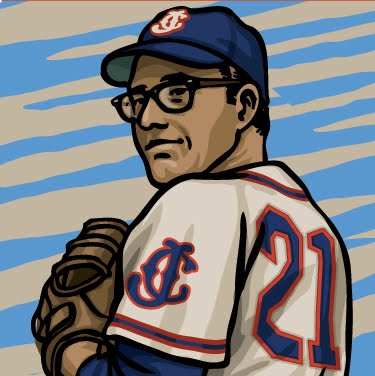
116. Pee Wee Reese: The Name Ain't What You Think


My brother called me yesterday to ask me about Jackie Robinson. See, Jay's a public middle school teacher in Jersey City and he was having his class read a novel that mentions Robinson and the Brooklyn Dodgers throughout the text. That the book has Robinson and the Dodgers in it has a deeper local connection - in Journal Square downtown there is a giant bronze statue of Robinson reaching skyward, a silent but striking tribute to the day in 1946 when he stepped onto the field in Jersey City's Roosevelt Stadium to become the first black man to play organized baseball in the 20th century.

Being a big Robinson admirer I probably told my brother much more than he desired to know about his first season in the majors but I didn't care, I was on a roll talking baseball. One thing I told him was that despite the way coverage has been skewed the past couple of years portraying him as a lone-crusader, Robinson had quite a few solid and courageous teammates who helped him through that most difficult year. Manager Leo Durocher, for example, single-handedly squashed a budding team mutiny by telling the players that all he cared about was the Dodgers winning and if the white players didn't hustle and win he had no problem replacing them with blacks who could. He told them that more black players were following Robinson and they had better get used to the idea. As for the anti-Robinson petition that was supposedly circulating, the players could "wipe their ass with it." To cap it off he declared: "I don't care if he is yellow or black or has stripes like a fucking zebra. I'm his manager and I say he plays."

There was one other player that came to mind when I was telling that Durocher story to my brother. While Durocher showed his support with tough-guy talk, this one particular teammate of Robinson's showed his with a silent but far-reaching gesture.

Before he was known as "The Little Colonel" and "The Captain", they called him "Pee Wee". The nickname evokes a vision of a diminutive fella, but in fact, Pee Wee Reese was not small at all, 5'-10", and 160lbs, average size for ballplayer during the era he played in. No, the nickname "Pee Wee" came from being a champion marbles player as a kid and a "peewee" is what players call a 1/2" sized marble. Reese was such a good player that he was runner-up in a city-wide peewee marbles championship held by his hometown Louisville Courier-Journal newspaper.

Like I said earlier, Reese wasn't small by any means, but in high school he was skinny and frail looking and this kept him from playing much on his high school baseball team. His love of the game was satisfied by playing for his his church team, New Covenant Presbyterian. With pro ball the farthest thing from his mind, Reese took an apprenticeship with the local telephone company where the constant climbing of poles built up his slight body adding strength to his frame. When his church team won the 1937 Louisville City League Championship, things began to change quickly for Reese.

The Louisville Colonels were the local minor league team and a scout made sure he snatched up the New Covenant shortstop after the series. For a $200 bonus and a promise of $150 a month, Pee Wee Reese became a professional ballplayer.

The new kid did pretty decent his first season, batting .277. Reese beat out former major leaguer Ray French to become the Colonels' starting shortstop and although he was just average at the position, manager Bert Niehoff could tell he just needed to play in order to hone his natural skills. He was fleet afoot and in 24 stealing attempts was successful in 23 of them. Being from Louisville didn't hurt and the good-natured Reese quickly became the hometown's favorite player.

The Colonels played in the American Association which was equivalent to today's AAA classification. In 1938 the Louisville team was what was termed "unaffiliated" which meant that it was under no working agreement with any major league club. This left the ownership open to offers to buy their players from a variety of different teams instead of having to sell to just one. At the end of the season a group of businessmen bought the Louisville club. The identity of the members of the group which made the purchase was intentionally kept ambiguous but it eventually became known that Tom Yawkey, owner of the Red Sox was behind it. The reason for the purchase was the team's shortstop, Pee Wee Reese. Yawkey wanted to make sure no other club sunk their teeth into this kid which his scouts said had the makings of a great major league shortstop.

The next year Reese built on his rookie season, batting .279 and stealing 35 bases in 36 tries. The 19 year-old was so respected in the league that at mid-season he was voted onto the American Association All-Star team. Opposing managers described him as the best infielder in the American Association, despite his youth.

Reese was pretty much guaranteed a place on the Red Sox except for one thing - their player-manager Joe Cronin, who happened to play that very same position as the kid from Louisville. Cronin was notoriously sub-par in the field and sensitive as hell about it. The Red Sox had a decent ballclub at the time, having clawed their was up from being a perennial second-division team. With young players like Bobby Doerr and Ted Williams mixed with veterans Jimmie Foxx and Lefty Grove, the Red Sox were beginning to gain back ground and respectability in the league. The only problem was that manager Cronin was terrified of being beaten out of his shortstop job by a younger player. While other Boston scouts reported the merits of the budding superstar in Louisville, Cronin told Yawkey that Reese was just too small and sickly-looking to play in the bigs. Boston's owner listened to his manager and tried to recoup his Louisville investment by selling Reese to the Brooklyn Dodgers for $35,000.

At the time of the purchase, the Red Sox were in second place behind the mighty New York Yankees and looked like the next big powerhouse of the American League. Now suddenly Reese found himself headed not for a first-rate team but to the joke of the National League, the Brooklyn Dodgers.

Like the Red Sox, Brooklyn had been the league's bottom feeder for decades. The difference was Boston's owner Tom Yawkey spent money on his players with reckless abandon and the Red Sox had turned their fortunes around. Brooklyn on the other hand had just recently avoided bankruptcy and their record was anything but encouraging. In '38 the team finished in 7th place, 18 1/2 games out and in '39 12 1/2 games back in 3rd place. The sporting papers were chock full of the stories about the team's incompetence - 3 guys winding up on the same base, outfielders being hit on the head with the ball and crazed fans driving the opposing team's players as well as the home team's mad with their incessant heckling.

No, Brooklyn was as far away from Boston as you could get. When informed by a sportswriter that Louisville's star player was soon to be a Dodger, Reese instinctively replied: "Oh - not Brooklyn!"

Of course Pee Wee Reese went on to become one of the Dodgers' most popular and successful players, the anchor that held together 2 generations of great Brooklyn teams in the 1940's and 50's. His leadership both on the field and in the clubhouse kept the Dodgers cool and collected during some of the most competitive pennant races in baseball history. But beyond that, it was Reese that became the example for his fellow ballplayers when it came time to integrate the team in 1947. When other players chose to shy away from making any statement about Jackie Robinson's presence on the team, it was Reese, a southerner by birth, who had the courage to stand by Robinson's side during that challenging 1947 season.

Perhaps no story says it better than the often repeated one about a May afternoon at Crosley Field in Cincinnati. There had been KKK death threats before the game. A sniper was supposedly poised to take down Robinson if he dared to take the field. The capacity crowd was extremely hostile against Jackie's presence on the field and the game hadn't even started yet. As the Dodgers took batting practice the Reds players began shouting racial slurs from their dugout. In this seething cauldron of hatred, Pee Wee Reese walked over to the solitary Robinson and casually put his arm around Jackie's shoulder in a show of friendship. Legend has it the stadium responded in a single, collective gasp. With that single gesture, Reese told the world that Robinson was accepted and from here on in, they had better get used to it.

Talking to Roger Kahn, author of the classic Brooklyn Dodgers book "The Boys of Summer", Reese said: "I was just trying to make the world a little bit better. That's what you're supposed to do with your life, isn't it?"

SABR, The Society of American Baseball Researchers has compiled a comprehensive book on the 1947 Brooklyn Dodgers called "The Team That Changed Baseball And America" in which every single player who wore a Brooklyn jersey that year has their own well-researched biography. While as a whole it tells the complete story of that fabled team, each individual 3-4 page biography tells the story of one man's journey to play professional baseball. If my word holds any water when it comes to suggesting reading materials, let it be known that I highly recommend this gem...


Tuesday, April 10, 2012

A Little Interior Decoration

For the rest of the month of April, the company who prints my posters has offered me a little discount which I'm passing down to anyone who would like to own one of my art posters. There are quite a few different themes and styles and you can see most of them HERE. I also have a store on ETSY which you can see even more HERE. The limited time pricing is for 16x24" size prints for $70 postage included. Payment is through Paypal and you can order a poster by clicking on the BUY IT NOW bar below, just REMEMBER TO WRITE IN THE NAME OF THE POSTER YOU WANT...


Name of Poster You'd Like:


Thursday, March 22, 2012

114. Joe Jackson: Shoeless Joe in North Jersey


Well, no set of Black Sox would be complete without Ol' Shoeless Joe. Often portrayed as the hapless victim of the fix, I personally believe he got himself willingly into the mess and spent the rest of his life regretting it, but then again, who really knows.

As with all the other Black Sox, much of Jackson's baseball career after the fix has been shrouded in speculation. Growing up in Northern New Jersey I would hear stories of Shoeless Joe's appearance on local ball fields back in the 1920's but like so many other great baseball lore passed down through the generations, you never know what's fire and what's smoke. Over the years I looked around for evidence of Jackson in Jersey and one day someone sent me two photos of him playing in Hackensack. He wore a pinstripe uniform and a dark cap with a "P" on it. The two photos intrigued me and I wanted to know more about them but ran into dead ends. Then one day I got into contact with T.W. from BlackBetsy.com and he gave me the low-down of Jackson's day in Hackensack. So, I think it's fitting to cap off this series with a look at the day in the life of a fallen big league star, in this case Joe Jackson and the afternoon of Sunday, June 25th, 1922.

The man standing in the shade of the building was deeply suntanned and wrinkles ran round his face, making him seem older than his 32 years. He wore a black suit, finely tailored, though of an older style cut and starting to show it's age around the edges. In his rough, calloused hand he gripped a leather travel bag, which, upon closer examination, showed that the ornate brass plaque between the handles had been crudely altered: someone had scratched away all traces of the original engraved initials.

The man stood outside the box office entrance to the town ballpark. It was a small, but well built ball yard, but in actuality he hardly took notice. After all, he'd played in a different one almost every weekend that summer and now they were all starting to blend together. If he hadn't stopped at the coffee shop back in the train station he'd probably have had no idea where exactly he was, which, by the way, was Hackensack, New Jersey.

After standing around in the late morning sun for a few minutes a caravan of dirty open cars turned into the dirt lot beside the ballpark. Stopping in a cloud of dust, a dozen men poured out. These were to be his teammates for today's ballgame. He watched as the men unloaded canvas bags of equipment. The oldest looking one of the group saw him standing near the box office door and walked quickly over to him, extending his hand. He introduced himself as the manager. In his other hand he offered up a manila envelope. The suntanned man opened it and pretended to count the money inside and quickly shoved it in his coat pocket. It was time to get ready.

The locker room was a locker room in name only. The small room was damp and had 2 long wooden benches that ran the length of the room and the walls had a shelf about neck high opposite each bench and a row of hooks beneath that. Each of the ballplayers staked out a space on one of the benches and unpacked their small traveling bags. Most of the players talked loudly with one another, laughing and throwing around swear words. Their accents were harsh to his ears and sometimes not too easy to follow. A few of the players stared unabashedly at the suntanned man and he began to grow more uncomfortable than he usually felt. As the suntanned man undressed he hung his jacket from the hook and folded his black pants and silk pink shirt. Running his hand over the folded silk garment to smooth it out before placing it on the shelf, he quietly touched the gold embroidered "J" monogram over the pocket.

The suntanned man removed a worn baseball uniform from his leather satchel. It was of a rougher quality wool than he was used to but it was a baseball uniform just the same. There was no name on the front, just black pinstripes. The cap he retrieved from the satchel was black as well, with a white button and white "P" on the front - a souvenir of an afternoon up in Poughkeepsie the week before. His name was "Joe Nutter" that day.

The manager appeared with another ballplayer in tow. He introduced him as "Smith" but the suntanned man recognized him as a young pitcher with Toronto. He couldn't recall his name, but it sure as hell wasn't Smith. The manager repeated the story he'd already heard - that his Westwood town team, traditionally a local powerhouse, had been unexpectedly clobbered by Hackensack a month before. There was always a heated rivalry between the two towns and the games always attracted spirited betting, the action being covered by heavies from nearby New York City and Newark. Westwood swore Hackensack had a few ringers on their team that day and needless to say much money was lost by Westwood's fans that day. Plenty of people were pissed off and thirsty for revenge. Taking up a collection, Westwood decided to purchase some insurance for today's game, hence the manila envelope of cash. Today, the suntanned man's name was "Josephs", at least that's what it said on the lineup card.

By this time he could hear the roar of the crowd. Through the row of filthy windows that lined one wall above the shelves he could make out much movement as hundreds of people jostled for seats. He could hear men shouting and children squealing. Someone threw something through one of the open windows and every few minutes some wiseguy would bang on the glass and shout something nasty. One of the suntanned man's temporary teammates sidled up and said: "They know you're here."

Emerging out from the darkness of the locker room he pulled his cap down as low as he could over his eyes to protect them from the sun. The crowd went wild when they recognized him.

"My God, it's Shoeless Joe Jackson!"

Spectators were spilling out onto the field and bits of paper littered the field. Glancing out to center field he could see it was cleared of fans, which made him feel a little better. The roar was deafening. There must be more than 1000 here today, probably more. Ugly, twisted faces shouted unintelligible words at him. Small children stared and women craned their heads and stood on tip-toes to catch a glimpse of him. He'd seen it all before. He did this every weekend.

The game wasn't much to remember as far as he was concerned. It was a standard affair - the Hackensack manager came over to the Westwood bench and in between swearwords made it clear his team would be playing the game under protest. Westwood held back the Toronto pitcher until he was unleashed in the 3rd inning after Hackensack scored a few runs. It was smart managing as it gave the gamblers time to settle the odds before the Toronto kid shut them down for the rest of the game.

In between hitting a home run, double and two singles there were a few notable incidents. A news photographer ran onto the field while Westwood was batting and attempted to take a photo of him as he sat on the bench. Two of his teammates started shoving the newsman and threatened to beat the hell out of him if he didn't get back to the stands. When Westwood's catcher reared back, ready to throw a punch, the fella ran off so fast he left his hat behind. The catcher stomped on it with his spikes and the rest of the ballplayers laughed. A few times the game was stopped, not by the umpire but because everyone paused to watch a fist fight in the bleachers. He noticed that the couple of policemen stood by and did nothing - wading into a crowd like this was pointless and after a few minutes the fighting stopped on its own anyway. At a few points in the afternoon the play was stopped while the players collected some of the larger items that were thrown onto the grass. Bottles of beer, scorecards, newspapers and even a few straw hats were picked up and thrown in a pile behind home plate. One call by the amateur umpire cause a heck of a row. When he called Westwood's left fielder out for supposedly not touching first base on his way to an easy double, the bench cleared and for a time it looked like the poor umpire was going to catch a beating. He sat on the bench and watched. The guy missed touching first by a mile anyway. A few innings later a Westwood fan charged out of the stands and accused a Hackensack outfielder of putting a concealed second baseball in play when he couldn't get to a deeply hit fly ball. He just pulled his cap lower over his eyes and thought about his wife.

He was proud of one play he made that day, not at bat but in the outfield. On a long ball hit out to him in center, he'd made the catch and threw a straight liner back to the surprised catcher who tagged out the equally surprised runner to end the inning. The bases had been loaded and it squelched a rally and when all was wrapped up it probably made the difference in Westwood's 9 to 7 defeat of Hackensack. Most of the crowd cheered but some threw even more crap on the field. This wasn't Comiskey Park.

After the game he tried to dress as quickly as possible. Half the team was drunk and in various stages of undress. One of the guys threw his spikes through one of the glass windows. He was too busy packing his leather satchel to find out why. Someone was pounding on the locker room door but no one answered. After a while he slipped his black suit coat over his pink silk shirt, once again obscuring the embroidered "J" above the pocket. He opened the locker room door and ignoring the lingering spectators in the parking lot headed off towards the train station, trying to remember where he was going to be next weekend and what his name would be when he got there.

The whole concept of this story was derived from a June 28, 1922 New York American newspaper article. It is one of the most moving articles I've come across dealing with the banned ballplayers. The writer had been at the Westwood game and the game details are as I have described here. Besides giving a summary of the whereabouts of the other Black Sox, writer Arthur Robinson includes fascinating details such as what Jackson wore that day and mentioning that his initials had been scratched off his travel bag. It is a grim and unflinching story and reading it all I could think about was how it made Jackson and the other seven men seem like they were stuck in some sort of sad baseball purgatory. Perhaps that's a fitting end to the perpetrators of baseball's saddest moment... but what the hell do I know, I'm just an simple artist.

I just wanted to give credit again to a few sources that besides first-hand contemporary newspaper articles, were the best places to glean hard-to-find information regarding the post 1920 lives of the Black Sox:

BlackBetsy.com a great website and more importantly it's staffed by a group of very knowledgeable Joe Jackson experts who were more than willing to share their groundbreaking research on the Black Sox Scandal. I owe much of the Joe Jackson article to T.W. and I just want to thank him for his kindness.

After The Black Sox: The Swede Risberg Story by Alan Muchlinski. Simply excellent chunk of research that shines a light onto the later years of Swede and his former teammates who he played against.

Outlaw Baseball Players in the Copper League: 1925-1927 by Lynn Bevill. A M.A. thesis published online that is the best source I've found that really explains the role of the Black Sox in the Copper League but also does a great job at telling the story of the towns and how the league operated.

Blacksoxfan.com No list of sources would be complete without a big thanks to this site dedicated to the Black Sox. The authors downloadable pdf of every existing outlaw and semi-pro game featuring a member of the Black Sox is just a monumental achievement and unbelievably helpful in tracking the movements of the eight men.

113. Swede Risberg: "Why work, when you can fool the public"


I hope you are enjoying the "After The Black Sox" series so far. When I was starting the Infinite Baseball Card site the very first drawings I attempted were of these 8 players. Besides the 1919 World Series fix being an interest of mine, drawing a set of 8 let me see how the style I was developing would look as a series. The originals were pretty basic and sparse compared to the ones you are looking at now, but the idea was there, the firm black line with bold blocks of color. I had wanted to re-draw these guys again but after getting to Happy Felsch and Eddie Cicotte, I got sidetracked by so many other great players who needed a card. Now, seeing them all together in all their post-1919 glory, I have to say it is a nice looking series. Anyway, here is the story of Swede Risberg's later years, leaving only one more, Shoeless Joe, who will make his appearance next week...

Swede Risberg has gone down in baseball lore as the muscle behind the 1919 fix. Besides having a nasty reputation that he cultivated long before he broke into the majors, his threat to murder Joe Jackson if he spilled his guts caused Shoeless Joe to make the infamous statement: "The Swede is a hard guy."

The Swede was born in San Francisco when it was still part of the "wild west" and grew up tough. His old man was a lumberjack from Sweden, and I don't think it would surprise anyone to know that that's where his nickname was derived from. Like many of the ballplayers he played with, Swede's education ebbed at an early age. His surly disposition and quickness to use his fists to settle a disagreement probably stems from insecurity derived from his embarrassment at his lack of schooling. Or maybe he was just a bad seed. Regardless of its root, when asked why he dropped out of school in the third grade, Swede quipped it was because he refused to shave...

During his minor league career on the west coast, the Swede forged his reputation as a tough customer through numerous spurts of violence. But he also became known as a very versatile player, filling in where ever he was needed, including on the mound. The White Sox snapped him up in 1917 and although he was terrible at bat, his defensive skill kept him in the game. His scrappiness was also noted, most memorably when he fought the ferocious Ty Cobb to a draw. By 1919 he was Chicago's starting shortstop and the press tabbed him as an up-and-comer.

Much like his pal Chick Gandil, Swede was a malcontent and must have been gasoline on the fire of the already inflamed White Sox locker room. With some of the team earning what they were worth and the rest playing for peanuts due to their inability to fight for good contracts, it was easy for the bitter Swede to make the choice to join in the fix. For his part he took home $15,000, one of the few conspirators who made anything for their troubles.

After the trial, acquittal and banishment from organized ball, the Swede played around Chicago under assumed names and then joined Gandil, Cicotte, Weaver and Felsch on the "Ex-Major League Stars" barnstorming team. What should have been a lucrative tour turned into a nightmare as the team was constantly heckled in what few games they were able to book. The whole organization collapsed when Cicotte's demand for his pay earned him a severe beating from the Swede. The former ace of the White Sox pitching staff left the team, leaving behind a few of his teeth.

With his 1919 pay-off cash, the Swede had bought he and his wife a dairy farm in Minnesota and he now embarked on an 11 year career as a ballplayer for-hire. Playing mostly for town teams throughout the northern part of the Midwest, the Swede changed teams frequently because the sheer cost of hiring him was too costly for most small towns to pay for more than one season. Many towns would hire a guy like the Swede to beef up their team in order to crush neighboring villages, giving its inhabitants bragging rights and make a little bit of money for the sporting men of the area.

From Alan Muchlinski's great book we now know where the Swede spent his post-1920 career. Muchlinski tracked down obscure local newspapers and mapped out his odyssey. After the disbandment of the Ex-Major League Stars, Risberg joined the Aces of Rochester, Minnesota in 1923 and 24, then joined Happy Felsch on the Scobey, Montana Giants. He went back to Rochester for a bit of 1926 and then over to Watertown, South Dakota through 1927 and then up to Manitoba, Canada to play for a team from the town of Virden.

Swede next turns up as a back-up pitcher on an integrated team in Jamestown, North Dakota. Among his opponents was old friend Happy Felsch who frequently worked the same circuit as Risberg. During the 1930 season the Swede threw a no-hitter against LaMoure. He went 2-for-4 that afternoon and fanned seven. Though it was merely semi-pro, it still wasn't bad seeing as the Swede was almost 36 at the time. His many seasons of rough ball playing also started to take its toll on him. A spike wound, courtesy of Ty Cobb, eventually caught up with the Swede and he developed osteomyelitis, the infection of the bone marrow and his playing days were numbered. Risberg played for Sioux Falls in '31 and '32 and then retired from the game.

According to his son, Risberg made more from barnstorming than he did as a major leaguer, but things didn't go too smoothly for the Swede - he lost his savings in the stock market crash of 1929. He appears to have stayed on his Minnesota farm until the early 1960's when he moved to California and opened up a bar. Like most of his Black Sox pals, the Swede never spoke openly about what really happened back in the fall of 1919 and I'm guessing that most men didn't have the stones to ask him, either. Swede's ex-wife did say that after he was accused of fixing the series he'd respond to inquires about his part with: "why work, when you can fool the public." When Eliot Asinof was writing his ground breaking "Eight Men Out" book in the early 1960's, Risberg told the author he couldn't remember anything about it - it was too long ago. About the only Eventually losing his leg to that old spike injury, the Swede proved his toughness by outliving all the other Black Sox, dying on his 81st birthday.

I just wanted to give credit again to a few sources that besides first-hand contemporary newspaper articles, were the best places to glean hard-to-find information regarding the post 1920 lives of the Black Sox:

After The Black Sox: The Swede Risberg Story by Alan Muchlinski. Simply excellent chunk of research that shines a light onto the later years of Swede and his former teammates who he played against.

Outlaw Baseball Players in the Copper League: 1925-1927 by Lynn Bevill. A M.A. thesis published online that is the best source I've found that really explains the role of the Black Sox in the Copper League but also does a great job at telling the story of the towns and how the league operated.

Blacksoxfan.com No list of sources would be complete without a big thanks to this site dedicated to the Black Sox. The authors downloadable pdf of every existing outlaw and semi-pro game featuring a member of the Black Sox is just a monumental achievement and unbelievably helpful in tracking the movements of the eight men.


Monday, March 19, 2012

112 Lefty Williams: Baseballs, Booze and Black Sox


Continuing with the post-scandal career of the Black Sox... Buck Weaver in my mind was the most tragic character from the whole scandal because he, unlike the other 7 players, apparently did not take money or agree to fix the world series. Pitcher Lefty Williams, however, is tragic in his own special way.

Back in 1919, Williams was on the way to being one of the best left handed pitchers in the American League. After a few faltering years with the Tigers he settled down with the White Sox and went 17-8 in 1917, 6-4 in 1918 and 23-11 in 1919 and led the league in games started with 40. His E.R.A. was consistently under 3.00. He, along with Eddie Cicotte were the heart of the White Sox pitching staff and his career was only getting better. In the 1920 season, his last before he and the other crooks were booted out of the game, Williams won 22 games. Cicotte, Jackson, Risberg and Gandil's careers were winding down and you can see how they would have been tempted to take the cash, but Williams was in his prime and through his greed and poor judgement a great career ended before it began.

Originally uninterested when he was approached by Chick Gandil to throw the series, Williams supposedly relented after being informed the fix was in anyway. Lefty received only half of the promised $10,000, but this still was almost double his regular season salary (Lefty's wife claimed the grand total he received for his part was actually $150). He and the other players may have tried to call off the fix half way through, but when Lefty’s wife was threatened (even this much-repeated part of the story may be made-up) he went ahead with it. Williams lost 3 games in the series and it was in part his atrocious and suspicious play that the series came under close scrutiny.

After his banishment he stuck close with some of the other banned players in their failed attempts to form a barnstorming team that capitalized on their infamous reputation. This all came to naught when first fans heckled and ridiculed the crooked ballplayers and then word came down from the commissioners office that any man taking the field against or with any of the 8 men out were subject to banishment themselves from organized ball. Now even the lowliest town-team didn't want to risk the future careers of any of their ball players for a game against the Black Sox.

Realizing his career as a major league ballplayer was over, Lefty began to live the life of a hired-gun ballplayer, one-game stands with what ever team could meet his price. With his wife Lyria in tow, Williams traveled the country making stops in towns from Minnesota to California. In 1926 Lefty accepted an invitation to join Buck Weaver and Chick Gandil in the outlaw Copper League.

As I talked about in the Chick Gandil story, the Copper League was made up of rough and tumble wild west mining towns and with the arrival of Hal Chase in the early 1920's had become a haven for blacklisted ballplayers. By the time he showed up in Douglas, Arizona in the spring of 1926, Lefty had turned into a surly, dark figure with a serious drinking problem. He fit right in.

Williams joined his former teammate Buck Weaver who was managing the Douglas Blues, but his time there only lasted through June when he left to join the Fort Bayard Veterans team where he was probably promised more money. Fort Bayard was a former New Mexico Army post that was converted into a hospital for veterans suffering from tuberculosis and other debilitating injuries brought on by being gassed in France during the first world war (remember that the great Christy Mathewson died from T.B. after being gassed during a training exercise). Fort Bayard also featured Chick Gandil who also jumped from the Douglas team the previous season. By most accounts Lefty was an ace pitcher who only seemed to get better as he drank between innings. I'm not sure whether the booze added anything to his fastball but opposing players said it sure did make him more intimidating. As ace of the Fort Bayard team, Lefty was given more leeway when it came to team rules - he would sometimes skip showing up for games he knew he wasn't scheduled to pitch and instead spend the day at his favorite speakeasy concentrating on his drinking.

To underline the fact that Lefty was still in his prime as a pitcher, in August he tossed a no-hitter against Weaver's Douglas Blues, sending the last 20 batters back to the bench in order. Sure it was only semi-pro but a no-hitter is still a no-hitter and factor in that Lefty was probably far from being in-shape due to his heavy boozing. At the conclusion of the season Lefty joined a Copper League all-star team and toured parts of Mexico before returning to Fort Bayard where he and his wife spent the winter months.

Despite Judge Landis' strenuous efforts to shut down the Copper League, or at least get them to expel the crooked ballplayers, the league continued for the 1927 season. Williams continued to dominate the league and as Lynn Bevill records in the excellent "Outlaw Ballplayers in the Copper League 1925-1927", at the midpoint of the season Lefty was 5-2 with 23 strikeouts and just 7 walks. As he did the year before, Lefty continued playing ball after the Copper league season and toured the southwest and Mexico with a barnstorming team, this time called the Juarez Brewers.

After the barnstorming trip I have been unable to find any more evidence of Lefty playing ball again. Around this time he and his wife Lyria turned up in Southern California where they opened up a nursery business in Laguna Beach. I don't know one way or another but I am guessing his alcohol intake probably subsided because the business seemed to do well. Like most of the other Black Sox, Williams never spoke about his part in the fix and died in 1959 at the age of 66.

I just wanted to give credit again to a few sources that besides first-hand contemporary newspaper articles, were the best places to glean hard-to-find information regarding the post 1920 lives of the Black Sox:

After The Black Sox: The Swede Risberg Story by Alan Muchlinski. Simply excellent chunk of research that shines a light onto the later years of Swede and his former teammates who he played against.

Outlaw Baseball Players in the Copper League: 1925-1927 by Lynn Bevill. A M.A. thesis published online that is the best source I've found that really explains the role of the Black Sox in the Copper League but also does a great job at telling the story of the towns and how the league operated.

Blacksoxfan.com No list of sources would be complete without a big thanks to this site dedicated to the Black Sox. The authors downloadable pdf of every existing outlaw and semi-pro game featuring a member of the Black Sox is just a monumental achievement and unbelievably helpful in tracking the movements of the eight men.


Friday, March 16, 2012

111. Buck Weaver: Innocent, But Still Guilty


Out of all the Eight Men Out, Buck Weaver is the only one who elicits any kind of sympathy from me. Weaver was a product of his age, upholding the turn of the century version of the unwritten "no snitching" code that so many of today's inner-city youth hide behind when it comes time to stand up for what is right. Buck was no different - he failed the test when it came time to speak up and stop the fix his teammates put in motion back in September, 1919. For this he never stopped paying the price, forever banned from the game he loved...


Besides being a pretty good hitter, “Buck” was an outstanding fielder, to the point of being the only third baseman Ty Cobb would not steal against. As far as I'm concerned that speaks more volumes about The Ginger Kid than any statistic found in the Baseball Encyclopedia. One of the most popular men to ever play for the White Sox, Weaver apparently knew of, but refused to participate in the fixing of the 1919 Series. It was this knowledge that was used against him and he was banned along with the other seven crooked ballplayers after the 1920 season. Even his stellar batting and errorless play in the series wasn’t enough to save him.

Weaver spent 1921 proclaiming his innocence to the point of deluding himself into believing he would be absolved of his part in the fix and be let back into the game. While the other banned players formed the "Ex-Major League Stars" and attempted to tour the mid-west, Weaver refused a lucrative contract to play with them and flatly refused to have anything to do with his former teammates. One afternoon in Chicago Weaver was asked by Risberg and Felsch if he would join their team that day to which Buck haughtily replied “Nothing doing. I’ll be back in the majors soon and you guys will still be semi-pros.” At this point he still believed he would be back on the White Sox. Throughout the summers of 1921 and 1922 newspapers in the mid-west featured stories about Weaver and his supposed appearances with a variety of semi-pro teams but these turned out to be just rumors. He was home in Chicago with his wife patiently waiting to be reinstated. It wasn’t until the following year that Buck came to the realization that Judge Landis’ ruling was indeed binding.

Weaver now needed to make a living and he began hiring himself out to semi-pro teams. In July he swallowed his pride and briefly reunited with Cicotte, Jackson and Risberg on the Bastrop, Louisiana ball club. He also played that summer with a team called “Sorg‘s Ice Creams” from Reedsburg, Wisconsin. He reportedly hit .369 that season and played against Happy Felsch who was roaming the outfield for the Twin Cities Red Sox.

1925 found Weaver in Arizona where he was recruited to play in the outlaw Copper League. This rough and tumble semi-pro circuit was made up of wild west mining towns and was a haven for black-listed ballplayers. Weaver’s team, the Douglas Blues, was managed by the crooked Hal Chase and featured Chick Gandil at second base. Gandil soon jumped the team for another in the league but the following year Weaver became the Blues manager and was joined by Lefty Williams. Weaver coached the Blues to a losing record and wasn’t helped by Lefty’s desertion mid-season to join the rival Fort Bayard club. To cap it off, Buck also severely injured his ankle that season and didn’t return to the Copper League in 1927. The reasons went unreported, but there was talk of Chick Gandil pulling strings to keep Weaver away because of their disagreement over the 1919 fix. Weaver still told anyone who would listen that he was clean while the other seven were guilty, most recently that winter in Chicago when he and the other Black Sox were called to testify in court once again. Gandil must have been seething every time he had to face Weaver’s team and now he felt the self-righteous Buck had double-crossed him again.

Weaver was an extremely popular figure in the Windy City and his presence in uniform on a ball field was sure to attract a crowd. While the other Black Sox generated a mix of mostly negative reactions when they played after 1920, Buck seemed to always get a warm welcome and no place was more friendlier than the Chicago area. Spring of 1927 brought the much-heralded return of the Ginger Kid to the area’s sandlots when he signed on with the Hammond, Indiana Hammonds. As the Hammonds made the league circuit a few opposing teams threw a “Buck Weaver Day” in honor of the popular third baseman. The Hammonds played against other top-notch Chicago area semi-pro clubs like the Logan Squares and Duffy Florals as well as Negro league teams such as the Chicago American Giants.

Moving over to the rival Duffy Florals, Weaver finished out his playing days by switching over to shortstop and managing the Floral’s for the ‘28 and ‘29 season. At the age of 41 Buck fronted a team called “Buck Weaver’s Cooney’s” which was financially backed by one of Al Capone’s associates named Duke Cooney. The team played through the 1933 season and Buck wound down his playing days with another self-named semi-pro club, “Weaver’s West Side Colonels.”

While all the other Black Sox left Chicago for good after 1920, Weaver remained there for the rest of his life. He worked for the city of Chicago, installed elevators and eventually went into the drugstore business with his brother in-law. A fellow by the name of Charlie Walgreen approached Buck with an offer to combine their drugstores into a city-wide chain but Weaver declined. Walgreen’s became, well, WALGREENS, and Weaver’s store went under during the depression. The once fun-loving third baseman devolved into a bitter, disgruntled man, always decrying his punishment by Judge Landis and proclaiming his innocence in the 1919 fix. At the age of 65 the Ginger Kid suffered a heart attack and died alone on a Chicago sidewalk. His numerous letters to the commissioner’s office and the Baseball Hall of Fame in Cooperstown never once received a response and the one man who rightfully should have had the best chance at reinstatement was left overshadowed by all the publicity generated by Shoeless Joe Jackson’s deluded supporters.


Tuesday, March 13, 2012

110. Fred McMullin: The Forgotten Black Sox


To continue with my series on the 8 disgraced Chicago White Sox, I bring to you the mysterious Fred McMullin. Often overlooked and only given the briefest of mentions in books and articles dealing with the 1919 scandal, McMullin is unique in that unlike his teammates, his post-Black Sox baseball career was very brief. Material to piece together his later life was scant to say the least but I was able to gather enough to write-up a modest summation of what happened to this mediocre utility player...

Rarely used utility infielder McMullin is said to be a part of the fix because he accidentally overheard the plan. This is not true. Fred had a sound baseball knowledge and as such he was the Chicago’s advance scout and he may have gave the rest of his teammates a deliberately flawed report on the Cincinnati pitchers they were about to face. McMullin received $5,000 for his part in the fix, which was only 2 at-bats and no time in the field.

After being kicked out of organized baseball McMullin returned to Los Angeles where he had been a star ballplayer before his time in the majors. He was a well-liked fixture in the local baseball scene and many could not believe he had anything to do with any illegal doings back east. Through his brother-in-law he secured a job at Universal Film Studios and played on the company’s baseball team. The Los Angeles area was a hotbed of winter semi-pro leagues and many major and minor leaguers as well as Negro league stars came out west to play in the warm weather. McMullin was a popular player until the major leagues found out about his participation in games against “honest” ballplayers. After the Philadelphia Phillies fined their star outfielder Irish Meusel $100 for playing against McMullin, the disgraced ballplayer resigned from Universal’s team.

McMullin for his part didn’t seem to grasp the magnitude of what he and his buddies had done in 1919 and continued to try to visit former friends and teammates when they played in the Pacific Coast League. After being ignored and rebuffed time and time again, McMullin got the picture and while calling his treatment by organized baseball a “persecution,” he none-the-less steered clear of his former acquaintances. Unlike the other 7 Black Sox, McMullin did not attempt to play under an assumed name or hire himself out to semi-pro town teams as a ringer. The former White Sox simply and quietly resigned himself to a life outside of baseball and drifted through various careers - carpenter, salesman, office manager and then of all things - a Deputy Marshal of Los Angeles County.

For the rest of his life Fred McMullin never proclaimed his innocence nor applied for reinstatement and for that matter never made any statement what-so-ever about his role in the 1919 fix. He died in Southern California at the age of 61 in 1952.

Wednesday, March 7, 2012

109. Chick Gandil: After The Black Sox


For better or for worse, the story of the 1919 World Series and the 8 Chicago White Sox banished from the game has taken on a mythical quality in the last 90 some-odd years. Countless books have been written about every angle of the scandal, major movies feature the eight in all their glory and even a few misguided congressmen have wasted the taxpayer's time trying to somehow use the laws of the country to reinstate Shoeless Joe Jackson half a century after his death. For me, I never had any romantic misconceptions regarding the Black Sox. With the exception of Buck Weaver, those remaining seven were dirty ball players who sold their souls for cash. To me, banishment from the game was a just punishment.

But that's not what I want to write about. Authors much more talented than me have already covered the scandal. What I am more interested in is what happened to those eight after they were thrown out of the game in 1920. Earlier I featured stories on Happy Felsch and Eddie Cicotte's post Black Sox careers and to continue with that series I bring to you the infamous leader of the scandal, Chick Gandil...

Chick Gandil was the mastermind behind the fixing of the 1919 World Series. Described by his contemporaries as a “professional malcontent”, Chick was a thug of a ball player, even being suspended during the 1919 season for punching an umpire. He was a juvenile delinquent and after dropping out of high school he ran away from home, working his way south and west, all the while scratching out a living as an itinerant ball player and boxer. By 1907 the 20 year-old found himself in Cananea, Mexico working as a boilermaker in a copper mine and playing first base for the company team. Entering professional ball the following season, Gandil had 9 years of big league experience under his belt at the time of the fix.

He made the most money out of all the players, pocketing some $35,000, nine times his regular salary. After being turned down for a raise in 1920 he left the game and went west, spending most of his earnings. Later he and a few of the other Black Sox formed a touring team called "The Ex-Major League Stars" which disbanded after Gandil knocked out a few of Eddie Cicotte's teeth in an argument over money.

Since playing against any of the banned players would jeopardize a ball player's standing with organized baseball, Gandil and the other Black Sox had to look far and wide for a league that would let them play. The Copper League in Southern Arizona and New Mexico was one such haven.

Formed in the early 1920's, The Copper League was made up of rough and tumble mining towns and the play as well as the fans were as rowdy as could be expected from frontier wild west towns. The infamous Hal Chase, generally described as the greatest first baseman of all time, migrated to the league after his forced retirement from the majors. It was in his capacity as manager of the Douglas Blues in 1925 that he extended offers to all of the out of work Black Sox players. Lefty Williams, Buck Weaver and Chick Gandil accepted offers to play. Along side those three who were implicated in the 1919 world series fix was former New York Giant Jimmy O'Connell who was thrown out of baseball for trying to bribe members of the Philadelphia Phillies in 1924.

Gandil began his Copper League career as the second baseman of the Douglas Blues. A first baseman in the majors, Gandil moved over to second because Hal Chase was holding down the position in addition to his role as team manager. From the start Gandil brought his agitating and combative attitude to the team. Near the conclusion of the season he abruptly left the Blues and joined the Fort Bayard Veterans team. The following season he signed with the Veterans again and was joined by Jimmy O'Connell. The two black-listed ballplayers were constantly at odds with each other , apparently mostly instigated by the bully Gandil who rode O'Connell about the quality of his outfield work. By the end of June Gandil was forced to leave the team after O'Connell, fed up with the tough older man's bullying, chased the former boxer out of the Fort Bayard ballpark with a baseball bat.

Chick landed on his feet however and was quickly snapped up by the Chino Twins. Chino was actually an amalgamation of two towns, Santa Rita and Hurley, hence the name "Twins." Chino was the name of the mining concern that employed most of the people in the region, the Chino Copper Company.

Gandil soon became the Twins' manager as well as first baseman. When the season ended he stayed on in Chino working for the copper mine. It was also during the off-season that Chick traveled back to Chicago to give further testimony about fixing games during the 1917 season.

For 1927 the Twins were supposed to be featuring Buck Weaver and Happy Felsch but neither former Black Sox joined the team by the time the season began. Rumors circulated that Gandil had forced the popular Weaver out of the league because of his testimony which was counter to what he and Swede Risberg had said regarding the '17 season. What ever the reasons, the Twins had a terrible first half of the split-season, managing just 8 wins against 18 losses. Chick batted a lofty .481 and somehow was able to turn the ball club around in the second-half and finished up 21-10, gaining them a seat in the championship series against Fort Bayard.

But then just as the series was to begin, Chick disappeared. For unknown reasons he left not only the team but the whole region of the country. After giving up on the game Gandil began working as plumber and settled in the Napa Valley of California. He spent the rest of his life denying the White Sox threw the World Series saying that the team played their best to win.

Stay tuned because I will be featuring the remaining 5 Black Sox ball players and their post-pro ball careers. I would like to give credit where credit is due for some of the sources I will be using in this series. Besides first hand contemporary newspaper articles, the following 3 sources were indispensable:

After The Black Sox: The Swede Risberg Story by Alan Muchlinski. Simply excellent chunk of research that shines a light onto the later years of Swede and his former teammates who he played against.

Outlaw Baseball Players in the Copper League: 1925-1927 by Lynn Bevill. A M.A. thesis published online that is the best source I've found that really explains the role of the Black Sox in the Copper League but also does a great job at telling the story of the towns and how the league operated.

Blacksoxfan.com No list of sources would be complete without a big thanks to this site dedicated to the Black Sox. The authors downloadable pdf of every existing outlaw and semi-pro game featuring a member of the Black Sox is just a monumental achievement and unbelievably helpful in tracking the movements of the eight men.


Sunday, March 4, 2012

108. Ted Williams: The Kid's First Year in San Diego (Redeux)


One of my favorite cards (and one of the early fan-favorites) I did early on was this one of Ted Williams as a San Diego Padre. Back then, over 2 years ago, my drawing style was much simpler than what it has evolved to over time and I always wanted to re-draw that old card of Ted in a more detailed style like I currently use. Well, that time has come and I coupled it with a more filled-out story about his first season as a pro ballplayer with San Diego back in 1936...

In the Spring of 1936 Ted Williams was just about to step onto the first rung of his life-long dream. His father was a professional photographer and part-time rummy while his mother was a soldier in the Salvation Army, tirelessly ministering to San Diego's boozers, hookers and single mothers. By the time Ted was a teen his Dad had left the picture, unable to put up with his wife's evangelical charity work and becoming more and more preoccupied with his drinking. His mom would disappear for long stretches being the Salvation Army's "Angel of Tijuana," and while Ted's older brother Danny used this time to hone his skills as a juvenile delinquent, the younger Williams concentrated on baseball and hitting in particular. Since his father's last name was Williams, no one knew that the youngster was actually half-Hispanic since his mother's family was from Mexico. This spared Williams from any distracting racism in his early baseball career.

While still a student at Herbert Hoover High the big league scouts from the Yankees and Cardinals came knocking but there was one problem: Ted’s over-protective mother thought he was too young to leave home. Ted and his Mom came to a compromise and they agreed to a tryout with the hometown San Diego Padres at the conclusion of the school year.

The Padres team Williams was trying to join for the 1936 season was led by former Chicago White Sox spitball pitcher Frank Shellenback. Frank was in his second year as a manager and his team was a nice blend of mature, seasoned ballplayers like Herm "old Folks" Pillette and Archie "Iron Man" Campbell and up-and-coming youngsters Bobbie Doerr and Vince DiMaggio. The Padres played in the Pacific Coast League, back in 1936 classified as a AA league, the equivalent of today's AAA, the highest level of the minor leagues.

The day of Williams' tryout, Shellenback was pitching batting practice and had the skinny kid step into the cage. According to Bobby Doerr, future teammate of Williams with Boston and now in his 2nd year with the Padres, the older San Diego players were miffed by this reed-thin kid taking up their precious time in batting practice. After Williams grooved a handful of Shellenback's offerings, including 2 or 3 that sailed out of the ballpark, the veterans' grumbling turned to wonder asking each other "who is this kid?"

Shellenback knew talent when he saw it and for $150 a month Ted Williams became a professional ballplayer.

Shellenback decided to use the new kid during a June 22nd exhibition game against a Navy-Marine Corps all-star team. In his only at-bat he singled and scored a run. A few days later, on June 27th, Williams got to pinch-hit during a regular season game against Sacramento. Facing Henry Pippen, the Kid went down on three strikes right down the pike - he didn't even swing.

On July 3rd Shellenback put the the kid into a game against the Los Angeles Angels as a relief pitcher and he immediately got shelled off the mound. At the plate however, the punk kid hit a double and a single in 2 at-bats. Williams was used sparingly by Shellenback but the veteran manager kept the youngster close on the bench, making sure he payed close attention to all aspects of the game. The Padres regular outfielders "Chick" Shiver, Vince DiMaggio and Syd Durst were backed up by Vance Wirthman but over the long season injuries to Durst and Wirthman enabled Williams to get some game experience but when each man returned the Kid went back to the bench. Shellenback for his part had no qualms about Williams' talent - he just wanted to bring him along slowly. Don't forget, the Pacific Coast League was essentially AAA level and Ted Williams was still in high school.

In the beginning of September, with the Padres competing for the pennant, left fielder "Chick" Shiver abruptly left the Padres to become the Georgia College football coach. Leaving in the middle of the night, Shellenback had no choice but to insert Williams into the regular lineup. In his first game as a regular Williams slugged a triple and double in 3 tries, fielded every ball that came his way flawlessly and was written up in the local paper for making 2 catches "hard enough to satisfy the most exacting test."

While many picked the Padres to quickly bow out of the pennant race, Williams' bat and glove work helped carry the team to the Pacific Coast League playoffs. In the 2 weeks he was the Padres starting left fielder the Kid hit .305 with 6 doubles, 2 triples and 7 RBI's. By the time San Diego faced the Oakland Oaks in the first round of the playoffs, Williams had moved up in the batting order from the 8th spot to 3rd. In the first game of the series Williams hit his first home run as a professional but the Padres eventually lost the playoffs to the Oaks in 5 games.

Didn't matter anyway, it was time for Ted to return to Hoover High for his senior year...


Tuesday, February 14, 2012

65. Shoeless Joe Jackson: What's In A Name?


Yeah, I know, I already posted this story a while back, but wait - there's a reason... after much prodding and more than a basketful of emails, I finally got around to finishing my trilogy of Joe Jackson's minor league odyssey. So, if you think you can remember all you need to about my story on Jackson's first year in pro ball with the Greenville Spinners, just go one down to the next entry. An don't just stop there - this week is a double heaping of Southern Hospitality, Joe Jackson style as I posted the story of his 1910 New Orleans season as well. Enjoy!

One of 8 kids, Joe Jackson was born into extreme poverty. At the age of six Joe took his place alongside the rest of his family in one of the sprawling textile mills that dotted the rural South Carolina landscape at the turn of the century. Because of the need to contribute money to the family he never had time for proper schooling and much to his shame remained unable to read and write for the rest of his life. The one bright spot in Jackson's grim life of industrial-age toil was baseball. Showing great skill at an early age, by 13 Jackson was playing outfield for the Brandon Mills men's ballclub. South Carolina's textile leagues had an impressive amount of talent playing on the various mill teams and for Jackson to make a mark amidst all this talent was quite impressive.

He quickly became a local legend and during games his brothers would roam the stands passing a hat taking donations after Jackson made another impressive play of timely hit. Word soon spread of his talents and in 1907 the Brandon Mills team was playing an exhibition game against the Greenville Spinners of the Carolina Association. Their manager Tom Stouch was shocked and dismayed when a young player on the team seemed to get on base every damn time he got up to the plate. In the field he dazzled as well. By the end of the game Stouch knew the kid had what it took to play professionally and the next year Jackson inked his "X" to a contract for the staggering sum of $75.00 a month to play for the Spinners.

Although he was brimming with ability he was still raw around the edges. On a few occasions he was caught trying to steal bases already held by his own teammates, but he was the local boy and the fans of Greenville readily embraced him. He had done what most of them were unable to do - escape the drudgery of the textile mills. The 1908 team featured two other players destined to play in the big leagues, Ezra Midkiff and Scotty Barr and along with Jackson the Spinners quickly made it to the top of the 6-team league. Jackson played the outfield but was also brought in to pitch on occasion. He had a tremendous arm but retired as a pitcher after he broke the arm of an opposing batter and the rest of the league refused to hit against him. It didn't matter, he made his mark elseware. His speed and skill in the outfield led fans to dub his mitt "a place where triples go to die." He belted the ball at a .400 clip for most of the summer. Locals noted that the sound his bat connecting with the ball made had such a unique sound that they could tell it was Joe Jackson even if they were blindfolded.

It was during a Sunday double-header against the Anderson Electricians that Joe Jackson earned his nickname.

Finally earning a decent salary, Jackson treated himself to a well-deserved new pair of spikes. While playing in the first game of the double-header the unbroken-in shoes gave him blisters. By the end of the game he was in terrible pain and begged Stouch to let him sit out the second game. A Sunday double-header back then was the place to be for a small rural community and Jackson was the great attraction. Stouch couldn't let him sit out the game, everyone would not only be disappointed but there was always the potential for violence. People took their baseball seriously back then.

So with great pain, Joe Jackson made the fateful decision to remove his brand-new spikes and took the field in just his stocking feet. All went well for most of the game until the top of the seventh when he smacked a triple and slid stocking feet-first into third. An angry Anderson fan, seeing Jackson called safe at third base and noticing his stocking feet cried out "you shoeless son-of-a-gun, you!" A sportswriter overheard it and a timeless nickname was born.

Jackson hated it. Already sensitive about his inability to read or even sign his own name, he felt the nickname made him look even worse, bringing to life the image of a back-woods bare-foot illiterate. He spent the rest of his life trying to explain the circumstances around his moniker, telling the story over and over again that he never played ball bare-foot and it was but one game in his whole career that he took the field in his socks.

Shoes or no shoes, it was obvious to all that Jackson didn't belong in the minors for long. Manager Tom Stouch wrote to Connie Mack of the Philadelphia Athletics letting him know about the potential of two of his outfielders, Joe Jackson and Scotty Barr. Mack must have been impressed by the description Stouch wrote because in mid-August he dispatched one of his players on the disabled list to Greenville to take a look. "Socks" Seybold sat in the stands as the Spinners played the Charlotte Hornets and watched as Jackson belted a double, triple and home run. He noted that the kid also had a rifle for an arm. He quickly telegraphed Mack who in turn sent his assistant Sam Kennedy to verify Seybold's claims. Further assured by Kennedy, Mack signed Jackson who was batting .346 at the time and Barr, who was batting .299 as well as posting a 12-6 pitching record.

As soon as the Spinners season ended, Scotty Barr hopped on the first train to join the Athletics but Jackson hesitated. He'd never left the Carolina's and Philadelphia was as far away from Greenville as the moon. He was embarrassed by his illiteracy and because of it did not even know who the heck Connie Mack or the Philadelphia Athletics were. Manager Tom Stouch had spent a lifetime trying to get to the major leagues and even though he played in but 4 games he assumed it was every ballplayer's dream to get the call. With this in mind he decided to personally deliver Jackson to Connie Mack and at the end of August, 1908 Tom Stouch and "Shoeless Joe" Jackson boarded the overnight sleeper to Philadelphia.

Many of the photographs I used for reference were found on the valuable website called "The Shoeless Joe Jackson Virtual Hall Of Fame" at www.blackbetsy.com Not only is it a great resource on the life of Joe Jackson, but the staff are extremely helpful, a fellow named T.W. over there was extremely patient fielding my questions a few months ago when I was working on a Jackson angle for this site.